
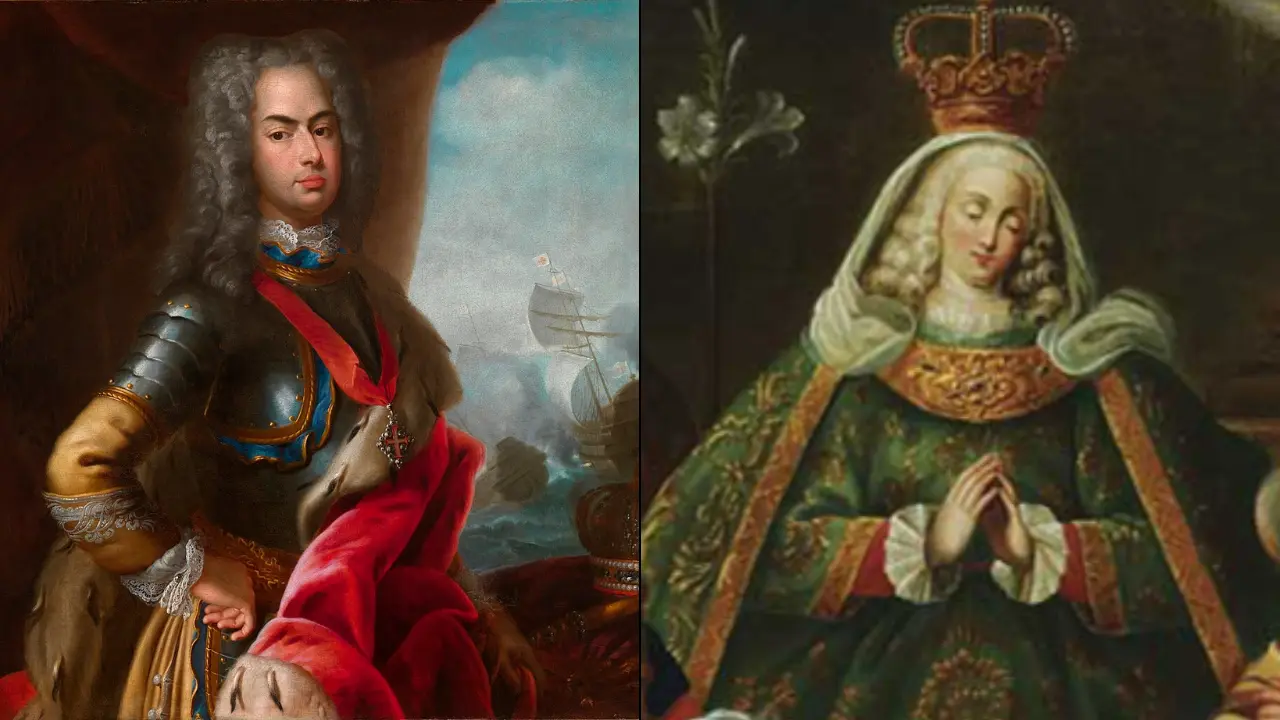
On 8 September 1720, a nineteen-year-old nun at the Monastery of Saint Denis of Odivelas gave birth to a son in Lisbon. She named him José. His father was the King of Portugal.She had taken her vows of chastity, poverty, and obedience less than four years earlier. She kept none of them.An anonymous visitor to her private apartments at that same monastery, sometime in the 1730s, left behind eleven paragraphs of notes. In those eleven paragraphs, the word “gold” appears thirty times.
A Rebellious Daughter Entered the Convent Because Her Father Had No Choice
Paula Teresa da Silva e Almeida was born on 17 June 1701 in the parish of Santa Justa on the outskirts of Lisbon, the second of three daughters born to Adrião de Almeida and Josefa da Silva. The family had a respectable lineage. Her paternal grandfather, João Paulo de Bryt, had been a German soldier in the imperial guard of Charles V, Holy Roman Emperor and King of Spain, who had subsequently settled in Portugal and established himself as a goldsmith. A century and a half later, that heritage had produced a solidly middle-class family with aspirations and limited capital.
Adrião de Almeida could not provide dowries for three daughters. His eldest, Maria Micaela da Luz, entered the Monastery of Saint Denis as a novice on 15 August 1704, before Paula was four years old. The youngest, Leocádia Felícia, also entered the monastery, though she eventually left to marry. Paula followed on 31 January 1717 at sixteen, professing her vows on 22 February of that year. She was, by all accounts, a rebellious girl. The convent was not her ambition. It was her father’s solution.
The Monastery of Saint Denis of Odivelas was one of the most prominent religious houses in Portugal, located just outside Lisbon. It was also, by any reasonable reckoning, one of the most morally compromised institutions in the country.
The monastery housed approximately three hundred nuns. Portugal’s nobility had developed a particular habit of visiting the establishment and the women inside it. Powerful men read poetry and sang through the grilles. When persuasion succeeded, they bribed key holders, pressured mother superiors, enlisted priests as go-betweens, climbed walls, and occasionally entered the grounds in disguise. A writer in 1777 described the broader climate of Portuguese religious life in plain terms: the clergy, he noted, was “absolutely ignorant and debauched,” with monks and nuns living in “the most scandalous libertinism.”
King John V of Portugal was among the monastery’s most devoted visitors.
The King Bought Out Her Previous Lover and Made Her His Favourite
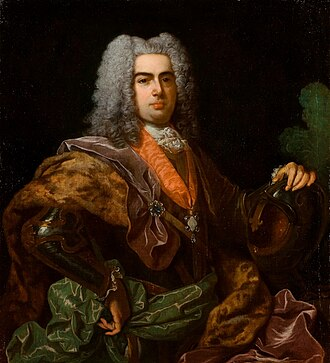
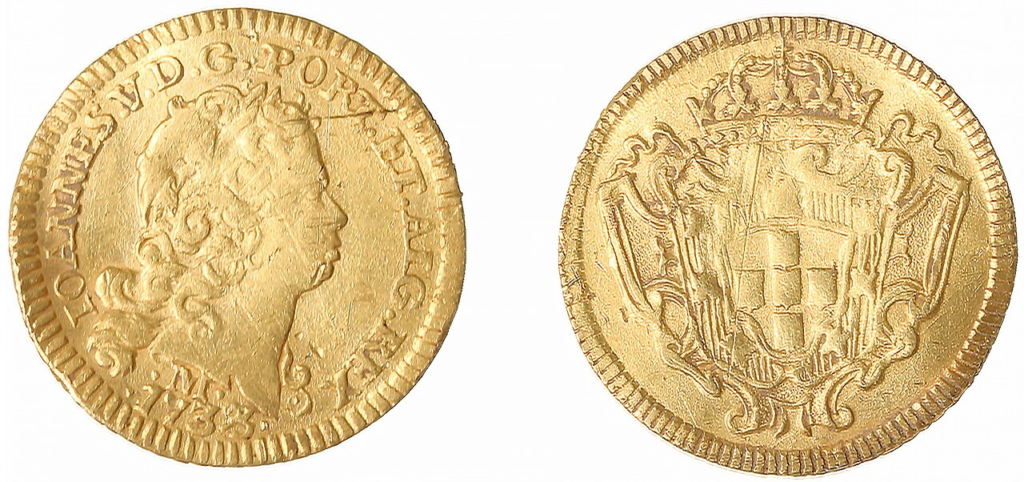
John V had come to the Portuguese throne in December 1706 at seventeen years old. His reign coincided with a transformation of Portugal’s economic position: gold deposits discovered in Brazil, the crown’s most significant colonial territory, flooded the royal treasury with revenues that made John one of Europe’s wealthiest monarchs. Twenty percent of all profits from Brazilian activities flowed directly to the crown. John spent lavishly on architecture and the church.
He spent, at considerable length, on the nuns of Odivelas, where he held the position of major patron, appeared at religious festivals and court events alike, and reportedly kept a private apartment connected to the convent by a passage.By 1719, Paula had attracted the interest of Francisco de Portugal, 8th Count of Vimioso. The king, encountering her during his visits to Odivelas, found the arrangement inconvenient. He negotiated with the Count. Vimioso departed. The specific terms were not recorded.
On 8 September 1720, Paula gave birth to José. John acknowledged the boy publicly. He then appointed Paula Abbess of the Monastery of Saint Denis, the institution where she had sworn her vows three years earlier.She was twenty years old. She now administered one of Portugal’s most powerful religious houses.
Contemporary accounts described her as quickly becoming known for extreme arrogance and for language incompatible with her clerical status. When noblewomen at court reportedly failed to rise in acknowledgment of her rank as Abbess, she was said to have replied: “Do not stand up for free who lies for money.”
The Brazilian Gold Turned a Convent Apartment Into the Most Opulent Private Residence in Portugal
The material rewards accumulated quickly and in substantial amounts.
On 28 April 1728, the Royal Chancellery registered a grant to Paula of 210,000 reis per year. On 10 May of that year, a second grant of 210,000 reis per year was registered, this one extending explicitly to Paula’s heirs and successors. A further pension of 1,288 reis was established in November. Paula’s father, Adrião, had already been inducted into the Order of Christ, the prestigious Portuguese successor to the Knights Templar, in September 1722, receiving with it a knighthood and a crown pension.
In 1724, John V commissioned a bathtub from London. It was built of solid silver, gilded inside and out, and weighed 3,580 ounces. The Swiss traveler César de Saussure encountered it in London before it was dispatched to Portugal and recorded his admiration, noting it had been made “exclusively for the lover of the Portuguese monarch,” a religious of an unnamed convent. Its craftsmanship, he wrote, had drawn considerable attention from the British court.
It arrived at Odivelas.
The anonymous observer who catalogued Paula’s apartments, whose notes are preserved in the archive of the Biblioteca Nacional de Portugal, described what he found there with exhausting specificity. Gilded ceilings. Gilded walls. An oratory gilded in its entirety. Curtains embroidered with gold thread and finished with gold tassels. A bed with solid gold statues of saints worked into the reliefs, dressed with the finest linens imported from the Dutch Republic. Mirrors in gold frames throughout. Buffets in every room. Nine maids serving the chambers. And chests, he noted at the end of his account, that he had not yet been permitted to see, said to contain thousands of garments.
In those eleven paragraphs, the word “gold” appears thirty times.
John V Died and Left Behind an Edifice Too Profitable to Dismantle
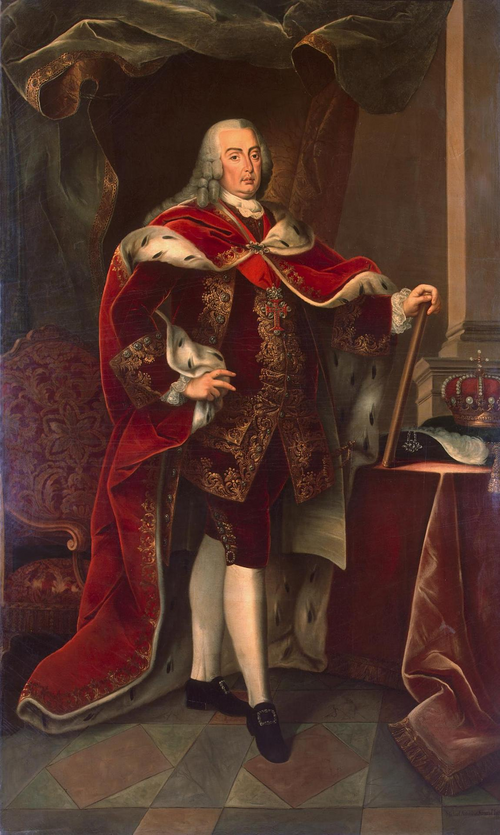
The king’s health deteriorated through the late 1740s under a condition of serious fluid retention, known as dropsy, likely caused by kidney or liver failure. He died on 31 July 1750, at sixty years of age. His legitimate son Joseph succeeded as King Joseph I.Paula’s position might have collapsed with the man who built it. It did not. Joseph I was initially disinclined to move against his father’s mistresses or the illegitimate children John had publicly acknowledged.
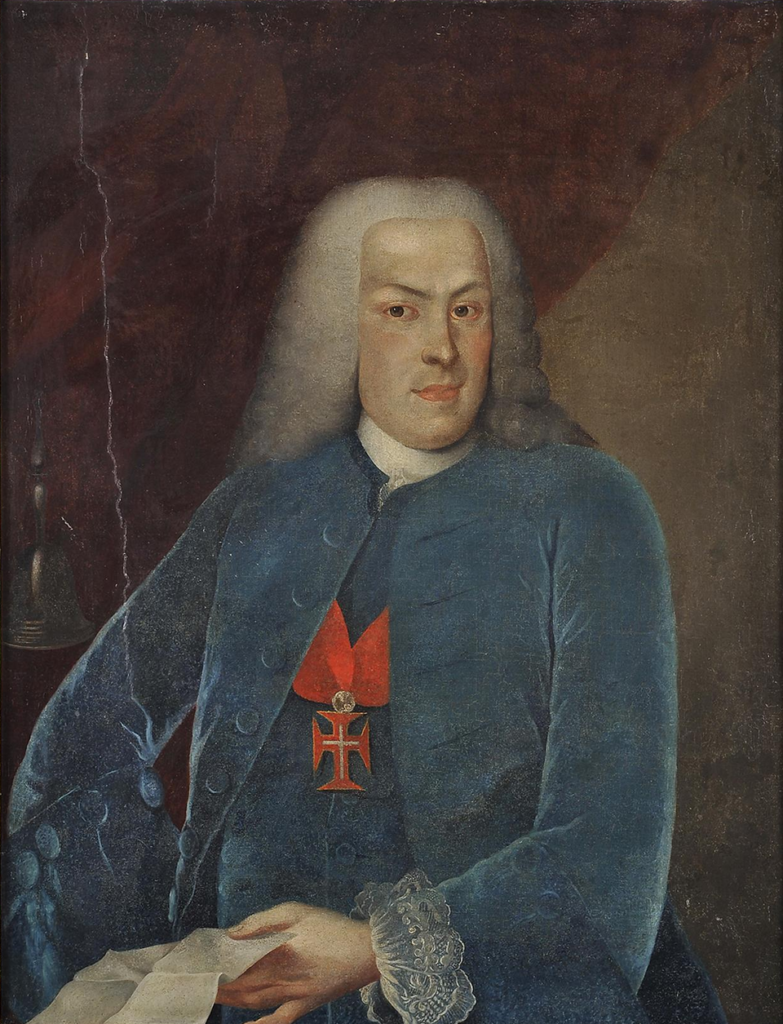
Paula’s son José had been raised alongside two other of John’s acknowledged sons in a palace in Lisbon’s Palhavã district, the three known collectively as the Children of Palhavã. He had risen to become Inquisitor General of the Portuguese Inquisition, one of the most powerful positions in Portuguese religious and political life. Paula remained at Odivelas, still Abbess, still occupying the apartments the king had built for her.
Then, on 1 November 1755, the ground beneath Lisbon gave way.
The earthquake, estimated by modern seismologists at between 8.5 and 9.0 on the moment magnitude scale and among the deadliest in European recorded history, killed tens of thousands across the city and the subsequent fires and tsunami that followed. The Monastery of Saint Denis sustained serious damage. Paula, then in her mid-fifties, oversaw the years of repair and reconstruction that followed.
Her Son Was Exiled and She Died in the Convent She Had Never Truly Left
Political enmity accomplished what the earthquake had not. In 1760, José, along with another of John V’s illegitimate sons, was exiled to the Buçaco forest region of central Portugal. The cause was a conflict with Sebastião José de Carvalho e Melo, then Count of Oeiras and the dominant figure in the government of King Joseph I. José would not be permitted to return to Lisbon until 1777.
Paula died before he came back.
She died at the Monastery of Saint Denis on 4 July 1768, at sixty-seven years of age. She was buried in the Chapter House of the monastery she had administered for nearly five decades. Her older sister Maria Micaela da Luz, who had entered that same institution sixty-four years before Paula and spent her entire life there in genuine religious observance, died two months later in September 1768.
The anonymous observer who catalogued Paula’s apartments had noted, at the close of his account, that there were chests he had not yet been permitted to see. They were said to contain thousands of garments.
Whether he ever saw their contents, the document does not record.
Legacy
Paula de Odivelas remains a vivid and contested figure in Portuguese historical memory. A 2017 television series dramatized her life for Portuguese audiences. She appears in Baltasar and Blimunda, the Nobel Prize-winning novel by José Saramago, where King John V describes her as a “cloistered flower with the fragrance of incense, glorious flesh.” Whether Paula was a woman who exploited the same corrupt system that had exploited countless others before her, or whether the distinction changes very much about how her story reads, the historical record declines to decide.
She broke every vow she made at sixteen. She accumulated wealth that most of Portugal’s nobility could not match. She ran one of the country’s most powerful religious institutions for nearly fifty years.
What she thought about any of it went with her into the Chapter House.
Leave a Reply