
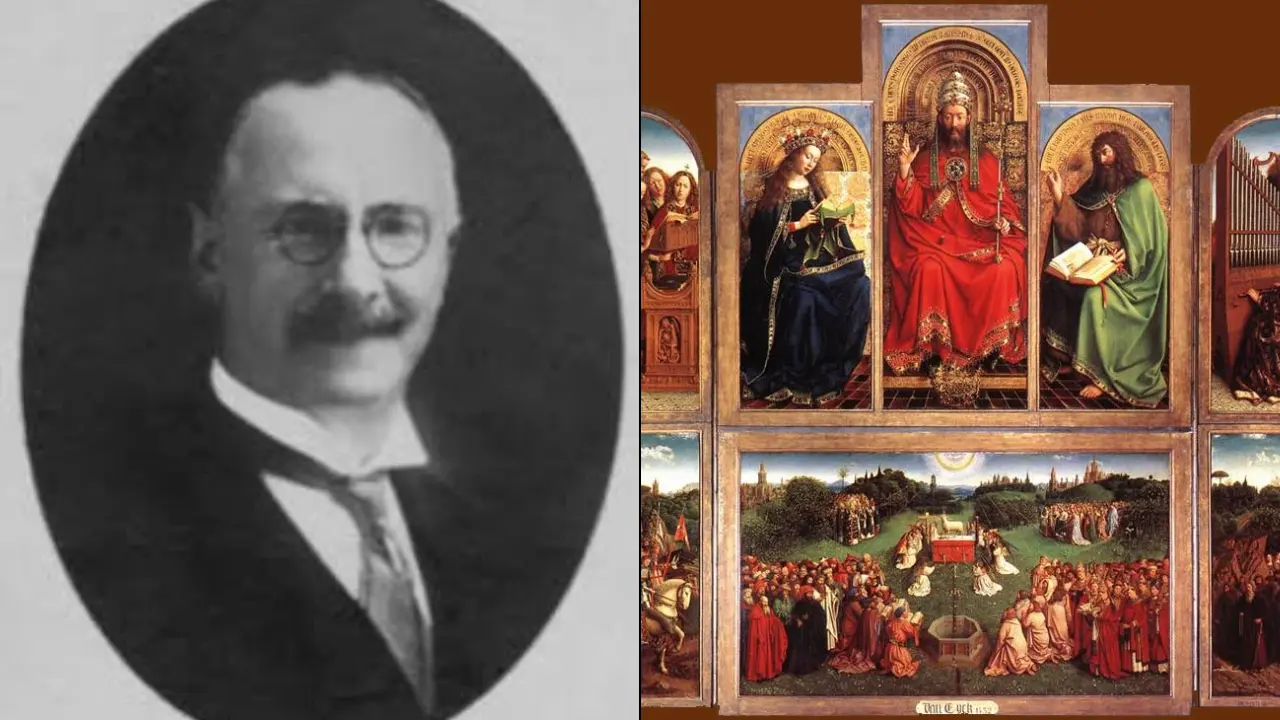
A respected Belgian stockbroker and church sacristan mailed 13 ransom letters to the Bishop of Ghent in 1934, signed only “D.U.A.” and died before revealing where he had hidden the panel that has not been seen in over 90 years.
On November 25, 1934, Arsène Goedertier rose to address a Catholic Party meeting in Wetteren, Belgium. He was 57 years old: a prosperous stockbroker with a large house and two telephone lines; a sacristan who had served his local church for decades; a pillar of Catholic civic life campaigning to stand for the Belgian Senate. Nothing about his life had suggested he was anything other than what he appeared to be.
He was not.
Midway through his address, Goedertier suffered a heart attack and was carried from the hall to his brother-in-law’s house in Dendermonde. Before he died, he summoned his lawyer, Georges De Vos, and said the words that transformed him, in a single hour, from respected community figure into Belgium’s most notorious art criminal. The panel he confessed to having stolen seven months earlier, Jan van Eyck’s Just Judges and the most famous piece of the most stolen painting in the world, was hidden in a location only he knew.
He died before saying where.
The Most Stolen Artwork in History Lost Its Crown Jewel
Completed in 1432 by Jan van Eyck and his older brother Hubert, the Ghent Altarpiece formally titled the Adoration of the Mystic Lamb had spent five centuries surviving everything Europe could throw at it. Calvinist rioters had nearly burned it. Napoleon had looted four of its 20 panels. A renegade vicar had sold six more. During the First World War, a cathedral custodian hid the remaining panels inside the walls and beneath the floorboards of the bishop’s house to keep them from German forces.
By 1934, the altarpiece had been the target of approximately 13 separate crimes and stolen, in whole or in part, six times. It holds the undisputed record as the most stolen artwork in history.The panel that vanished during the night of April 10 was the lower left interior piece: the Just Judges, depicting 15 robed riders ascending a mountain path toward the Lamb of God. Its reverse face carried a grisaille image of St. John the Baptist. Together they formed two sides of a single oak board. The thief took both.
The cathedral’s sacristan, Van Volsem, discovered the theft during his morning rounds on April 11. He reached the Vijd Chapel and found the lock forced. The door swung open onto an empty frame. Pinned to the wood was a note, written in French: “Taken from Germany by the Treaty of Versailles.” It was misdirection. The theft had nothing to do with Germany.
By that afternoon, every police department in Belgium had been notified. Scotland Yard had been alerted. The commissioner of the Ghent police, Antoine Luysterborghs, arrived at the cathedral, surveyed the scene and then left. A wheel of cheese had been stolen from a shop nearby. It took priority.
Goedertier Built the Life of an Unlikely Suspect
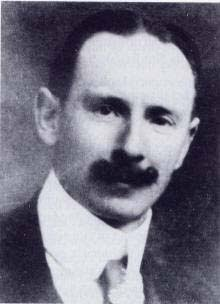
Arsène Goedertier was born on December 23, 1876, in Lede, a small municipality in East Flanders, the sixth of 12 children born to Emile Goedertier and Maria Wandels. His father had been headmaster of the local boys’ school until Belgium’s school wars of the late 1870s forced him out. The Diocese of Ghent offered Emile a new position. He became a sacristan a role Goedertier later described as his father’s greatest mistake, though the religious community around them saw nothing degrading in it.
Arsène followed his father into the same work. In 1896, at 19, he took up the post of sacristan and organist at Sint-Gertrudiskerk, St. Gertrude’s Church, in Wetteren. He held the job for years. He married Julienne Minne, the niece of a wealthy Paris stockbroker. Following the First World War, he quit the church post and opened a stockbroking office. The business prospered steadily. Within a few years, the couple occupied a large, elegantly furnished house with central heating, two telephone lines, and a Chevrolet. By the time of his death, Goedertier held more than 3 million Belgian francs in his accounts.
In his leisure hours, he read detective novels obsessively and owned a library full of them. He attended and judged exhibitions at the Royal Academy of Art. He enrolled in the art school in Wetteren to improve his painting. He was a prominent voice in the local Catholic party and a fixture in Ghent civic life, a man widely regarded as serious, devout, and reliable.
No one was watching him. He gave them no reason to.
Thirteen Letters Arrived Signed Only D.U.A.
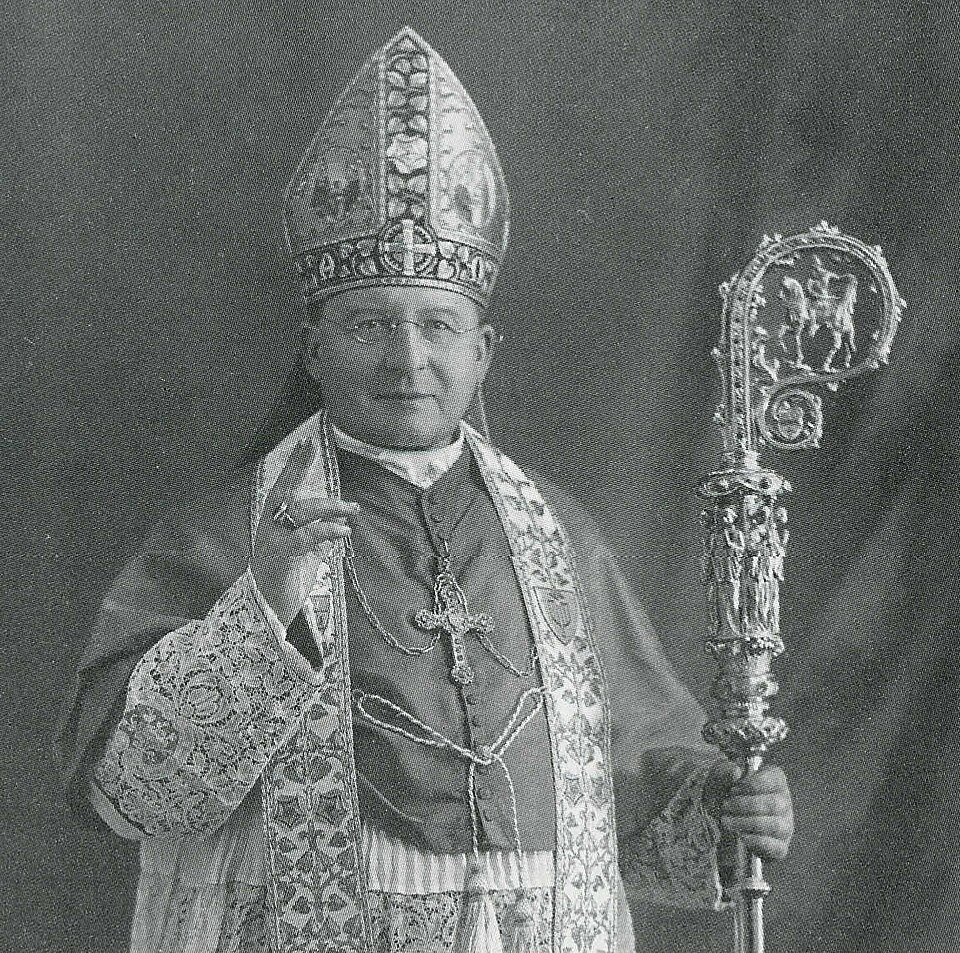
On April 30, 1934, nineteen days after the theft, Bishop Honoré-Joseph Coppieters of Ghent received an envelope. The letter opened: “It is our privilege to inform you that we possess the two paintings by van Eyck which were stolen from the cathedral of your city.” It demanded one million Belgian francs, roughly 22,300 British pounds, for the safe return of both panels. If the ransom was not paid, the panels would be destroyed.
The letter was signed “D.U.A.”
Bishop Coppieters was privately willing to negotiate. The public prosecutor and the Belgian Minister of Justice were not: payment was blocked, the correspondence was ordered to continue under police supervision, and the bishop cooperated. He kept writing back. The second letter from D.U.A. offered a gesture of good faith a baggage claim receipt for a package deposited at Brussels North Station. A police delegation retrieved it and found the grisaille panel of St. John the Baptist, wrapped in black cloth, undamaged. It was moved in secret to the episcopal residence. The public was told nothing.
A later letter changed the terms of delivery entirely. The ransom package was to be handed to a specific intermediary: Vicar Henri Meulepas of Sint-Laurentiuskerk in Antwerp. D.U.A. had arranged the priest’s involvement without his knowledge, recruiting him through an anonymous encounter in a confession booth in which a stranger had asked the vicar to accept a delivery on behalf of a prominent Belgian family. Father Meulepas had agreed, with no understanding of what he was agreeing to. On June 14, 1934, the package arrived at his rectory. It contained 25,000 francs. One million had been demanded.
Negotiations continued through October. Twelve more letters passed between D.U.A. and the bishop’s office. Neither side would concede. The last letter was dated October 1, 1934. After that, nothing. The Just Judges appeared to be gone.
Goedertier Confessed Everything and Revealed Nothing
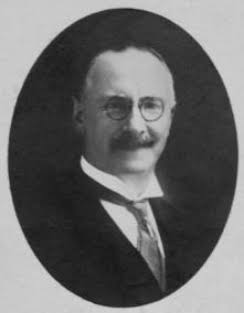
De Vos found the envelope in the writing desk exactly where Goedertier had said it would be, marked “Mutualité.” Inside were carbon copies of all 13 ransom letters, each typed, each signed D.U.A. He also found a 14th letter, never sent, addressed to Bishop Coppieters. It contained one sentence of consequence: the Just Judges rested in a place where neither Goedertier nor anyone else could retrieve it without attracting public attention.
No location. No name. No coordinates.
De Vos did not alert the police for another month. When investigators finally searched the house, they found nothing further. Goedertier’s widow was interrogated at length. His notebooks and jottings were studied. His drawings produced nothing. He had prepared the paper trail with as much care as the theft itself. He had left enough to confirm his guilt. He had left nothing that could find the painting.
The investigation ran immediately into a problem Goedertier appeared to have designed. He had suffered from severe nearsightedness. Breaking into a cathedral at night would have presented serious difficulties for a man who could barely see in the dark. The panel also hung at a height that most analysts believe required two people working in coordination to remove without damaging the frame. Yet Goedertier’s dying confession had been singular: I alone know.
A witness who had been near the cathedral that night later identified as the very cheese thief whose robbery had drawn the police commissioner away from the crime scene told investigators he had seen two figures leaving through the cathedral grounds, carrying a package wrapped in black cloth. His account, given that he himself was fleeing a different theft at the time, was never treated as fully conclusive.
In 1938, a lawyer approached the Belgian Minister of the Interior claiming to represent an anonymous client who held the Just Judges and would return it for half a million francs. Belgium’s prime minister turned the offer down.
In 1939, art conservator Jef Van der Veken began making a replacement copy of the panel, working from a 16th-century copy that Michiel Coxie had produced for Philip II of Spain and kept at the Royal Museums of Fine Arts of Belgium. Van der Veken used a two-centuries-old closet shelf as his support, applied wax to mimic the altarpiece’s patina, and gave one of the painted horsemen the face of King Leopold III, a subtle signal to anyone looking closely that the panel before them was not original. He paused during the German occupation and completed the copy in 1945. It now occupies the Just Judges’ original position in the Vijd Chapel.
Josef Goebbels had assigned Oberleutnant Heinrich Köhn of the Nazi Art Protection Department to recover the original as a birthday gift for Hitler. Köhn traveled to Ghent, interviewed dozens of witnesses, and eventually sat across from Georges De Vos himself. Shortly after that interview, De Vos died in a movie theatre under circumstances that were never fully explained. Köhn failed to find the panel. He was sent to the front lines as punishment.
In 1995, an amateur detective illegally exhumed Goedertier’s skull and staged a séance to question the remains about the painting’s location. The skull said nothing.
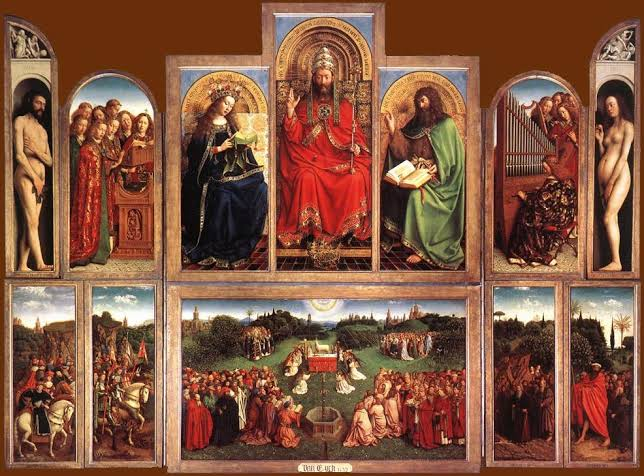
The Just Judges Has Never Been Found
Theories have accumulated for nine decades. Many investigators believe the panel was hidden initially somewhere within Saint Bavo’s Cathedral itself, to allow easy retrieval if the ransom was paid, then moved as the Nazi search intensified. Ground-penetrating X-rays conducted to a depth of ten metres across the cathedral floor found nothing. A search of a well beneath a Ghent parking garage in 2008 found nothing. A detective belonging to the Ghent police department remains assigned to the case to this day. The cathedral’s historic medieval tile floor would need to be excavated to search it properly. The cost, and the cultural destruction, have made that option unthinkable.
Goedertier’s motive was never established. He held 3 million francs at his death, which rules out simple financial need. Some historians argue the theft was an act of revenge against the Catholic hierarchy that had demoted his father from headmaster to sacristan; others suggest that a man who had spent decades consuming detective fiction had, at some point, decided to commit one. Both remain speculation. His motive died before his lawyer left the room.
What did not die is the unsent 14th letter. “It rests in a place,” Goedertier wrote to the bishop he never sent it to, “where neither I, nor anybody else, can take it away without arousing the attention of the public.”
Arsène Goedertier died as he had lived: the most respectable man in the room, the one no one had thought to watch, the one who knew exactly what he was doing and told no one why. The Just Judges, last seen by its thief in April 1934, has not been seen by anyone since.
He knew where it was. It died with him.
Leave a Reply