
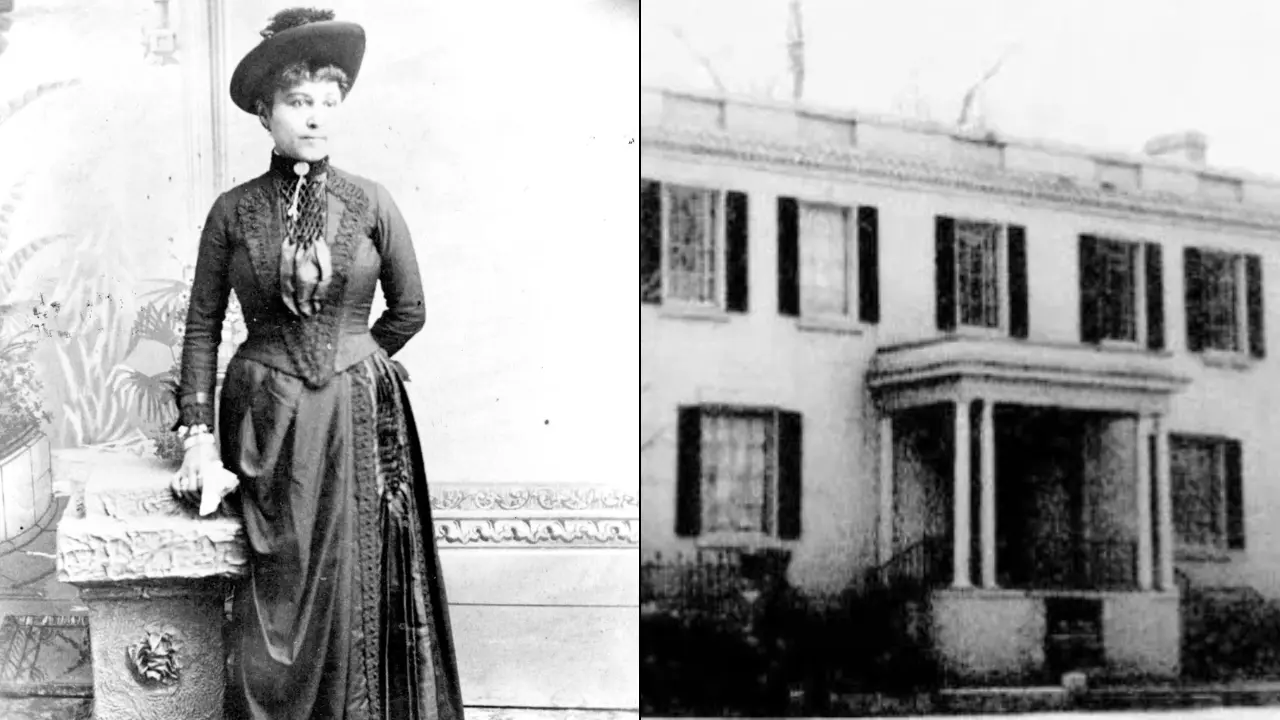
Born into slavery on her own father’s plantation, Amanda America Dickson inherited 17,000 acres of Georgia farmland then defeated 79 white relatives across three courts to keep it.
On June 13, 1887, two associate justices of the Georgia Supreme Court handed down a ruling that none of David Dickson’s white relatives had anticipated. Amanda America Dickson born into slavery, the daughter of a planter and the twelve-year-old girl he had raped was entitled to his entire estate. Seventeen thousand acres of Georgia farmland. A seven-bedroom house in Augusta. One of the largest private fortunes held by any Black American in the 19th century.
Seventy-nine of his white relatives had spent more than two years arguing otherwise. They had claimed he was not of sound mind. They had claimed Amanda had manipulated him. Several had insisted, in open court, that Amanda was not his daughter at all.
She was thirty-seven years old. She had been born a slave. She had been taken from her mother before she could walk.
A Slave Owner Chose His Daughter Over His Blood
Amanda America Dickson was born on November 20, 1849, on the Dickson plantation in Hancock County, Georgia. Her mother, Julia Frances Lewis, was thirteen years old when Amanda arrived. The previous year, David Dickson who owned Julia, her mother Rose, and the rest of their family had raped Julia when she was twelve and he was forty.
The circumstances of Amanda’s birth were no secret on the Dickson plantation.
After Amanda was weaned, David Dickson made a decision that would shape the next four decades of her life. He removed her from her enslaved mother and her maternal grandmother Rose and placed her in the household of his own mother, Elizabeth Sholars Dickson, who became Amanda’s legal owner. There, Elizabeth put the child to work as a domestic servant but Amanda also received something her enslaved relatives were forbidden: an education. She learned to read, to write, to play the piano. She was schooled in etiquette and the social customs of her father’s white family. Her father taught her how to conduct business and protect her finances after marriage. That knowledge would eventually prove essential.
David Dickson was not a man easily ignored. By 1861, he had been nicknamed the Prince of Georgia Farmers, credited as the driving force behind the state’s agricultural prosperity through decades of innovative farming techniques. He was also one of the eight wealthiest plantation owners in Hancock County. His affection for Amanda whom he raised with documented care and attention was local knowledge. His treatment of Julia Lewis, whom he continued to own and employ as his housekeeper and domestic servant, was a different matter entirely. Julia was permitted to visit her daughter. She was not permitted to raise her.
In 1864, Elizabeth Sholars Dickson died. Amanda was fifteen. Georgia law had prohibited slaveholders from independently freeing their slaves since 1801, requiring an act of the legislature seldom granted. Neither David Dickson nor Elizabeth could legally manumit Amanda regardless of intention. She remained enslaved until December 6, 1865, when the Thirteenth Amendment abolished slavery throughout the United States.
She was sixteen years old.
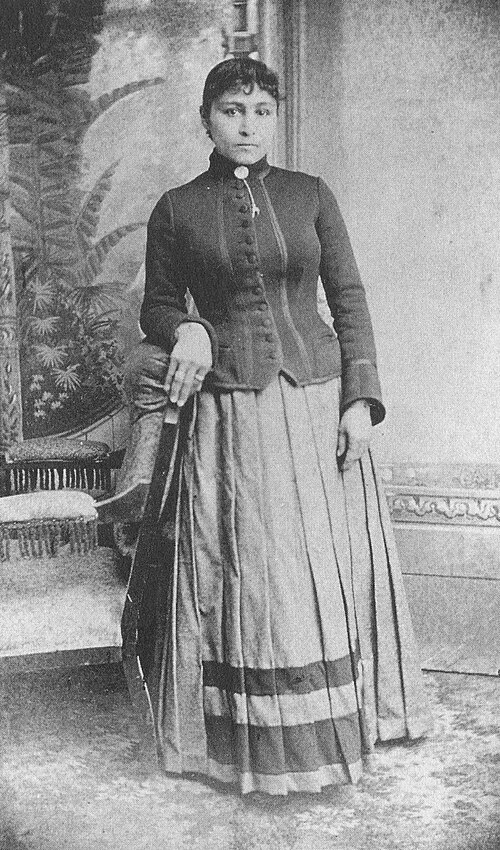
Amanda Built a Life That Her Father’s Death Would Upend
In 1866, Amanda left the Dickson plantation and moved to a small farm in Floyd County, Georgia, near the city of Rome. She went with Charles Eubanks a white first cousin and Confederate Army veteran. Under Georgia law at the time, interracial marriage was prohibited; whether Amanda and Charles married elsewhere is unknown, as no surviving record of a legal marriage has been found. Together they had two sons: Julian Henry, born in 1866, and Charles Green, born in 1870. Both boys later married into Georgia’s prominent families. Julian Henry married Eva Walton, granddaughter of George Walton, a signatory of the Declaration of Independence.
By 1870, shortly after Charles Green’s birth, Amanda left Eubanks and returned to her father’s plantation. Charles Eubanks died on July 31, 1873. Years later, Amanda chose a different path. In 1876, at the age of twenty-seven, she enrolled in the normal school at Atlanta University, a historically Black college, where she studied teaching for two years. She returned to the Dickson plantation in 1878.
Seven more years passed before everything changed.
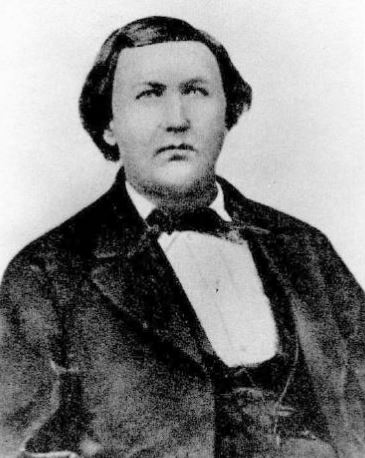
David Dickson’s Death Set Off a Legal War
On February 18, 1885, David Dickson died suddenly on his plantation in Hancock County. He was seventy-five.
His will left no room for interpretation. His entire estate 17,000 acres of land across Hancock and Washington counties, his personal property, and all remaining assets would pass to Amanda America Dickson and her two sons, under Amanda’s “sound judgment and unlimited discretion.” A specific clause prohibited interference from any future husband.
Seventy-nine white relatives filed a challenge within months.
Their arguments shifted as the case moved through the courts. David Dickson had not been of sound mind. He had been unduly influenced by Amanda and her mother Julia. Amanda, several relatives insisted, was not his daughter at all. On July 6, 1885, probate judge R.H. Lewis ruled in Amanda’s favor. The relatives appealed. In November 1885, the Superior Court of Hancock County upheld the will. The relatives appealed again, this time to the Supreme Court of Georgia.
In October 1886, Chief Justice James Jackson heard the opening arguments. He made his position immediately plain. According to court records, Jackson declared he would rather die in his place than uphold the will. Days later, he contracted pneumonia. He died before the case was decided. Judge Logan E. Bleckley, appointed to fill the vacancy, declined to reopen the proceedings. The ruling fell to associate justices Samuel Hall and Mark Blanford.
On June 13, 1887, they ruled in Amanda’s favor. Citing the Fourteenth Amendment, the Georgia Supreme Court affirmed that the property rights of a Black woman and her children were equal before the law to those of any white woman in comparable circumstances. The decision was final.
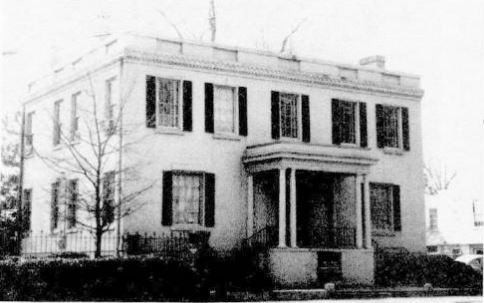
Amanda Settled in Augusta and Her Son Threatened Everything
Amanda moved to Augusta, Georgia, and in 1886 purchased a seven-bedroom home at 452 Telfair Street, in a multiracial neighborhood on one of the city’s established streets. Her wealth, her refinement, and the notoriety of her legal victory placed her at the center of Augusta’s elite Black community. Those who knew her described a woman of intelligence and elegance in equal measure.
On July 14, 1892, Amanda married Nathan Toomer, a wealthy, educated man of mixed race from Perry, Georgia. Like Amanda, Toomer had been born into slavery. As a young man, he had served as personal assistant to Colonel Henry Toomer, and through that proximity acquired the habits and business instincts of his employer’s class.
Amanda’s health had been fragile throughout the marriage, requiring the regular attention of a family physician. By spring 1893, she had improved. Then her youngest son, twenty-three-year-old Charles Dickson who was married became infatuated with his fourteen-year-old stepsister, Mamie Toomer. To remove Mamie from his reach, Nathan and Amanda took her to the St. Francis School and Convent in Baltimore, Maryland, operated by an order of Black nuns.
Charles followed. He recruited his brother-in-law Dunbar Walton, his sister-in-law Carrie Walton Wilson, and a hired man named Louis E. Frank to help him kidnap Mamie from the convent. The plan failed. Walton, Frank, and their attorney E.J. Waring were indicted by a Baltimore grand jury on charges of conspiracy to kidnap. Charles Dickson, who had orchestrated the scheme, faced no legal consequences.
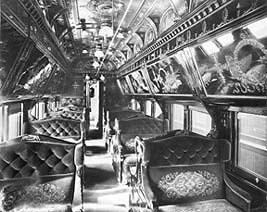
A Pullman Car Sent Her Home to Die
When the ordeal was over, Nathan and Amanda purchased first-class tickets on a Pullman Palace Car for the journey home to Augusta. They were denied their seats. As a Black couple traveling in summer 1893, they were refused the accommodations they had paid for and forced onto a slower, more arduous route south in oppressive heat.
Amanda arrived home in Augusta on June 9, 1893. She was visibly ill. A physician who examined her that morning noted her heart and lungs sounded healthy but found her markedly agitated. He administered anodyne to relieve her pain. A second doctor, summoned in the absence of the family physician, diagnosed her with neurasthenia a condition of nervous system exhaustion, marked by severe headache, insomnia, and chronic fatigue.
Amanda America Dickson died on June 11, 1893. She was forty-three years old. Her death certificate listed the cause as complications of diseases.
Her funeral was held at the Trinity Colored Methodist Episcopal Church in Augusta, Georgia. She was buried in her wedding dress.
She left no will. Within days of her death, her estate was in dispute contested between her mother Julia Frances Lewis Dickson, her husband Nathan Toomer, and her sons. The woman who had spent more than two years in court defending her father’s fortune against seventy-nine challengers died without leaving any instructions for her own. The matter was eventually settled out of court.
Nine months after Amanda’s death, Nathan Toomer married Nina Pinchback, the daughter of a Reconstruction-era senator from Louisiana. On December 26, 1894, they had a son. That son Jean Toomer grew up to write Cane, one of the defining works of the Harlem Renaissance.
Amanda America Dickson never knew.
Leave a Reply