
In January 1884, Welsh physician and self-declared archdruid Dr. William Price cremated his dead infant son on a hilltop above Llantrisant and the trial that followed permanently altered how Britain disposes of its dead.
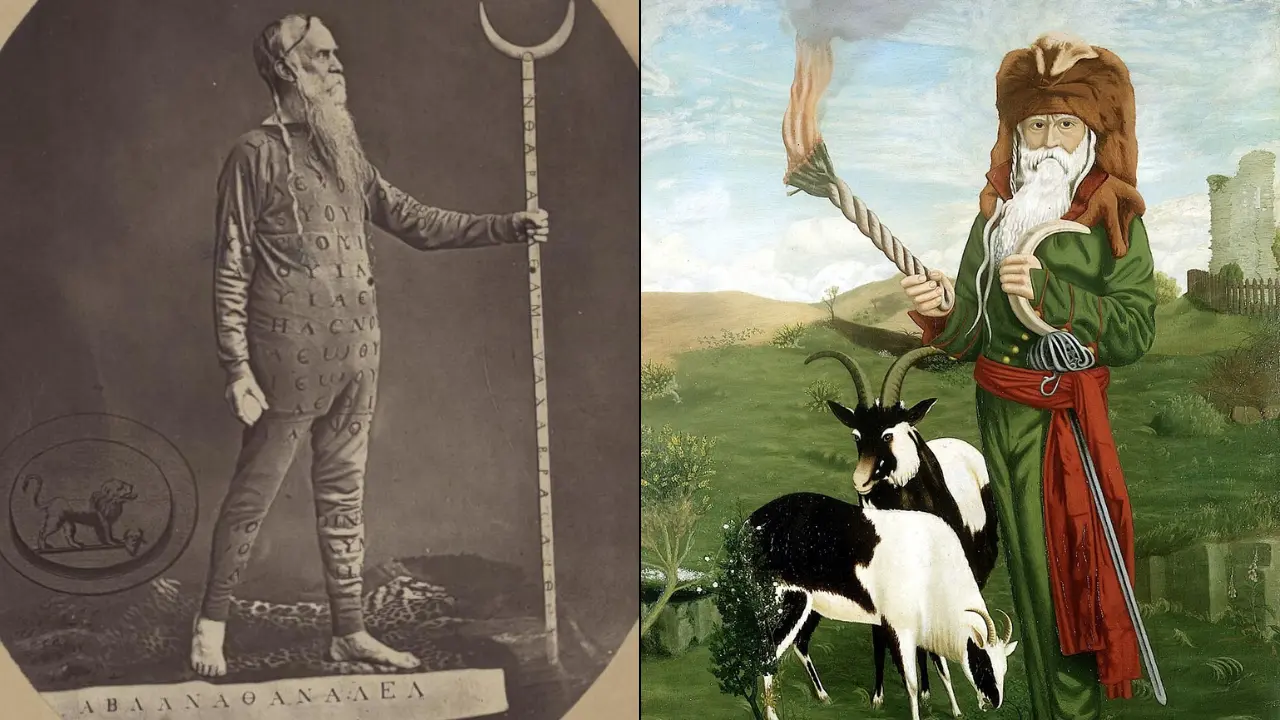
On the evening of Saturday, 12 January 1884, an old man in white robes climbed a hill east of Llantrisant, Wales, carrying a dead infant in his arms. He laid the body on a prepared heap of wood and coal, chanted what witnesses described as a strange druidic requiem, and set it alight. Local churchgoers returning from evening service spotted the flames on the hillside and climbed to investigate. What they found a white-bearded, fox-fur-hatted doctor burning his dead baby son caused immediate uproar. Sergeant Tamblyn and his officers pushed through the crowd, snatched the body from the fire, and arrested Dr. William Price for the illegal disposal of a corpse.
The trial that followed would reshape British law.
A Lunatic Father Drives Price Toward Medicine
William Price was born on 4 March 1800 in a cottage near Rudry, Caerphilly, in Glamorganshire, Wales. His father, also named William, was an ordained Church of England priest who had studied at Jesus College, Oxford a man of education and social standing who nonetheless descended into violent mental illness. He bathed either naked or fully clothed in local ponds, kept snakes in his pockets for days at a time, fired a gun at a woman he accused of taking sticks from his hedgerow, and hurled sharp implements at neighbours. The family eventually took to tying him to his bed or armchair.
Price’s mother, Mary Edmunds, was an uneducated Welsh maidservant. Their marriage was socially controversial, their household propped up by charity from wealthier Price relatives. At 10, Price enrolled at the local school in Machen, where he learned English; at home, the family spoke only Welsh. By 13, he had decided to become a doctor driven, apparently, by his father’s condition, the deaths of siblings in infancy, and the wretched health of workers in the surrounding industrial communities.
In 1814, he secured an apprenticeship under the surgeon Evan Edwards in Caerphilly. After five years, he moved to London, studying at The London Hospital in Whitechapel under Sir William Blizard and at St Bartholomew’s Hospital under the surgeon John Abernethy. In 1821, at 21 years old, he became a member of the Royal College of Surgeons of England. He returned to Wales and set up practice.
Price Reinvents Medicine, Then Arms a Revolution
By 1823, Price had been elected chief surgeon at the Brown Lenox Chainworks in Pontypridd, a post he would hold for nearly five decades. He served as medical advisor to the wealthy Crawshay family, who owned ironworks at Merthyr and Treforest, and he moved among the Welsh upper classes with apparent ease. By every other Victorian measure, however, he was operating on a different plane entirely.Price considered coins contaminated and washed them.
He refused to wear socks, finding them unhygienic. He believed that eating meat “brought out the beast in man” and was an early and committed vegetarian. He refused to treat patients who smoked, opposed vaccination, and condemned his fellow practitioners as poison peddlers men who profited from illness rather than confronting its causes.
He constructed something that functioned as a social healthcare model: workers paid small weekly deductions from wages and received free treatment in return. The system spread across the Welsh coalfields and would, in time, influence the architecture of Britain’s National Health Service.He was also categorically opposed to marriage, which he believed enslaved women. He fathered several illegitimate children over the course of his life and offered no apology for it.
Through the 1820s and 1830s, Price developed a parallel political life as a leading figure in Chartism the movement demanding the vote for working-class men. By 1839, government reports recorded that he had personally acquired seven pieces of field artillery for the cause. On 4 November 1839, thousands of armed Chartists marched on Newport in open rebellion. Soldiers crushed them in the streets. Price had anticipated the failure and kept away from the march, but the government’s subsequent crackdown left him exposed. He disguised himself as a woman and fled to France.
A Stone in Paris Rewrites Price’s Purpose
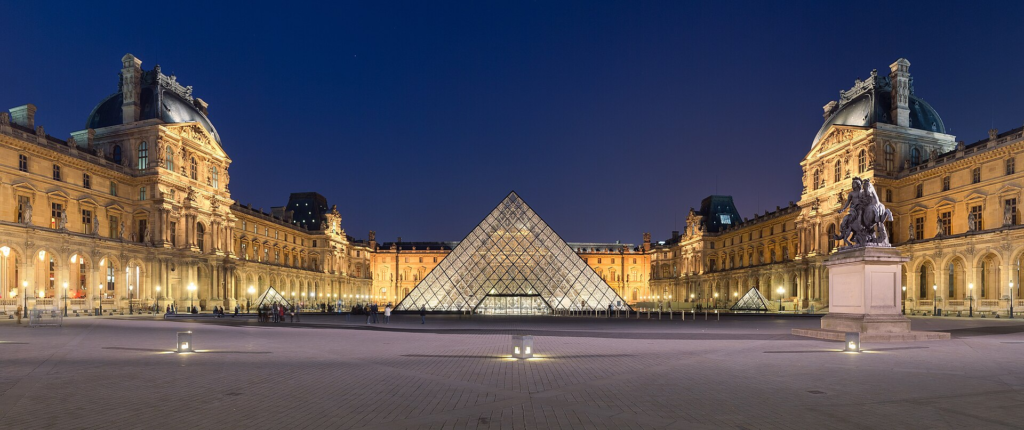
In Paris, Price visited the Louvre, where a stone bearing a Greek inscription stopped him entirely. He became convinced incorrectly, as historians have since established that the inscription contained an ancient prophecy: a man would come to reveal the true secrets of the Welsh language and liberate the Welsh people. The historian Ronald Hutton later observed that nobody else had made anything like the same interpretation of the inscription. Price concluded that the prophecy referred to him.
He returned to Wales with a mission.
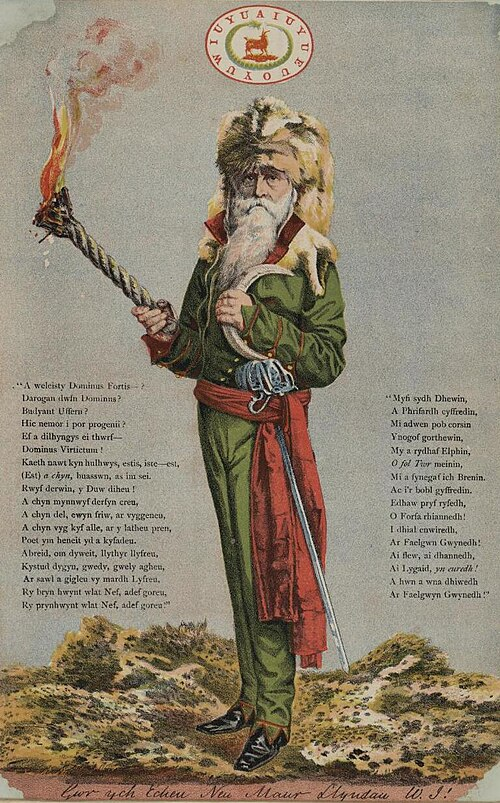
He founded a druidic religious group whose followers carried staffs engraved with figures and letters. He grew his beard long, left his hair uncut, and adopted a fox-fur headdress with the animal’s legs dangling over his shoulders, paired with clothing made of emerald green cloth. He organised a druidic eisteddfod at Pontypridd in 1844. Nobody came. He initiated his daughter as a bard himself, alone, and went home.
His ambitions consistently outpaced his following. He worked for years toward a museum of Welsh druidic life, eventually securing land from the local landowner Sir Benjamin Hall near Glyntaff. They fell out. The project collapsed. Debt drove Price to France again in 1861, where he wrote to the national press to declare himself Lord of the Southern Welsh and to assert that Homer had been born near Caerphilly and had personally built Caerphilly Castle citing ancient Chinese texts as his evidence.
He returned to Wales in 1866, settled in the medieval town of Llantrisant, and opened a surgery that proved a success.
Price Burns His Dead Son on a Hilltop
On 4 March 1881 his 81st birthday Price organised a druidic wedding ceremony at the Rocking Stone in Pontypridd, marrying his partner Gwenllian Llewelyn, a farmer’s daughter born in 1859. He addressed the sun at noon while women dressed as the Three Graces looked on. Reports of the day noted that the large crowd found the proceedings amusing.
On 8 August 1883, Gwenllian bore Price a son. He named the child Iesu Grist Welsh for Jesus Christ believing him to be a prophesied redeemer of the Welsh people. Five months later, on 10 January 1884, the infant died from unknown causes.Price did not consider burial. He regarded it as a pollution of the earth. On the afternoon of Saturday, 12 January 1884, his men hauled wood, coal, and a cask of pitch to the top of the Caerlan hill east of Llantrisant. That evening, wearing white robes, Price carried his son’s body up the hill, laid it on the prepared pyre, chanted his druidic prayers, and set it alight.
Sergeant Tamblyn arrived through the crowd, snatched the body from the flames, and arrested him.
The trial was a sensation. Price, long experienced in litigation and a formidable speaker, argued before Mr Justice Stephen that while cremation was not declared legal under English law, it was equally not declared illegal. Stephen agreed. Price was acquitted and returned to Llantrisant to find a crowd of supporters cheering in the street. On 14 March 1884, he finally cremated his son’s body in a ceremony of his own devising. He then sold three hundred medals commemorating the event at threepence each.
Price Dies, and 20,000 People Watch Him Burn
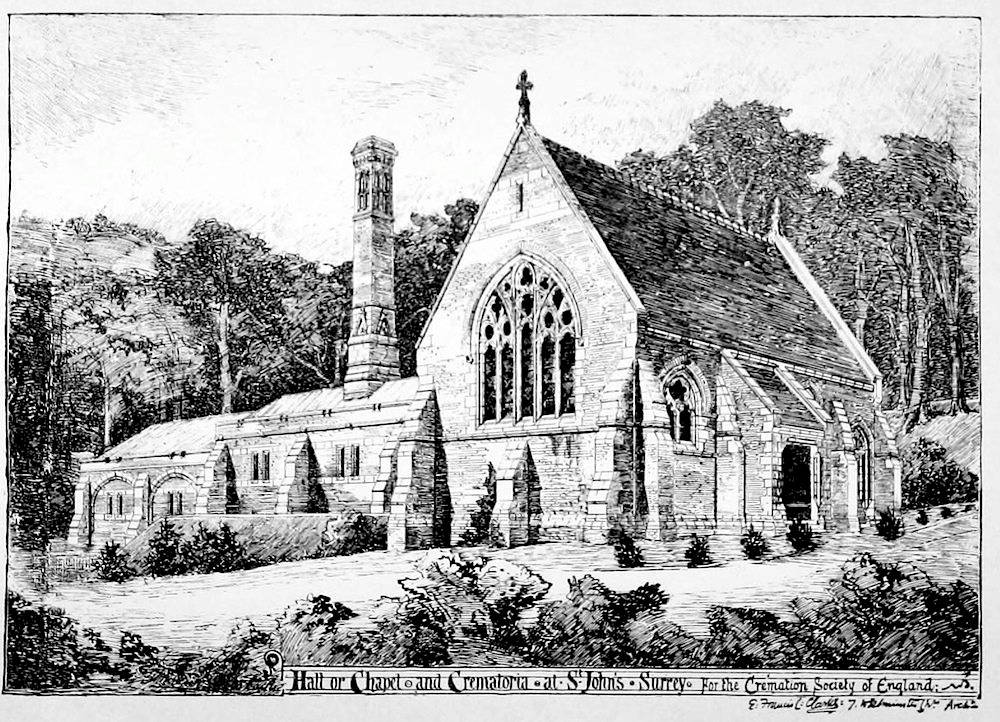
The case, combined with the sustained efforts of the Cremation Society of England, led directly to the Cremation Act 1902, which established licensed crematoria across Britain. The first unchallenged cremation in the country that of Jeanette Pickersgill took place at Woking Crematorium in 1885, one year after Price’s trial. Crematoria followed in Manchester, Glasgow, Liverpool, and Birmingham in the years that came after.
Price and Gwenllian had two more children. He continued practising medicine in Llantrisant until the end. He died at his home on 23 January 1893. When he understood that death was close, his last recorded words were: “Bring me a glass of champagne.”
He drank it and died shortly afterward.
He had left careful instructions about what was to come next.
On 31 January 1893, 20,000 people gathered on the hillside above Llantrisant to watch the cremation of Dr. William Price the man who had forced Britain to legalise it. His family stood around the pyre in a mix of traditional Welsh and druidic clothing. His will stipulated that no attempt should be made to preserve his ashes, but that they should be spread across the earth to help the grass and flowers grow.
The man who had spent 92 years defying every institution he encountered dissolved, at last, into the soil of the country he had spent his life trying to reclaim.
Leave a Reply