
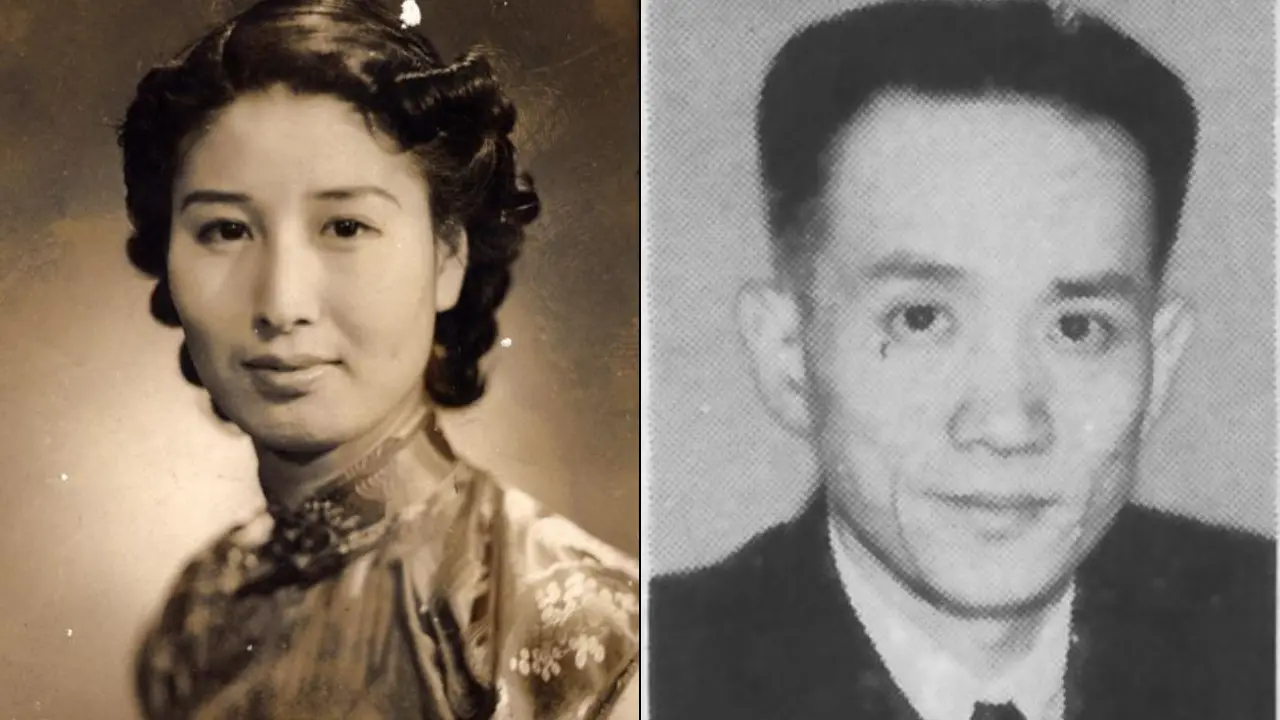
At 22, Shanghai socialite Zheng Pingru was executed by Japanese collaborators in February 1940, after a nine-month undercover operation and two failed assassination attempts against one of occupied Shanghai’s most feared men.
On the evening of December 21, 1939, Zheng Pingru walked into the Siberia Fur Company on Nanjing Road, Shanghai’s most famous shopping street, on the arm of one of the most feared men in the city. She was 21 years old. He was Ding Mocun, security chief of the Japanese puppet government that had occupied Shanghai for two years, a man who had made his name arresting, interrogating, and executing resistance fighters. The city’s underground had given him a nickname: Butcher Ding.
Pingru had spent nine months as his girlfriend.
Two Kuomintang assassins waited outside the shop. The plan was straightforward. She would get him inside. They would finish the rest.
What happened in the next few minutes sealed the fate of the most remarkable female spy in occupied Shanghai.
Shanghai Made Her a Celebrated Socialite
Zheng Pingru was born in 1918 in Lanxi, a city in Zhejiang Province in eastern China, into a family that straddled the line between two nations at a time when those two nations were moving toward war.
Her father, Zheng Yueyuan, was a committed Nationalist revolutionary and a follower of Sun Yat-sen, the founding president of the Republic of China. While studying in Japan as a young man, Zheng Yueyuan met and married Hanako Kimura, a Japanese woman who adopted the Chinese name Zheng Huajun after returning to China with her husband. The couple had five children. Pingru was the second of their three daughters.
The family settled in Shanghai, where her father took up a teaching position at Fudan University, one of China’s most established institutions. Pingru studied at the Shanghai College of Politics and Law. But it was outside the classroom that she began to make her name.
By the mid-1930s, Shanghai was one of the most cosmopolitan cities in the world. Known internationally as the Paris of the East, it was a city of extraordinary contrasts: foreign concessions carved out by European powers operated alongside Chinese districts, jazz clubs and department stores existed within walking distance of each other, and a thriving culture of magazines, cinema, and society events had produced a distinct class of urban celebrities. Pingru moved naturally through this world. Her appearance was striking and unusual for the era, the product of her Chinese and Japanese heritage, and she drew attention at the city’s prominent social gatherings.
In 1937, she was invited to appear on the cover of Liangyou, known in English as The Young Companion. Founded in 1925, Liangyou was Shanghai’s most widely read pictorial magazine, a Chinese-English publication combining fashion, society, and culture in a format comparable to Cosmopolitan in the West. A cover appearance was a mark of social arrival. Pingru was 19 years old.
Beneath the glamour, the family’s political sympathies were clear. When Japan invaded Manchuria in 1931 and attacked Shanghai in 1932, Pingru joined anti-Japanese protests alongside her siblings. Her mother’s nationality had not softened the family’s opposition to Japanese aggression. Her father was a Nationalist. The occupation was not something any of them would accommodate.
Occupation Transformed Her Comfortable World
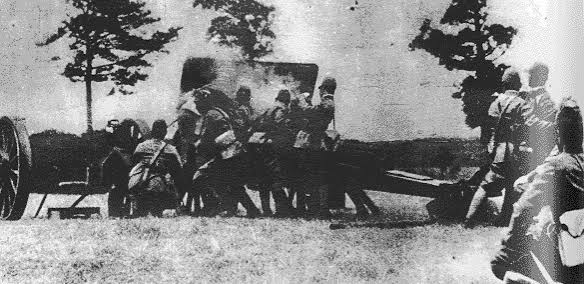
The conflict that would redefine Pingru’s life arrived formally in July 1937. An incident at the Marco Polo Bridge near Beijing, exploited as a pretext by the Japanese military, triggered the full-scale Second Sino-Japanese War. China, which had failed to industrialize and centralize at the pace Japan had achieved since the 19th century, could not match Japanese military force in open battle. Beijing fell. Shanghai fell in November 1937 following a months-long battle that killed tens of thousands of soldiers and civilians alike. Nanjing fell weeks later.
Japan did not formally annex the territories it seized. Instead, it installed a collaborationist administration to govern eastern China on its behalf. The Reorganized National Government, established in 1940 and led by Wang Jingwei, a senior Nationalist politician who had broken with the resistance and chosen accommodation over opposition, provided the Japanese with a veneer of Chinese governance while real authority remained in Tokyo. Shanghai, the country’s commercial and cultural capital, sat at the heart of this occupied zone.
For residents who remained in the city, occupation created a brutal set of choices: accommodate the new order, resist it, or attempt to survive in the diminishing space between. The Wang Jingwei regime rewarded collaboration with positions, income, and relative security. It punished resistance with detention, torture, and execution. The machinery for that punishment operated from a building at 76 Jessfield Road in the city’s western districts, where Ding Mocun ran the regime’s intelligence and security apparatus. For Shanghai’s underground resistance networks, 76 Jessfield Road had become synonymous with disappearance.
Shortly after the fall of Shanghai in November 1937, Zheng Pingru made her choice. She joined the underground Kuomintang resistance movement and began working as an undercover spy. Her value to the resistance was specific and significant: she spoke Japanese fluently, thanks to her mother’s instruction during her childhood. She could move through occupied Shanghai’s social world without arousing suspicion. She could gain access to rooms and conversations that most resistance operatives could never have reached.
Her handlers gave her a target.
Pingru Spent Nine Months Hunting Butcher Ding
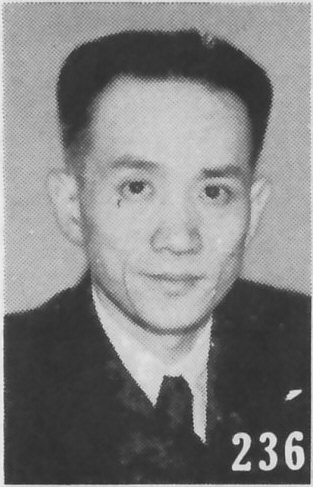
Ding Mocun was among the most hated men in occupied Shanghai. As security chief of the Wang Jingwei regime, he directed operations from 76 Jessfield Road. Resistance fighters, Communists, and suspected opponents of the collaborationist government were brought there to be held and interrogated. The nickname Butcher Ding was not metaphor; it reflected a documented record of ordering the execution of anti-Japanese operatives throughout the occupied city. The fear his name generated in Shanghai’s resistance networks was deliberate, functional, and thoroughly earned.
He had also, years earlier, served as the principal of Pingru’s secondary school.
The resistance identified this former connection as an opening. Beginning in March 1939, Pingru orchestrated a series of apparently coincidental meetings with Ding at social events and on the streets of Shanghai. Each encounter was carefully arranged by her handlers to appear unplanned. Ding, a powerful man accustomed to commanding the loyalty of those around him, was drawn to the attentions of the young socialite whose face had recently appeared on the cover of Liangyou. Within months, she had established herself as his companion. From this position, she monitored and reported on his movements, his habits, and his activities to Kuomintang intelligence.
The relationship placed her in sustained and extraordinary danger. Maintaining the cover required spending time in the company of a man who was actively hunting the very network she belonged to, at a period when exposure meant the same fate he was inflicting on others. She did this for nine months.
The first assassination attempt came on December 10, 1939. At the end of an evening out together, Pingru invited Ding back to her home, where Kuomintang assassins had been positioned inside and were waiting. He declined the invitation without explanation and left. The plan collapsed before it began.
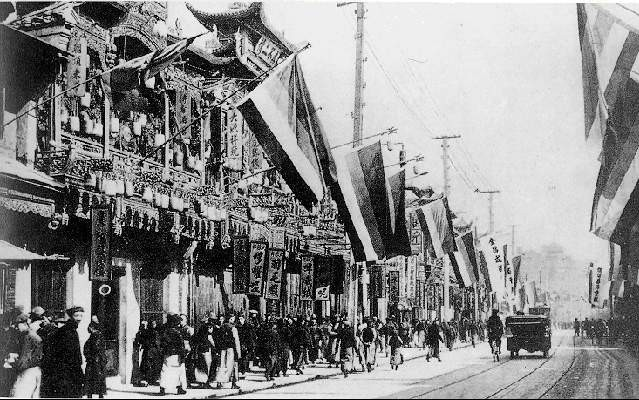
Eleven days later, a second attempt was organized. On December 21, Pingru accompanied Ding to dinner at a friend’s house. Afterward, she asked him to take her to Nanjing Road, the main commercial artery of the city. As their car moved down the street, she pointed out the Siberia Fur Company and said she wanted to buy a coat and asked him to help her choose one. Two Kuomintang assassins had been positioned nearby, waiting for this precise moment.
Inside the shop, Ding’s instincts fired. He noticed two men watching from across the street. He turned without a word, walked back to his car, and ordered his driver to leave. The assassins rushed forward and fired. They missed.
Ding was gone. Pingru stood alone in the fur shop.
The Wang Regime Executed Her at 22
Ding Mocun reconstructed the evening with precision: the request to drive to Nanjing Road, the sudden interest in a specific shop, the two men on the pavement. He sent word for Pingru to come to his headquarters at Jessfield Road.
She drove there carrying a concealed Browning pistol. She never made it through the entrance. Li Shiqun, a senior officer within Ding’s security apparatus, arrested her at the door before she could enter. She was taken inside the building she had been sent to destroy and held at the intelligence headquarters.
The Wang Jingwei regime made sustained efforts to turn her. Wang Jingwei’s wife, Chen Bijun, reportedly visited Pingru in custody and attempted to persuade her to defect, to abandon the resistance and accept a position within the collaborationist government. Pingru refused. Wang Jingwei then held her as a hostage and attempted to use her imprisonment as leverage against her father, demanding that he accept the role of Minister of Justice for the regime. The position would have given the collaborationist government a figure of credibility drawn from the Nationalist establishment.
Her father refused.
The leadership of the Wang Jingwei regime voted unanimously to have her killed. In February 1940, Zheng Pingru was secretly executed near Zhongshan Road in western Shanghai. She was 22 years old, and had been an undercover Kuomintang operative for less than three years.
The war consumed the rest of her family in the years that followed. Her father, grief-stricken and unwell, died in 1941. Her brother, Zheng Haicheng, a fighter pilot in the Republic of China Air Force, was killed in battle on January 19, 1944. Her fiancé, Colonel Wang Hanxun, also a pilot who had served alongside her brother, was killed near Guilin on August 7 of the same year. Her mother, Hanako Kimura, the Japanese woman who had raised a Chinese nationalist spy, survived the war, relocated to Taiwan, and died in 1966 at the age of 80.
Ding Mocun did not outlive the peace for long. Arrested in September 1945 within weeks of Japan’s formal surrender, he was charged with collaboration and treason. He was executed in 1947.
Two Rival Governments Honored the Same Martyr
The political fracture that reshaped China after the war produced an unusual outcome for Pingru’s memory. The Kuomintang government, which retreated to Taiwan in 1949 following the Communist Party’s final seizure of mainland China, formally declared her a martyr to the Nationalist cause. The Communist government that now governed the country she had died defending, the ideological enemy of the movement she had served, recognized her separately as an anti-Japanese heroine. A memorial statue of Zheng Pingru was unveiled in Qingpu, Shanghai in 2009. Both governments had claimed the same woman, for entirely different reasons.
Wider recognition came through fiction, and with it, lasting controversy.
The novelist Eileen Chang was born in Shanghai in 1920, two years after Pingru, and had spent her wartime years in the occupied city before eventually leaving China. She learned of Pingru’s story from her former husband, Hu Lancheng, who had served as a propaganda official in the Wang Jingwei regime. In 1979, Chang published Lust, Caution, a novella whose protagonist, Wang Jiazhi, is a young woman recruited by resistance fighters to seduce a Japanese collaborationist security official into a trap. The parallels with Pingru’s documented story were unmistakable to anyone who knew it.
Ang Lee’s 2007 film adaptation of the novella won the Golden Lion at the Venice Film Festival, the ceremony’s highest honor, bringing the outline of Pingru’s story to an international audience that would otherwise never have encountered it.
The Zheng family did not welcome the recognition.
In Chang’s novella and in Lee’s film, Wang Jiazhi falls in love with her target and ultimately saves his life by warning him at the critical moment. The Zheng family felt this ending perversely twisted the documented reality of what Pingru had actually done. She had driven to Jessfield Road after the operation collapsed, carrying a pistol, and said nothing. Under detention, and with the Wang Jingwei leadership arguing unanimously for her execution, she had not warned Ding Mocun. She had not protected the man she was sent to destroy. She had refused to betray her network even at the cost of her own life.
The cover of Liangyou showed a young woman in the full confidence of Shanghai society. Zheng Pingru was 19 years old in that photograph, one year before the city fell to Japanese forces, and two years before she joined the resistance that would eventually deliver her to 76 Jessfield Road and then to her death in the western districts of the city she had once crossed without a second thought.
She never chose the story that was told about her afterward.
Leave a Reply