
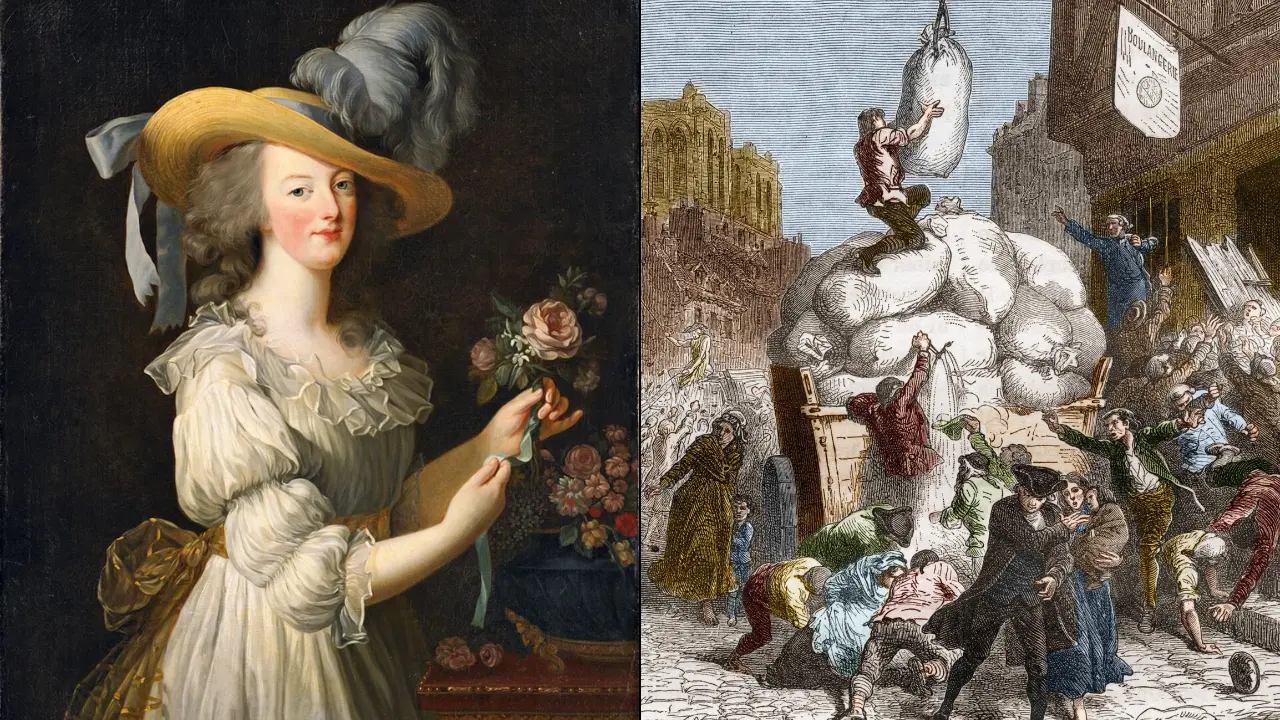
In fourteen years at Versailles, Yolande de Polastron rose from an indebted noblewoman to the most envied woman in France, then died in Viennese exile just fifty-five days after her queen was guillotined.
On the night of July 14, 1789, as news reached the Palace of Versailles that crowds in Paris had stormed the Bastille Saint-Antoine and the French monarchy was tipping toward collapse, Queen Marie Antoinette did not summon a minister. She did not call for a general. She sent for Yolande de Polastron, the thirty-nine-year-old woman who had been her closest confidante for fourteen years, and told her to leave France immediately.
Gabrielle, as she was known to those who loved her, departed that same night with her husband and their children. The two women never spoke again.
History has not been kind to the woman revolutionary Paris called the Duchess of Polignac. She was cast as the embodiment of aristocratic excess: the parasitic court favourite who drained the royal treasury while the common people of France went hungry. The reality, as so often with stories the Revolution chose to simplify, is harder to resolve than the propaganda which outlived her.
Poverty Drives the Polignacs Toward Versailles
Yolande Martine Gabrielle de Polastron was born in Paris on September 8, 1749. Her father was Jean François Gabriel, Comte de Polastron, a man of ancient aristocratic lineage and very little money. Her mother, Jeanne Charlotte Hérault, died when Gabrielle was three. The child was placed in the care of an aunt and educated at a local convent in the Languedoc region of southern France. It was an austere upbringing for a girl of noble birth, and it produced a woman who reportedly cared nothing for the extravagant fashions and jewellery that defined life at Versailles.
At sixteen, Gabrielle was promised in marriage to Jules François Armand, Comte de Polignac, a soldier serving in the Royal Dragoons on an annual salary of 4,000 livres. The Polignacs were, like the Polastrons, ancient in pedigree and strangled by debt. The couple married on July 7, 1767, when Gabrielle was seventeen, two months short of her eighteenth birthday. They had two children in quick succession: a daughter, Aglaé, born in 1768, and a son, Armand, born in 1771. Two more sons, Jules and Camille, followed in 1780 and 1781. They might have lived out their days in comfortable provincial obscurity had Gabrielle’s sister-in-law, Diane de Polignac, not arranged for the couple to be presented at the royal court at Versailles in 1775.
What happened next changed everything.
Marie Antoinette Falls for a Perfect Stranger
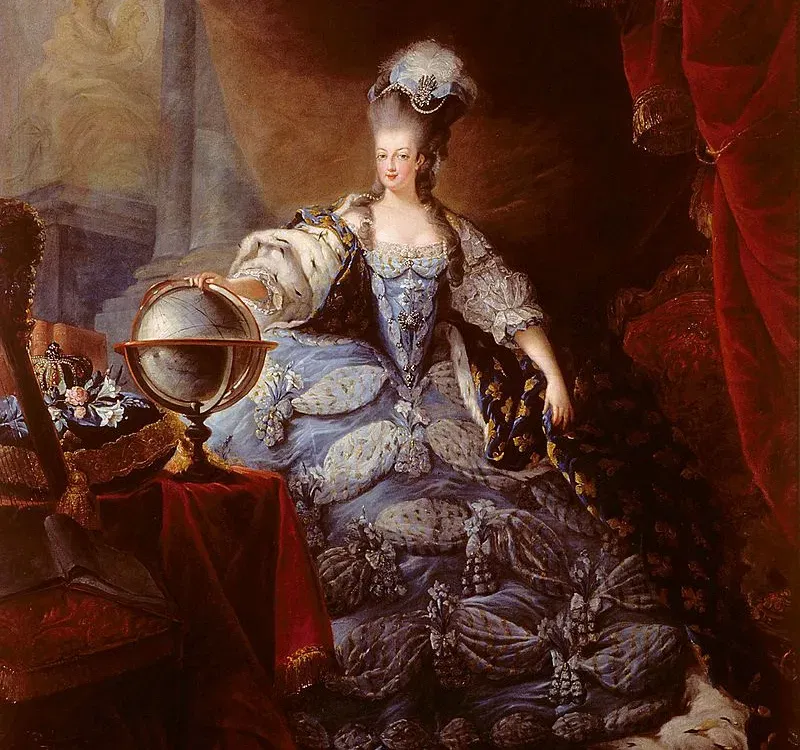
The court Gabrielle entered in 1775 revolved around a new royal couple. Louis XVI, nineteen years old, had ascended the French throne on May 10, 1774. His consort, Queen Marie Antoinette, was eighteen, and had come to France from Vienna as the daughter of Holy Roman Empress Maria Theresa and the sister of the future Emperor Joseph II. By most accounts, she was profoundly lonely. The Habsburg court she had grown up in was thousands of miles away. Her marriage to Louis, five years old by 1775, remained unconsummated. The French court was full of people who wanted something from her.
Gabrielle de Polastron, apparently, wanted nothing.
When the Polignacs were presented at a formal reception in the Hall of Mirrors, Marie Antoinette was, in the word used by contemporary accounts, instantly “dazzled.” The queen invited them to relocate permanently to Versailles within days. Gabrielle replied that her husband could not afford the cost of maintaining a court presence. Marie Antoinette’s response was immediate: the crown would settle the Polignac family’s outstanding debts in full and find Jules a suitable appointment.
Gabrielle accepted.
She rose quickly within the queen’s inner circle, becoming the undisputed leader of Marie Antoinette’s most intimate gatherings, the figure without whose approval few were admitted to the queen’s private life. King Louis XVI, grateful for his wife’s obvious contentment, encouraged the friendship. When the Governess of the Children of France, Victoire de Rohan, Princesse de Guéméné, was forced to resign in 1782 following a bankruptcy scandal involving her husband, the queen appointed Gabrielle in her place. The appointment came with a thirteen-room apartment in the palace. Previous royal governesses had been given four or five rooms. In 1780, Jules had already been raised to the title of Duke of Polignac, making Gabrielle a duchess.
The Austrian ambassador, writing to Empress Maria Theresa, noted the development with measured alarm. “It is almost unexampled,” he wrote, “that in so short a time, the royal favour should have brought such overwhelming advantages to a family.”
He was not wrong.
Revolution Makes Gabrielle Its Most Visible Target
Inside the palace, Gabrielle was envied. Outside it, by the late 1780s, she was loathed.
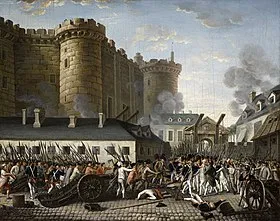
France was suffering. Successive catastrophic harvests had driven up the price of bread across the country. The national population had expanded from approximately 18 million people in 1700 to roughly 26 million by the 1780s, pressing against increasingly depleted supplies. The government’s debt stood at an unprecedented four and a half billion livres. A succession of finance ministers appointed by Louis XVI through the 1780s, among them Jacques Necker and Charles de Calonne, failed to stabilise the crisis. In Paris, the extravagance of Versailles was not merely resented. It had become a political cause.
The Polignacs were the primary target.
By the late 1780s, thousands of pornographic pamphlets were circulating through Paris depicting Gabrielle as the queen’s lesbian lover. There was no evidence to support the allegations. The pamphlets served a purpose beyond her personal reputation, though: they systematically corroded what remained of the monarchy’s moral authority, exploiting anxieties about female power and aristocratic excess that ran deep in Parisian culture. Several later historians have noted that Gabrielle’s actual expenditure over fourteen years at Versailles reportedly did not exceed what Louis XV’s famous mistress, Madame de Pompadour, had spent in a single year. The numbers did not reach Paris. The pamphlets did.
Those who knew Gabrielle consistently described a woman of genuine elegance and unaffected warmth. Sympathetic historians, among them Pierre de Nolhac and the Marquis de Ségur, concluded that many of the charges against her were more accurately attributed to her entourage than to the woman herself. A harsher verdict, championed by the biographer Stefan Zweig, held that behind the sweetness of manner lay a woman who was fundamentally cold, self-indulgent, and constitutionally disinclined to apply her considerable influence toward anything beyond her own comfort. By this reading, she was not more corrupt than her contemporaries at Versailles. She was simply more conspicuous.
Bastille Falls and the Polignacs Flee France
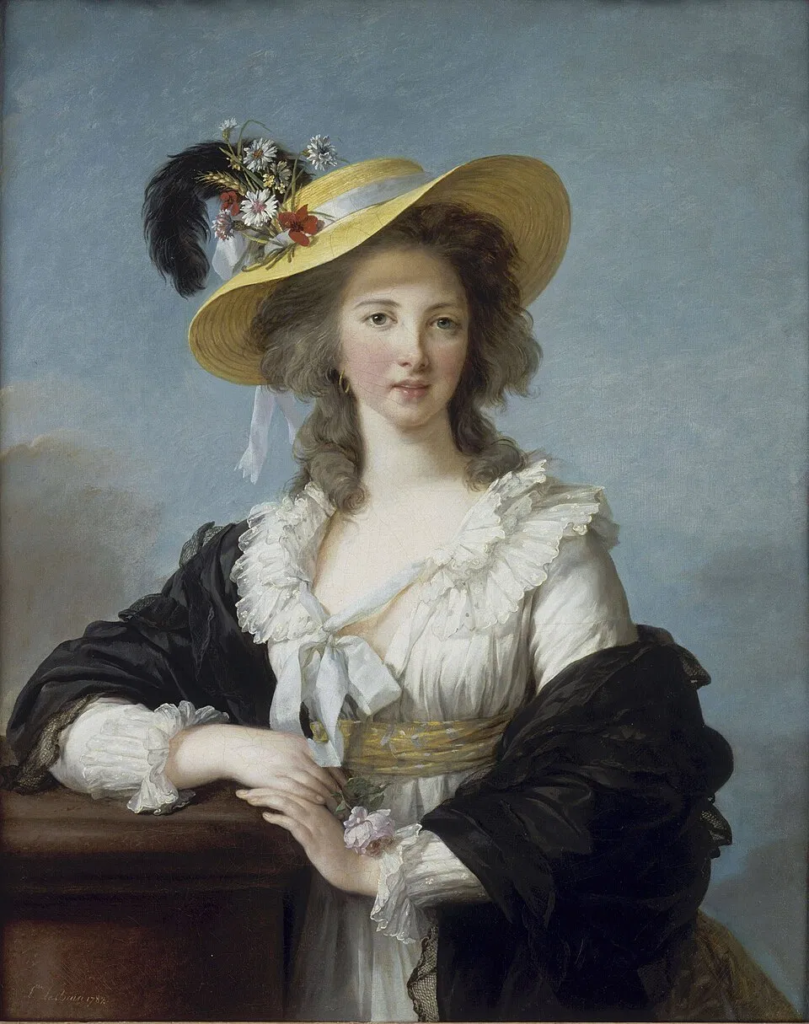
Gabrielle de Polastron was among the most committed hardliners in the queen’s circle during the summer of 1789. Working alongside Jules, the Comte d’Artois, and the Baron de Breteuil, she pressed Marie Antoinette to move against Jacques Necker, the finance minister whose popular support gave him a measure of protection even within an increasingly desperate court. Necker’s dismissal came in early July 1789, without the military capability to suppress the unrest it would unleash. On July 14, 1789, the crowds of Paris stormed the Bastille.
The Polignac family went into exile that same night.
Surviving correspondence allows their movements to be traced across the following years. The family traveled first to Switzerland, where Gabrielle kept up a regular correspondence with Marie Antoinette. She was already, by most accounts, seriously ill. The illness she had reportedly been suffering from for some years would later be identified by most historians as cancer, though her family offered no diagnosis at the time and royalist accounts circulating after her death suggested consumption as an alternative cause.
From Switzerland, the Polignacs moved south through Italy, passing through Turin, Rome, and Venice, where Gabrielle attended her son’s wedding in March 1790. By 1791, the family had reached Vienna, presumably expecting that the king and queen might eventually make their way there. They did not.
Louis XVI was found guilty of high treason and executed by guillotine on January 21, 1793. Marie Antoinette’s trial began in October. She was convicted and guillotined on October 16, 1793, in Paris.
Vienna Claims Her Before History Could Judge
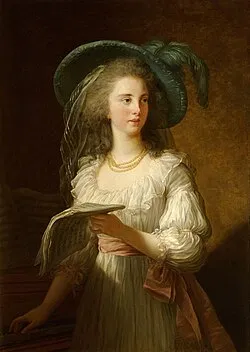
Yolande de Polastron died in Vienna on December 9, 1793. She was forty-four years old. She had survived her queen by fifty-five days.
Her family announced that she had died of grief at the news of Marie Antoinette’s execution. Most historians have since concluded that cancer, likely present for years before the Revolution, was the actual cause. Both accounts may carry some portion of the truth.
Among what she left behind: a son, Jules de Polignac, who served as Prime Minister of France under Charles X from 1829 to 1830. And further down the line of descent, through a granddaughter who married a Russian nobleman, a chain of inheritance that led eventually to Count Pierre de Polignac, whose son was Rainier III, Prince of Monaco.
She had spent fourteen years inside the most watched court in Europe and died in a foreign city with nothing resolved. The pamphlets that had made her notorious outlived her by centuries. What the pamphlets could not account for, and what history has struggled to accommodate ever since, is that Yolande Martine Gabrielle de Polastron died in Vienna on December 9, 1793, fifty-five days after the queen whose friendship had shaped her entire adult life, still waiting, by every available account, for a verdict that has never quite arrived.
Leave a Reply