
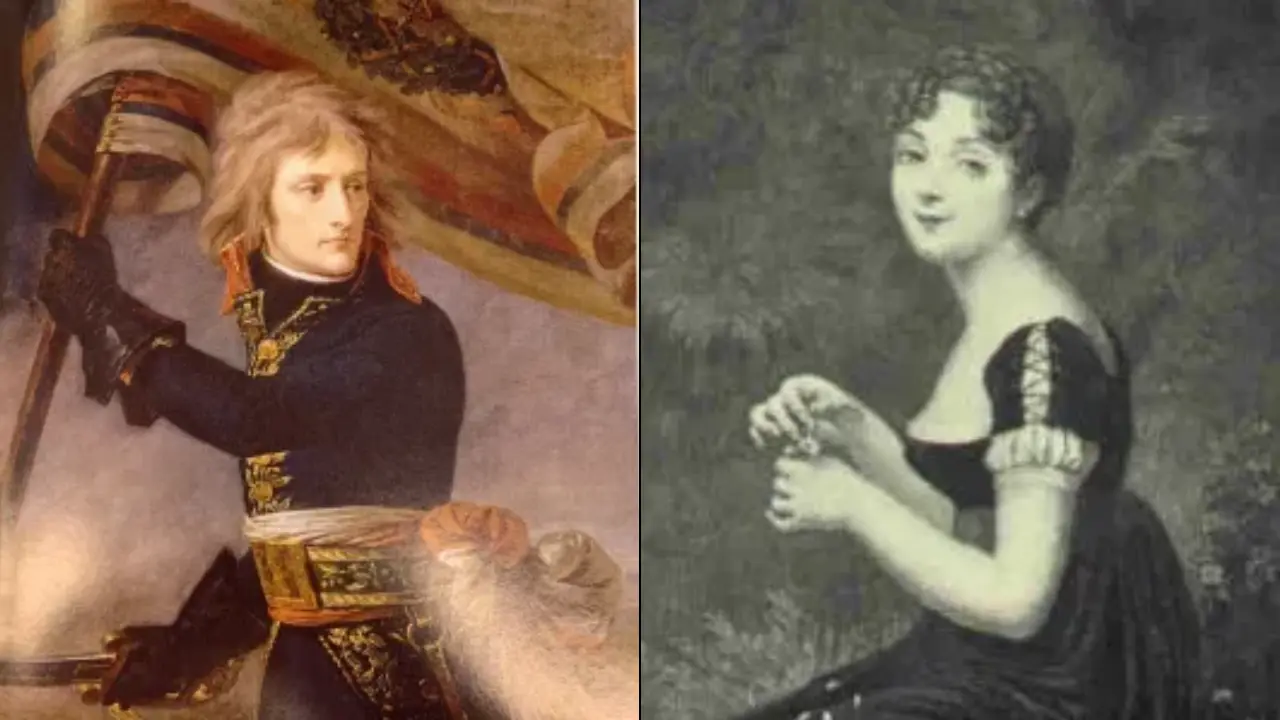
In 1798, a 20-year-old hat-maker from Carcassonne disguised herself in a soldier’s uniform, boarded a French troop ship to Egypt, and became the most celebrated woman in Napoleon Bonaparte’s army.
Silo: Scandals
On the evening of November 30, 1798, a pleasure garden blazed with candlelight in the heart of occupied Cairo. Napoleon Bonaparte had ordered the Tivoli Egyptien built to raise the morale of an army thousands of miles from home, and on that night it was working. Officers played vingt-et-un. Music drifted through the warm air. Napoleon was making his rounds when he stopped walking.
A young blonde woman sat at a card table, holding her cards with the easy confidence of someone who had been popular in every room she had ever entered. She was small and slim, with a perfect smile. She was also married to one of his lieutenants. Napoleon introduced himself anyway.
A Hat-Maker Boards a Troop Ship
Marguerite Pauline Bellisle was born on March 15, 1778, in Pamiers, a market town in the Ariège department of southern France. Her father, Henri Jacques-Clément Bellisle, was a clockmaker. Her mother was Marguerite Brandon. There was nothing in Pauline’s upbringing to suggest the life that followed. She became a milliner’s apprentice in Carcassonne, selling hats, cultivating the charm and adaptability that would prove to be her most durable assets.
In Carcassonne she met Jean-Noël Fourès, a second lieutenant in the 22nd Regiment of Mounted Chasseurs who was on sick leave from fighting in the Pyrenees. By the accounts of those who knew them, they formed what was described as a model couple. They married on January 27, 1798, despite the opposition of Fourès’ parents. Their honeymoon ended when he was recalled for the Egyptian campaign.
Napoleon was preparing to sail 40,000 men to Egypt. The orders were explicit: wives and mistresses were not to accompany the expedition. Pauline ignored them. She obtained a Chasseur’s uniform, disguised herself as a soldier, and boarded the transport ship La Lucette alongside her husband and the rest of the army. She was not the only woman to attempt this, but she was among the most successful. She remained undetected for the entire 54-day voyage. The officers around her almost certainly knew. They turned a blind eye.
The expedition landed at Alexandria. Pauline arrived in Cairo with her husband on July 30, 1798. She discarded the uniform with evident relief. She had only a few dresses, but in a garrison starved of female company, her presence was immediately sought after, to the visible fury of Jean-Noël Fourès.
Napoleon Disposes of a Husband
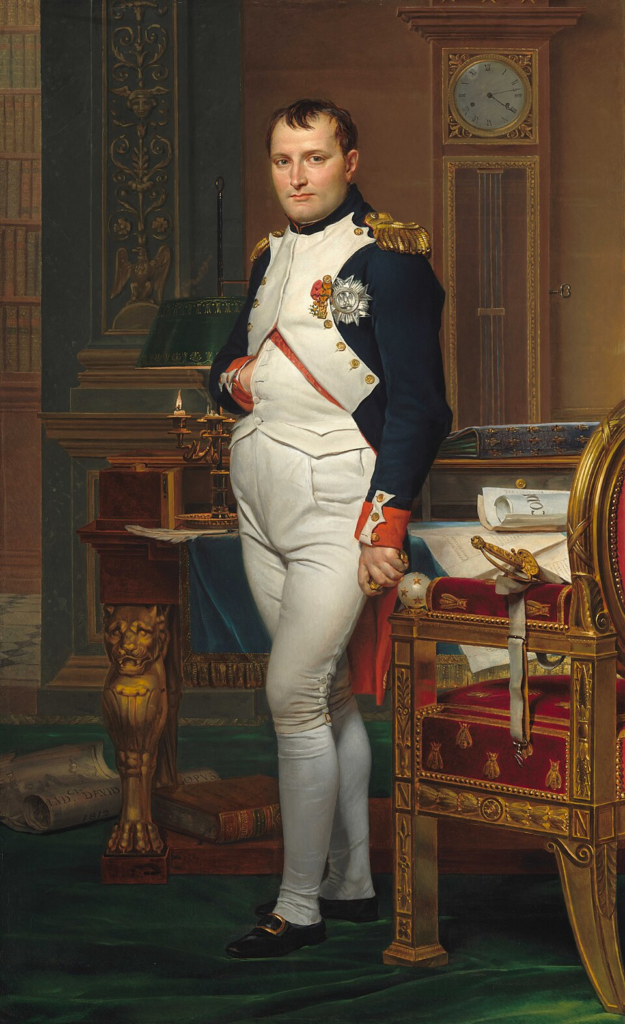
At the Tivoli Egyptien on November 30, 1798, Napoleon introduced himself and they talked briefly before he ended the conversation, conscious of how many eyes were watching. He was already infatuated. He sent expensive gifts. He dispatched aides, including Junot and Duroc, to court her on his behalf. Pauline was flattered but clear: nothing would happen while her husband was still in Cairo.
Napoleon acted accordingly. He instructed his chief of staff, Berthier, to arrange for Lieutenant Fourès to carry dispatches to the Directory in Paris. There was no urgency in the dispatches. The urgency lay entirely in removing Fourès from Cairo.
On December 17, 1798, Berthier summoned Fourès and delivered the orders. Fourès asked for time to let his wife pack. Berthier informed him that the Army did not recognize wives in Egypt and that he must travel alone and immediately. Fourès was in Alexandria within hours.
That same evening, Napoleon hosted a dinner party and seated Pauline at his right hand. During the meal, a carafe of water was spilled over her dress. Napoleon offered his quarters so she could change. The couple were absent for nearly an hour. The other guests were not surprised.
Within days, Pauline moved into a villa on Esbekiya Square, a few minutes’ walk from Napoleon’s residence. She dressed in a general’s uniform and wore a tricolour sash as a bonnet. She organized desert picnics, excursions to the Pyramids, and dinner parties for senior officers. The French troops cheered when she rode through Cairo. They gave her two nicknames: Clioupatre and La Générale. The Egyptians, observing from a different vantage point, called her “the lady of the Great Sultan.”
Napoleon, who had just learned of his wife Josephine’s infidelities from Junot, was by this point determined to divorce her on his return to France. He reportedly made it known that if Pauline bore him a child, the matter would be settled. Pauline herself, when pressed on the subject, reportedly replied: “Well, it’s not my fault.”
The British Return the Wrong Man
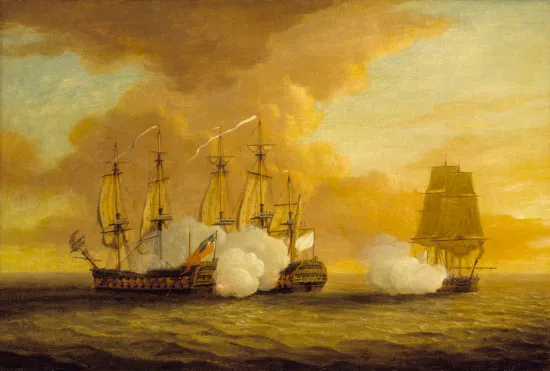
Fourès’ ship, Le Chasseur, was intercepted at sea by the British frigate HMS Lion. The dispatches he carried were examined and found to be largely useless. The British captain, unable to extract anything further from Fourès, made a decision that would detonate the household at Esbekiya Square. He sent Fourès back to Egypt.
Fourès arrived back in Cairo on January 8, 1799, three weeks after he had been dispatched. His colleagues informed him of what had been happening in his absence. He made his way directly to the villa on Esbekiya Square.
He found Pauline at home. He flew into a rage. He demanded she return with him. She refused. He struck her. Officers who overheard the commotion dragged him away.
A Divorce Granted Within Hours
Pauline applied for a divorce to protect herself against his brutality. Sartelon, the commissaire of Cairo, granted it within hours. Pauline readopted her maiden name, Bellisle, though the army had long since settled on Bellilote, the nickname she had carried since Carcassonne. Eugène de Beauharnais, Napoleon’s stepson, objected to the arrangement. He was alone in doing so. The entire army approved.
Napoleon was deeply attached to Pauline. The attachment was not hidden. Contemporary accounts describe them as openly affectionate, and every senior officer in Egypt knew the nature of the relationship. It was the first and arguably the most genuinely romantic affair of Napoleon’s life.
Two months after the divorce, Napoleon left for the Syrian campaign without her. He reportedly sent passionate letters from the field. Those letters have since disappeared. He returned to Cairo and revived the relationship. Then, in August 1799, he received word that the English fleet had cleared Egyptian waters.
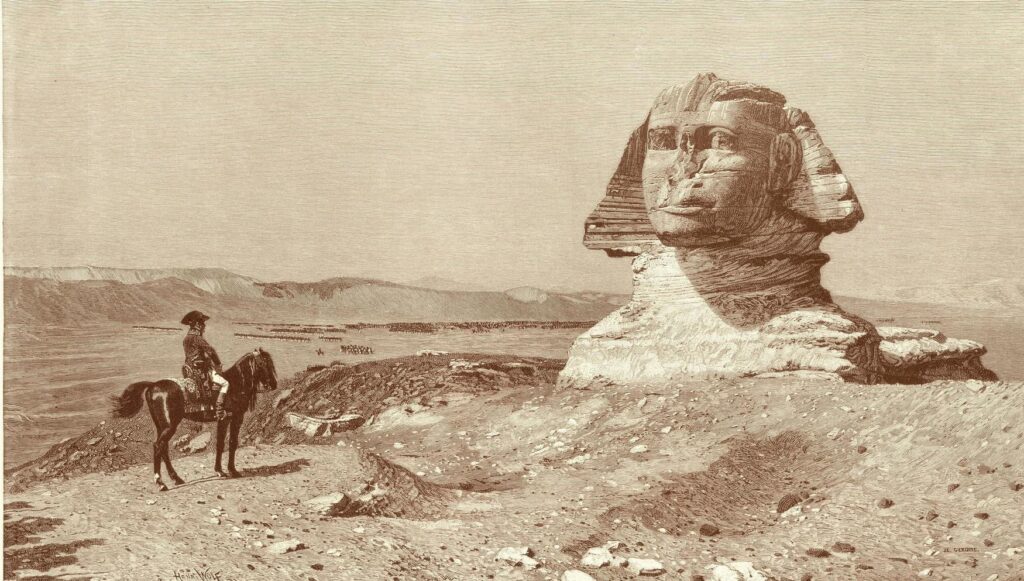
Napoleon Slips Away Without a Word
On the night Napoleon left Egypt for France, he said goodbye to Pauline in private. He told her he was leaving for an inspection of the Nile delta. He sailed for France without telling her the truth, and never returned to Egypt.
General Jean-Baptiste Kléber, who succeeded Bonaparte in command of the French army, briefly succeeded him in Pauline’s company as well. The arrangement was short-lived. By October 1799, Pauline had left Cairo. She reportedly boarded the USS America for the voyage home. According to accounts preserved by historians at The Napoleon Series, the ship was intercepted by a British frigate and she was returned to Alexandria, where she remained for several months before securing another passage. She reached France in 1800.
Napoleon, now First Consul and unwilling to risk fresh scandal, refused to see her. He gave her a mansion near Paris and repeated gifts of cash. He arranged her marriage, on the advice of his aide Duroc, to Pierre Henri de Ranchoux, a retired infantry officer. Napoleon gave Ranchoux the post of vice-consul in Santander as a wedding gift.
The marriage did not last. When Ranchoux was later posted to Gothenburg as French consul, Pauline declined to follow him to Sweden. She remained in Paris, where she was watched for a time by Fouché’s police and eventually exiled briefly to Blois. During the subsequent divorce proceedings, she was relegated to Craponne, a small town in the Haute-Loire. Pauline, by then without income and having saved little from her Paris years, faced ruin.
She wrote a novel. Lord Wentworth, published in 1813, met with enough success to keep her solvent. She followed it with Aloïze de Mespres in 1814 and, two decades later, a third novel, Une châtelaine du XIIe siècle, in 1834.
Pauline Outlives an Emperor and Burns His Letters
In the spring of 1816, Pauline married Jean Baptiste Bellard, a former captain of the Imperial Guard. The couple settled in Rio de Janeiro. Bellard built a fortune in the exotic wood trade, and Pauline rebuilt hers alongside him. She returned to Paris in 1837, separated from Bellard the following year, and settled into a final chapter that her neighbors found consistently bewildering.
She shared her apartment with monkeys and birds. She took her small dog to Sunday Mass. She was known, per accounts that have survived, for smoking a pipe in her window. She painted, collected works she later bequeathed to the town of Blois, and continued writing into old age. A self-portrait is preserved in the Bibliothèque Nationale de France.
Napoleon had written her letters throughout the Egyptian campaign. She kept them for decades, going first through what she described as a period of violent hostility toward him, and then into something closer to indifference. Before she died, Pauline Fourès burned every one of them.
She died in Paris on March 18, 1869, three days after her 91st birthday, and is buried at Père-Lachaise cemetery. She was almost certainly the last surviving participant in Napoleon’s Egyptian adventure. The woman he had called his Cleopatra outlived the Emperor by 48 years.
Leave a Reply