
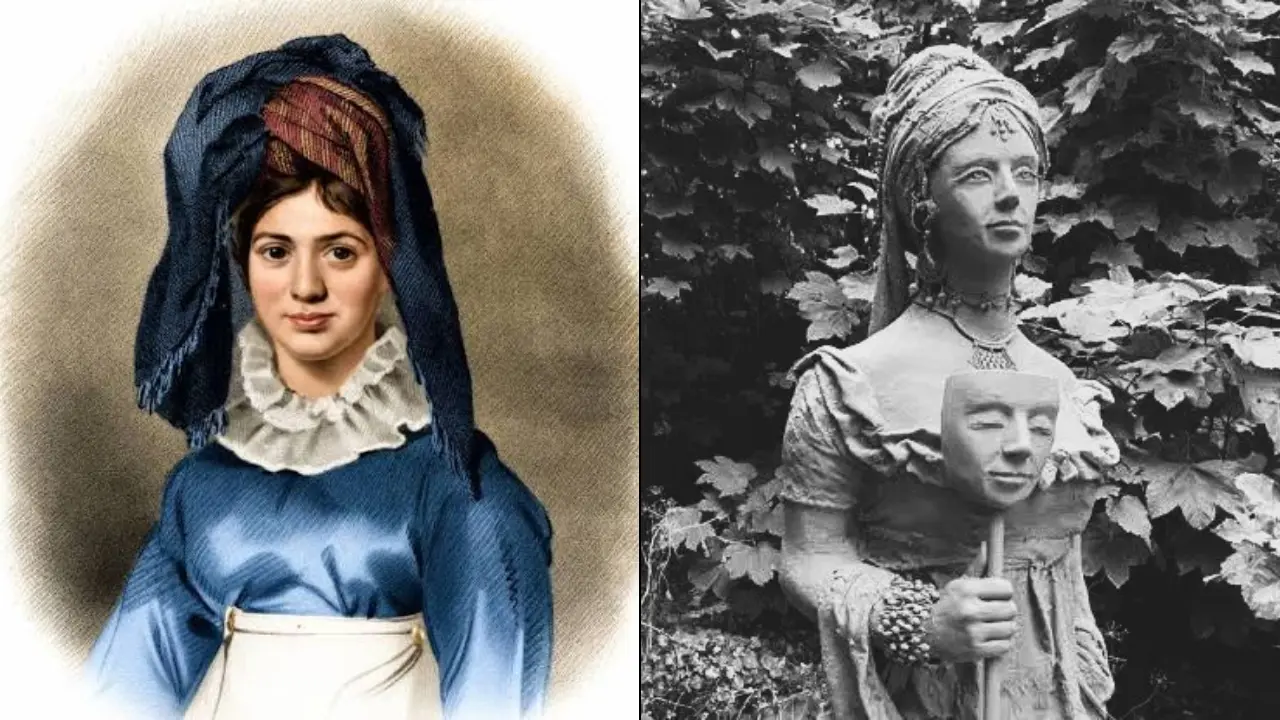
The Elaborate Hoax of Princess Caraboo, The Cobbler’s Daughter Who Invented a Kingdom and Fooled Regency England
In April 1817, a penniless Devon cobbler’s daughter invented an entire island kingdom, a royal lineage, and a working foreign language, and held England’s educated elite spellbound for ten weeks.
On the evening of 3 April 1817, a young woman appeared at a cobbler’s cottage in Almondsbury, a small Gloucestershire village northeast of Bristol. She wore a black silk turban. She spoke a language no one in the village could identify. Within ten weeks she would be dining with county dignitaries, attending a ball held in her honor in Bath, and holding the written endorsement of a physician who had spent weeks authenticating her language.
Then a Bristol boarding-house keeper named Mrs. Neale picked up a newspaper.
A Cobbler’s Daughter Invented an Entire Kingdom
The woman who would become Princess Caraboo was born Mary Willcocks in the village of Witheridge in Devon, most likely in November 1792, though the date is disputed across sources. She was the daughter of a cobbler. As a child she suffered a bout of rheumatic fever that her father later claimed had left her, in his words, “never right in the head.” Whatever the weight of that assessment, it is certain that by early adulthood she had moved to London and taken work as a nursemaid in Clapham for the children of a wealthy family. There she developed a habit of entertaining the children with elaborate invented tales. The habit outlasted the job.
By her own later account she eventually married a foreign gentleman who accompanied her to Dover and then vanished. She spent time in a London workhouse. A child she bore died in infancy. By early 1817 she was itinerant, having traveled south from London with a group of gypsies and spent a period begging on the streets of Bristol. At some point during those weeks she had taken lodgings with a woman named Mrs. Neale.
She was, in the spring of 1817, a penniless vagrant without prospects. She invented one.
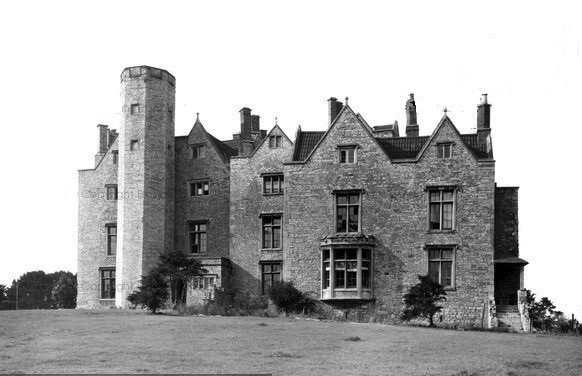
That evening in Almondsbury, the cobbler’s wife brought her to the Overseer of the Poor, who brought her to Knole Park, the home of Samuel Worrall, who served as both the Town Clerk of Bristol and a local county magistrate. Worrall and his American-born wife, Elizabeth, could make nothing of her language, though they noted that she called herself “Caraboo” and showed interest when shown pictures of China. At the local inn that evening she identified a drawing of a pineapple with the word “nanas,” the Indonesian word for the fruit, and insisted on sleeping on the floor rather than the bed provided.
Samuel Worrall was skeptical. He sent her to Bristol to be tried for vagrancy.
Regency England Received Its Foreign Princess
During her imprisonment a Portuguese sailor named Manuel Eynesso arrived with a remarkable claim. He could understand her language, he said. What he translated was this: she was Princess Caraboo of the island of Javasu, in the Indian Ocean. She had been captured by pirates, held at sea for weeks, and had finally escaped by jumping overboard in the Bristol Channel and swimming to shore.
Eynesso fabricated every word of it. No corroborating source exists for any element of the story he produced.
The Worralls believed him. Elizabeth Worrall brought the young woman into Knole Park, and for the next ten weeks, Princess Caraboo became the most celebrated curiosity in Gloucestershire.
What followed was a performance of sustained and considerable skill. Caraboo fenced. She used a bow and arrow with an accuracy that impressed witnesses. She swam naked in the estate lake when alone. She climbed trees to pray to her god, whom she called Allah-Talla, a rendering of the Arabic Allāh taʿālā, meaning “Allah the Exalted.” She cooked a chicken curry she described as native to her island. She refused to drink tea twice from the same cup.
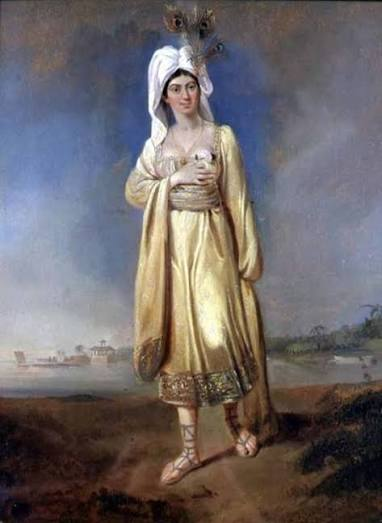
Her portrait was painted by the artist Edward Bird and reproduced in local newspapers. A ball was held in her honor in Bath. Local dignitaries pressed for invitations to meet her.
Through all of it, not one person made her slip. Bank notes were scattered on a table and allowed to fall to the floor. She did not glance at them. A young gentleman declared her the loveliest creature he had ever seen and pressed his attentions. She showed no reaction.
A Scholar Gave the Princess His Official Endorsement
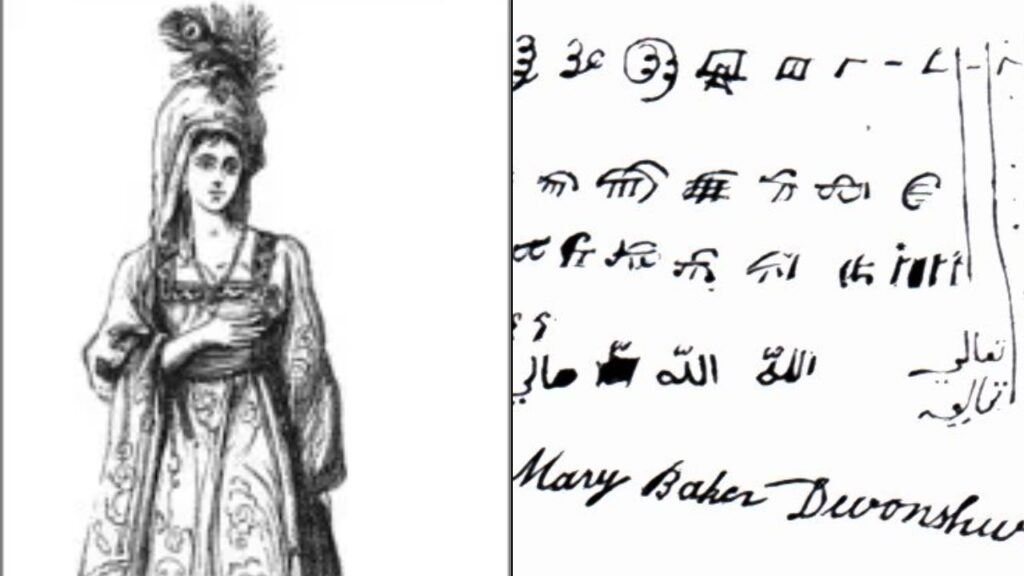
Several weeks into the deception, a physician and scholar named Dr. Wilkinson arrived from Bath to determine whether the princess was genuine. He conducted sessions with Caraboo and found her accent internally consistent, her vocabulary unrepeating, and her responses coherent. He produced Edmund Fry’s Pantographia, an encyclopedia of known alphabets and writing systems, and cross-referenced it against the written samples she produced. He concluded that the marks on the back of her head were the work of oriental surgeons, not the consequence of any English medical procedure.
Worrall sent the findings to the national press for wider publication. He included a sketch of the young woman and a public notice requesting that anyone with information come forward.
It was the worst decision her patrons made.
A Boarding House Keeper Ended the Kingdom
Within weeks, Dr. Wilkinson returned to Knole Park. He had received letters from multiple sources. Several people who had known the young woman before Almondsbury recognized the sketch in the newspapers.
The most consequential among them was Mrs. Neale. She had provided Mary Willcocks with lodgings only months before her arrival in Almondsbury, and had watched her entertain the children of the house with an invented language. When she saw the published sketch, she was not surprised. She simply acted.
The investigation that followed was swift. The language Caraboo had spoken was identified as a constructed pidgin assembled from invented words, Romani words she had picked up on her travels, and fragments of Arabic and other languages she had absorbed in passing. The marks on the back of her head were scars from a crude cupping procedure performed at a London poorhouse hospital. Eynesso’s translation had been a fabrication.
When confronted, Mary Willcocks immediately stopped speaking Caraboo’s language and began speaking English. The deception had run for approximately three months. An Exeter newspaper described her as “a vile impostor, a vagrant wanderer, and daughter of a poor cottager.” The educated men of Gloucestershire who had accepted her as royalty were not publicly sympathetic to having their credulity catalogued in print.
Elizabeth Worrall chose not to prosecute. She arranged and paid for Mary’s passage to Philadelphia.
Mary arrived to find her story had preceded her. A showman named Sanders persuaded her to appear at the Washington Hall in Philadelphia as Princess Caraboo, dancing and speaking her invented language for paying audiences. The show failed. Audience numbers fell and Sanders cancelled the run. In November 1817 she wrote to the Worralls from New York, her last documented contact with them. The letter complained about the burden of her own notoriety.
A story meanwhile circulated in the South Atlantic that her ship had been blown off course and she had come ashore on St Helena, where Napoleon Bonaparte, then in exile after his final defeat at Waterloo, had been so taken with her that he proposed marriage. She had declined and continued to America. The story appeared in Felix Farley’s Bristol Journal on 13 September 1817. St Helena lies thousands of miles from any plausible transatlantic crossing route.
She remained in America for seven years and returned to England in 1824. A brief attempt to revive Princess Caraboo at a New Bond Street venue in London attracted no one who did not already know the truth.
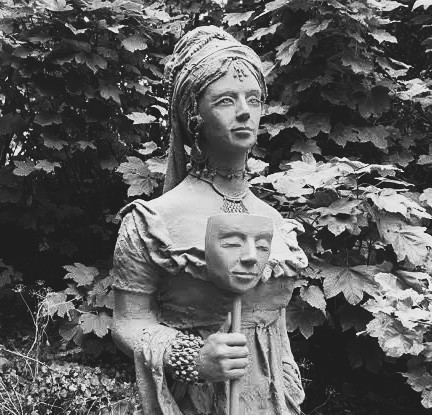
Mary Willcocks Died Without a Marker
In September 1828, under the name Mary Burgess, borrowed from a cousin to obscure her past, she married a man named Richard Baker in Bedminster, south of Bristol. They had one daughter, Mary Ann, born in 1829.
For the next three decades she supplied leeches to the Bristol Infirmary Hospital at a time when the creatures were still considered medically useful. Local children knew who she was. When they gathered outside to chant “Caraboo” at her, she went indoors.
Mary Willcocks died from a fall on Christmas Eve 1864 and was buried in an unmarked grave in Hebron Road Cemetery, Bristol. Her daughter carried on the leech business alone, living as a spinster in the family home until February 1900, when the house caught fire. She died in it.
Neither left a record of what Mary Willcocks believed she had been doing across those ten weeks, or why. The island of Javasu was a fiction. The language of Javasu was Romani coin names and fragments of Arabic, assembled by a woman with a remarkable memory and a talent for performance. The physician who authenticated both is remembered only in connection with the story of how completely she fooled him.
Princess Caraboo is buried in Bristol without a stone. The kingdom she invented has outlasted her by over two centuries.
Leave a Reply