
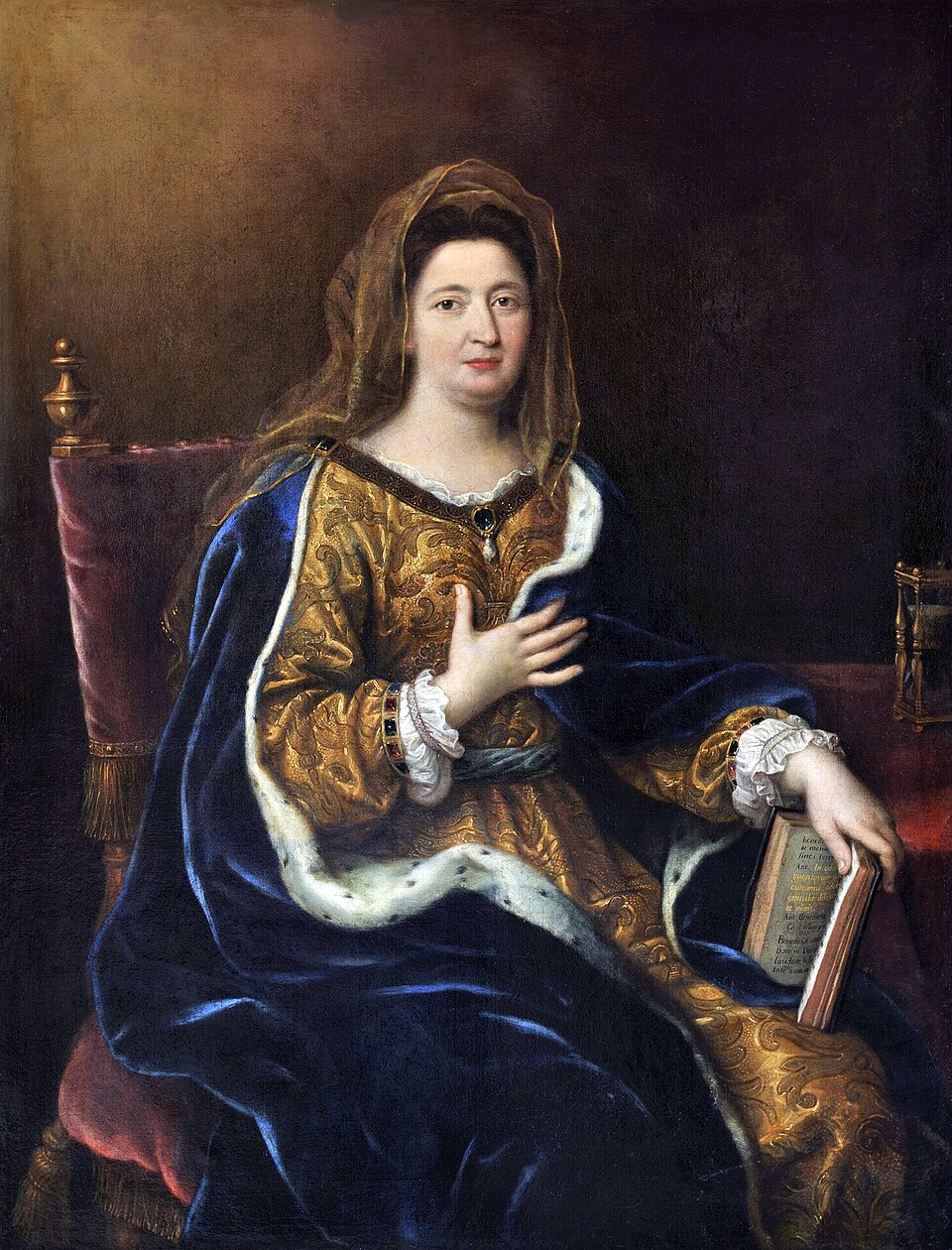
For thirty-two years, the most powerful king in Europe had a wife nobody in France was permitted to acknowledge a woman born in a prison cell who died without a state funeral.
In the autumn of 1683, in a candlelit chapel at the Palace of Versailles, the King of France took a wife he could never name. The Archbishop of Paris, François de Harlay de Champvallon, presided. The king’s confessor attended. A handful of trusted officials and one royal valet stood as witnesses. No official document was created. No announcement followed. Before dawn, Françoise d’Aubigné had become the Queen of France.
France did not know it. France was not supposed to know.
Françoise d’Aubigné Was Born Behind Bars
Françoise d’Aubigné entered the world on November 27, 1635, not in a house in the town of Niort but in its prison, where her father, Constant d’Aubigné, was being held on charges of correspondence with the English. Constant was the grandson of Agrippa d’Aubigné, a celebrated Huguenot poet and soldier, but he had inherited little of his forebear’s discipline. He had murdered his first wife. He had gambled away his family’s fortune. He had, at various points, converted to Catholicism and then back again, and had betrayed Protestant contacts to the crown. Cardinal Richelieu, chief minister to King Louis XIII, had seen enough. Constant was imprisoned at Niort. His wife, Jeanne de Cardilhac, the daughter of the prison’s own warden, remained at his side. Their daughter was born in the cells her grandfather administered.
The family was released from custody sometime after Richelieu’s death in December 1642. Constant had secured a commission as governor of the small island of Marie-Galante in the French Caribbean, and the family embarked for the West Indies, settling on Martinique. The commission came to nothing. Around 1645, Constant returned to France alone, nearly destitute, leaving his wife and children behind on the island. He died in Provence on August 31, 1647, before they could follow him. Françoise was eleven years old when she learned her father was dead.
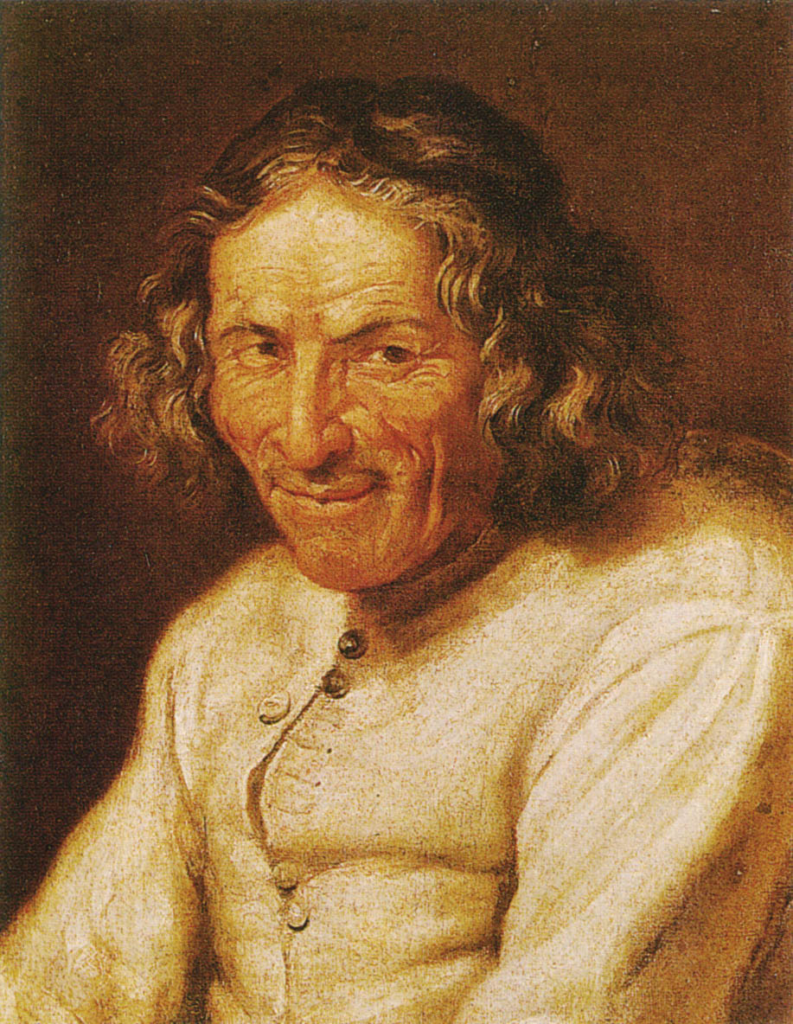
Her mother died around 1651. Françoise passed between relatives: first to her aunt, Madame de Villette, who raised her as a Protestant; then to another aunt, Madame de Neuillant, a Catholic who found the girl inconvenient. Madame de Neuillant arranged for her ward to board with Paul Scarron, a celebrated and chronically ill poet whose Paris apartment had become one of the more fashionable literary salons in the city. Scarron was paralyzed, widely believed to be impotent, and 25 years Françoise’s senior. He offered her a choice: marriage or a convent. Françoise chose marriage. They wed on April 4, 1652.
Paul Scarron Opened Paris to Her
For eight years, Françoise d’Aubigné was Madame Scarron. The apartment attracted writers, wits, and aristocrats who found in Scarron’s parlor a welcome alternative to the formalities of court. Françoise presided over it: charming, widely read, possessed of an intelligence that the salon had helped to cultivate. Whether the marriage was conventional in every sense has always been disputed; given Scarron’s physical condition, contemporaries doubted it. But he valued her deeply, and she nursed him through years of worsening disability. When Scarron died on October 6, 1660, he left behind a widow with little money and an excellent address book.
For the next six years, Françoise survived on a pension reportedly worth 2,000 livres a year, provided by Anne of Austria, the queen mother, whom she had encountered through Scarron’s circle. When Anne died in 1666, Louis XIV, who had no existing relationship with the widow Scarron, allowed the pension to lapse. The widow’s options contracted quickly. Then, in 1669, an offer arrived.
A Royal Governess Captured a King’s Eye
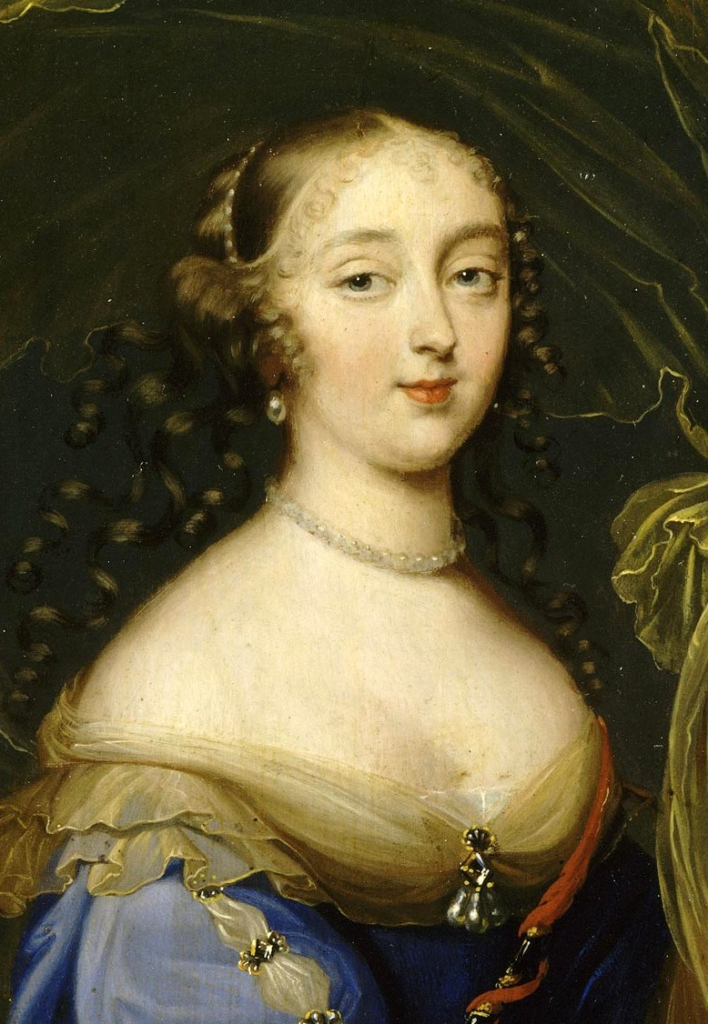
The offer came from Françoise-Athénaïs de Rochechouart de Mortemart, the Marquise de Montespan, then the chief mistress of Louis XIV and recently delivered of one of the king’s illegitimate children. The children of a royal mistress required a governess of absolute discretion: educated, capable, and invisible. Montespan offered Françoise the position, along with a salary and a small household. She accepted.
Over the years that followed, Montespan bore Louis XIV seven illegitimate children in total. All of them came under Françoise’s care. She managed the household. She educated the children. She brought to the work a quality of warmth and rigorous competence that the king began to observe in a different register. By the mid-1670s, Louis was visiting Madame de Maintenon’s apartments as often as the mistress’s. In 1675, he awarded Françoise the estate of Maintenon near Chartres and the title that went with it. The gift looked, on the surface, like a patron rewarding a valued servant.
Within a few years, the court understood that it was something more. By the late 1670s, the king spent a significant portion of every day in Madame de Maintenon’s company, discussing theology, literature, and affairs of state. The Marquise de Montespan watched her position erode. By the early 1680s, the woman who had arrived as a governess had replaced her entirely.
The Archbishop Married France’s Secret Queen
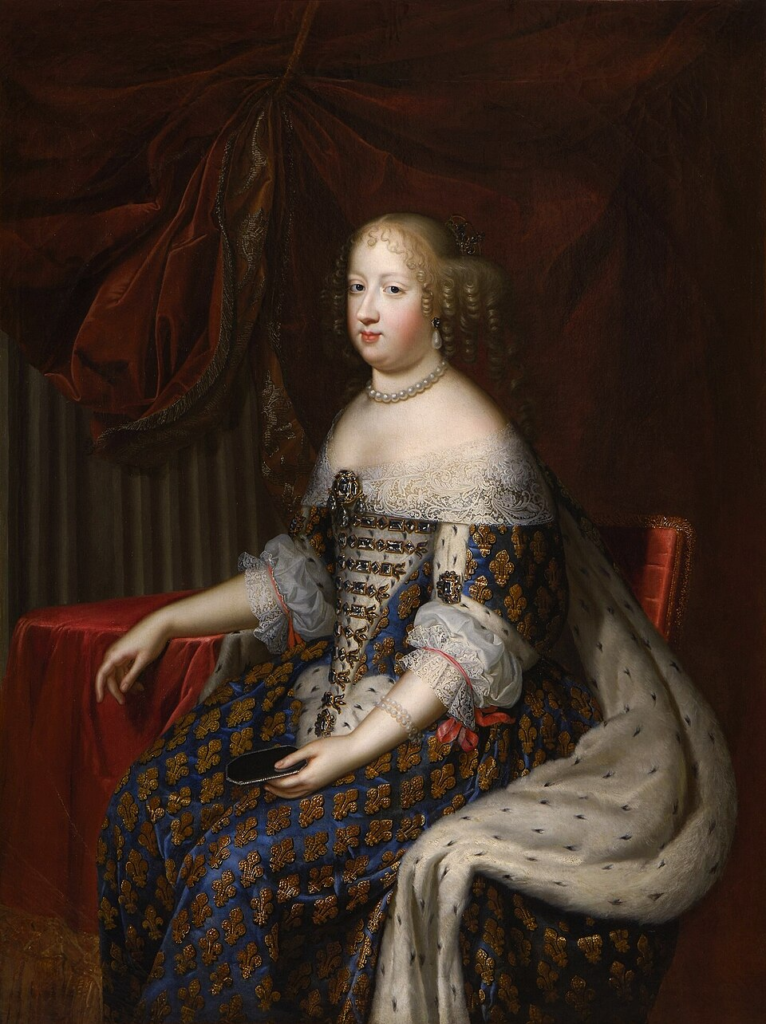
Queen Marie-Thérèse of Spain, Louis XIV’s wife since 1660, died at Versailles on July 30, 1683. An abscess on her left arm had been mismanaged by court physicians until septicaemia set in. In a reign of more than forty years, Louis was said to have remarked, his queen had caused him only one trouble. Within months, he resolved to marry again.
The ceremony took place on October 9, 1683, or perhaps in January 1684: historians have never been able to settle the question, because no official record was made. The Archbishop of Paris officiated. The king’s confessor, Père la Chaise, and a small group of court officials and the royal valet Alexandre Bontemps witnessed the union. The chapel at Versailles, the candlelight, the witnesses, the vows: all of it was real. None of it was acknowledged.
The reason was not scandal in any ordinary sense. The reason was simpler, and in its own way more brutal. Louis XIV was the premier monarch of Europe. Royal convention demanded he marry a woman of royal blood. Françoise d’Aubigné was the daughter of a man who had died alone in a Provençal village, penniless and forgotten. The marriage was morganatic: legally binding, socially impossible, officially invisible. Françoise was the King of France’s wife in the eyes of the church. In the eyes of the court, she was still the Marquise de Maintenon.
An Uncrowned Queen Shaped French Policy
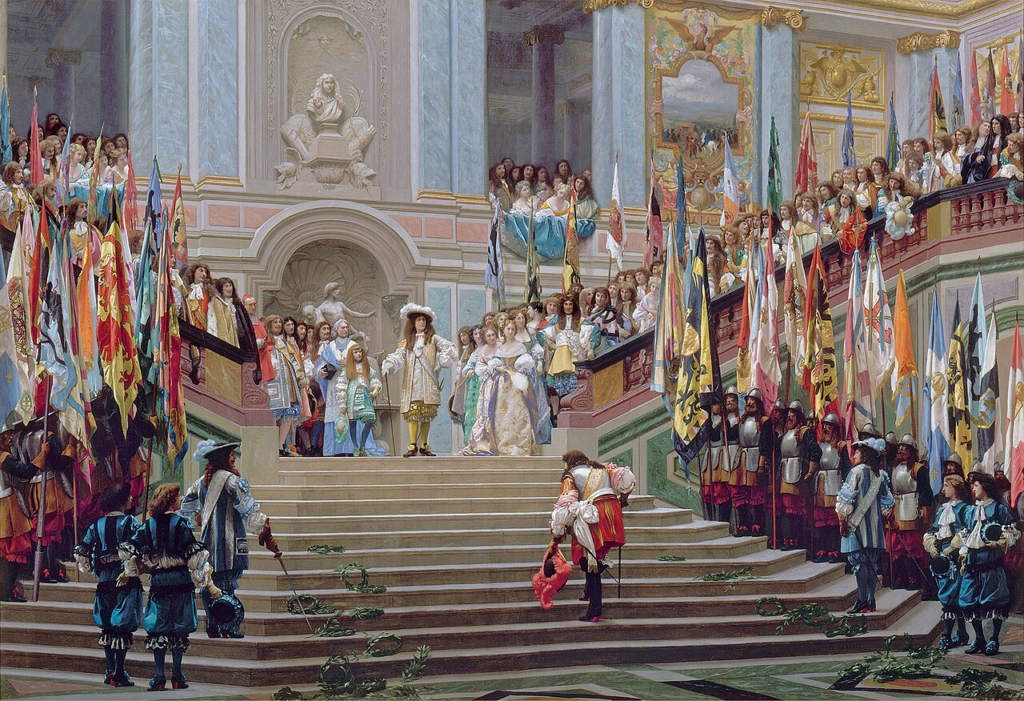
At Versailles, the secret was an open one. Madame de Maintenon occupied apartments at the top of the grand staircase, directly opposite the king’s. Louis spent part of every day with her. He received ministers in her rooms and conducted state business from the chair beside her fireplace. The Duchess of Orléans, who despised Maintenon with an energy she channeled productively into her correspondence, described a woman who exercised a queen’s influence while holding a widow’s title.
Protestant writers of the period blamed Maintenon for Louis XIV’s 1685 revocation of the Edict of Nantes, which stripped French Protestants of the religious freedoms they had held for most of the century. The accusation rested on circumstance: a Protestant-raised woman had married the king, and within two years the Protestant protections had been abolished. Recent scholarship has generally rejected the connection. The evidence suggests Maintenon worked against some of the worst excesses of the persecution that followed, not in favour of the revocation.
For the first seventeen years of the secret marriage, her political influence remained limited. The War of the Spanish Succession changed that. When fighting broke out in 1701, pitting France and Spain against a coalition led by Britain, Austria, and the Dutch Republic, France’s military position deteriorated through the first decade of the conflict. Louis XIV began to rely on Maintenon with increasing urgency. She sat in on ministerial discussions. She corresponded with diplomats. She left behind an enormous archive of letters, but she had burned the most sensitive ones herself before she died. The gap in the record is precisely calibrated.
Saint-Cyr Became Her Only Acknowledged Legacy
What Françoise d’Aubigné could not accomplish under her real name, she accomplished in stone.
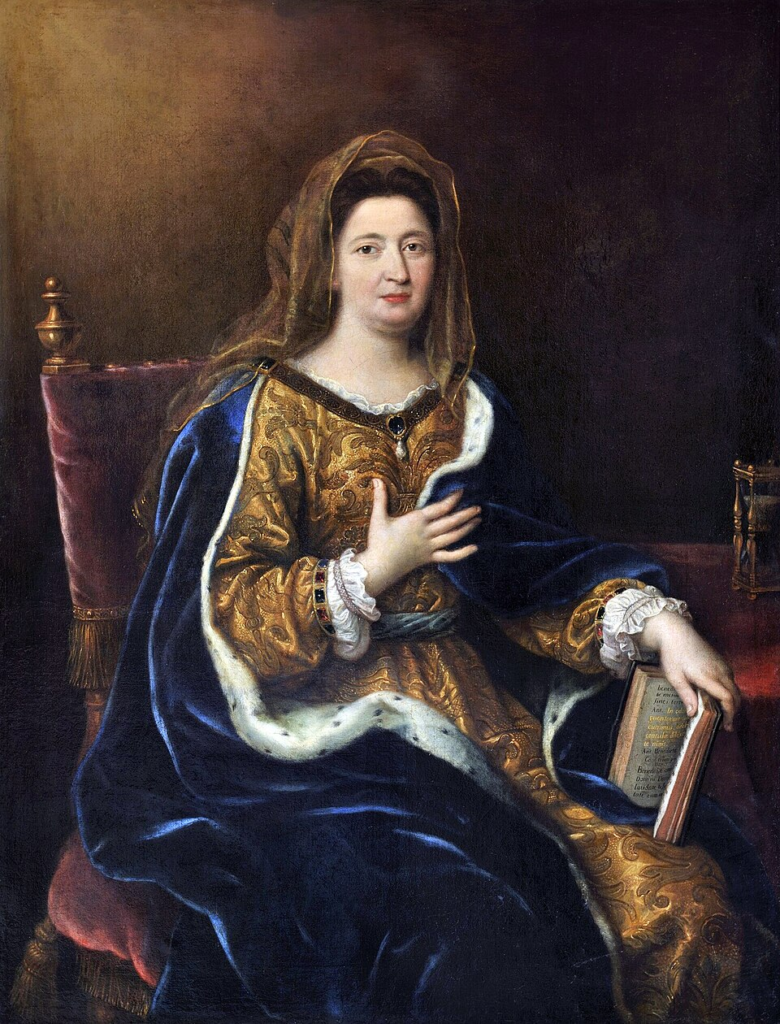
In 1686, three years into her secret marriage, she founded the Maison Royale de Saint-Louis at Saint-Cyr, near Versailles, a boarding school for the daughters of impoverished noble families. The school accommodated approximately 250 students, instructed by a faculty of lay teachers rather than nuns. The curriculum ran beyond catechism to arithmetic, geography, history, reading, and writing. Students were encouraged to play chess. They performed theatrical works, among them a play commissioned from Jean Racine at Maintenon’s personal request. It was the one institution in France that bore her name publicly. The Marquise de Maintenon had founded it. The Queen of France could not have.
Louis XIV died on September 1, 1715, after a reign of seventy-two years and 110 days. His son and his two eldest grandsons had predeceased him. The crown passed to his five-year-old great-grandson, Louis XV. Françoise d’Aubigné, then 79, retired to Saint-Cyr. Louis XV settled a pension on her. She received visitors in her rooms at the school: writers, churchmen, and heads of state. In 1717, Tsar Peter the Great of Russia visited during his tour of Western Europe. He asked what illness afflicted her. She replied: great age and a weak constitution.
Françoise d’Aubigné died on April 15, 1719, at the age of 83. No state funeral was held. She was not interred at the Basilica of Saint-Denis, where the kings and queens of France were laid to rest. She was buried, in accordance with her wishes, in the choir chapel of the school she had built, without members of the court present. Her Château de Maintenon passed to her niece, Françoise Charlotte d’Aubigné, Duchess of Noailles.
She had been the Queen of France for thirty-two years. The official record, to the end, declined to say so.
Leave a Reply