
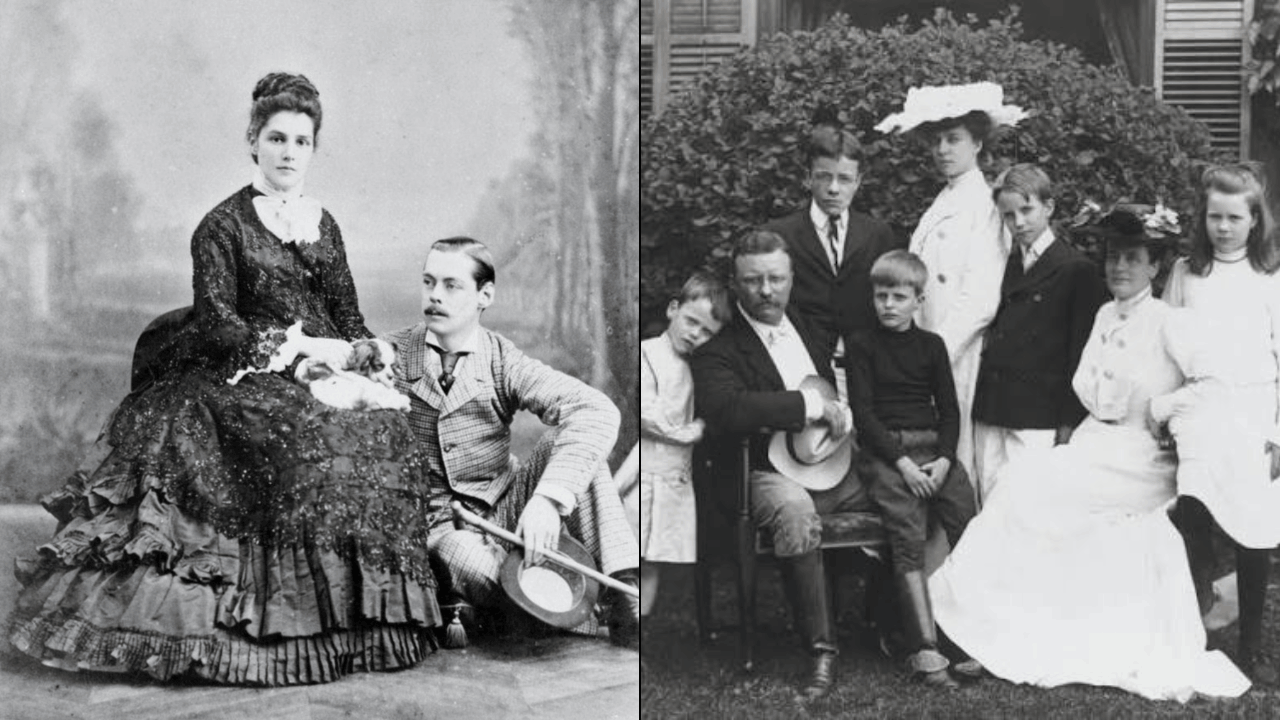
The Brooklyn Financier’s Daughter Who Built a Prime Minister’s Career, Then Built Her OwnOn April 15, 1874, at the British Embassy in Paris, a 20-year-old American named Jeanette Jerome married Lord Randolph Churchill in a ceremony so quiet it looked more like an apology than a wedding. Seven and a half months later, on November 30, she gave birth to a son at Blenheim Palace. The family called it premature, brought on by a fall she’d suffered on the estate grounds.London counted the months anyway, and never said so out loud.The boy was Winston Leonard Spencer Churchill. His mother would spend the next four decades doing what she had already done once, in the nine months before his birth: turning a fast, reckless decision into something that worked.
A King of Wall Street, and What He Left Behind
Jennie’s father, Leonard Jerome, arrived in New York City with a law degree and no intention of using it. He’d grown up on a farm near Syracuse, one of ten children, and neither the farm nor the courtroom held his attention. Risk did. Partnered with his brother and the financier William Travers, Jerome rode the railroads and telegraph speculation of mid-century Wall Street until the newspapers had a name for him: the King of Wall Street.By 1859 he had enough to build something no ordinary financier would attempt a six-story mansion at the corner of Madison Avenue and 26th Street, directly across from Madison Square Park.
The ballroom ran champagne through its fountains. The private theater seated 600. Behind the house, the stables were paneled in black walnut; contemporaries joked that Jerome’s horses lived better than his staff.That obsession with horses outlasted the mansion. In 1866, Jerome and financier August Belmont bought 230 acres in what was then rural Westchester County and built Jerome Park Racetrack, the first flat-racing course of its kind in America, with a grandstand for 8,000. The following year, Jerome Park hosted the first running of the Belmont Stakes. Jerome Avenue in the Bronx still carries his name.
His wife, Clara Hall Jerome, married Leonard expecting stability and got chaos in expensive tailoring instead hunting trips with Buffalo Bill Cody, yacht races, and mistresses he made no particular effort to hide. By 1867, she’d had enough. Clara gathered her three surviving daughters Clarita, the eldest; Jennie, 13, dark-haired and restless; and Leonie, the youngest and sailed for Paris. A fourth daughter, Camille, had died of fever in 1863 at around eight years old; Jennie, then nine, never spoke of it publicly, in the manner the era required of grief.Leonard stayed behind. Within a few years he’d lost the mansion entirely.
The Girl the Prince of Wales Noticed
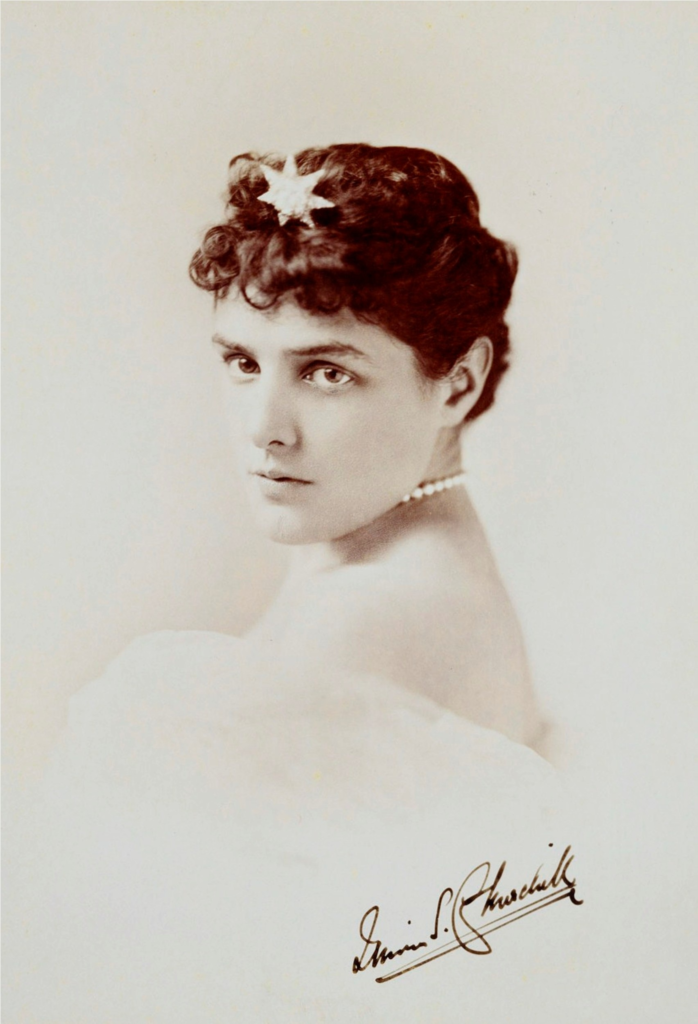
Paris under Napoleon III belonged to the imperial court at the Tuileries, and Clara Jerome understood something her husband, for all his genius with money, never fully grasped: in Europe, proximity to the right room mattered more than the size of a bank account. Empress Eugénie took a liking to the eldest Jerome daughter, and the family was drawn into the edges of the imperial circle. Jennie, still too young for formal society, studied piano under Stephen Heller, a Hungarian concert pianist and friend of Chopin’s who told Clara her daughter had genuine talent though he doubted, pointedly, whether she had the discipline to use it.
The Paris years ended with the Franco-Prussian War. France collapsed after the Battle of Sedan in September 1870; Empress Eugénie fled the Tuileries. The Jerome women left for London, meaning to stay a few months until things settled. Instead, London became the stage for everything that followed.The Prince of Wales Albert Edward, married, and consistently, publicly unfaithful ran the fashionable end of London society through his Marlborough House set, a circle that prized spectacle and discretion over morality. Jennie met him within months of arriving, when she was 16 or 17 and he was nearly 30. What the meeting produced, in the near term, was simpler than gossip suggests: it opened doors. What it produced later is a separate, better-documented chapter.
Three Days at Cowes
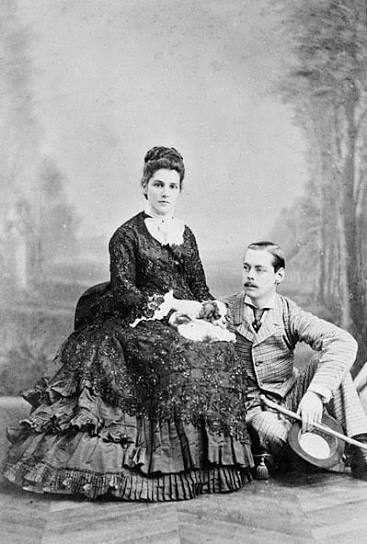
In August 1873, at a regatta ball on the Isle of Wight Cowes Week, the social event of the British summer the Prince of Wales introduced 19-year-old Jennie to Lord Randolph Churchill, the second surviving son of the 7th Duke of Marlborough. Randolph was 24, slight, with a mustache that aged him and a manner that swung between electric charm and cold withdrawal. He’d studied at Oxford’s Merton College without particular distinction and showed no clear ambition. His name carried weight. His prospects didn’t.Within three days, he’d proposed under starlight in a garden overlooking the harbor. Jennie accepted without hesitation.
The parents took eight more months to accept it. The Marlboroughs considered an untitled American daughter, worse, of a Wall Street speculator unsuitable. Leonard Jerome liked Randolph well enough but doubted a younger son with no profession could support his daughter. The dispute settled, in the end, on money: Jerome offered a marriage settlement built around £50,000, yielding roughly £2,000 a year, split between husband and wife.
Blenheim Palace, the Marlboroughs’ vast ancestral seat, was in genuine financial trouble by the 1870s, and American money arriving through marriage was becoming a familiar way to patch what generations of aristocratic spending had worn through.They married in Paris on April 15, 1874. Winston arrived seven and a half months later. Whether the birth was truly premature, or whether Jennie was already pregnant on her wedding day, was never confirmed and never discussed in print during her lifetime the kind of detail Victorian society noticed, filed away, and never once said aloud.
Blackmailing a Future King
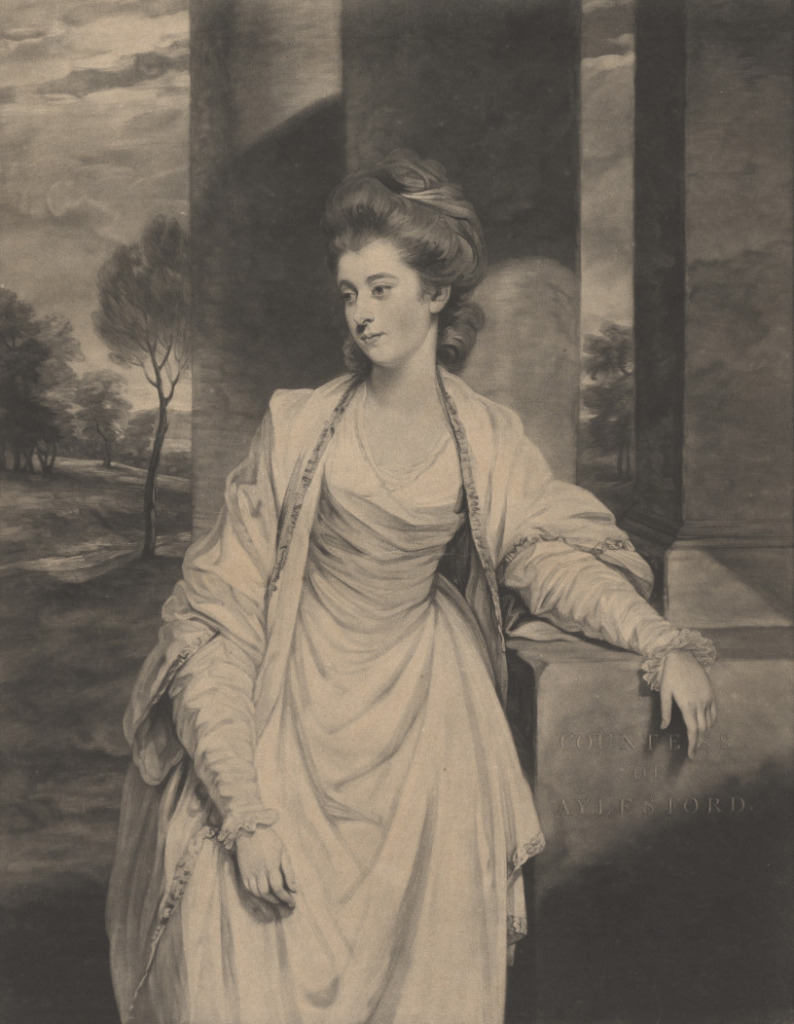
The trouble that followed wasn’t Randolph’s own doing not directly. In 1876, his elder brother, the Marquess of Blandford, began an affair with Edith, Countess of Aylesford, while her husband was touring India as a companion to the Prince of Wales. When the Earl of Aylesford learned of it and moved to divorce his wife, naming Blandford, Randolph intervened to protect the family name. He was holding a packet of old letters written years earlier by the Prince of Wales himself to Lady Aylesford and he threatened to make them public unless the Prince pressured Aylesford to drop the case.
It worked, and it also detonated. The Prince, informed of the threat, reportedly challenged Randolph to a duel and had him ostracized from London society. Prime Minister Disraeli eventually negotiated the letters’ return and their destruction, and arranged a face-saving exit: the Duke of Marlborough was appointed Lord Lieutenant of Ireland, on the condition that he take his troublesome son along as private secretary. It was not a promotion. It was a removal.
In Dublin, while Randolph served his father, Jennie did something that surprised people who thought they understood her. She sat through debates on Irish land reform and home rule, learning informally, with no vote and no seat how coalitions formed and votes were won. It was a skill she would spend the rest of her life refining. Meanwhile, her sons were raised largely by their nanny, Elizabeth Everest, a warm, devoted woman from Kent who became, for Winston especially, the fixed point his mother rarely was.
The Woman Behind the Fourth Party
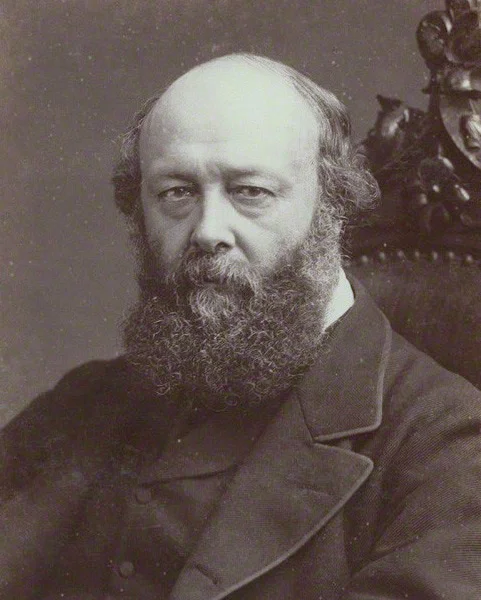
When the family returned to London in 1880, Jennie arrived changed. She drove Randolph’s re-election campaign through the lanes of Woodstock in a carriage decorated in his racing colors, opening doors that a political wife had never opened in that constituency before; Henry James joked that Parliament would need a new law to regulate the effect of her smile. She sat for years in the ladies’ gallery of the House of Commons, studying which arguments moved votes while Randolph built his reputation through the Fourth Party a small, deliberately disruptive alliance designed to provoke his own party’s leadership.
In 1883 the Primrose League was founded to extend Conservative support beyond the aristocracy. Jennie held membership number 12. She built local branches, addressed meetings hiding her notes behind a fan the first few times, by her own account and helped turn the League’s female members, the “Dames,” into a canvassing operation that let women run British electoral campaigns for the first time, without a single one of them able to cast a vote. By 1886, Randolph had risen to Chancellor of the Exchequer and Leader of the House of Commons at 37, drawing comparisons to Disraeli. A prime minister’s wife reportedly said Jennie could have governed the world.
The Resignation
In December 1886, Randolph wrote to Prime Minister Salisbury threatening to resign over cuts to the military budget, gambling that his position made him too valuable to lose. Salisbury accepted the resignation the next morning, without negotiation. Jennie learned of it the way the rest of London did reading it in the Times at breakfast. Her husband had not warned her.What the resignation exposed couldn’t be undone. Randolph’s health had already begun to decline in ways his contemporaries could not fully explain. By the mid-1880s his speech had grown erratic; the precision that had made him formidable was disappearing.
His doctors at the time believed he was suffering from syphilis, and Winston himself later repeated that account. Modern medical historians have disputed it: some point instead to a brain tumor, noting that neither Jennie nor either of her sons ever showed signs of infection, and that Randolph’s symptoms sores, tremor, slurred speech that came and went don’t cleanly match the disease’s typical course. No diagnosis from 1895 can now be confirmed with certainty.
What is certain is what Jennie did with it. In the summer of 1894, acting on medical advice, she took Randolph on a trip around the world, hoping a change of climate might slow his decline. It didn’t. He deteriorated at every stop, failing to recognize people he’d known for decades, unable at times to complete a dinner. They came home seven months later, far earlier than planned. Randolph died on January 24, 1895, at his mother’s house in Grosvenor Square. He was 45. Winston, 20 and newly commissioned, stood at the graveside and later wrote that the loss felt final the closing of a door on everything his father might have become.
Jennie was 40, with debts larger than anyone outside the family had suspected and no title to replace the one she’d lost. She did not disappear into it.In 1899, she founded and edited the Anglo-Saxon Review, a lavishly produced literary quarterly that published Henry James and George Bernard Shaw and cost a guinea a copy twenty times the price of an ordinary magazine, and priced exactly wrong: the audience who could afford it didn’t need it, and the audience who wanted it couldn’t afford it. It folded after ten issues.
That same year, the Boer War broke out with both her sons in the war zone Winston captured by a Boer patrol while working as a war correspondent, Jack serving as a cavalry officer advancing on Ladysmith. Jennie chaired the fundraising committee for a hospital ship, raised roughly $150,000 in weeks, and secured a vessel from Baltimore shipping magnate Bernard N. Baker. The ship, the Maine, was refitted at Limehouse with an operating theater and an X-ray machine most field hospitals had never seen.
It sailed for South Africa in late December 1899 with Jennie aboard as head of the American nursing contingent. Twenty operations were performed in Durban harbor; three patients died. One of the wounded carried aboard was her own son Jack, hit at Tugela Heights during the advance on Ladysmith. In 1902, King Edward VII the same Prince of Wales who had once threatened her husband to a duel over a scandal that wasn’t Randolph’s pinned the Royal Red Cross to her dress.
What the Discretion Concealed
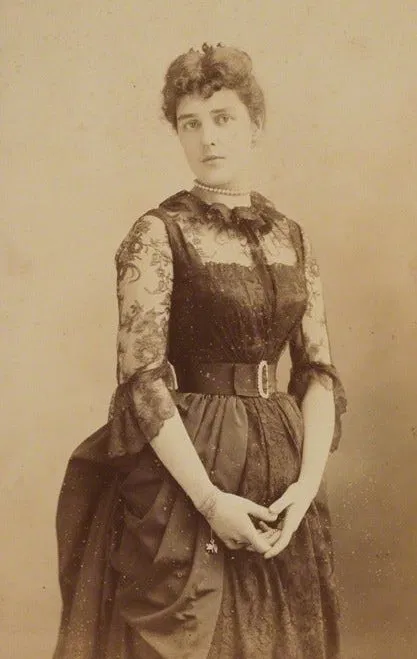
Victorian high society ran on an unwritten contract: a woman of rank could take lovers, provided the affair was never confirmed publicly, her husband was never forced to act on it, and no child’s parentage was ever in question. Jennie’s affair with the Prince of Wales, which began in the early 1870s, was known to everyone who mattered and acknowledged by no one. When he was crowned Edward VII in 1902, three of his former mistresses Jennie among them, alongside Lillie Langtry and Sarah Bernhardt sat together in a box at Westminster Abbey that the press nicknamed, without much subtlety, the “king’s loose box.”
The Prince was never the center of her private life, though. That was Count Charles Kinsky, an Austrian diplomat and steeplechase rider four years her junior, whose affair with Jennie ran for years through letters and stolen weekends before he married someone else. Several biographers consider him the great love of her life. Others Herbert von Bismarck, King Milan I of Serbia moved through with less weight. One frequently cited figure puts her total number of lovers at 200; Churchill biographer Roy Jenkins called the number suspiciously round, and there’s no way now to confirm or dismiss it.
What survives more reliably is the John Singer Sargent portrait that became the frontispiece of her 1908 memoir composed, alert, a gaze that suggests the subject knows more than the painter and the 1897 Devonshire House costume ball, where Jennie appeared as the Byzantine Empress Theodora, a woman who had risen from nothing to rule the Roman world. The choice needed no caption.
In 1900, at 46, Jennie married George Cornwallis-West, a captain in the Scots Guards twenty years younger than she was. He called her Pussycat; she called him her George. He had no money and no particular ability to make any, and after a decade the marriage gave way under its own weight. They separated in 1912; the divorce came through in 1914. Cornwallis-West promptly married the actress Mrs. Patrick Campbell, who had starred, not long before, in the flop of a play Jennie herself had written.
Jennie resumed the name Lady Randolph Churchill and left no public record of how the double loss felt.In June 1918, at 64, she married a third time Montagu Porch, a colonial administrator 23 years her junior, whom she’d met on a visit to Nigeria. Winston, told of the engagement, reportedly said he didn’t mind a stepfather younger than himself, so long as the man was kind to his mother. The marriage was quiet and, by most accounts, happy. It was also her last.
The Shoes Were New
In May 1921, visiting a friend in London, Jennie fell down a staircase. She was wearing new Italian shoes with high heels. The break, at the ankle, should not have been fatal at 67 but the wound turned gangrenous, and doctors amputated the leg above the knee. For two weeks she seemed to be recovering. Then, on the morning of June 29, a blood vessel in the stump hemorrhaged. She died within hours, with Montagu Porch at her side.
She was buried beside Lord Randolph at the churchyard of St. Martin’s in Bladon, within sight of Blenheim Palace the estate his family had married her fortune to save. Winston, who would go on to lead Britain through the war his father never lived to see coming, called her the Evening Star: vivid, present in effect if never quite in reach. He never stopped returning to her influence, in letters and speeches, the way one returns to a first principle.The shoes had been beautiful. They had also, notably, never been worn before that day.
Leave a Reply