
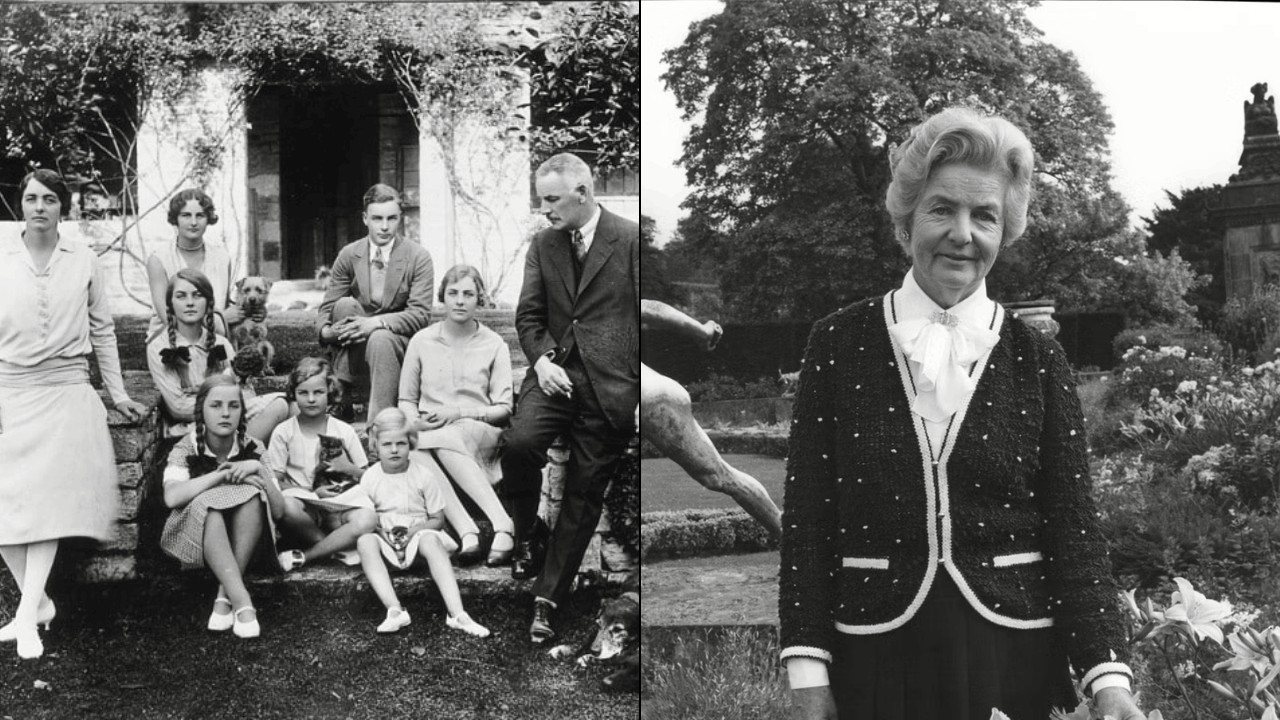
While her sisters courted Hitler, joined the Communist Party, and scandalized Britain, Deborah Mitford was written off as the boring one until she inherited a bankrupt dukedom in 1950 and quietly built it into one of England’s great fortunes.
In the mid-1930s, a teenage Deborah Freeman-Mitford sat down to dinner in Munich with Adolf Hitler. Her sister Unity had arranged it. Hitler spoke no English, so Unity translated, and by Deborah’s own account decades later, there was almost no real conversation at all. She would go on to recall that Winston Churchill filled a room with charisma the moment he entered it. Hitler, she said, did not not to her, anyway.
It is a strange detail to be almost incidental, but for Deborah Mitford, it mostly was. She was the youngest of six sisters whose politics tore Europe’s headlines and her own family apart, and for most of her early life she was defined by what she was not: not a fascist like Diana, not a Nazi devotee like Unity, not a Communist like Jessica, not a novelist like Nancy. She was, in the words later applied to her, simply the practical one. It would take a bankrupt dukedom, four dead infants, and one of England’s largest inheritance tax bills for the world to understand what “practical” actually meant.
Born Into an Eccentric and Divided House
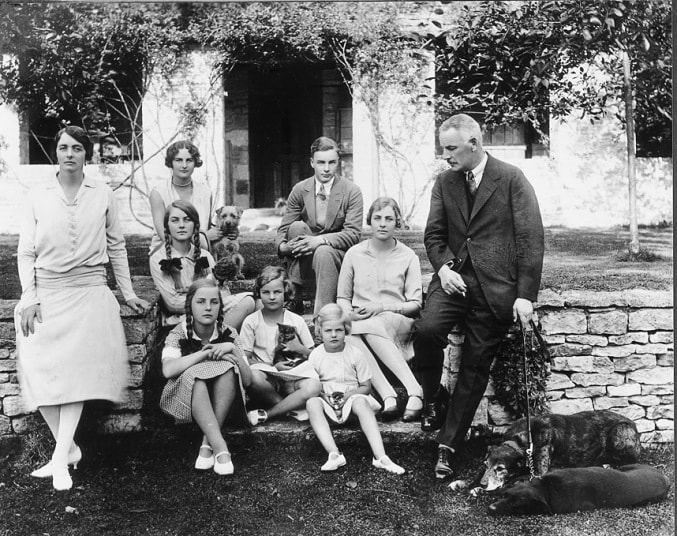
Deborah Vivien Freeman-Mitford was born on March 31, 1920. Most contemporary and genealogical sources place her birth at Asthall Manor in Oxfordshire; a smaller number of records list Kensington, London. Either way, she was born the sixth daughter of David Freeman-Mitford, 2nd Baron Redesdale, and Sydney Bowles, daughter of the publisher and Member of Parliament Thomas Gibson Bowles.
Her parents had wanted a son. They had one, Tom, born in 1909, and five daughters after him before Deborah arrived a run of disappointment her family did not entirely bother concealing. Baron Redesdale disapproved of educating girls at all, reportedly on the theory that hockey would give them fat ankles. Deborah was raised largely by governesses, spent her Saturdays fox hunting and her Sundays ice skating, and grew up mostly ignored by parents whose marriage was collapsing around her.
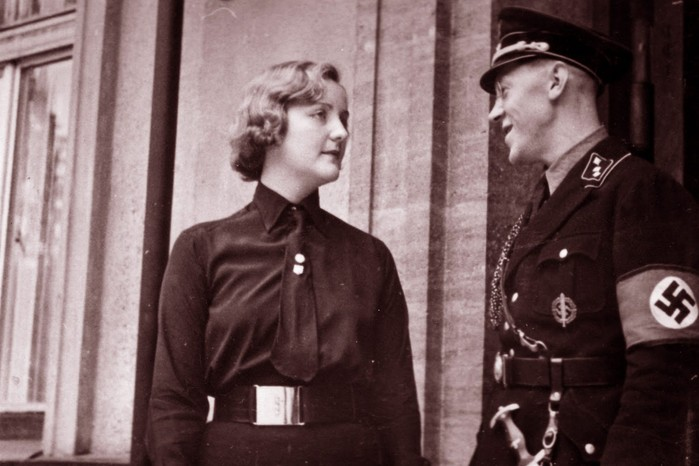
By the time she reached adolescence, her older sisters had turned the family into a subject of national fascination. Diana left her first husband in 1932 to marry Oswald Mosley, leader of the British Union of Fascists. Unity followed not long after, relocating to Munich to be near the Nazi leadership and eventually becoming one of Hitler’s closest female confidantes. Jessica, by contrast, declared herself a Communist. Nancy, appalled by Diana’s fascist sympathies, would not speak to her for years.
Their father opposed German fascism outright; their mother, Sydney, did not and the disagreement helped end the Redesdales’ marriage for good.Deborah, alongside her sister Pamela, stayed out of it. She later wrote of Diana, “I do not share her views, but my love for her overcame this side of her character” a line describing not political neutrality but family loyalty stretched over an unbridgeable gap.
A Sister Retrieved From the Wreckage of Her Own War
That loyalty was tested on September 3, 1939, the day Britain declared war on Germany. Unity, unable to reconcile her devotion to Hitler with the war between their two countries, walked into Munich’s English Garden and shot herself in the head. She survived, though the bullet could not be safely removed. Hitler, informed of the attempt, visited her in the hospital and arranged for her care.
Three months later, Unity was moved to a hospital in neutral Switzerland. Deborah, not yet twenty, traveled with her mother to Bern to bring her sister home. “We were not prepared for what we found,” Deborah later wrote of the sister she encountered: emaciated, her hair matted, permanently altered by the wound she carried in her skull.
Unity would live nearly a decade more as an invalid, cared for by her mother and sister, before dying in 1948 when the bullet shifted position in her brain.Deborah defended Unity for the rest of her life, even as the press and, later, her own in-laws raised the question of her sister’s Nazi associations. It was not agreement. It was blood.
Marrying Into a Family, Not a Fortune
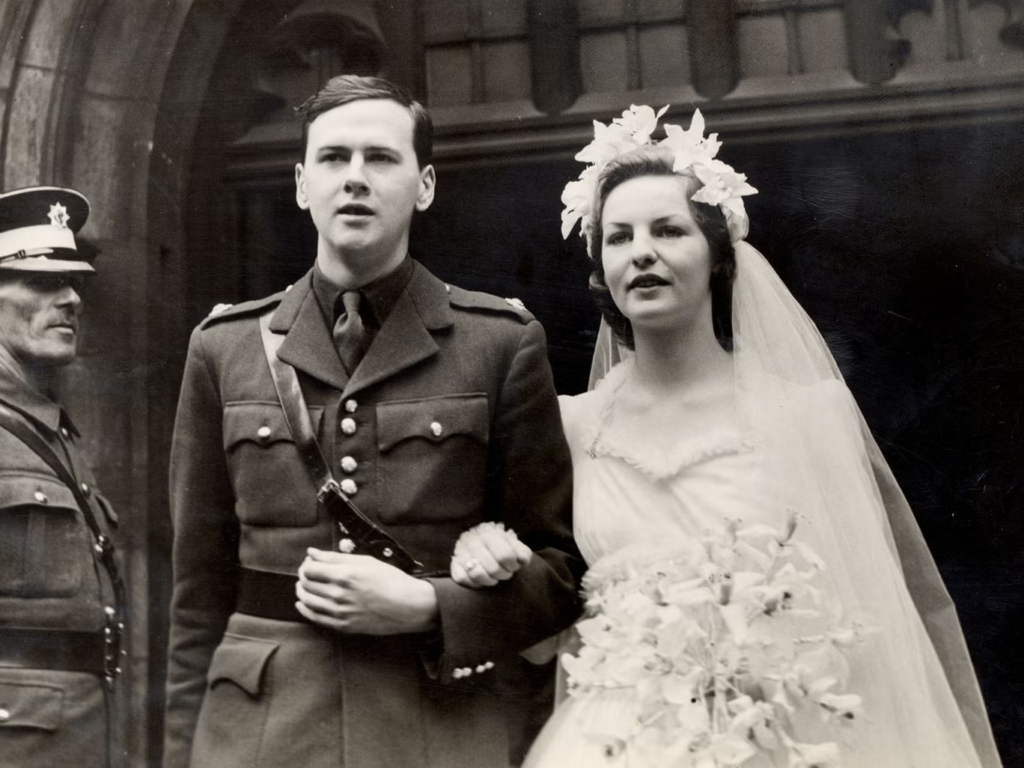
Not long after returning from Switzerland, Deborah agreed to marry Lord Andrew Cavendish, the younger son of the 10th Duke of Devonshire. They married in 1941 at the Priory Church of St Bartholomew the Great in London. At the time, Andrew was a second son no title, no expectation of inheriting anything grander than a comfortable life in his older brother’s shadow.Their first child, a boy named Mark, was born and died on the same day: November 14, 1941.
Three years later, the shadow lifted in the worst possible way. Andrew’s older brother, William “Billy” Cavendish, had married the American socialite Kathleen “Kick” Kennedy sister of the future president in May 1944. Four months after the wedding, on September 9, 1944, Billy was killed by a sniper while leading a company of the Coldstream Guards near Heppen, Belgium. Andrew became heir to the dukedom by his brother’s death, not by any plan of his own.
Six years later, in November 1950, the 10th Duke died suddenly of a heart attack. Andrew, thirty years old and stationed in Australia at the time, inherited the title. Deborah, twenty-nine, became Duchess of Devonshire a role neither of them had spent their marriage expecting to hold.
Inheriting a Palace the Government Nearly Took
The inheritance came with a debt attached large enough to end it. Death duties on the 10th Duke’s estate were assessed at the maximum wartime rate commonly put at roughly £7 million, though estimates of the precise figure vary. Advisors told the new Duke and Duchess the situation was unfixable and recommended breaking up the estate for sale piece by piece.
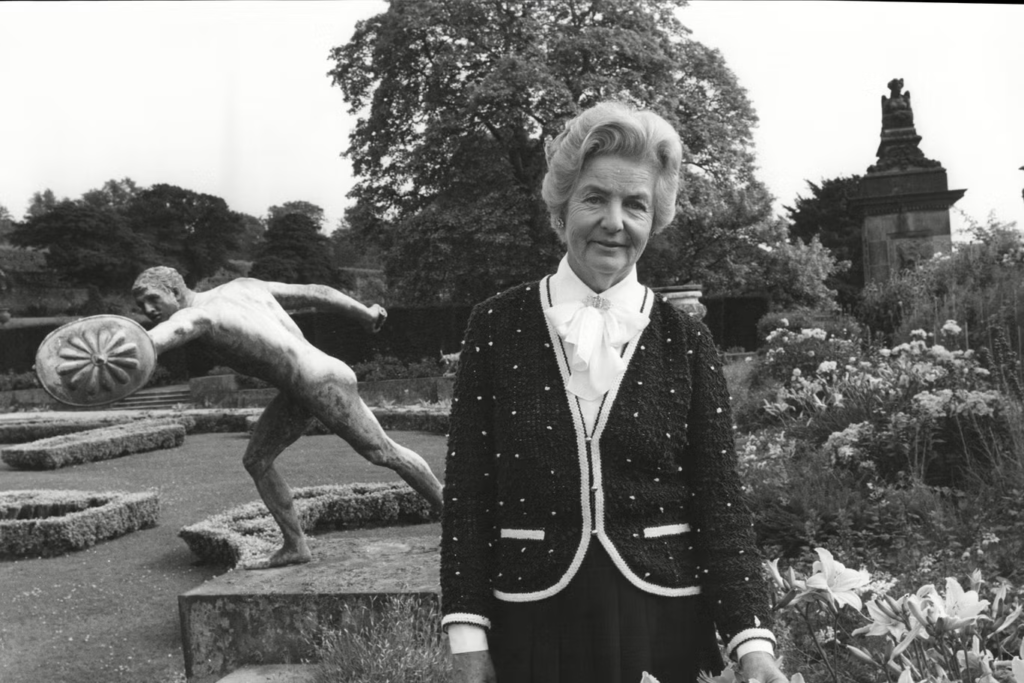
They didn’t. Instead, they sold what they had to: major works of art, rare books, and Hardwick Hall, a second Cavendish palace dating to the 16th century, handed to the Treasury in place of cash. Thousands of acres went with it. What remained was Chatsworth House itself 300 rooms across five storeys, first purchased by the Cavendish family in 1549 sitting empty, its interior stripped for wartime use as a girls’ boarding school, uninhabited by any Duke or Duchess of Devonshire in years.
Deborah became the house’s chief restorer. She oversaw the repainting of family rooms and the rebuilding of common areas herself, and by 1959 nine years after inheriting a debt no one expected them to survive the Cavendishes were able to move back in.
The Housewife Who Rebuilt a Fortune
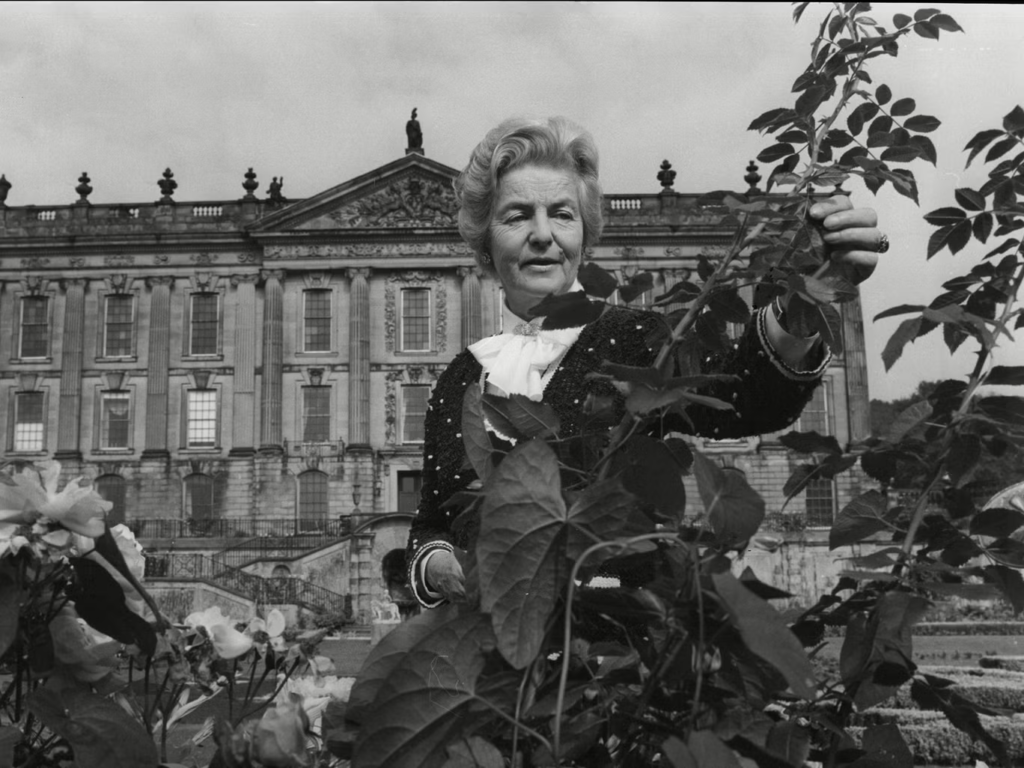
What Deborah built next went well beyond restoration. She planted the gardens that would eventually supply a working farm and, later, the Chatsworth Farm Shop. She personally staffed the ticket office when Chatsworth first opened its doors to paying visitors. She oversaw the development of hotels on the surrounding estate, in the villages between Chatsworth and Chesterfield.
By the 1990s, the house she had inherited half-derelict was drawing crowds that placed it alongside the Tower of London as one of England’s most visited attractions a status it still holds today, with over half a million visitors a year.
She was, in the phrase later applied to her by the British press, the “housewife duchess.” It was accurate in only the narrowest sense. What she had actually done was take an aristocratic fortune the government had all but confiscated and rebuild it into one of Britain’s largest a business achievement her more famous sisters, for all their headlines, never came close to matching.
A Marriage Held Together on Her Terms
None of it came without cost at home. Andrew’s infidelities became a matter of public record when he was called to testify at a burglary trial and was forced to admit, under oath, that he had been on holiday with one of a series of younger women at the time of the crime. He also drank heavily for years. Deborah tolerated both for a long time before finally confronting him in the 1980s, giving him an ultimatum between her and the drink. He chose her
Asked years later why she had stayed married to a man who had given her so many reasons to leave, Deborah gave an answer with no self-pity in it at all: he wasn’t boring.The marriage produced seven children in total. Four did not survive infancy Mark in 1941, a miscarried twin in 1946, and two more children who died shortly after birth in 1947 and 1953. Three lived: Emma, born in 1943; Peregrine, born in 1944; and Sophia, born in 1957, arriving after a run of loss that would have broken a lesser resolve.
The Last Mitford
Andrew died in 2004 at eighty-four, having served two decades in government under his uncle by marriage, Prime Minister Harold Macmillan, and having watched, alongside Deborah, the dukedom recover from the edge of dissolution to genuine wealth. Their son Peregrine succeeded as the 12th Duke. Deborah moved out of Chatsworth to make way for him, back into the smaller house on the estate where she and Andrew had lived in the 1950s while the main house was still being rebuilt.
By the time of her own death on September 24, 2014, at ninety-four, Deborah Cavendish was the last surviving Mitford sister the one nobody expected to matter, having outlasted every sibling whose politics once made international headlines. Diana had died in 2003. Pamela and Jessica had gone in the mid-1990s. Nancy in 1973.Her funeral drew crowds two miles deep along the road from Chatsworth House to St Peter’s Church in Edensor: more than 600 estate staff given the day off to line the route, hundreds more members of the public, and the Prince of Wales and Duchess of Cornwall walking the entire distance behind her coffin.
Inside the church, the congregation sang hymns. Then, at the request of a woman who had once dined uncomfortably with Adolf Hitler and spent a lifetime being underestimated by history, the recording that played was Elvis Presley singing “How Great Thou Art.”She was buried beside the sister she had once crossed a continent at war to bring home.Now that you’ve read about Deborah Mitford, discover the story of her sister Unity Mitford, the socialite whose devotion to Hitler nearly cost her everything. Or read about Kathleen “Kick” Kennedy, the American who married into the Cavendish family and lost her husband within months.
Leave a Reply