
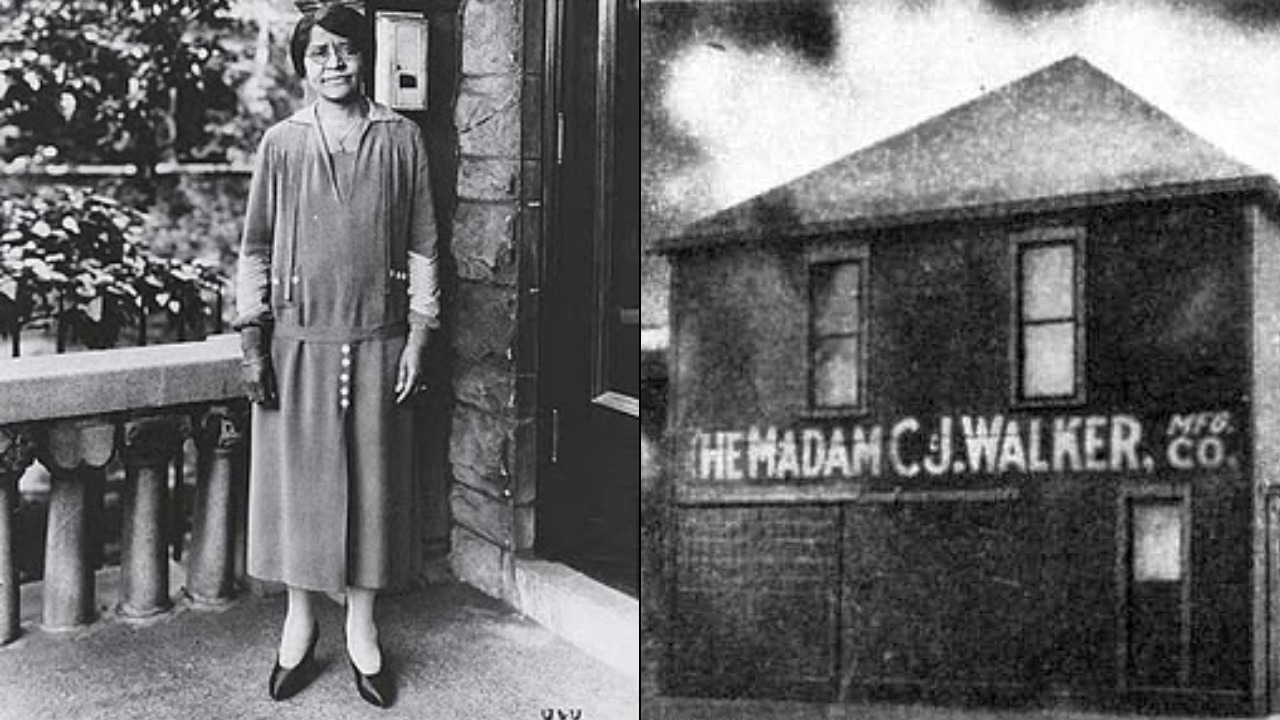
In November 1913, Annie Malone sat in the audience at the National Negro Business League’s annual convention in Philadelphia, watching a woman she had once employed take the stage. Madam C.J. Walker, then in her mid-forties and already a nationally known hair-care entrepreneur, spoke to the room about her rise in the business. She did not mention Annie Malone once.Malone stood up. Without a word, she walked out of the hall. Her entourage followed her into the corridor.By then, Malone was already a millionaire. Walker was not yet close.
Annie Turnbo Built a Business Out of a Farmhouse in Illinois
Annie Minerva Turnbo was born on August 9 near Metropolis, Illinois, the tenth of eleven children born to Robert and Isabella Turnbo, both of whom had escaped slavery in Kentucky. Robert joined the Union Army’s 1st Kentucky Cavalry during the Civil War. Both parents died while Annie was still young, and she and her siblings were raised piecemeal among older relatives, eventually landing with an older sister in Peoria.
Her exact birth year is contested. Older institutional sources the Missouri Historic biography project, BlackPast list 1869. Newer scholarship and genealogical records, including Wikipedia’s sourced infobox, list 1877. The discrepancy likely traces back to inconsistent record-keeping common for Black Americans born in the Reconstruction-era South and Midwest, where birth certificates were rarely filed. It matters here for one concrete reason: Malone is reported to have died at age 79, a figure that is only mathematically consistent with an 1877 birth year. This piece treats 1877 as the better-supported date, while noting that 1869 remains in wide circulation.
Frequent illness kept Annie out of school more often than in it. What she retained was an interest in chemistry and an eye for hair. African American women of her generation styled their hair using goose fat, lye soap, and heavy oils, methods that scarred scalps and broke hair off at the root. Turnbo began experimenting with something gentler.By her mid-twenties, working out of the small town of Lovejoy, Illinois, she was selling hair oils, straighteners, and scalp treatments she’d formulated herself one of them a hair grower that did not damage the scalp the way its competitors did.
A Move to St. Louis Turns a Local Business Into an Empire
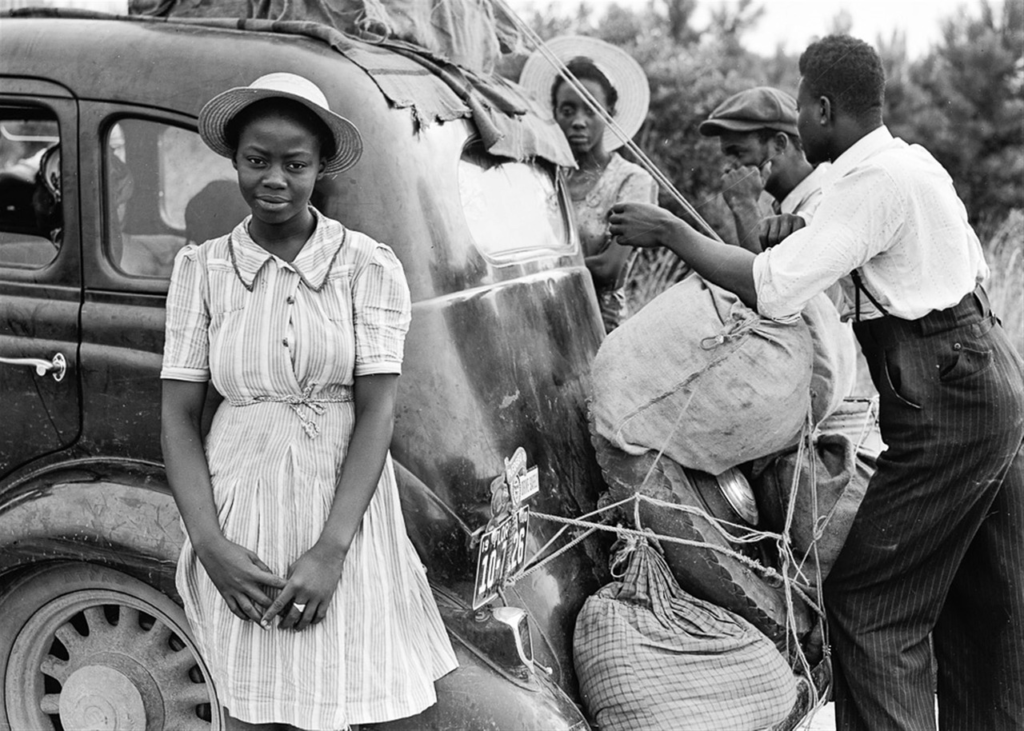
Turnbo’s timing was exact. St. Louis’s Black population had climbed from roughly 100,000 residents in the mid-1800s to nearly 700,000 by 1910, swelled by the Great Migration north. In 1902, she moved her operation to the city, opened a shop on Market Street, and began advertising directly in Black neighborhoods and newspapers while also hiring white saleswomen to sell into white neighborhoods, a rare cross-market strategy for the period.
She trademarked her products under the name Poro, a West African term denoting an organization built to discipline and refine both body and spirit. She did not rely on salon traffic. Poro agents went door to door, demonstrating the product in customers’ own homes a sales model Malone pioneered decades before Avon existed.One of the women who became a Poro agent, sometime between 1903 and 1905, was a widowed mother in her mid-thirties named Sarah Breedlove.
Sarah Breedlove Learns the Business Then Leaves to Start Her Own
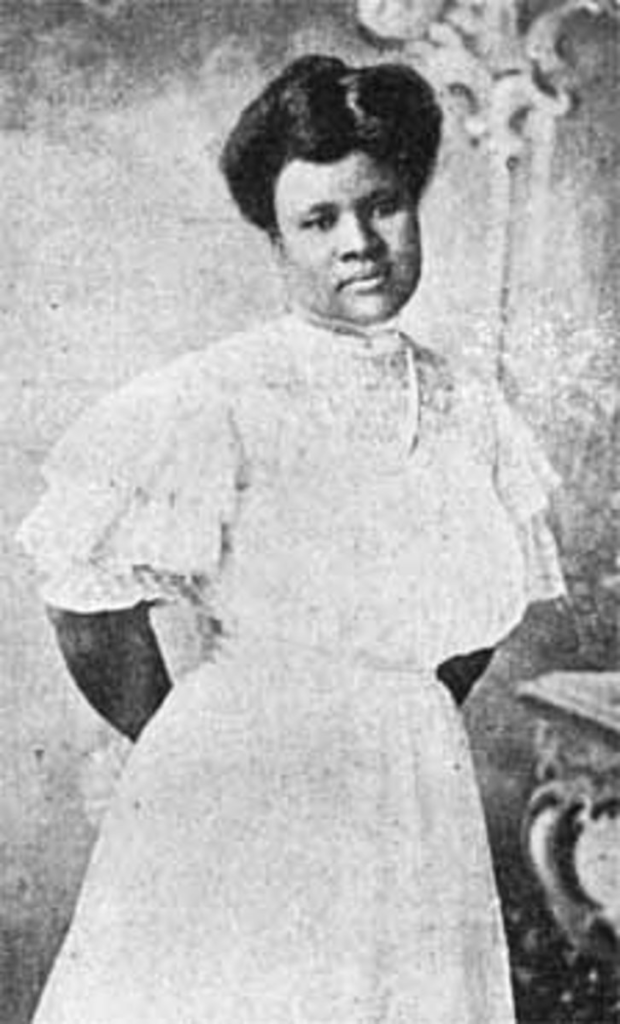
Breedlove had been battling a scalp condition that was costing her her hair. Malone’s Wonderful Hair Grower treated it. Breedlove signed on as a commissioned Poro sales agent, learned the formula, the sales structure, the door-to-door model and in 1905, relocated to Denver, where she began developing a nearly identical product using her own dream-inspired backstory. The following year she married Charles Joseph Walker and renamed herself Madam C.J. Walker.
Malone accused her former agent of stealing the formula outright. Walker’s defense was that Black women had used variations of the petroleum-and-sulfur mixture for generations that no one owned it. The charge never held up in any formal legal sense. It didn’t need to. By the time both businesses were worth millions, the public had already begun choosing its founder and history’s choice would ultimately have less to do with who built the formula than with who was still alive to defend her legacy.
Poro College Becomes a City Within the City
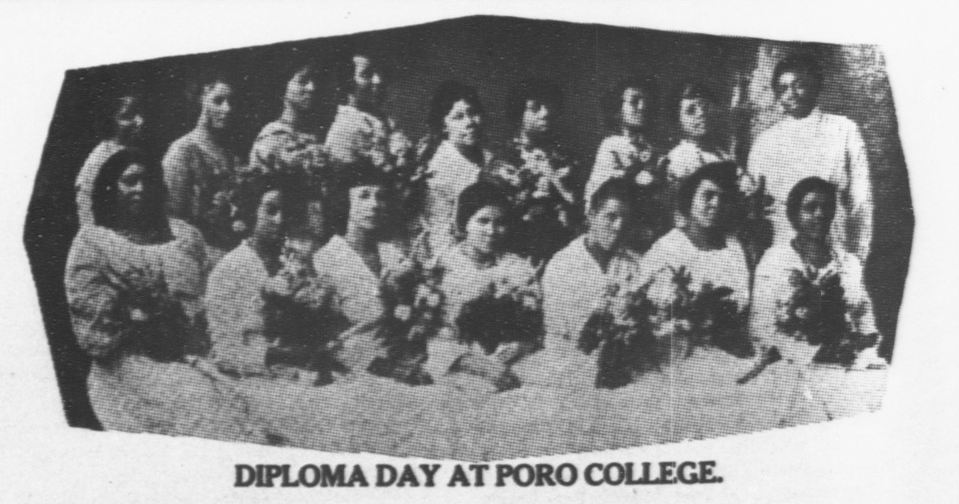
By 1917, Malone had enough capital to build something no one had built for Black women before: a three-acre training complex in St. Louis’s Ville neighborhood, with classrooms, manufacturing floors, a 500-seat auditorium, dormitories, a bakery, a gymnasium, a roof garden, and a full-service dining hall a campus, decades before Silicon Valley made corporate campuses fashionable.
Poro College trained an estimated 75,000 women between the 1910s and the early 1940s, dispatching franchised graduates as far as the Caribbean, South America, the Philippines, and parts of Africa. At its peak in the mid-1920s it employed roughly 175 people on-site in St. Louis alone. In 1924, Malone’s reported income tax bill came to nearly $40,000 then said to be the highest individual tax payment in Missouri, and the rough equivalent of three-quarters of a million dollars today.
She was, by multiple accounts, among the first Americans to own a Rolls-Royce, though she spent the rest of her fortune with none of that same flash funneling money instead into Howard University’s medical school and the St. Louis Colored Orphans’ Home, where she sat on the board for more than two decades.
The college was also, by design, more than a business. When a tornado tore through St. Louis in 1927, killing 79 people and leaving thousands homeless, Malone opened Poro College’s doors to the displaced, feeding and sheltering storm victims for weeks alongside the Red Cross the same complex that trained beauticians by day became a relief shelter almost overnight.
A Second Marriage Ends in a Six-Year Legal War
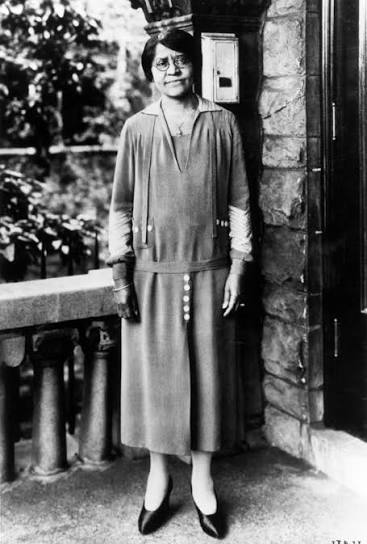
Malone’s first marriage, to Nelson Pope in 1902, dissolved by 1907, leaving little record behind. Her second, to former schoolteacher Aaron E. Malone in 1914, lasted longer and initially folded him into the business he took over as company president and helped run the operation for over a decade.The marriage soured through the 1920s as Aaron consolidated influence inside the company, reportedly working to turn some of Malone’s own employees against her leadership as the relationship deteriorated.
In 1927, he filed for divorce and demanded half the business, arguing he’d helped build it. The case dragged through St. Louis courts and newspapers for years. Malone settled for a $200,000 payment a fortune in the 1920s but kept sole control of the company that bore, by then, only half of the name she was born with.
The Empire Comes Apart in Chicago
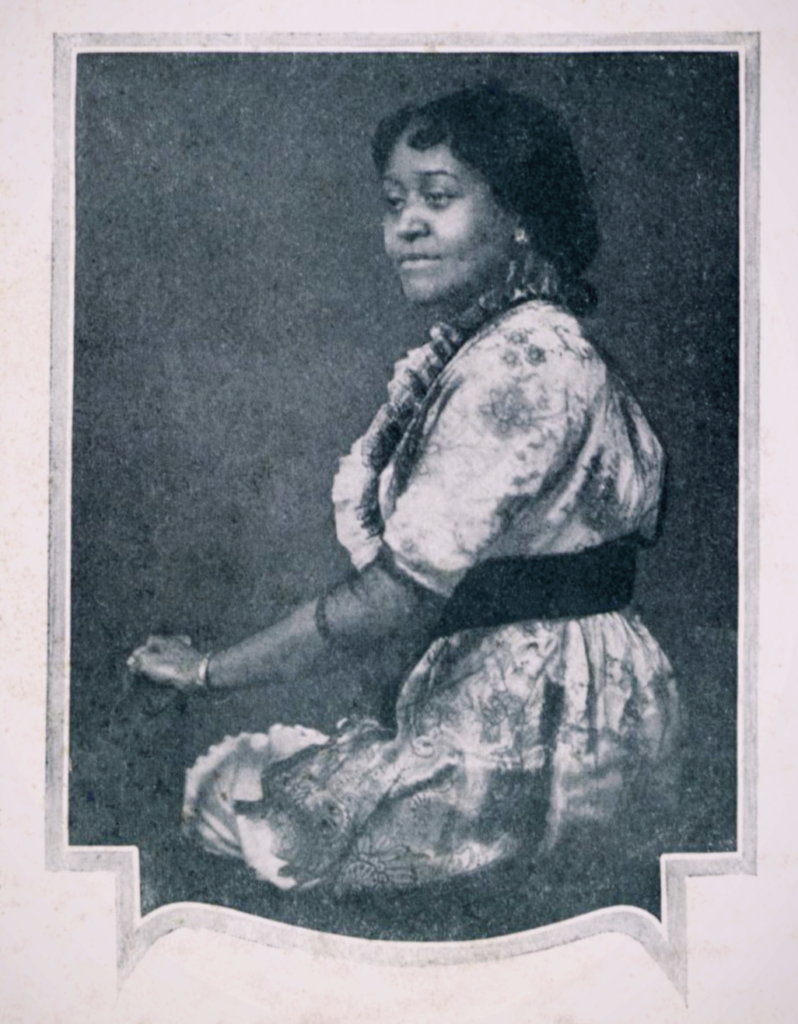
She relocated the business to Chicago in the 1930s, still wealthy enough to buy an entire city block. But Poro never fully recovered. The Great Depression gutted sales through most of the decade, and a string of lawsuits from people trying to claim pieces of her fortune left her cash-poor by the mid-1930s. She sold St. Louis property to stay solvent. Trouble with the federal government followed: Malone fell behind on excise taxes owed on her products and on real estate taxes, and by 1951 the government had moved to seize control of what remained of the company the final blow to an empire that had once rivaled anything built by a woman of her era, Black or white.
In 1939, before that final collapse, the original Poro College building on Ferdinand Street had already become the site of Missouri’s first law school for Black students training a new kind of advancement inside the walls where Malone had once trained hairdressers.She spent her last years on Chicago’s South Parkway, winding down her direct involvement in a business that, without her, kept a diminished presence into the 1940s. In the late spring of 1957, she suffered a stroke. She died shortly afterward at Provident Hospital, at 79.
Leave a Reply