
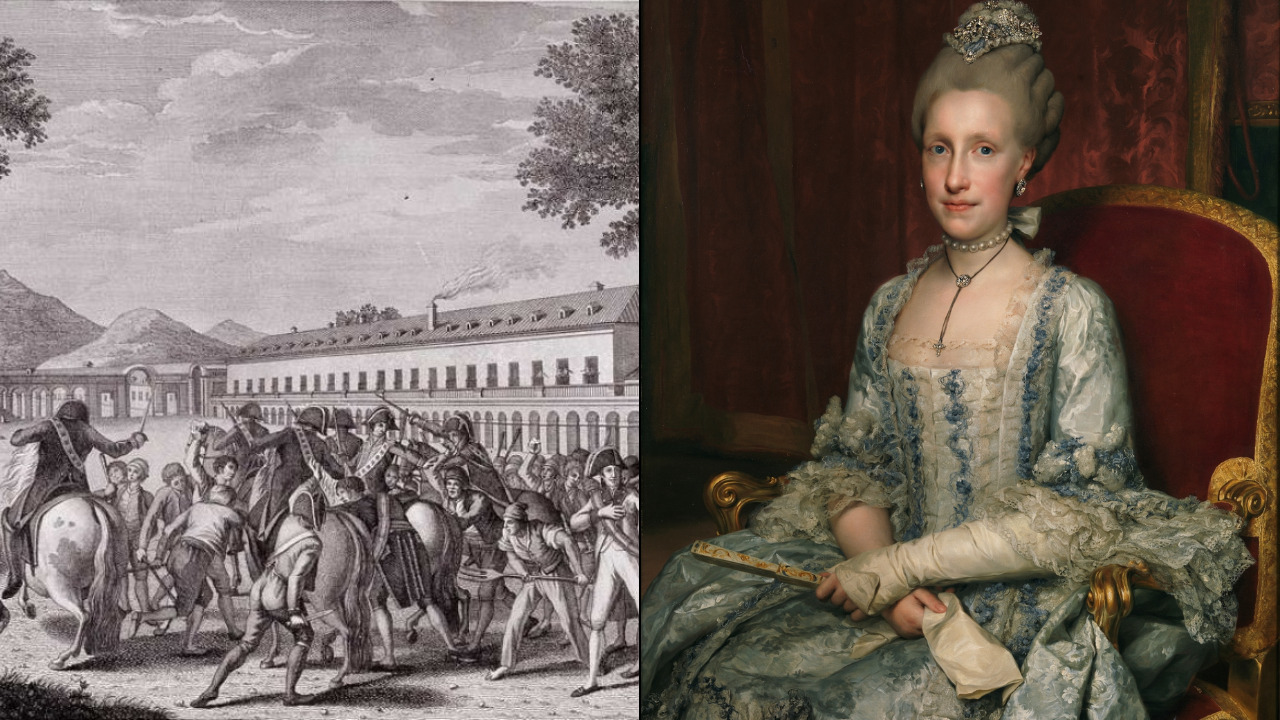
On July 23, 1802, María Cayetana de Silva, the 13th Duchess of Alba, died of a fever in the Andalusian town of Sanlúcar la Mayor. She was 40 years old, the wealthiest woman in Spain, and by the account already spreading through Madrid the latest casualty of Queen Maria Luisa of Parma, who was rumored to have had her poisoned out of jealousy. Physicians attributed the death to tuberculosis. Spain believed the queen.
A Duchess Born Into Loss
Maria Luisa was born on December 9, 1751, in the Italian city of Parma, the youngest child of Philip, Duke of Parma the fourth son of King Philip V of Spain and Louise Élisabeth of France, eldest daughter of King Louis XV. The duchy had come to the Bourbons only three years earlier, awarded to her father under the Treaty of Aix-la-Chapelle. Maria Luisa had two older siblings: Isabella, born in 1741, and Ferdinand, born in January 1751, just eleven months before her.
The family’s fortune in Parma soured quickly. Louise Élisabeth died in 1759. Isabella, who had married the future Holy Roman Emperor Joseph II, followed her mother to the grave in 1763, both claimed by smallpox the era’s deadliest disease. The children’s education is usually credited in part to Étienne Bonnot de Condillac, the French Enlightenment philosopher, but the record here is genuinely murky rather than simply uncertain: most accounts tie Condillac firmly to Maria Luisa’s brother Ferdinand, the heir he was specifically brought in to tutor, while his connection to the sisters is thinner and inconsistently dated.
Some sources place his arrival in Parma as early as 1758, which would have overlapped with Maria Luisa’s own childhood there; others date it later, after she had already left for Spain. Whether she was ever actually his student is not a settled question it’s an open one most retellings simply skip past.
A Child Bride to an Unwilling King
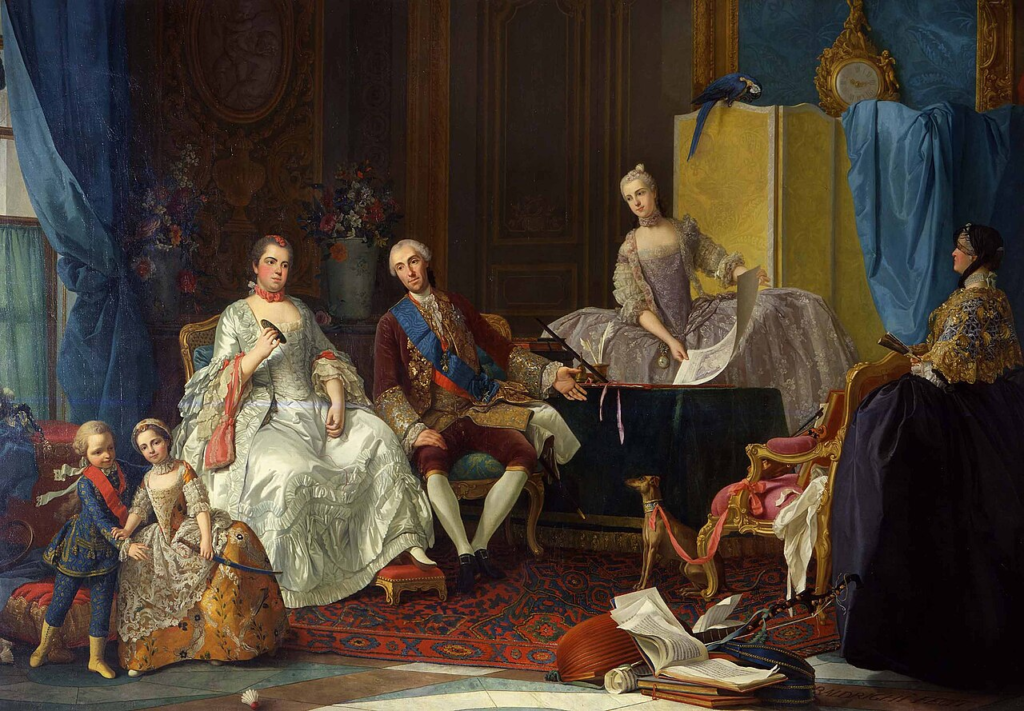
By the time her mother died, marriage negotiations were already underway. An early match with Louis, Duke of Burgundy, dissolved when the boy died of tuberculosis at nine. In his place came Prince Charles, heir to the Spanish throne and Maria Luisa’s first cousin. On September 4, 1765, at La Granja Palace in San Ildefonso, north of Madrid, the marriage was consecrated. Maria Luisa was 13. Charles was 16.The early years were brutal in a different way. Charles’s mother was already dead, and Maria Luisa, thrust into the role of first lady of an austere Spanish court, drew open resentment from relatives who found her domineering over a husband who never developed into a forceful heir.
Pregnancy brought no relief. Across her marriage, Maria Luisa endured 24 pregnancies. Ten ended in miscarriage. Of the 14 children she carried to term, seven died in infancy or childhood a firstborn son dead at two and a half, a daughter dead at not yet five, infant twins dead within weeks of each other in 1784. Only seven survived to adulthood.Rumors circulated at court that the queen was cursed. By her 30s, courtiers noted a jaundiced yellow tinge to skin once described as strikingly attractive in her 20s the toll, it was whispered, of twenty years spent almost constantly pregnant.
The Favorite Who Ran a Kingdom
King Charles III died in the winter of 1788, and Maria Luisa’s husband ascended as Charles IV. She wasted no time establishing her role: at the new king’s first meeting with his senior councilors that same year, she was present, and stayed present for the next two decades. Charles preferred hunting to governing. Maria Luisa preferred governing to almost everything else, and became the primary patron of a young court painter named Francisco Goya.
It was also under Charles IV that Manuel de Godoy, a young royal guardsman, rose with startling speed to Secretary of State and effectively ran Spain. Godoy’s youth, his closeness to the queen, and the sheer velocity of his promotion fed years of court gossip that he and Maria Luisa were lovers and that he had fathered several of her later children. The rumor found its most striking supporter after her death: her own confessor, Fray Juan Almaraz, reportedly wrote in his last will that Maria Luisa confessed on her deathbed that “none, none of her sons and daughters, none was of the legitimate marriage.” Historians have never been able to verify the confessor’s account independently, and most treat it with real skepticism but it has outlived every denial anyone issued while the queen was alive.
The same court gossip that trailed Godoy trailed Maria Luisa’s rivalries with other women. The Duchess of Alba’s death in 1802 was folded instantly into the poisoning narrative, despite the fact that nearly every historian who has examined the case attributes it to tuberculosis. Two years later, when her own daughter-in-law, 21-year-old Maria Antonia of Naples and Sicily, died suddenly, the same accusation resurfaced. The friction between the two women wasn’t purely personal: Maria Antonia was outspokenly anti-French at a court now entirely dependent on Paris, which put her at odds with both Godoy and her mother-in-law well before any illness set in. Her death, like the duchess’s, is now generally attributed to tuberculosis, not poison.
A Crown Undone by an Ally
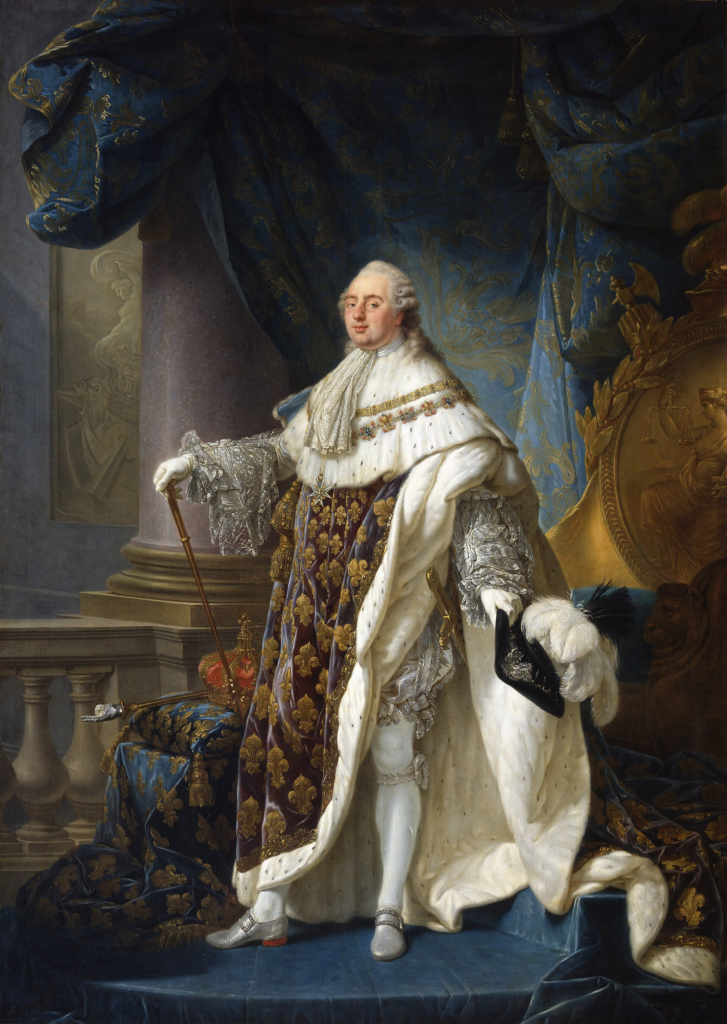
While rumor consumed the Spanish court, a genuine threat was building across the Pyrenees. The French Revolution, which broke out in 1789, ended in the execution of Maria Luisa’s cousin Louis XVI in 1793 and dragged Spain into war against the new French Republic. Spain made peace at Basel in 1795, and by 1796 Charles, Maria Luisa, and Godoy had reversed course entirely, binding Spain to France as its closest ally in Europe. The alliance served the queen’s own ambitions as much as it served Spanish foreign policy: in 1800, Godoy negotiated the Second Treaty of San Ildefonso, trading the vast Louisiana territory back to France in exchange for a throne the newly created Kingdom of Etruria in Tuscany, installed specifically to make Maria Luisa’s daughter and namesake a queen in her own right.
The arrangement only grew more lopsided after Napoleon crowned himself emperor in 1804.In 1807, Godoy negotiated the Treaty of Fontainebleau, permitting Spanish and French troops to jointly invade Portugal. French soldiers poured into Spain and never fully left. That October, Crown Prince Ferdinand long hostile to his mother’s favorite was caught plotting to depose his own father and remove Godoy, a scheme uncovered at the Escorial palace. Ferdinand was arrested, informed on his own advisors to save himself, and was pardoned by his parents. The reconciliation didn’t hold.
Exile, and a Question Without an Answer
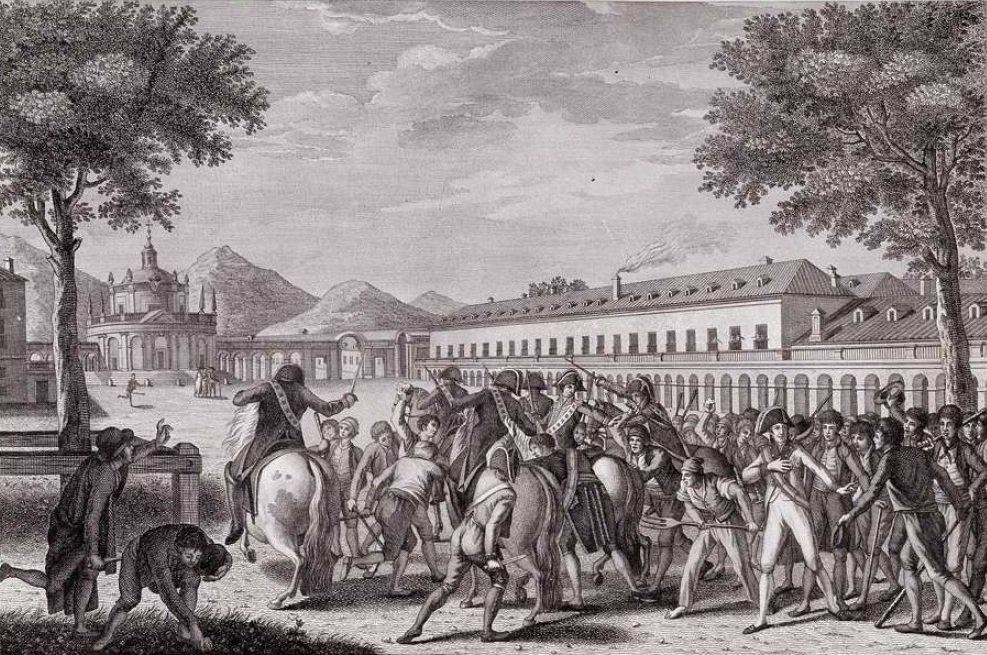
Five months later, on March 17, 1808, with the royal family fleeing south toward the coast amid rumors they meant to escape to the Americas, a mob of soldiers and citizens stormed the palace at Aranjuez, ransacked Godoy’s quarters, and dragged him out half-dead. Two days later, the same crowd forced Charles to abdicate in Ferdinand’s favor. Napoleon, unwilling to recognize either Bourbon claimant, lured father and son to Bayonne under the pretense of mediating the succession, then compelled both to renounce the crown outright, installing his own brother Joseph as king that summer.
Maria Luisa, Charles, and Godoy left Spain together and spent years as effective political prisoners in the south of France accounts place them first in Aix-en-Provence, later Marseille comfortable but watched. In 1812 they were permitted to relocate to Rome, living under the protection of the papacy while Ferdinand, restored to the Spanish throne after Napoleon’s collapse, refused to let his parents come home.
Maria Luisa died in Rome on January 2, 1819, at 67. Charles followed just over two weeks later. Godoy outlived them both by more than three decades. In her will, Maria Luisa had named him a principal beneficiary and Charles, freed from his wife’s judgment for the first time in over fifty years, asked Godoy to vacate their household almost immediately after her death.
Whether Godoy was ever more than a minister to her is a question that has outlasted every person who could have answered it honestly. The confessor’s letter says one thing. The absence of any surviving proof says another. Spain believed what it wanted to believe about its queen while she was alive, and has largely kept believing it ever since.
Leave a Reply