
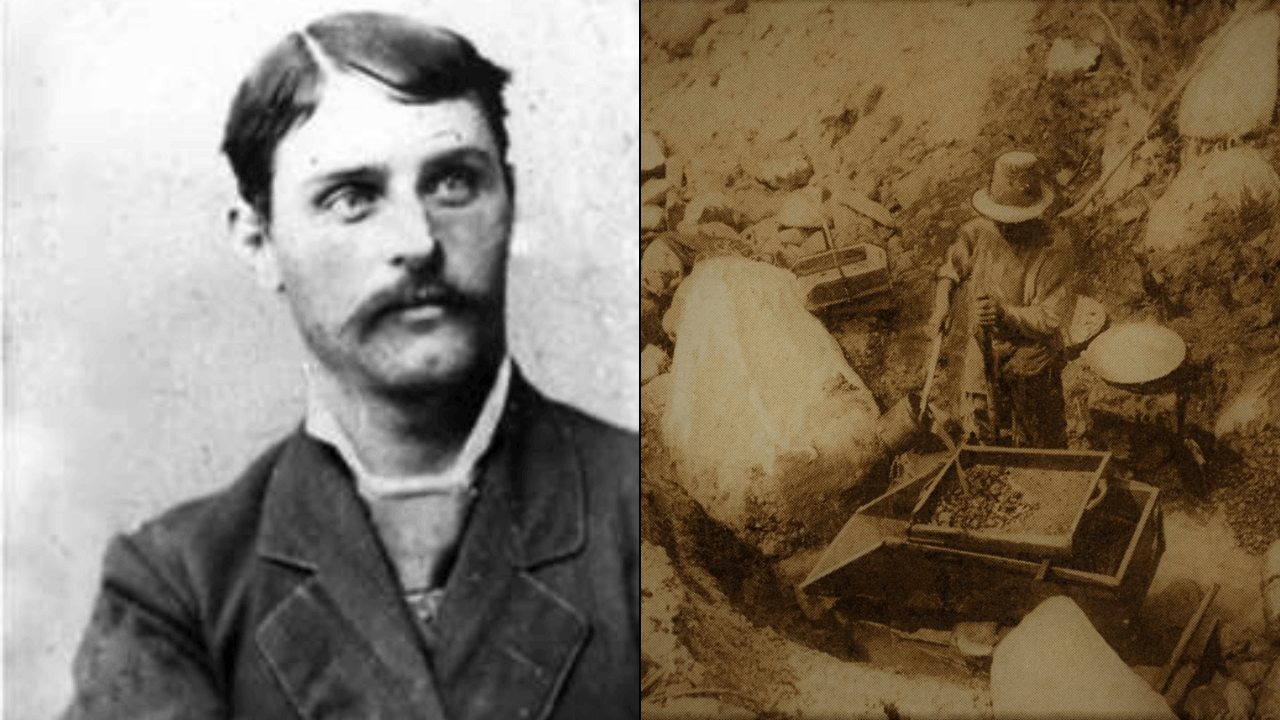
Philip Arnold spent roughly $28,000 on cast-off London gemstones, scattered them across a single acre of Colorado mesa, and walked away with $550,000 about $8 million today.At about four o’clock on the afternoon of June 4, 1872, six men reached a bare, iron-stained mesa in the northwest corner of Colorado after four days on horseback. Philip Arnold had led them there by a deliberately confusing route, stopping often to climb hills and consult his compass, playing a man half-lost in country he knew perfectly.
He was unusually helpful about where the others should dig. Within minutes, Alfred Rubery shouted and held something up to the light. For more than an hour the party pulled diamonds from the ground, along with rubies, emeralds and sapphires. Asbury Harpending later wrote that he could never work out why a few pearls hadn’t been thrown in as well.Arnold had buried every stone himself.
A Hatter’s Apprentice Goes West and Comes Home With a Leather Bag
Philip Arnold was born in 1829 in Hardin County, Kentucky, the same county that produced Abraham Lincoln. He received almost no education. He was apprenticed to a local hatter, enlisted for the Mexican-American War as a teenager, and joined the rush to California in 1849. For the next two decades he worked mining operations across the West, earning enough to return periodically to Kentucky, where he bought a farm, married a woman named Mary, and started a family.By 1870 he was 41 and working in San Francisco as an assistant bookkeeper for the Diamond Drill Co.
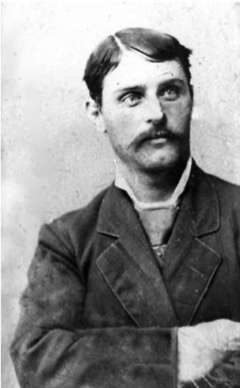
A firm that manufactured drills tipped with industrial diamonds. Arnold took an interest in the merchandise that was unusual in a bookkeeper. He read technical works on gemstones. By November of that year he had acquired a bag of uncut industrial diamonds, presumably from his employer, and mixed them with garnets, rubies and sapphires he had likely bought from Indians in Arizona.He had also acquired a partner: his older cousin John Burcham Slack, born in Hardin County in 1820, another Mexican War veteran and another forty-niner. Arnold talked. Slack said almost nothing. The division of labor held for two years.
Arnold Lets Two Words Slip in George Roberts’s Office
The pair chose their first mark carefully. George D. Roberts was a San Francisco businessman whose prominence had been built by moving quickly and asking few questions. He also knew Arnold, who had once prospected for him.Arnold and Slack turned up at his office one night in late 1870, weather-beaten, holding a small leather bag. Inside was something of great value, they said, which they would have deposited at the Bank of California had the hour not been so late. They resisted saying more until Arnold allowed himself to let slip two words: rough diamonds.
On where they had found them, the cousins mumbled something about Indian territory an answer that was true in a way Roberts did not understand.Then Arnold asked Roberts to swear himself to secrecy. Roberts agreed.”Roberts was very much elated by our discovery,” Arnold told the Louisville Courier-Journal in December 1872, “and promised Slack and myself to keep it a profound secret until we could explore the country further and ascertain more fully the extent of our discoveries.
” Arnold understood exactly what a promise of silence does to a man like Roberts. The office door had barely shut before Roberts was spreading the news.He told William C. Ralston, founder of the Bank of California, a financier who had put money into the Comstock Lode, the transcontinental railroad, and most things in between. He got word to Asbury Harpending, then in London, who sailed for San Francisco as fast as steamships and railroads would carry him. William M. Lent and Gen. George S. Dodge came in behind them.
The Cousins Sail to London and Buy Their Diamond Field Wholesale
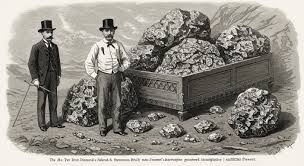
The investors wanted the two prospectors bought out and gone. Arnold and Slack made a show of reluctance before Slack named his price: $100,000 for his share, half in advance and half after one more trip to the field.With the first $50,000, the cousins sailed for England. In July 1871, travelling under assumed names Arnold as “Aundel,” Slack using his middle name, Burcham they bought $20,000 worth of rough diamonds and rubies, thousands of stones, from a London merchant named Leopold Keller.
“I asked them where they were going to have the diamonds cut,” Keller later testified in a London court. They never intended to have anything cut. Some stones would be shown to investors as proof. The rest would be buried in Colorado for those investors to find.Harpending met their returning train at Lathrop, California. “Both were travel stained and weather beaten and had the general appearance of having gone through much hardship and privation,” he wrote.
Slack was asleep. Arnold “sat grimly erect like a vigilant old soldier with a rifle by his side, also a bulky looking buckskin package.” The cousins explained that they had found $2 million in stones and split them into two packs, one of which had been lost crossing a river on a raft they had built themselves.At Harpending’s house, the survivors of the imaginary raft accident were dumped onto a bedsheet spread across his billiard table. It looked, he wrote, “like a dazzling, many-colored cataract of light.”
Charles Lewis Tiffany Appraises Stones He Does Not Understand
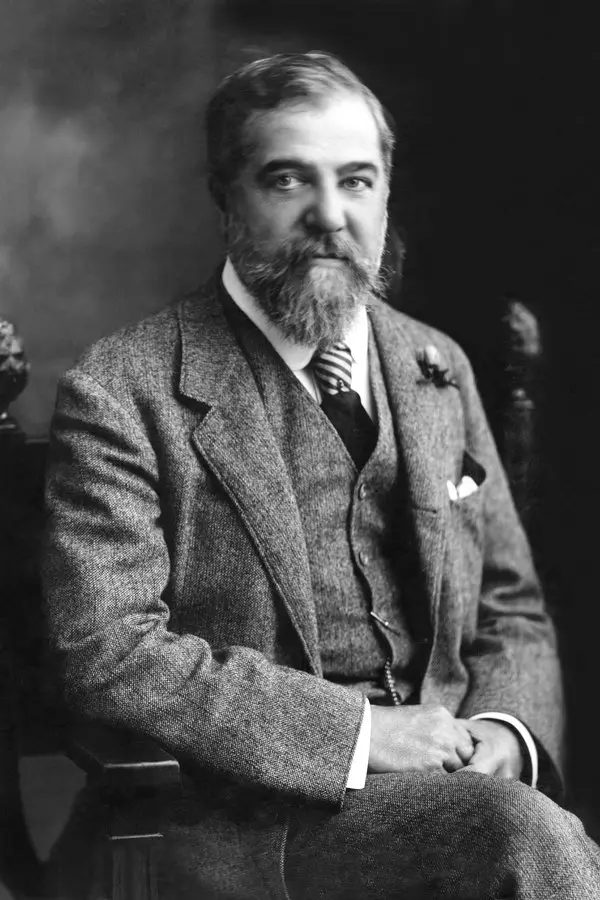
The investors were credulous, not stupid. Before committing further, they took ten percent of the haul to New York for appraisal and hired a mining engineer to inspect the field.Sometime in October 1871 the group met at the Madison Avenue home of Samuel Barlow, a corporate lawyer and friend of Ralston’s. The company assembled there says everything about how far the story had travelled. Charles Lewis Tiffany, founder of Tiffany & Co. Gen. George B. McClellan, former commander of the Union Army, recruited because his name might attract capital.
Benjamin F. Butler, by then a U.S. representative, brought in to handle any legal difficulty in Congress if the field turned out to sit on federal land. Horace Greeley, editor of the New York Tribune, whose exact role remains unknown.Tiffany sorted the stones, held them to the light, and pronounced them “beyond question precious stones of enormous value.” Two days later he returned a figure: $150,000. Harpending did the arithmetic and concluded the full sack must be worth at least $1.5 million.
The stones Tiffany valued at $150,000 were a fraction of the parcel Arnold and Slack had bought in London for $20,000. Only after the collapse did it emerge that neither Tiffany nor his lapidary had meaningful experience with uncut stones.Arnold extracted another $100,000 from the investors and went back to Keller in London for $8,000 more.
Henry Janin Stakes 3,000 Acres Around a Single Salted Acre
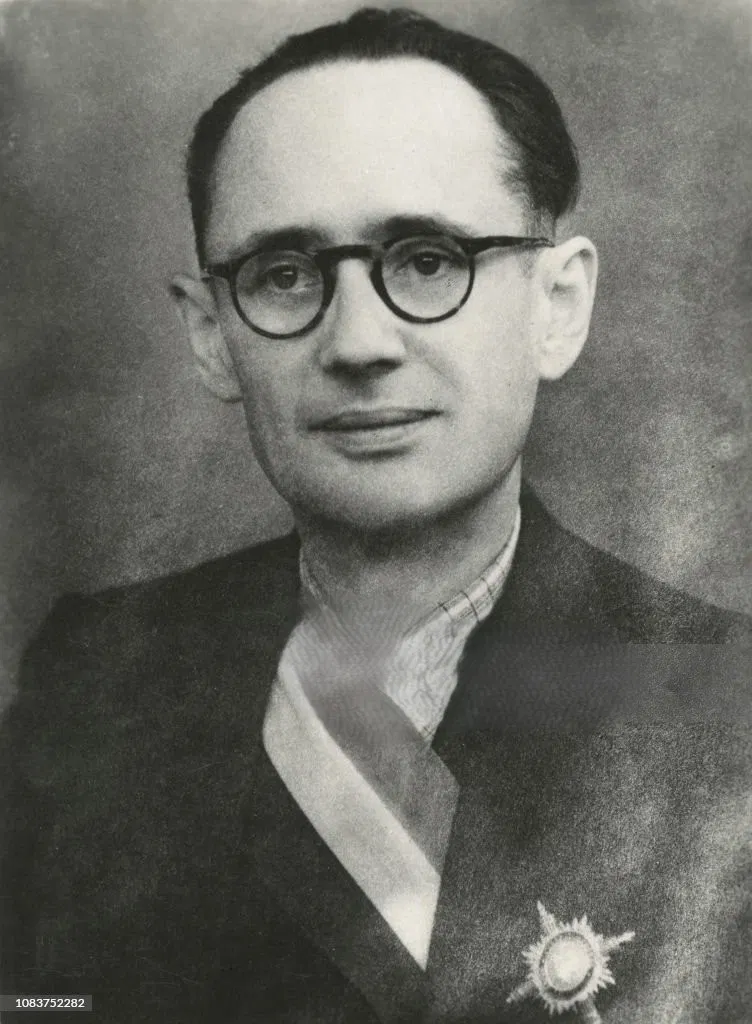
The engineer the investors chose was Henry Janin, a respected professional who had reportedly examined hundreds of mines without endorsing a bad one. His fee was $2,500 plus the right to buy 1,000 shares at $10.Cold weather delayed him until June. Janin, Harpending, Dodge and Rubery met the cousins in St. Louis and rode the Union Pacific to Rawlins, Wyoming. Arnold could have brought them within easy reach of the site from Black Buttes station. Instead he took them on the four-day horseback detour that ended on the mesa on June 4, with the party, in Harpending’s words, “cross and quarrelsome.”
Within two days Janin was, Harpending recalled, “wildly enthusiastic.” He staked out 3,000 acres against the possibility that the surrounding country held more. The area Arnold had salted came to barely more than one acre. Janin’s report valued the proposed 100,000 shares at $40 each and he sold his own soon after at that price, clearing $30,000 above his fee the only man involved who was not a swindler and still made money.Slack and Rubery were left behind to guard the site. They disliked each other. Within a couple of days both were gone.
Arnold collected the $150,000 promised him after Janin’s inspection and sold Harpending a further $300,000 in stock, bringing his total to roughly $550,000. He had more shares coming. He did not wait for them. He had already moved his family from San Francisco back to Kentucky that spring.
Clarence King Digs a Ten-Foot Trench and Finds Nothing in It
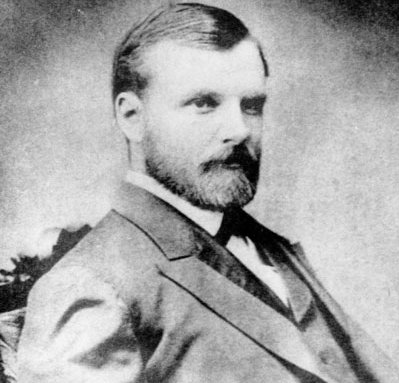
What destroyed the scheme was a train.On October 6, 1872, geologist Samuel F. Emmons noted in his diary that “suspicious looking characters on the train are returning diamond hunters. Henry shows us some of the diamonds pretty crystals.” Emmons worked for Clarence King, the Yale-educated geologist who at 25 had persuaded Congress to fund and appoint him head of a federal survey covering 80,000 square miles between the Rockies and the Sierra. Janin’s hints suggested the diamond field lay inside King’s territory, in ground his own men had worked. A major discovery there by anyone else would call the entire Fortieth Parallel Survey into question.
King’s party rode 150 miles from Fort Bridger in bitter cold and found the site by following Janin’s own claim notices. They found rubies within minutes. Emmons wrote that they picked stones out of the rock on their hands and knees until the light went, and slept dreaming “of the untold wealth that might be gathered.”The next day King noticed that every diamond came with about a dozen rubies beside it an arrangement no natural deposit produces.
The stones appeared only in disturbed ground. Rubies in anthills were surrounded by footprints, and beside the ants’ own exit hole there was always a second small break in the crust. “Our explanation,” Emmons wrote, “was that some one must have pushed in a ruby or two on the end of a stick.” Anthills without footprints held nothing.They dug a trench ten feet deep in a gulch where diamonds should have run well below the surface. It was emp
King Rides 45 Miles Through the Cold to Reach the Bank of California
On the fourth day a stranger rode into camp, “a stout party, city dressed, and looking very much out of keeping with his surroundings.” He asked whether they had found any carats. One of King’s men blurted out the truth. The stranger’s response was immediate: “What a chance to sell short on the stock.” He gave his name as J. F. Berry, a New York diamond dealer, and admitted he had been watching them through a spyglass from a nearby butte.King and topographer A. D. Wilson left camp before dawn, rode 45 miles across open desert to Black Buttes station and reached San Francisco on November 10. King went straight to Janin’s hotel and spent most of the night convincing him.
The next morning the two men faced the directors at Ralston’s office. King read aloud a letter he had written for publication stating that the fields were “utterly valueless” and that the company had been the victim of an “unparalleled fraud.” According to Emmons, one director hoping to sell short suggested King might do well to sit on the news a few days. King’s reply has been repeated ever since: “There is not enough money in the Bank of California to make me delay the publication a single hour.”A second inspection party went out in weather so cold one man’s whiskey was said to have frozen in the bottle. On November 25, Gen.
David Colton reported finding rubies lying on bare rock where “it would have been as impossible for Nature to have deposited them as for a person standing in San Francisco to toss a marble in the air and have it fall on Bunker Hill monument.”The next morning the San Francisco Chronicle stacked its headlines: “UNMASKED!” above “The Great Diamond Fiasco,” above “THE MAMMOTH FRAUD EXPOSED.”
The Investors Discover There Is Nobody Left to Blame
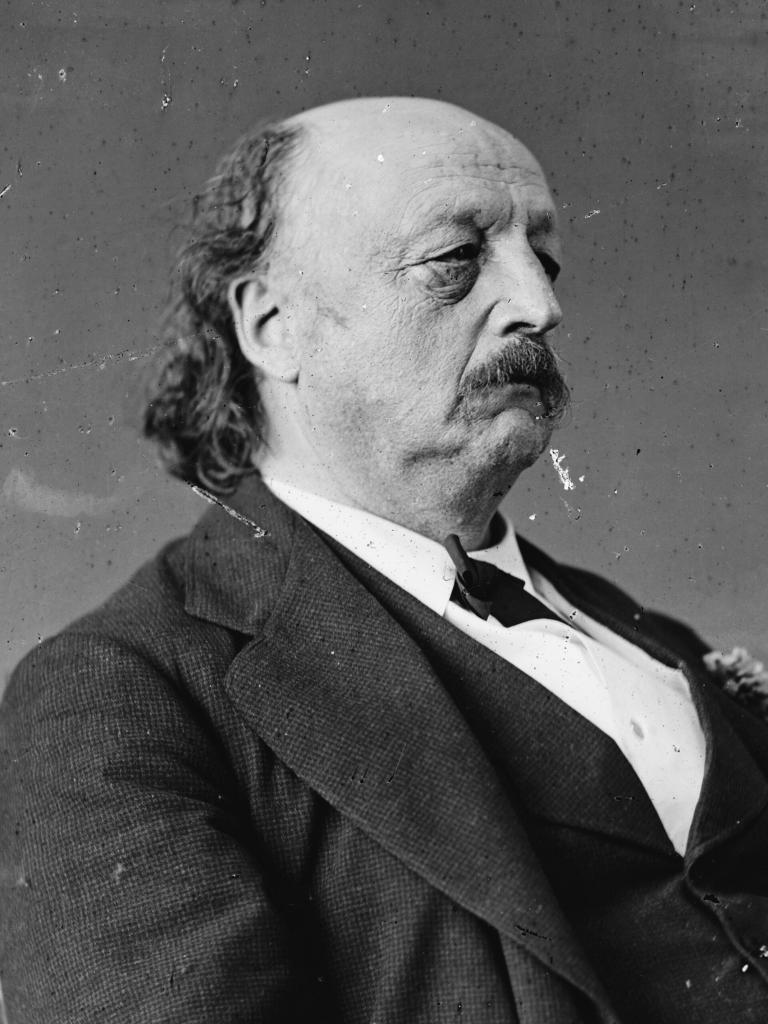
Arnold and Slack were already gone, so the press turned on the men who had been fooled. Janin was pilloried. Harpending fell under suspicion of complicity, having been in London during one of Arnold’s buying trips. Butler was found to have received 1,000 shares for steering a mining act through Congress that let the company purchase the federal land beneath the fictitious field. Lent sued, claiming losses of about $350,000. Ralston was widely reported to have lost $250,000.
A San Francisco grand jury indicted both cousins for fraud. The contents of the indictment were never made public, and Bruce A. Woodard, the accountant whose 1967 study Diamonds in the Salt remains the fullest account, argued the investors quashed them to avoid further humiliation. Arnold’s response to the news, delivered to the Louisville press, was that “I have employed counsel myself a good Henry rifle.” In March 1873 he nonetheless settled with Lent out of court for $150,000, the closest thing to a confession he ever made.
Arnold Goes Home to Elizabethtown and Buys a Bank
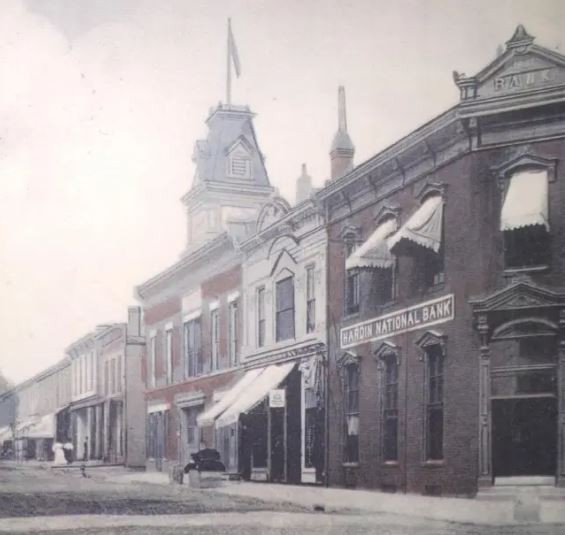
In July 1872, before the collapse, Arnold had bought a large house on the edge of Elizabethtown from attorney William Wilson for $17,875, paid in cash. He added some 500 acres of farmland and bred horses, sheep and pigs. Every deed was in his wife Mary’s name.In 1873 he put an unknown sum into a failed Elizabethtown bank and reopened it. It did well. He lent money to a struggling competitor. Local opinion was not uniformly hostile; a Kentucky grifter who had taken half a million dollars off California financiers and Union generals was, to some of his neighbors, something close to a hero.
To one competitor he was not. Relations with rival banker Harry N. Holdsworth deteriorated through 1878. On June 19 the two met in the street and Arnold beat him with a cane while holding a pistol in his other hand. On August 16 they met again in Charles Lott’s saloon. Arnold beat him a second time; Holdsworth left, returned with a shotgun, and the two fired on each other. Holdsworth was untouched. Arnold, trying to get behind a tree, took a load of buckshot in his right shoulder.The wound troubled him for the rest of his life, which lasted six more months. He contracted pneumonia and died at home on February 8, 1879, aged 49.
His funeral was reported as the largest ever seen in Elizabethtown. Several hundred thousand dollars of the money he took has never been accounted for.John Slack was assumed for a century to have fled the country or died shortly after walking away from the mesa. Woodard traced him instead to St. Louis, where he built caskets, and then to White Oaks, New Mexico, where he worked as an undertaker and lived alone until his death in 1896 at the age of 76. The man who had helped sell America a million-dollar diamond field left an estate of $1,600.
Leave a Reply