
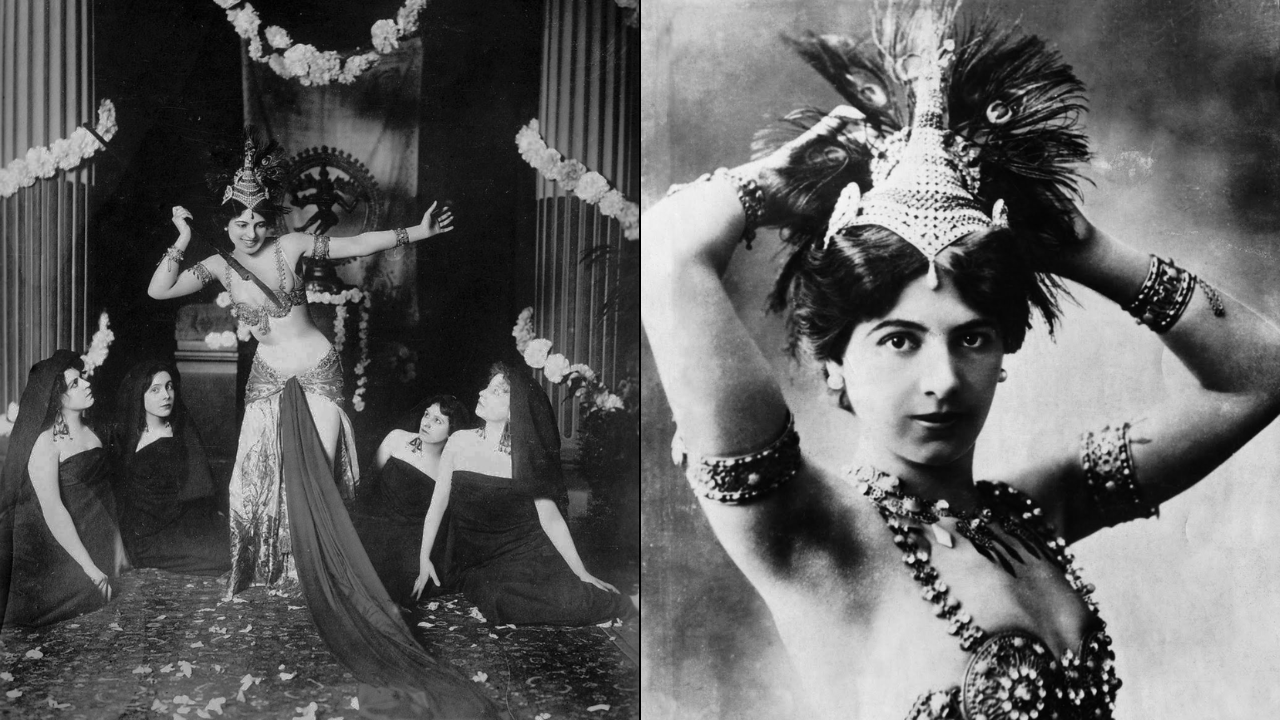
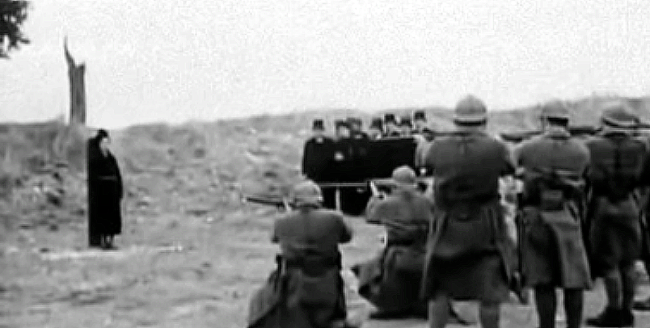
On October 15, 1917, a French firing squad killed Margaretha Zelle for espionage the prosecution had proved with not one document after a two-day trial in which her lawyer was forbidden to question a single witness.Just before dawn on October 15, 1917, twelve French soldiers formed a line in the moat of the Château de Vincennes.
The woman facing them was 41 years old and wore a dark coat and a tricorn hat. She refused to be bound. She refused the blindfold. According to Henry Wales, the British reporter who witnessed it, she blew the soldiers a kiss before the volley, then sank to her knees with her head still up, still watching them.
A non-commissioned officer walked over and shot her in the head to be certain.The charge was that Margaretha Geertruida Zelle the exotic dancer the world knew as Mata Hari had passed intelligence to Germany that killed at least 50,000 Allied soldiers. Neither French nor British intelligence ever produced a document proving she transmitted anything of value to anyone.
Margaretha Zelle Answers a Newspaper Advertisement for a Wife
She was born on August 7, 1876, at Kelders 33 in Leeuwarden, in the north of the Netherlands, the eldest of four children and the only daughter of Adam Zelle, a hat merchant with a shop on the ground floor and money in oil investments. Her family called her M’greet. She attended exclusive schools until she was 13.That year, 1889, her father went bankrupt. Her parents divorced soon after. On May 9, 1891, her mother, Antje van der Meulen, died. Margaretha was 14.
The four children were split among relatives, and she was sent to her godfather in Sneek, then to a teacher-training school in Leiden from which she was withdrawn after the headmaster began pursuing her conspicuously. She fled to an uncle in The Hague.At 18, she answered a newspaper advertisement placed by Rudolf MacLeod, a captain in the Dutch colonial army, born in 1856 and 38 years old, who was looking for a wife. She sent a photograph. They married in Amsterdam on July 11, 1895. He was 21 years her senior.
A Poisoning in Java Kills Her Son and Ends the Marriage
The couple sailed for Java in May 1897 aboard the SS Prinses Amalia. Two children followed: Norman-John, born in 1897, and Louise Jeanne, born in 1898.MacLeod drank. He beat her. He blamed her for his failure to be promoted, and he kept a concubine openly, which colonial society in the Dutch East Indies tolerated without comment. She left him for the household of another officer, and returned when he promised to change. He did not change.In 1899, both children fell violently ill. The family said a servant had poisoned their food.
Modern accounts hold that the children were suffering complications from the treatment of congenital syphilis contracted from their parents. Louise Jeanne survived. Norman-John died.The couple separated formally on August 30, 1902. The divorce became final in 1906, and Margaretha was awarded custody of her daughter. MacLeod was ordered to pay support and never paid a guilder. On one visit he simply did not send the girl back. She had no money to fight him, and she let it go, telling friends that whatever he had been as a husband, he had been a decent father.
Margaretha Zelle Invents Mata Hari at the Musée Guimet
She arrived in Paris in 1903 with almost nothing. She rode horses in a circus under the name Lady MacLeod and posed for artists to make rent.Then, at a private salon, she was seen by Émile Étienne Guimet, the industrialist who had founded the Musée Guimet, the city’s great museum of Asian art. He offered her his galleries, his collection of costumes and jewellery, and a suggestion: the aristocratic Scottish name would not do for a temple dancer.
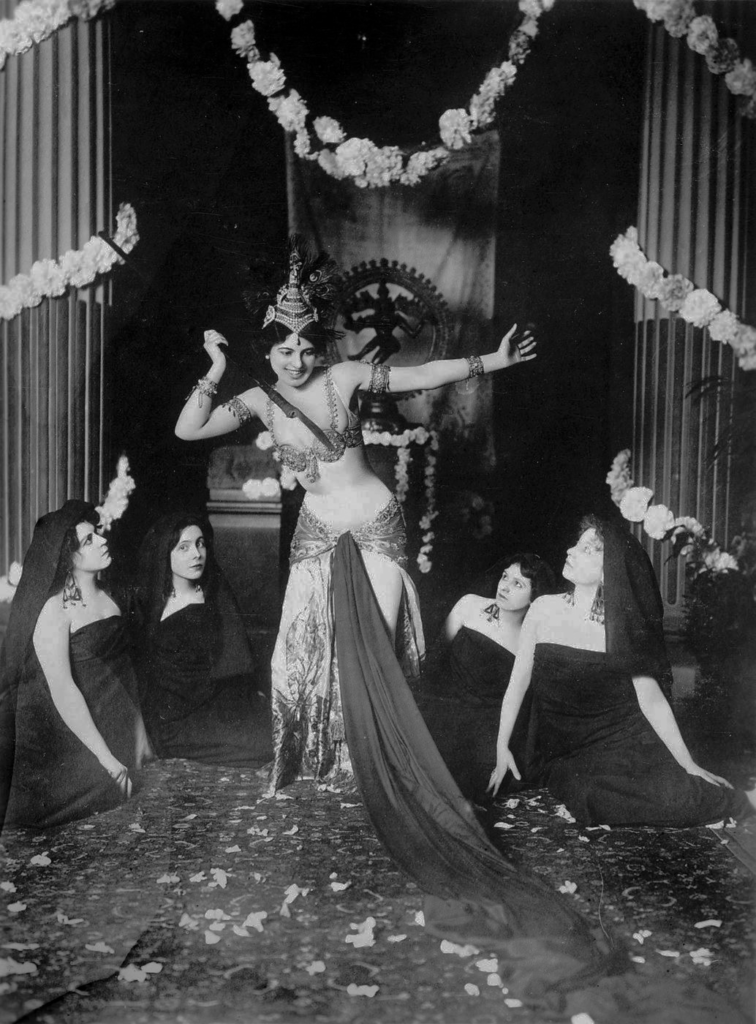
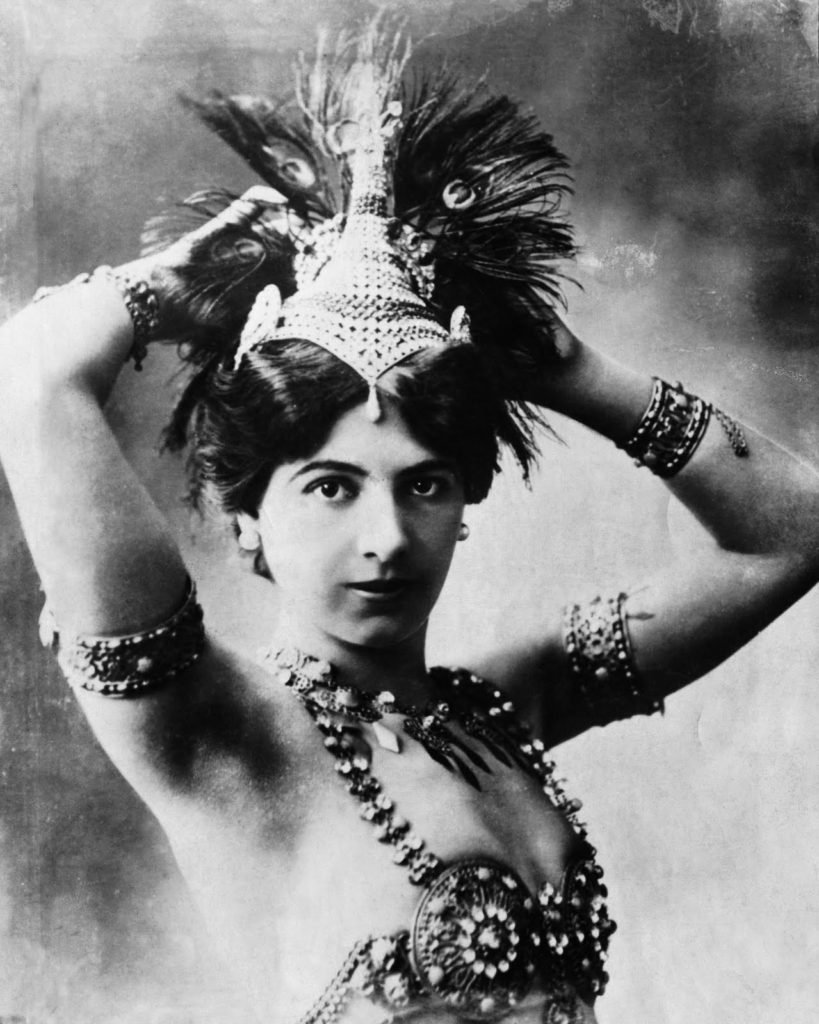
On March 13, 1905, before an audience of roughly 300 that included the German and Japanese ambassadors, she danced in a hall lit by candles around a statue of Shiva.The name she used that night was Mata Hari Malay for the sun, literally “eye of the day.”The persona was pure invention.She presented herself as a Javanese princess of priestly Hindu birth, raised inside sacred dance. Both her parents were Dutch. She had spent six years in the Indies as an army wife. Nobody in Paris knew enough to contradict her, and the act was a sensation: she shed her costume piece by piece until she wore a jewelled breastplate and little else.
She never appeared bare-chested, being self-conscious about her breasts, but the illusion carried. That year she performed more than thirty times in the most exclusive salons in the city, including the house of Baron Henri de Rothschild, and six times at the Trocadéro. Gabriel Astruc became her booking agent. She toured Vienna, Berlin, Madrid, Monte Carlo.A Viennese critic described her as slender and tall, moving with the grace of a wild animal, her face making a strange foreign impression.
Younger Imitators Push Mata Hari Off the Stage
By 1910 the imitators had arrived, and the critics had sharpened. The consensus among serious cultural institutions hardened into a single verdict: she was a dancer who did not know how to dance, and her fame was exhibitionism. Her career declined after 1912. She gave her final performance on March 13, 1915, ten years to the day after her debut.What remained was the other trade. By her late thirties she was a successful courtesan, moving through the beds of officers, politicians, and financiers across a continent that had just gone to war.
Her lovers were German, French, Dutch, and British, and she made no distinction between them.The Netherlands stayed neutral. Her Dutch passport let her cross borders that were closed to nearly everyone else, and she crossed them constantly, travelling between Paris and The Hague by way of Spain and Britain with trunks of costumes behind her. British and French counter-intelligence began watching her.
The Deuxième Bureau Offers a Million Francs for the Crown Prince
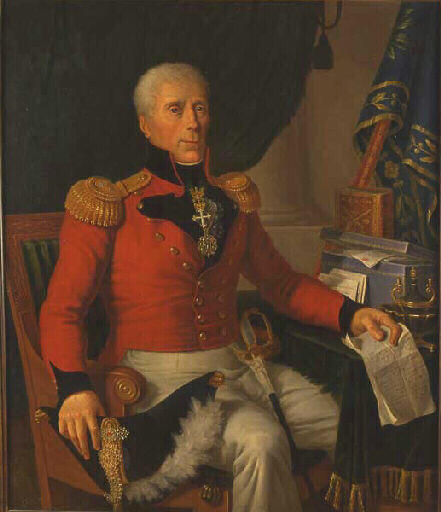
In the autumn of 1915, Karl Kroemer, the honorary German consul in Amsterdam, offered her 20,000 francs and three bottles of invisible ink to report anything useful she found in Paris. She took the money she considered it compensation for the furs and jewels German authorities had seized from her in Berlin at the outbreak of war and, by her own account to French investigators, threw the ink into a canal.In 1916, nearing 40, she fell in love with Vadim Maslov, a 23-year-old Russian staff captain of the 1st Special Infantry Regiment, one of the 50,000 Russians sent to fight on the Western Front.
She called him the love of her life. In April 1916 he was wounded and lost the sight in his left eye.She applied for permission to visit him near the front. A neutral citizen had no business near the front, and the answer came with conditions attached: agents of the Deuxième Bureau, France’s military intelligence service, told her she could see him if she agreed to work for France. Her handler was Captain Georges Ladoux.The assignment was Crown Prince Wilhelm, eldest son of Kaiser Wilhelm II. She had danced before him before the war.
German propaganda had built him into a warrior-general commanding an army group, and the Deuxième Bureau offered a million francs for what she could extract from his bed.The Crown Prince had almost nothing to do with running that army group. He was a womaniser and a drinker whose real occupations were parties and far-right politics, and German propaganda existed precisely to conceal that. France sent her after a figurehead.
Arnold Kalle Sends Berlin a Message He Knows the French Can Read
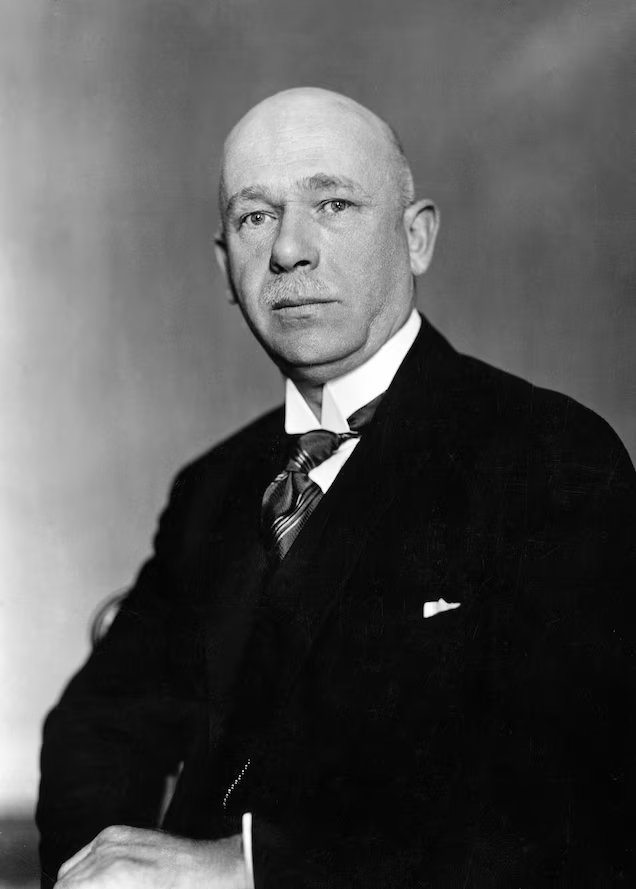
She went to Madrid and approached Major Arnold Kalle, the German military attaché, asking him to arrange a meeting with the Crown Prince. She slept with him. She gathered a few rumours and sent them to Ladoux, who neither thanked her nor paid her.In January 1917, Kalle transmitted radio messages to Berlin describing the useful work of a German agent code-named H-21, whose biography matched Margaretha Zelle’s so exactly that identification was immediate. The Deuxième Bureau intercepted them and had its spy.
The messages were sent in a cipher German intelligence knew the French had already broken.Walter Nicolai, chief intelligence officer of the German army, had grown irritated that his expensive Dutch asset produced nothing but Paris gossip about the sex lives of French politicians and generals. Exposing her to the French was a way of terminating an employee. Whether Kalle acted on that logic or another, the effect was the same: Germany handed France a scapegoat, wrapped and addressed.
Pierre Bouchardon Puts Her Morals on Trial
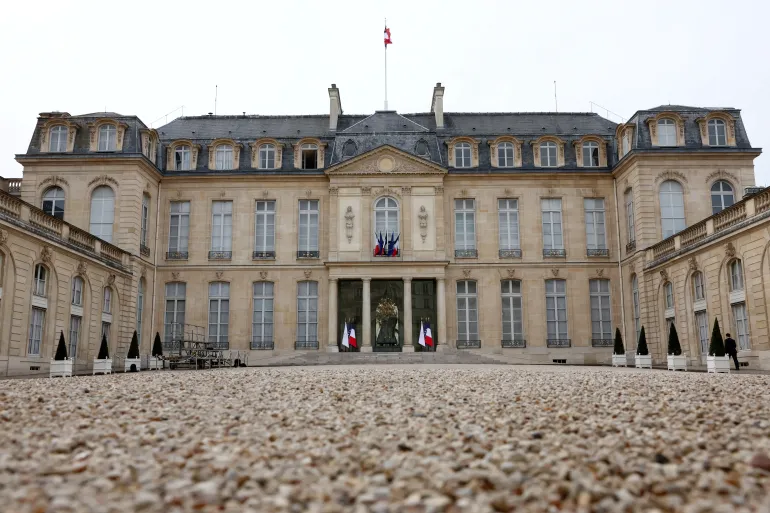
Five police inspectors arrested her in her room at the Hôtel Élysée Palace on the Champs-Élysées on February 13, 1917. Twelve lots of correspondence, photographs, banknotes, and calling cards were sealed and carried away. She was taken to Saint-Lazare, a rat-infested women’s prison where sex workers were sent for humiliating medical treatment, and held there in near-total isolation, writing as many as six letters a day to anyone she thought might help.Captain Pierre Bouchardon interrogated her seventeen times over five months.
He established that the Javanese princess was a hat merchant’s daughter from Friesland, and he used that invention as proof of a dishonest character. She admitted taking Kroemer’s 20,000 francs. Bouchardon presented the reimbursement as a spy’s salary.Ladoux, meanwhile, prepared the case against his own former agent, casting every one of her movements in the worst available light and, by several accounts, tampering with the evidence outright.
The court martial opened behind closed doors at the Palais de Justice on July 24, 1917, before seven officers of the Third Permanent War Council. Her counsel was Édouard Clunet, an international lawyer of 74 and a former lover, with no experience of military tribunals. Under the rules in force he was forbidden to cross-examine the prosecution’s witnesses. He was also forbidden to question his own.Maslov, embittered by the loss of his eye, refused to testify for her and told her he did not care whether she was convicted.
She fainted.France in the summer of 1917 was a country close to breaking. The Nivelle Offensive had failed, mutinies were spreading through the French army, and the war had to be somebody’s fault. Bouchardon delivered his summation in a single sentence: she was, he said, the type of woman who is born to be a spy.The tribunal deliberated for less than 45 minutes. When the verdict was read she said only that it was impossible, twice.
Her Head Disappears From a Paris Museum
Four days after the execution, on October 19, 1917, Captain Georges Ladoux was secretly arrested and charged with spying for Germany. He was later acquitted.Louise Jeanne MacLeod, the daughter Rudolf had kept, died in 1919 at 21, probably of the same syphilitic complications that killed her brother.No family member claimed Margaretha Zelle’s body.
It was given to a medical school for dissection. Her head was embalmed and kept at the Museum of Anatomy in Paris, where it sat among the specimens until archivists checking the collection in 2000 discovered it was gone possibly since the museum’s relocation in 1954. Records show the rest of the body was received in 1918. None of it can be accounted for now either.
In 2017, a century after the volley in the moat, the French army declassified 1,275 pages of her sealed trial file. The historians who have gone through it broadly agree with what the Mata Hari Foundation argued in 2001 and what Julie Wheelwright put plainly: she passed on nothing that could not be found in the Spanish newspapers.France shot Margaretha Geertruida Zelle for killing 50,000 men, and then lost every piece of her.
Leave a Reply