
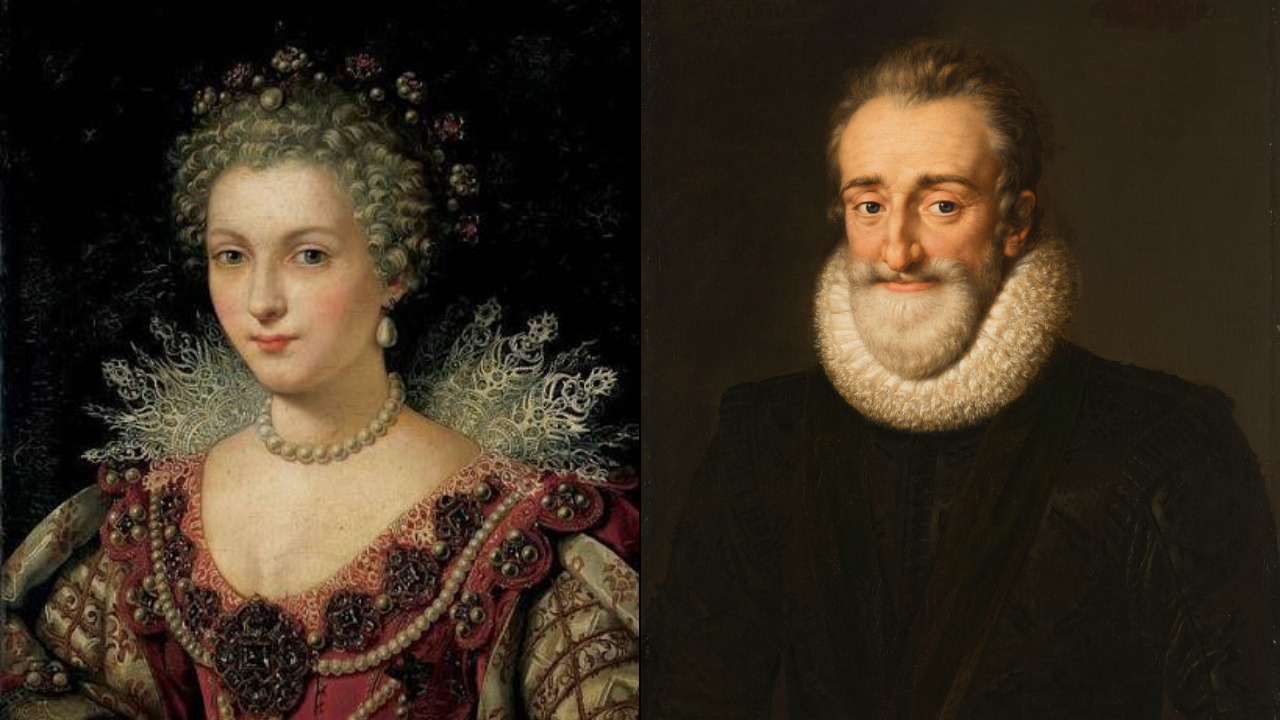
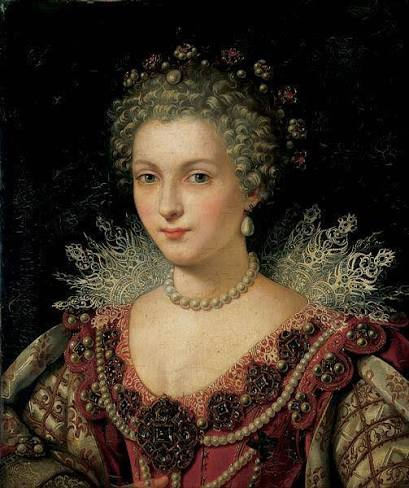
In February of 1599, at a festival in the Louvre, King Henri IV of France pressed his own coronation ring onto the finger of his mistress and promised to marry her. Ten weeks later, Gabrielle d’Estrées was dead and before her body was cold, servants had already stripped the rings from her fingers.Nothing about Gabrielle’s death looked like an accident to the people who loved her. She had sailed through three pregnancies in perfect health. This one broke her from the inside, in a single night, while the king she was meant to marry was thirty miles away.
Born Into a Family Known for Scandal
Gabrielle was born around 1573, at either the Château de la Bourdaisière in Touraine or the château de Cœuvres in Picardy even her birthplace comes to us as a dispute the record never settled. Her father, Antoine d’Estrées, held a string of titles: Baron Boulonnois, Vicomte de Soissons, Marquis of Cœuvres, Governor of the Île-de-France. Her mother, Françoise Babou de La Bourdaisière, had once served as a lady-in-waiting to Mary, Queen of Scots.
Françoise bore ten children in ten years. Then she took a lover, abandoned her family, and bore a daughter out of wedlock. She was murdered in her bed alongside that lover, reportedly by tenants she and her household had wronged.Gabrielle grew up in the wreckage of that reputation. She and her six sisters became notorious courtesans, a family whose name was already synonymous with gallantry before Gabrielle ever met a king.
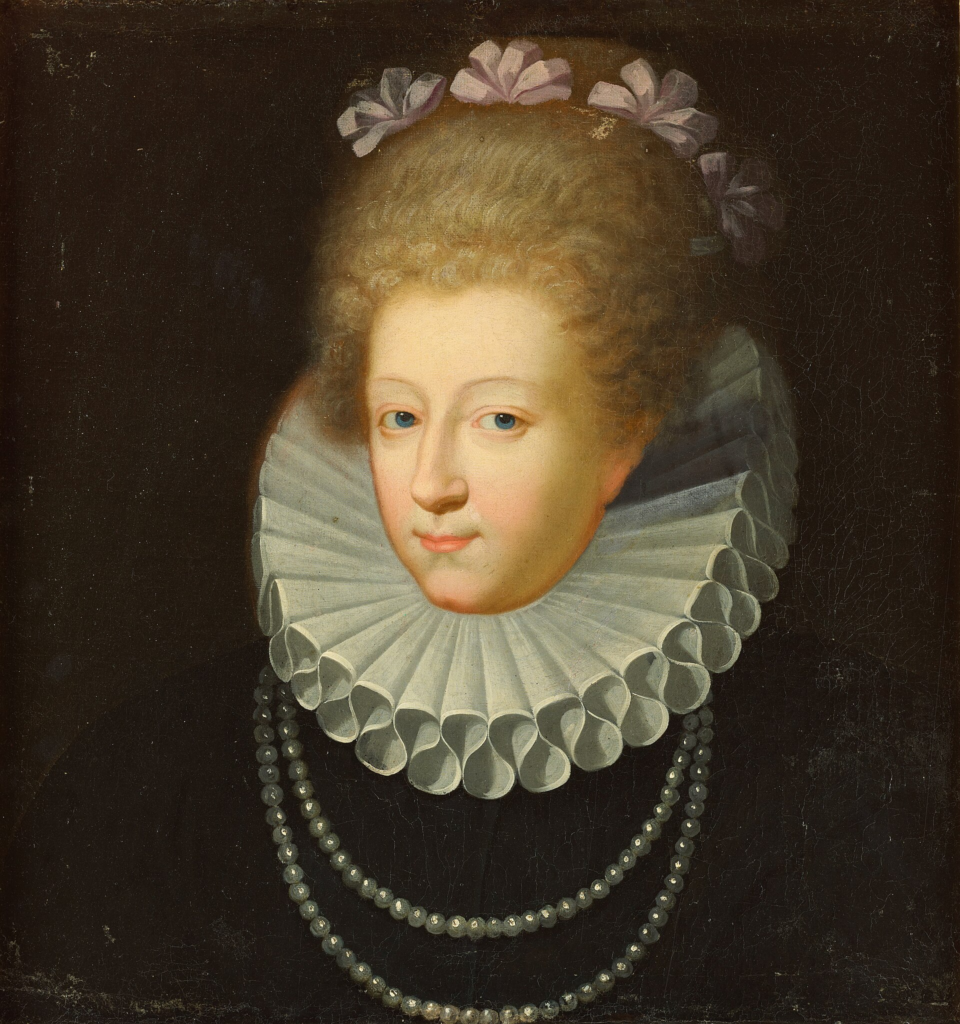
She learned little of formal education and a great deal about the art of seduction. She was tall, blonde, blue-eyed, and pale a beauty contemporaries wrote about often. Her first documented lover was Roger de Saint-Lary, Grand Equerry of France, who would only be made Duke de Bellegarde years later. For now, he was simply a powerful man at court with a beautiful mistress he was about to hand to his king.
Henri Falls for Gabrielle at War
When Henri III was assassinated on August 2, 1589, the crown passed to his Protestant cousin, Henri of Navarre a king the Catholic League refused to accept without a fight. In November of 1590, in the middle of his siege of Paris, Bellegarde brought Gabrielle to meet him.Henri fell for her immediately. She held out, legend says, until January 1591, during the siege of Chartres. By April, the affair was official though Bellegarde, by some accounts, had not entirely stepped aside.
He had once hoped to marry her himself. He gave up that plan the moment the king got involved, but he stayed close to court, and close to Gabrielle, for years afterward.Gabrielle’s father, alarmed at the entanglement, married her off instead to a widower, Nicholas d’Amerval, lord of Liancourt. She hated the marriage and could not refuse her father. It made no difference to the king. Henri was already so besotted that courtiers accused him of risking military victories just to steal time with her.
Gabrielle Becomes the King’s War Strategist
By 1593, for reasons the record does not explain, Gabrielle’s devotion to Henri hardened into something total. She followed him on campaign while pregnant, living in his tent. She scrubbed his clothes with rocks when the soap ran out. She managed his correspondence and carried his secrets. When Henri worried for her safety and asked her to return to Paris, she refused, saying she was only happy near him.It was Gabrielle who convinced Henri that the French crown was worth a change of faith. On July 25, 1593, he converted to Catholicism at Saint-Denis, reportedly declaring that Paris was worth a Mass.
He was crowned at Chartres on February 27, 1594, and made his triumphal entry into Paris that September 15 with Gabrielle riding in an open litter ahead of him, dressed in black satin sewn with pearls. No one else had ever preceded the king that way.That June, she had given him a son, César. In early January 1595, Henri had her marriage to Liancourt annulled reportedly by forcing her husband to admit impotence in open court, though other accounts place the annulment process a year earlier, in 1594.
Whatever the exact date, the outcome was the same: the Parlement of Paris legitimized César, and with him, Gabrielle’s position at court. Henri was so open about the affair that one chronicler recorded him and Gabrielle repeatedly lifting their masks to kiss at a ball in Fontainebleau, in front of the entire court.When Spain seized Amiens in 1597, Gabrielle emptied her own treasury of fifty thousand gold pieces for Henri’s war chest, then raised two hundred and fifty thousand more from the nobility and pawned her own jewels. During one collapse in the fighting, she stood in the open, under cannon fire, shouting for fleeing soldiers to hold the line, until Henri himself had her carried off the field.
Gabrielle Wins the Peace and the Enemies
Henri didn’t just keep Gabrielle at his side. He put her to work. In March 1596, he gave her a seat on his council alongside her sister Catherine, and the two women helped draft laws, receive ambassadors, and negotiate an end to a religious war that had bled France for thirty years. Gabrielle had direct correspondence with the Pope, and she used it to press Rome into formally accepting Henri’s conversion. In 1597, peace with the Catholic League finally held.
The following year, she and Catherine worked to overcome objections from Catholics and Huguenots alike to secure compliance with Henri’s Edict of Nantes, the decree that gave French Protestants new rights and, for a time, an uneasy civil peace.By then Gabrielle presided over a household of eighty-three ladies and gentlemen, seventeen crown officials, and more than two hundred servants. Foreign monarchs sent her gifts to match her standing: a diamond-and-sapphire brooch from Elizabeth I of England, two dozen silver goblets from the Archduke of Tuscany, an emerald pin, jars of perfumed oil, even a pair of stags freshly killed in the hunt.
None of it bought her safety. The French aristocracy despised her rise. Pamphlets circulated calling her a whore and blaming her for the kingdom’s every misfortune. Clergymen preached against her from the pulpit. Two other children Catherine-Henriette in 1596, Alexandre in 1598 had already been born and legitimized, and the more Henri elevated her, the louder the warnings grew that he was building toward a succession crisis no one else wanted.
By November 1598, Gabrielle pregnant with her fourth child had moved into the queen’s own apartments at the Louvre. That January, Henri wrote to Pope Clement VIII himself, begging for an annulment of his marriage to Marguerite de Valois. Clement hesitated. He worried openly that children born of an annulled, adulterous union could tear the succession apart. But by February, it looked as though he might relent, and at a festival that month, Henri gave Gabrielle his own coronation ring in front of the court.The wedding was set for Easter Sunday. Gabrielle was five months along.
Death Arrives Days Before the Wedding
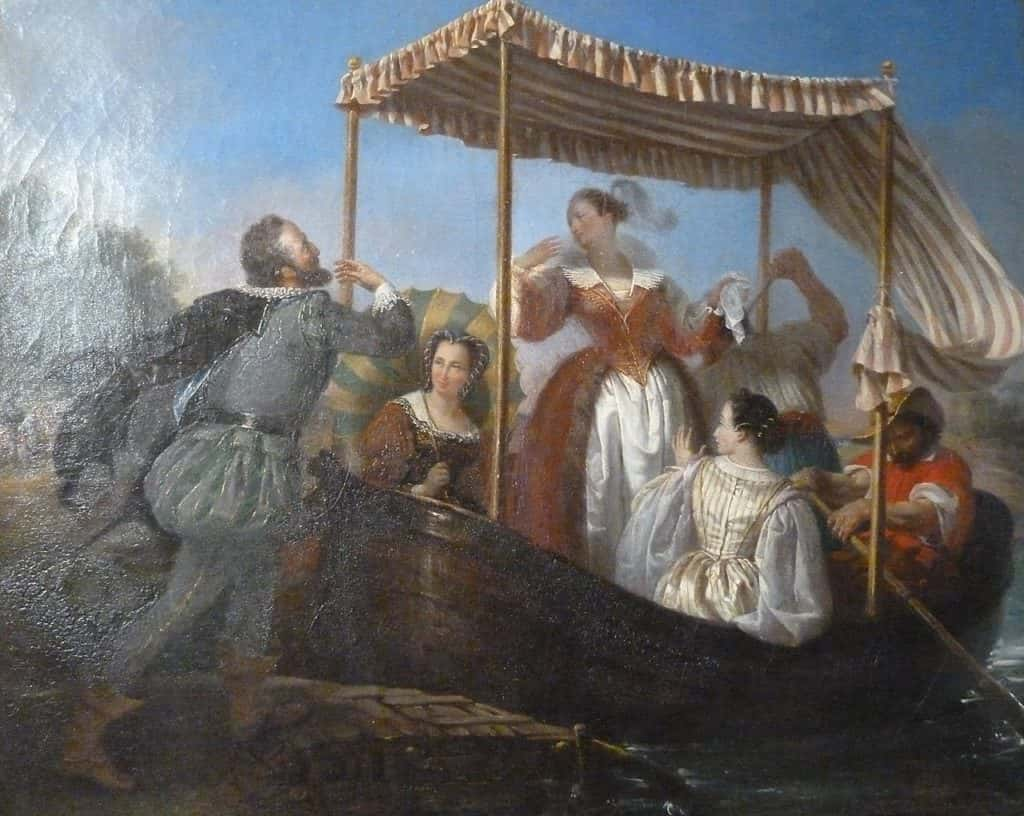
She had come through three pregnancies without incident. This time, she was peevish, sleepless, haunted by nightmares she couldn’t shake. Three days before the wedding, she traveled by barge to Paris to prepare, while Henri stayed behind at Fontainebleau. When she left him, she burst into tears and clung to him.In Paris, at a friend’s house, she drank a glass of lemon or lemonade. The next afternoon, labor began. The child was already dead inside her. Two surgeons, three apothecaries, and a priest stood over her as she convulsed, her face turning black, her mouth twisting to the side.Gabrielle died giving birth to a stillborn son.
The friends who saw her face were so shaken that some of them fainted.Physicians of the time blamed the lemon, calling it corrupt. Modern medicine points instead to eclampsia, or possibly placenta previa the pregnancy her body had carried three times without difficulty simply turned lethal on the fourth. Before anyone thought to grieve properly, servants had already taken the rings from her fingers. Her own father took the royal furniture she’d ordered for her rooms as queen.Henri was still at Fontainebleau when the news reached himHe wore black in mourning, breaking a tradition that forbade French kings from doing so.
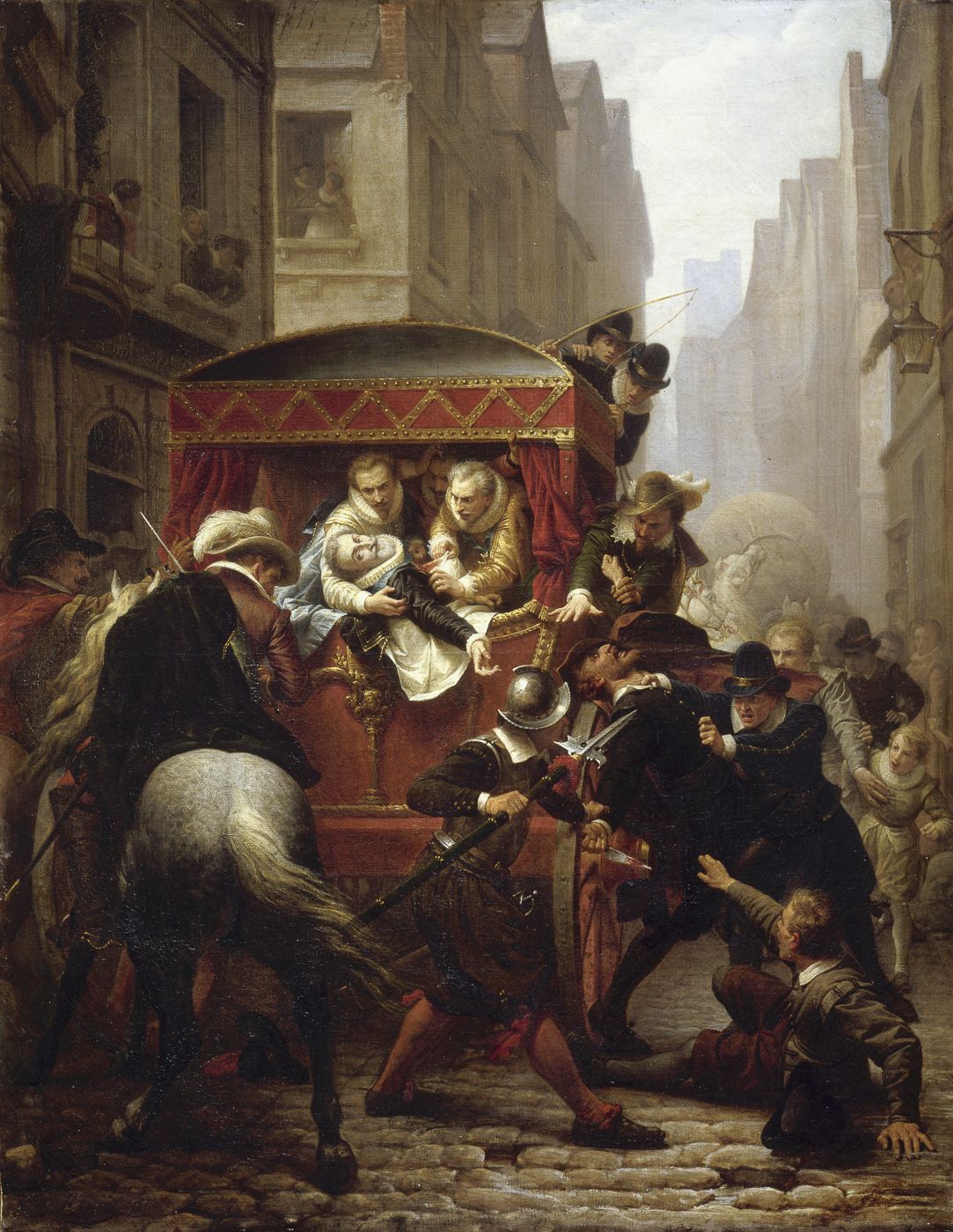
He gave her a queen’s funeral at Saint-Germain-l’Auxerrois, then had her buried at Maubuisson Abbey. For years afterward, a wax effigy of her stood in a chamber off his own apartments at the Louvre, dressed each day in a fresh gown.Gabrielle was the only mistress Henri IV never betrayed. Within months of her death, he had moved on to Henriette d’Entragues, and by the end of 1600 he had married Marie de’ Medici the woman who would give him the heir Gabrielle never carried to term. Eleven years later, Henri himself would die by an assassin’s blade, stabbed in his own carriage by a Catholic zealot named François Ravaillac. The ring he had given her as a promise of a crown was never seen on her hand again after the night she died.
Leave a Reply