
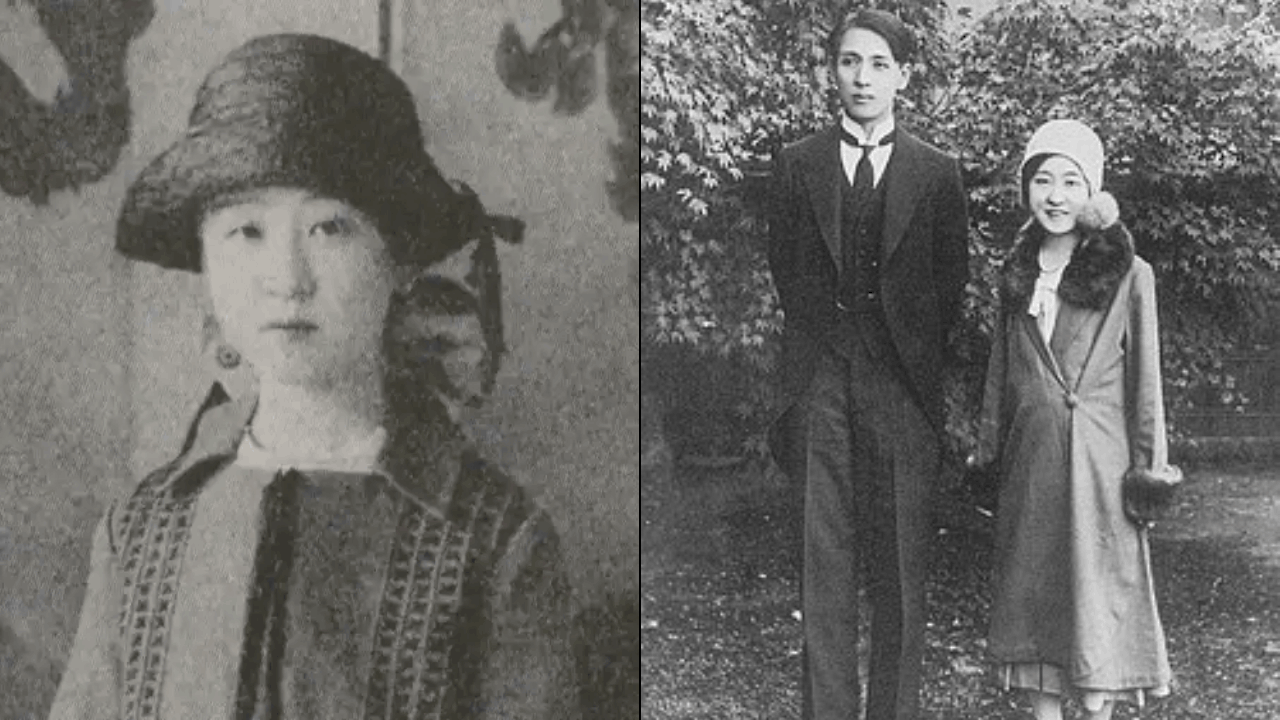
She arrived in Japan at the age of twelve, on a ship she had not chosen to board, sailing away from the only country she had ever known. She would not see Korea again for thirty-seven years.Princess Deokhye was the last daughter of a dynasty that had already been broken. Born on 25 May 1912 in Changdeok Palace in Seoul, she entered the world as the youngest child of Emperor Gojong, the last ruler of the Joseon dynasty, and his concubine Yang Gwi-in. The circumstances of her birth offered little protection.
Her mother was not a queen consort. She was not the daughter of a legitimate union. For the first five years of her life she had no formal name at all, called only Agi, meaning “baby,” while the Japanese colonial government that had governed Korea since 1910 waited to see what she would become. In 1917 they decided. Gojong’s persuasion of the Governor-General of Korea secured her formal entry into the imperial family registry. She was Princess Deokhye.
A Country Already Lost
The Korea into which Deokhye was born was a kingdom in name only. The Joseon dynasty had ruled a unified Korean peninsula since 1392, maintaining a largely insular existence that had permitted it to develop its own distinct institutions, culture, and system of governance.
The nineteenth century dismantled that arrangement with speed. Western powers imposed trade relationships on East Asia by force, and Japan, having absorbed those same pressures from the 1850s onward and converted them into its own programme of rapid modernisation, turned its ambitions toward Korea from the 1870s onward.
Queen Min, the consort of King Gojong, resisted Japanese encroachment across the 1880s and 1890s, frequently positioning Korea within Russia’s sphere of influence as a counterweight. The Japanese response was direct. In 1895, agents working with the approval of the Japanese minister in Seoul murdered Queen Min inside the palace.
Gojong briefly reasserted Korean independence by proclaiming the Korean Empire in October 1897 and taking the title of Emperor. It lasted thirteen years. In 1907 the Japanese administration forced him to abdicate in favour of his son Emperor Sunjong, a weaker figure with no capacity to resist. In 1910, the annexation was formalised. The empire ceased to exist. The royal family was retained as a ceremonial remnant, a carefully managed symbol that lent the occupation a veneer of continuity while the Japanese government ruled the country through its own administrative apparatus in Seoul.
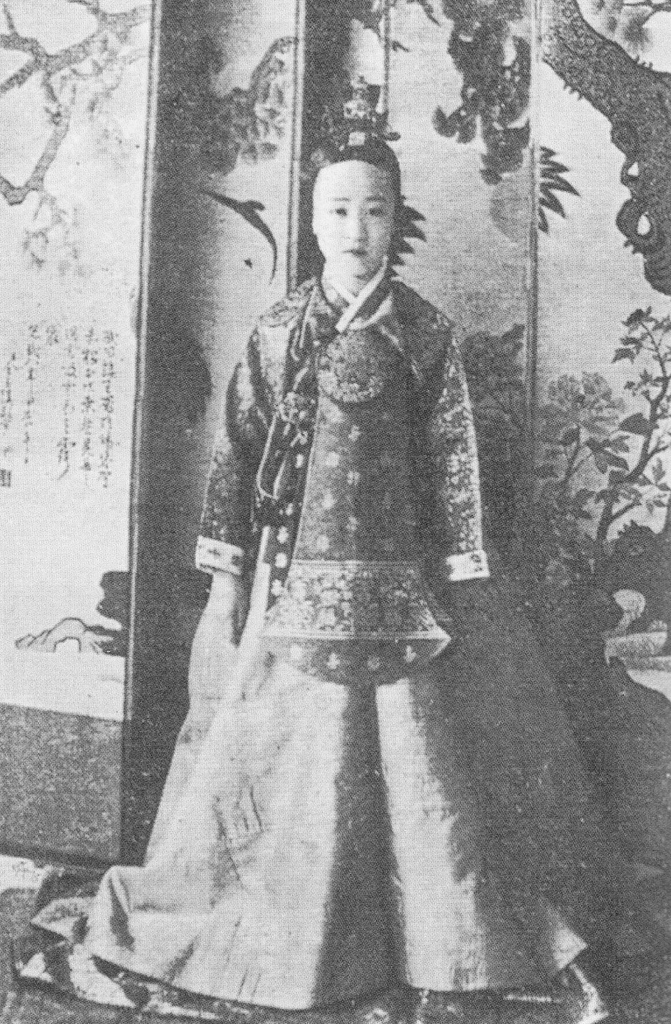
Gojong retained an imperial title and a residence but exercised no real power. He was a figurehead inside an occupied palace, and his children were watched accordingly. Though several of his sons had already been sent to Japan for education, Gojong attempted to anchor his youngest daughter to Korea. He established the Deoksu Palace Kindergarten for Deokhye, attended by girls from noble families, within Hamnyeong Hall, and in 1919 moved to arrange her marriage to Kim Jang-han, the nephew of his court attendant Kim Hwangjin.
The intention was to bind her to Korea through formal ties before the Japanese could intervene.They intervened anyway. The engagement was blocked by Japanese authorities in Seoul. Then, on 21 January 1919, Gojong died suddenly at Deoksu Palace at the age of sixty-six. He had not been ill. Rumours circulated immediately that he had been poisoned, possibly because of his secret marriage negotiations. That theory has never been disproved. With him went the last meaningful resistance to Japanese control over Deokhye’s future.
Sent Abroad Against Her Will
For several years after her father’s death, Deokhye remained in Seoul, attending the Hinodae Elementary School and living under the nominal guardianship of the Japanese occupation government. The arrangement was always temporary. In March 1925, the Japanese colonial authorities informed the remaining Korean imperial household that the princess would be relocating to Tokyo to continue her education. She was twelve years old.
She enrolled at the Gakushuin, the Peers’ School, an institution founded in Kyoto in 1847 and relocated to Tokyo in 1877 that educated successive generations of Japan’s imperial family and nobility. Deokhye was not a student there by her own preference. She was placed there because placing her there suited colonial policy. Her half-brother Yi Un already lived in Tokyo, and she moved initially into his household, but the Japanese side refused to let the arrangement continue once her schooling began.
She was alone, in a foreign language, in a foreign city, inside a school designed to produce loyal subjects of a nation that had swallowed her own.She managed for several years. In May 1929 her mother, Yang Gwi-in, died in Korea. The Japanese authorities permitted Deokhye to return briefly for the funeral. She came back to Tokyo in a condition that those around her quickly recognised as deteriorating. She began to sleepwalk.
Her behaviour became increasingly erratic. Her physician diagnosed her with what was then called dementia praecox, a catch-all term applied to psychotic disorders in the early twentieth century. The condition is today understood as schizophrenia, characterised by periodic episodes of psychosis. The trauma of separation, the death of her mother, and years of displacement had broken something that could not be repaired.
A Marriage Designed to Erase Her
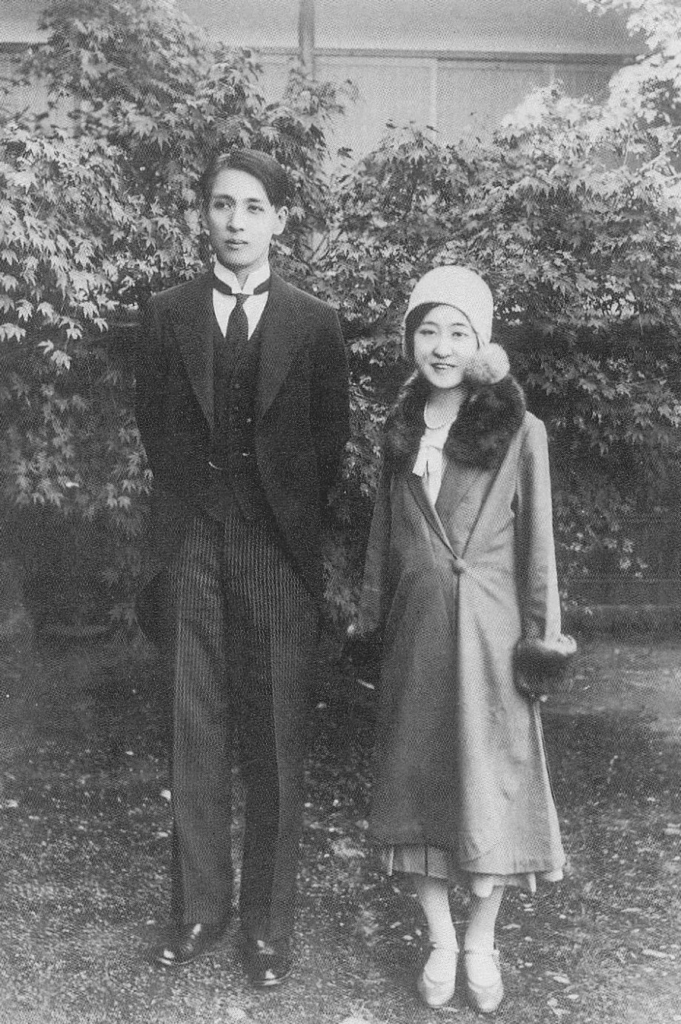
Despite her condition, the Japanese imperial court had a use for her still. In 1930, Empress Teimei, the widow of the late Emperor Taisho and a figure of considerable influence in court affairs, arranged a marriage between Princess Deokhye and Count Sō Takeyuki, the thirty-seventh head of the Sō clan. The match was political in conception and cynical in execution.
The Sō clan had governed the island of Tsushima from the Kamakura period, in the thirteenth century, until the abolition of Japan’s feudal domain system in 1871, a tenure of roughly six centuries. Their position on Tsushima, an island in the Korea Strait administered under Nagasaki Prefecture and lying geographically between Korea and the island of Kyushu, had made them the principal mediators of Japan-Korea diplomatic and commercial relations across that entire period.
To marry the daughter of the last Korean emperor to the head of this clan was not a coincidence. It was a statement. It said that the Joseon dynasty and the institution that had dealt with it for centuries were now, in every conceivable sense, absorbed.Deokhye’s half-brother protested the match. The wedding was delayed while her condition was monitored. When she appeared sufficiently stable, the ceremony went ahead in Tokyo on 8 May 1931.
She was nineteen. Count Sō Takeyuki, a Cambridge-educated academic and poet who would later translate English literary works into Japanese, was twenty-three. Neither of them had chosen the other.The union was not without care on his part. Poems Takeyuki wrote are addressed to both his wife and their daughter, Masae, known in Korean as Jeonghye, born on 14 August 1932. But domesticity did not hold Deokhye’s condition stable. By 1933 she had been admitted to a psychiatric facility for the first time.
She would spend much of the following decade inside various mental health institutions as Japan descended into war and Korea’s occupation tightened. The imperial government that had coerced them both into the marriage ceased to exist in 1945. Korea regained its independence. Japan’s peerage was abolished. The rationale for the union dissolved.
In 1955, Takeyuki petitioned for divorce, seeking permission from Crown Prince Yi Un, Deokhye’s half-brother. The marriage was formally ended. The following year, in August 1956, their daughter Masae disappeared in Yamanashi Prefecture, leaving behind a note that read as a suicide letter. Her body was never recovered. Deokhye’s condition, already precarious, deteriorated in the aftermath.
A Long Way Home
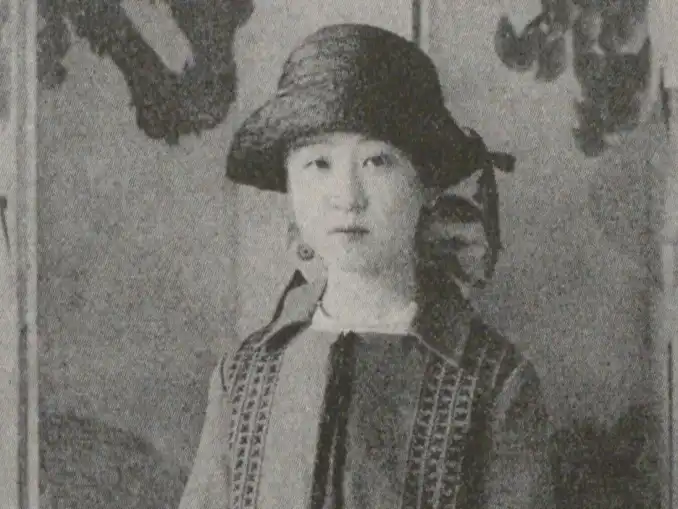
South Korea, liberated from Japan but then divided and bloodied by civil war between 1950 and 1953, had its own politics around the old royal family. President Syngman Rhee, who governed South Korea from 1948 to 1960 with increasingly authoritarian methods, was wary of any symbolic revival of the monarchy. The return of the last princess was blocked.It was permitted only after Rhee’s removal from power following the April Revolution of 1960. On 26 January 1962, Princess Deokhye returned to Korea. She wept when she saw the mainland for the first time in thirty-seven years.
She spent the remainder of her life at Nakseon Hall in Changdeok Palace, which had been reopened as a residence for surviving members of the Joseon dynasty. Her half-brother Yi Un and his wife Yi Bangja, a Japanese-born princess who had married into the Korean royal family in 1920, eventually joined her after Yi Un was permitted to return in November 1963. Yi Un’s son Yi Ku, Gojong’s grandson and the last recognised heir of the Joseon line, also lived nearby. The Korean government provided a stipend.
There were periodic hospitalisations at Seoul National University Hospital for Deokhye’s psychiatric condition throughout the years that followed.She outlived all of her half-siblings. She died on 21 April 1989, aged seventy-six, suffering in her final period from aphasia, a condition caused by neurological damage that strips the sufferer of the ability to produce or comprehend language. She could not speak.
She could not understand what was said to her. She was buried at Hongnyureung Royal Tomb in Namyangju, south of Seoul, near the grave of her father and his consort Empress Myeongseong.On Tsushima today, a monument marks her marriage to Count Sō in 1931. The Korean film The Last Princess, released in 2016, reconstructed her years in Japan and her efforts to return home.
A 2009 novel by Kwon Bi-yeong, on which the film drew, brought the broader Korean public back to a life that occupation, illness, and time had very nearly buried.She had been, for most of the twentieth century, forgotten. The dynasty was gone. The empire was gone. The daughter was gone. What remained was a small stone on a Japanese island, commemorating an arrangement nobody had asked her about.
Or discover more stories from history’s royal courts.
Leave a Reply