
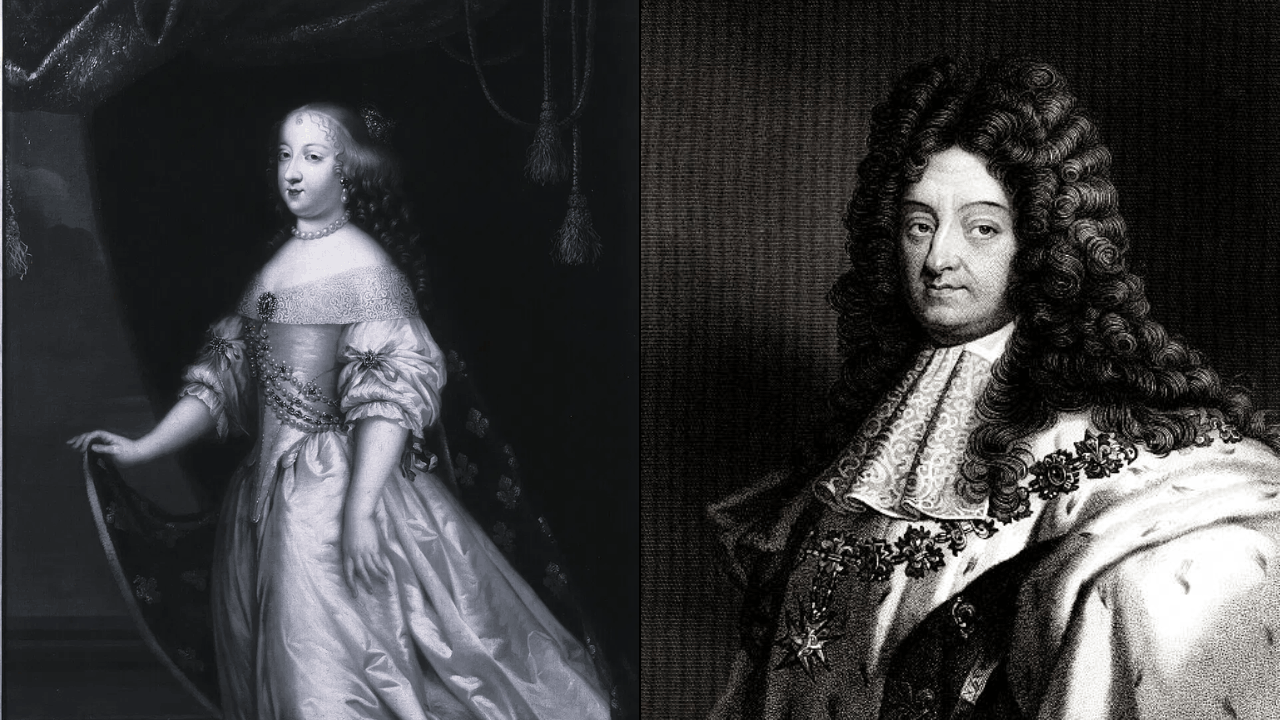
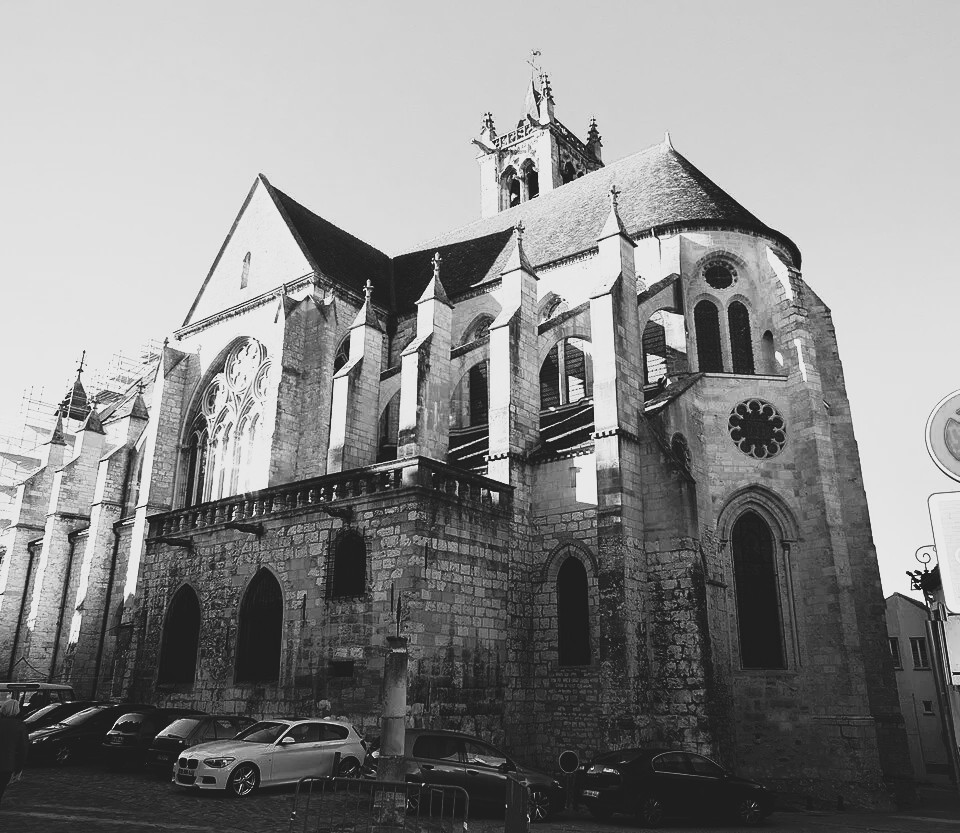
She knew a secret that could have shaken the French monarchy. Whether anyone ever told her what it was is a different question entirely.In the summer months, when the court of Louis XIV decamped from Versailles for the hunting lodges of Fontainebleau, aristocrats would occasionally make a detour to the Benedictine abbey of Notre-Dame de la Nativité at the small town of Moret-sur-Loing.
They came not to pray but to look.Inside the convent lived a Black woman an almost impossible sight in provincial 17th-century France.She was known to the nuns and to the nobles who visited as la Mauresse de Moret: the Mooress of Moret. She received a royal pension.
She was educated far beyond her station. She could read and write at a time when most women, regardless of rank, could do neither. And she seemed entirely certain that she was the daughter of the King and Queen of France.Her name was Louise Marie Thérèse. The truth of her origins has never been established, and it almost certainly never will be.
Who She Was
The date of Louise Marie Thérèse’s birth is itself uncertain. Some scholars place it on 16 November 1664; others push it back to the late 1650s. She enters the historical record properly only in the 1690s, when a handful of high-profile French court figures began writing about her with a conspicuousness that suggests she was already considered remarkable long before they committed her to paper.
She spent her life at the Benedictine abbey at Moret-sur-Loing, a town north of Fontainebleau in north-central France. It was terrain the court knew well: the Château de Fontainebleau was a favoured royal retreat, used extensively in autumn during hunting season. That proximity alone was suggestive.
Why had a Black woman a rarity in France at any level of society, let alone in a cloistered religious house come to rest so close to the orbit of the crown?The question drove contemporaries to speculation, and it has driven historians ever since.
The Portrait
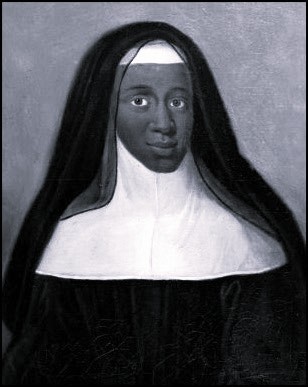
In the art collection of the Bibliothèque Sainte-Geneviève, a major library next to the Panthéon in central Paris, there hangs one of the most unusual paintings produced in 17th-century France. It depicts a Black woman in the habit of a Benedictine nun.
Research published in 1924 by the Société de l’histoire de Paris et d’Île-de-France concluded that the pastel was painted around 1680, likely by the same hand that produced a series of 22 royal portraits spanning Louis IX to Louis XIV executed between 1681 and 1683 at the direction of Father Claude Du Molinet, librarian of the Sainte-Geneviève abbey.The painting is striking on multiple grounds.
In the 17th century it was unusual to paint an ordinary nun at all. That the subject was a Black woman makes it more unusual still. The figure appears to be somewhere in her thirties, though her head is partly covered and the attribution is unknown. What strikes the viewer most, beyond the rarity of the subject, is the deliberateness of the commission. Someone wanted this woman recorded. Someone thought she warranted the same artistic attention typically reserved for royalty.
The King and Queen
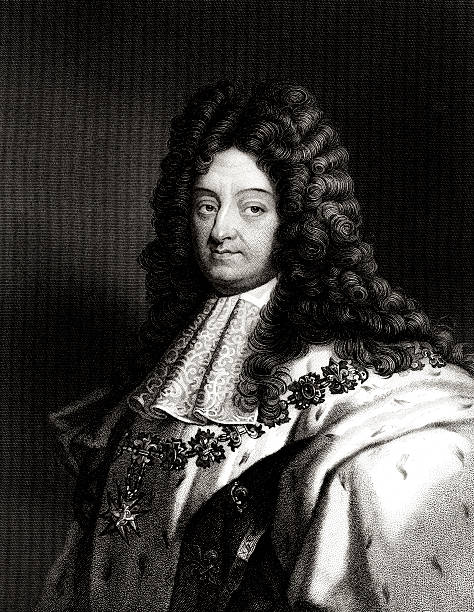
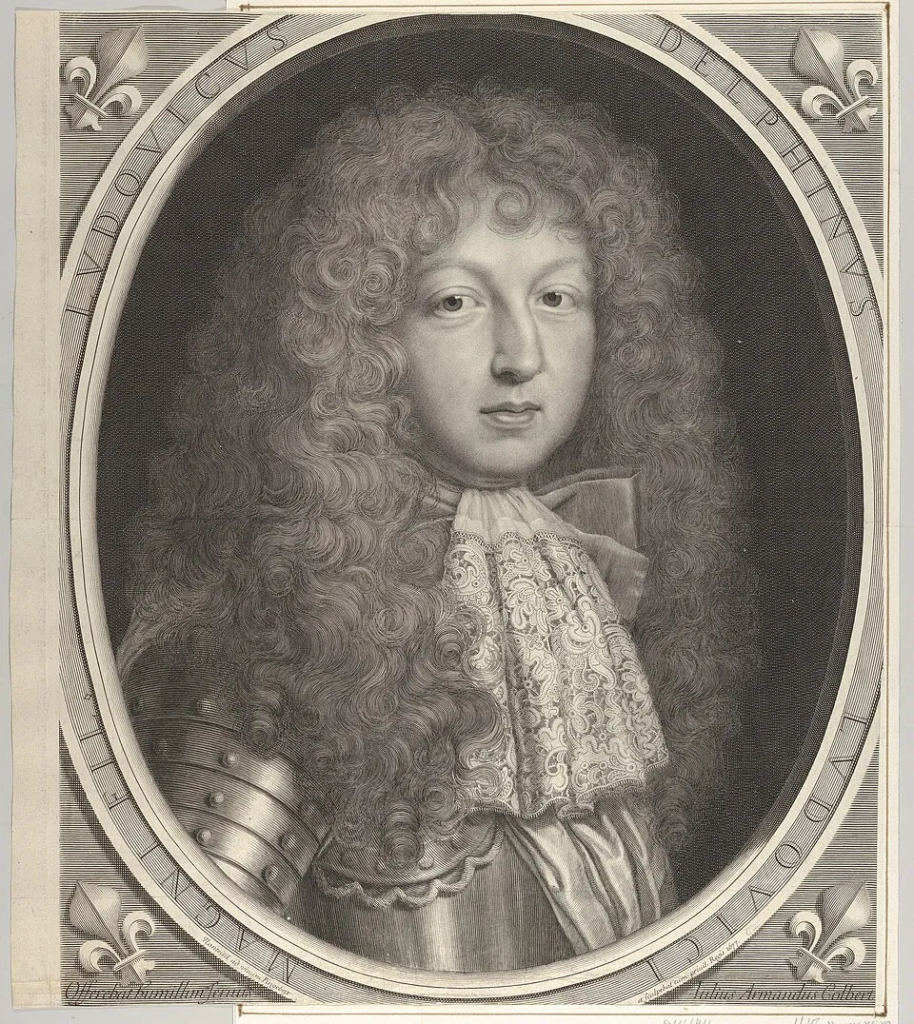
To understand why this woman commanded such attention, it is necessary to understand the two figures at the centre of the speculation about her.Louis XIV ascended the French throne in May 1643 at the age of four, following the death of his father Louis XIII. He would rule for 72 years and 110 days the longest verified reign of any sovereign monarch in recorded history. He was also, by every contemporary account, a man who understood how to keep secrets. His court was a machine for spectacle and concealment in equal measure.
He fathered numerous illegitimate children and conducted affairs that were simultaneously known to everyone and formally denied. In 1683 or 1684, after the death of his wife, he contracted a secret morganatic marriage with Françoise d’Aubigné, the Marquise de Maintenon a union that was an open secret at Versailles for decades without ever being publicly acknowledged.
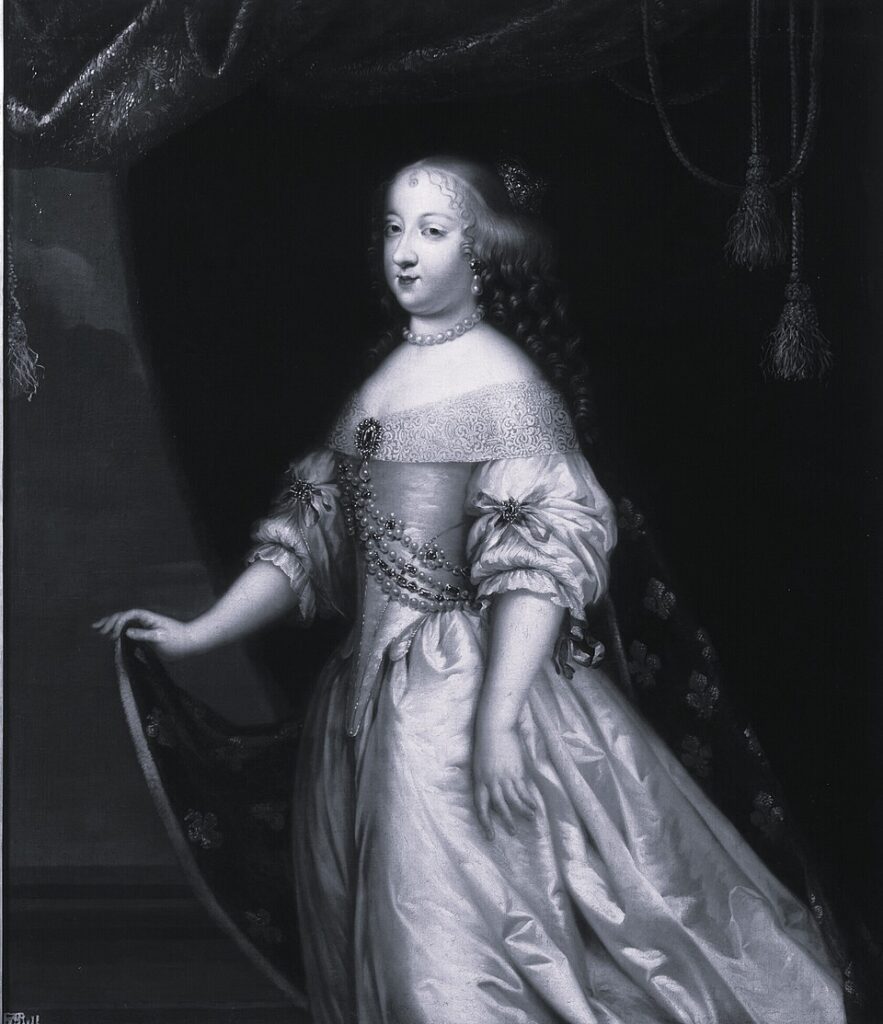
His wife, Maria Theresa of Spain, was by every account his moral opposite. The daughter of King Philip IV of Spain, she had married Louis in June 1660 as part of the settlement that ended a long-running conflict between France and Spain, formalised in the Treaty of the Pyrenees the previous year.
She was pious, patient, and entirely devoted to a husband who gave her little reason to be. Of their six children, five died in early childhood. She endured Louis’s very public affairs with a composure that 17th-century courtiers found either admirable or tragic depending on their sympathies.
She died on 30 July 1683, aged 44, before reaching what should have been the more tranquil years of her marriage.By the time Louise Marie Thérèse became a subject of open gossip in the 1690s, the queen was already dead. What remained was the question of why the king was paying such sustained attention to an obscure nun.
Three Theories
The first and most widely circulated theory is that Louise was the illegitimate daughter of Louis XIV by a Black woman at the French court. By the middle of the 17th century, France had established colonial holdings in the Caribbean and was engaged in the Atlantic slave trade. A small but documented Black population existed at or near the French court.
It was entirely possible some historians argue probable that Louis fathered a child with a Black woman and had the infant placed discreetly in a convent under royal patronage. Voltaire, writing in 1751, endorsed this view, noting the king’s known habit of providing for his illegitimate children and the ease with which such an arrangement could have been made and concealed.
The second theory, favoured by a significant number of historians and by the Canal+ television series Versailles (2015–2018), holds that Louise was the child of the queen. In the 17th century, it was fashionable among European royal women to maintain Black dwarfs at court, kept as servants, entertainers, and status symbols.
The Queen’s African dwarf, Nabo thought to have been brought from Dahomey and gifted to Maria Theresa by the Duke of Beaufort was one of her favoured companions, a figure of whom Louis XIV apparently disapproved. The theory holds that this attachment became an affair, with consequences the king was unwilling to make public.
The circumstantial anchor for this theory is a real birth. On 16 November 1664, Queen Maria Theresa gave birth to her third child, a daughter officially named Marie-Anne. The infant was born premature and died 40 days later, buried at Saint-Denis in the royal necropolis north of Paris. But proponents of the theory insist she never died at all.
They argue that Alexandre Bontemps, Premier Valet de Chambre to the king, quietly removed the child from court, initially to the provinces, then through a succession of religious houses until she came to rest permanently at Moret-sur-Loing.
The sceptics are unequivocal. Marie-Anne was born at a court where royal births were public events witnessed by courtiers and foreign ambassadors. Her death and burial were similarly observed. Historians note that attendants described the infant’s colouring as dark and purplish almost certainly from oxygen deprivation at a premature, difficult delivery not from African parentage. No contemporary diplomat reported anything that would have been, in their world, a catastrophic dynastic revelation.
A third theory is simpler and perhaps for that reason the least satisfying: that Louise was a Black orphan taken under royal patronage, given the names of both the king (Louis) and queen (Thérèse) as was customary for children sponsored by the crown, and supported by a pension that reflected royal piety rather than royal guilt.
It is worth noting that in the second half of the 17th century, hundreds of orphaned women were sent from France to Quebec under the patronage of Louis XIV to help populate the colony the so-called Filles du Roi. Royal wardship of vulnerable individuals was neither unusual nor necessarily scandalous.
What Saint-Simon Recorded
Our fullest account of Louise Marie Thérèse comes from Louis de Rouvroy, Duke of Saint-Simon (1675–1755), the most important memoirist of the late 17th and early 18th-century French court. His memoirs, which run to many volumes, are considered the most detailed and vivid record of life at Versailles under Louis XIV. On the subject of the Black nun, Saint-Simon was unusually candid about the limits of his own knowledge:
“It seems that in this convent there is a woman of colour, a Moorish woman who had been placed there very young by Bontemps, the king’s valet. She received the utmost care and attention, but never was shown to anybody. When the late queen or Madame de Maintenon went, they did not always see her, but always watched over her welfare. She was treated with more consideration than people the most distinguished, and herself made much of the care that was taken of her, and the mystery by which she was surrounded.
Although she lived regularly, it was easy to see that she was not too contented with her position. Hearing Monseigneur hunt in the forest one day, she forgot herself so far as to exclaim, ‘My brother is hunting.’ It was pretended that she was a daughter of the king and queen, but that she had been hidden away on account of her colour. Many people believe this story, but whether it was true or not has remained an enigma.”
Even Saint-Simon a man who spent years embedded in Versailles and had access to some of the best-connected people at court could not say for certain. What he could say was that the mystery was real, that the crown’s concern for this woman was genuine and sustained, and that her own conviction of royal birth was unwavering.
Her Later Life
The Duke of Montpensier Anne Marie Louise d’Orléans, first cousin to Louis XIV and a diarist of considerable stature also wrote of visiting Moret to look in on Louise, noting the periodic checks sent by the king to ensure her welfare. These visits continued into the 1690s, when Louis formalised the arrangement by granting her a pension of 300 livres on 15 October 1695, payable for life from the royal treasury wherever she might reside.
After Louis XIV’s death in September 1715, court interest in the woman at Moret faded. The king who had arranged her pension was gone. The queen whose possible secret she embodied had been dead for over 30 years. Louise continued her life in the convent days of prayer, work, and the slow rhythms of the cloistered routine though the privileges that set her apart from her fellow nuns did not entirely disappear.
One document written in her hand is dated April 1725. The last document bearing her signature is dated 10 January 1730. She is generally believed to have died in 1732, though even this cannot be confirmed. If the birth date of 1664 is correct, she was around 67 or 68. If the earlier estimate of c. 1658 is accurate, she was nearer 73 or 74 old age by any early 18th-century measure.
The Speculations Since
In 1978, the French writer Pierre-Marie Dijol published Nabo, ou le Masque de Fer, in which he wove the story of Louise Marie Thérèse together with the legend of the Man in the Iron Mask. Dijol’s argument that Nabo himself was the masked prisoner, imprisoned after the king discovered the queen’s affair had essentially no evidentiary basis and was comprehensively rejected by historians. It made for compelling reading.
An exhibition devoted to her story ran at a regional museum in France in the summer and autumn of 2019, and academic interest in Louise Marie Thérèse has remained active over the past decade. A cluster of scholarly papers have examined her story through the lenses of race, royal legitimacy, and the limits of the historical record.
The portrait in the Bibliothèque Sainte-Geneviève remains where it has always been on public display, the face half-covered, the identity still contested. The name given to her, combining Louis and Thérèse, belongs to both a king and a queen. Whether it was an acknowledgement or a fiction, a gesture of duty or of guilt, is something the archive has declined to clarify.
Or explore more of history’s greatest mysteries.
Leave a Reply