
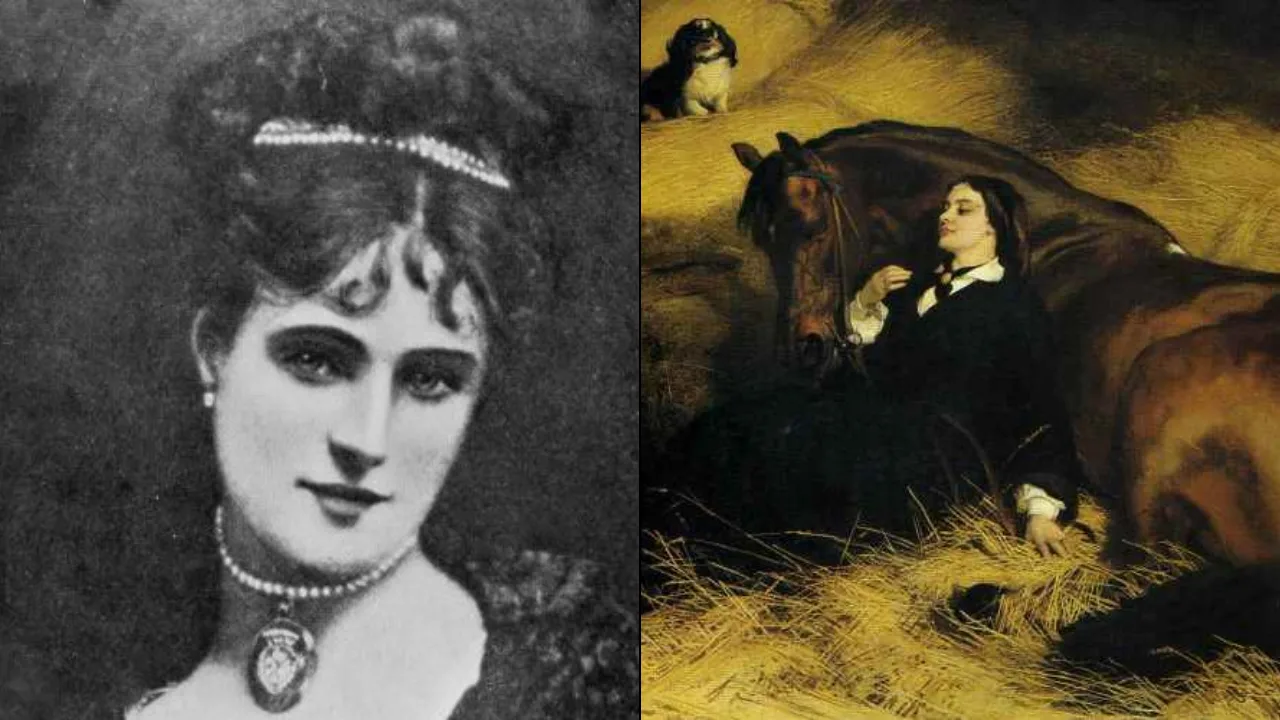
On an afternoon in July 1862, a correspondent wrote to The Times describing a scene playing out daily along Hyde Park’s Rotten Row. The crowd had been assembling since morning. Carriage after carriage circled the track, each pulled by thoroughbred ponies, each driven by a woman in a perfectly cut riding habit. Duchess. Marchioness. Countess. Each time, the spectators looked, recognised no one of consequence, and sat back down. Then a single carriage appeared. The crowd lurched to its feet. According to the letter, they pressed close as the woman threaded her way between them, expression perfectly blank, and then vanished toward Apsley House “into the unknown world, nobody knows whither.”
Everybody knew her as Anonyma. Nobody was supposed to know her name.
Her name was Catherine Walters. She was 23 years old, born in a docklands tenement in Toxteth, Liverpool. She had arrived in London with borrowed money and an 18-inch waist and had, in the space of roughly six years, become the most talked-about woman in England.
Liverpool Built Walters Before London Claimed Her
Catherine Walters was born on 13 June 1839, the third of five children. Her father, Edward Walters, worked as a tide waiter, a customs officer who boarded incoming ships at high tide to collect duty on cargo. Her mother, Mary Ann Fowler, died in childbirth while Catherine was still a young child. Edward Walters drank. The family lived near the docks in conditions that one contemporary account described as combining malnutrition, disease, and ignorance into a single unrelenting pressure.
Her first job was in a bowling alley attached to a Liverpool pub called the Black Jack Tavern. She set up the skittles before each game. The customers called her Skittles. She would use that name for the rest of her life.
She took a second job at a livery stable and learned to ride. The pay was still poor. The future was still narrow. When Lord George Fitzwilliam encountered a Liverpool teenager with grey-blue eyes and chestnut hair and a manner that did not match her address, he made a decision. Catherine was 16 when she left for London as his mistress.
When the relationship ended, Fitzwilliam settled £2,000 on her and granted an annual pension of £300. He asked nothing in return. She said nothing about him publicly. Not then, not ever.
That restraint was not instinctive. It was a calculation. She had already understood something her competitors never would.
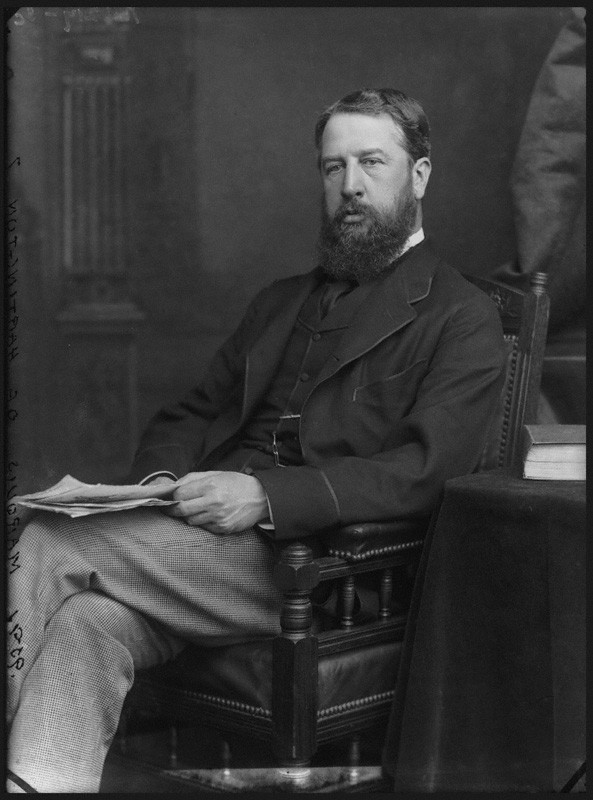
Hartington Bought Her Horses and Her Fame
In 1858, at 19, Catherine became the mistress of Spencer Compton Cavendish, styled Marquess of Hartington and later the 8th Duke of Devonshire. He was 25, politically ambitious, and, by all accounts, genuinely devoted to her. He bought her a townhouse in Park Street, Mayfair, with extensive grounds and a stable of thoroughbreds. He introduced her to the tailoring house of Henry Poole & Co. on Savile Row. Their craftsmen cut her riding habits to a precision that left nothing to speculation.
She rode in Hyde Park every morning. Her posture was immaculate. Her clothing left nothing unfitted. She sat the horse as though she had been assembled there. By the early 1860s, crowds gathered specifically to watch her pass.
Aristocratic women began copying the cut of her habit. Poems were written. Ballets were staged. In 1861, Edwin Landseer exhibited a painting at the Royal Academy titled The Shrew Tamed, showing a beautiful woman in riding clothes reclining against a subdued horse. The model was almost certainly Annie Gilbert, a professional horsewoman and friend of Landseer’s. The public assumed it was Skittles. The painting acquired a second, more durable title.
Everyone called it The Pretty Horsebreaker.
She had never sat for Landseer. The assumption alone was its own kind of power.
In public, Catherine used the name Anonyma. It was a fiction nobody fully believed, and nobody was prepared to break. A letter in The Times in July 1862 recorded the ritual of her appearances at Rotten Row with barely contained astonishment, describing how society’s most titled women failed one by one to interest the crowd, before Anonyma finally appeared and “they are satisfied.”
By the summer of 1862, the press coverage had become a liability. The Times and the Daily Telegraph had both run pieces on Anonyma that stopped just short of naming the Marquess directly. Hartington faced the ruin of a political career before it had properly started. The affair ended not by private decision but by the application of public pressure: Hartington left for America under the pretext of observing the Civil War at first hand. Catherine sold the Park Street house and auctioned its contents.
He settled approximately £2,000 per year on her. The Cavendish family continued the payments. They did so for years after Hartington died in Cannes on 24 March 1908.
Catherine said nothing. Henry Labouchère, journalist and Liberal MP, would eventually put it plainest. “She had the most capacious heart I know,” he wrote, “and must be the only whore in history to retain her heart intact.”
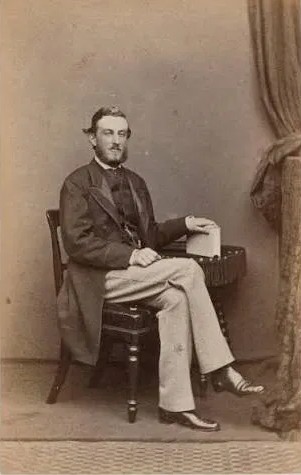
Paris Made Walters Europe’s Best-Kept Secret
After a brief, volatile passage to America with Aubrey de Vere Beauclerk, a married Anglo-Irish aristocrat from County Down whose marriage later collapsed into one of the most notorious divorce cases of the decade, Catherine arrived in Paris around 1863.
Under the patronage of Achille Fould, Finance Minister to Napoleon III, she established a salon and took her place among the leaders of the Parisian demi-monde. She drove her own carriage through the Bois de Boulogne behind two thoroughbreds, accompanied by two grooms. All three were impeccably dressed. She returned to Leicestershire each season for the hunting and kept her reputation as the most accomplished horsewoman of her generation in two countries simultaneously.
In Bordeaux she met Wilfrid Scawen Blunt, a 23-year-old English diplomat and poet. Their affair was brief. His infatuation was not. Blunt married Lady Anne Noel in 1869, started a family, and never stopped writing about Catherine Walters. In later years they resumed a correspondence that continued until her death. His poetic sequence Esther is thought to be drawn directly from their relationship and the long friendship that replaced it.
When the Franco-Prussian War broke out in 1870, Catherine returned to London.
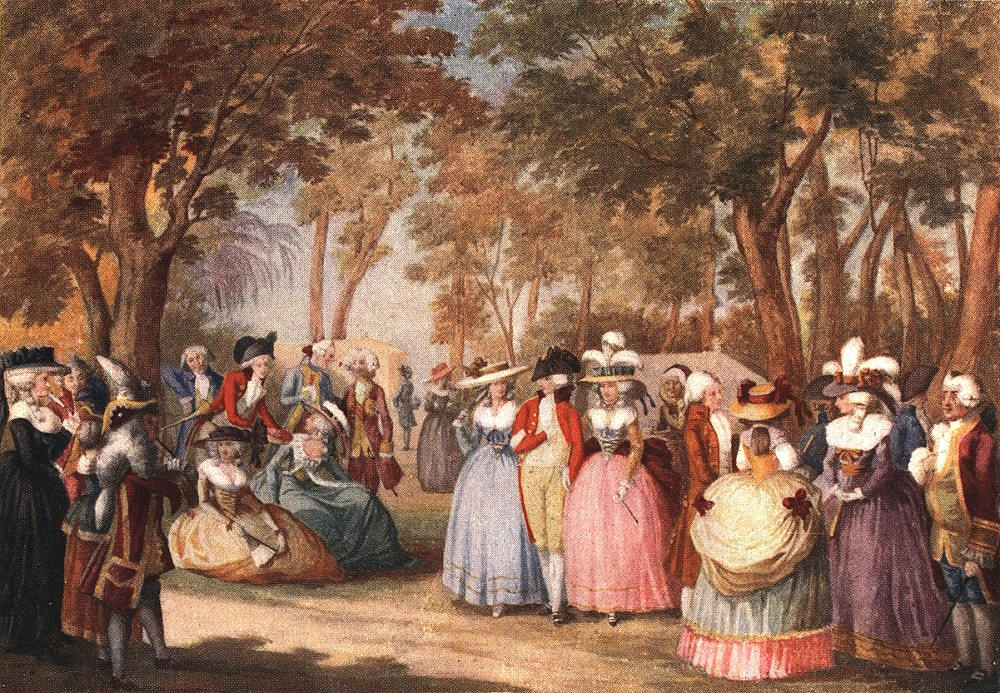
The Prince’s Letters Confirmed What Rumour Could Not
Back at 15 South Street, Mayfair, she settled into a routine. The Sunday afternoon tea parties resumed. The guests were exclusively men. William Gladstone, by then a former Prime Minister with further terms ahead of him, attended regularly. Whether his relationship with Catherine extended beyond those afternoons is a question historians have generally answered in the negative.
The most significant relationship of the 1870s was with someone who held rather more power than Gladstone. The Prince of Wales, later King Edward VII, born 9 November 1841 and two years Catherine’s junior, fell for her with the kind of thoroughness he apparently reserved for things he could not have freely. He gave her a generous allowance. He arranged access to his personal physician. He wrote her more than 300 love letters.
When the relationship ended, he asked for them back.
She returned every letter. Without conditions. Without public comment. Without a single name placed in circulation.
The Prince gave her a lifetime pension in gratitude. The letters were never seen again.
In the 1880s, Catherine kept company with Alec Baillie, a Scottish gentleman of comfortable means. During the relationship she was known socially as Mrs Baillie. That too eventually ended. She retired as a wealthy woman sometime in the 1890s, at approximately 50 years of age.

She Left No Memoirs and No Names
Her last significant companion was Gerald Le Marchant de Saumarez, some twenty years her junior, whom she had first encountered around 1879. They became lovers years later, after a friendship had already grown between them. The affair was brief. The friendship was not. In 1920, it was Wilfrid Scawen Blunt, by then 79 and her friend for more than fifty years, who arranged her burial at the Franciscan Monastery in Crawley, West Sussex.
Catherine Walters died on 5 August 1920 at 15 South Street, Mayfair, of a cerebral haemorrhage. She was 81.
She left the Mayfair house to Gerald Le Marchant de Saumarez. She left no diary. She left no memoir. She left no accounting of the men who had passed through her life or the confidences they had left behind.
Sixty years of proximity to the most powerful men in England, and not a single name had ever crossed her lips.
“Nobody knows where,” the Times correspondent had written of Anonyma in 1862, watching her carriage vanish toward Apsley House.
In the end, nobody ever did.
Leave a Reply