
Here is the condensed article with five headings.
The Iron Matriarch of the Vanderbilts, The Woman Who Watched a Dynasty Die
Alice Claypoole Gwynne presided over the greatest private fortune in American history, outlived four of her seven children, and died in April 1934 having preserved more of the Vanderbilt wealth than any of her heirs six months before the scandal that would have destroyed her.
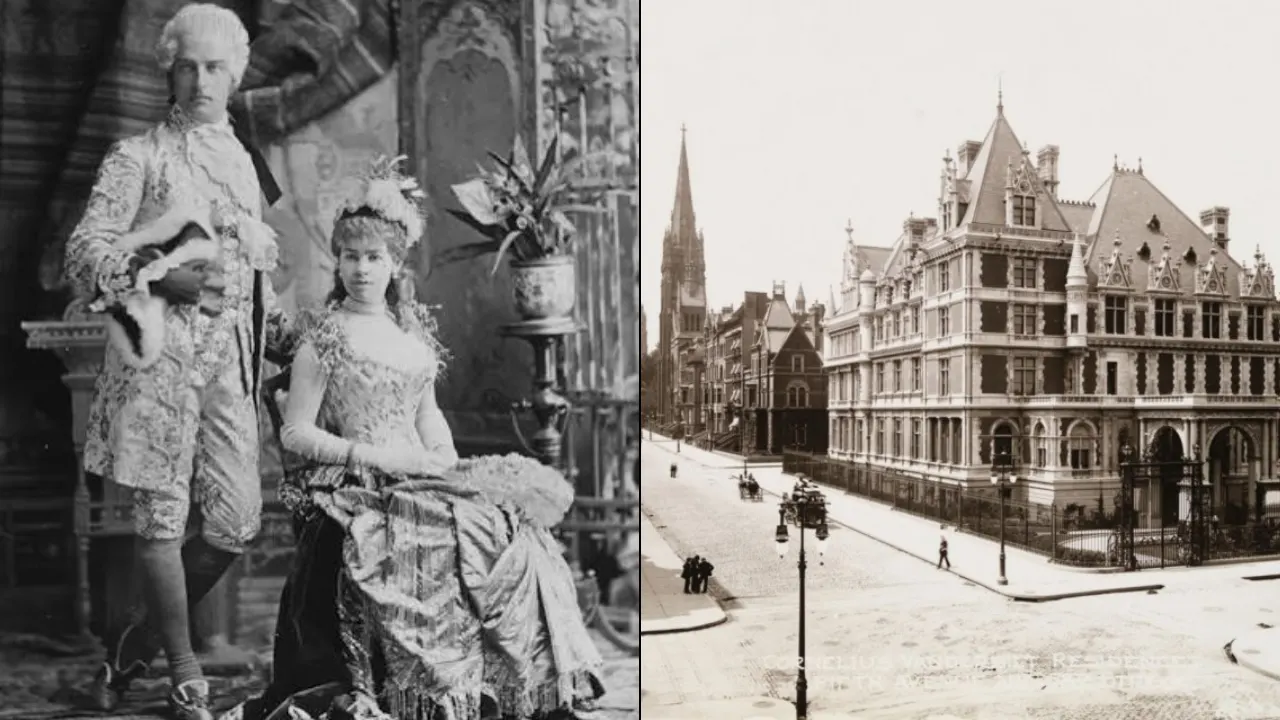
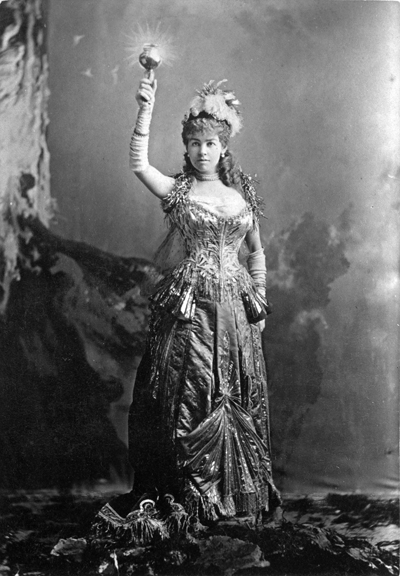
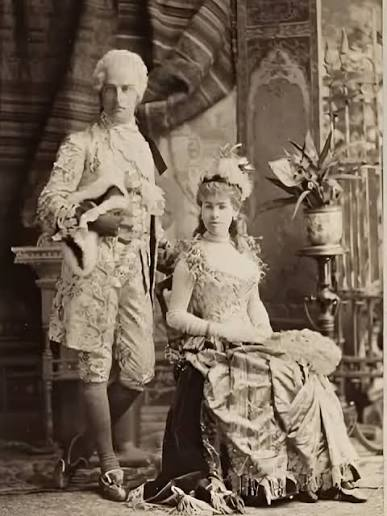
On the evening of March 26, 1883, twelve hundred of New York’s most powerful people filed through the doors of Alva Vanderbilt’s new French château at 660 Fifth Avenue for the most anticipated costume ball of the Gilded Age. Alva had thrown it to force her way into the old-money establishment controlled by Caroline Astor, and the calculation had worked. But when Alice Claypoole Gwynne Vanderbilt stepped into the ballroom dressed as an electric light, a battery-powered torch raised above her head, she took the evening away from her sister-in-law without appearing to try.
The press wrote about Alice for days. It would not be the last time.
Alice Gwynne Enters the Vanderbilt Dynasty
Alice Claypoole Gwynne was born on November 11, 1845, in Cincinnati, Ohio, to Abraham Evan Gwynne, a prominent lawyer, and his wife Rachel Moore Flagg. Her mother’s family carried its own distinction. Her maternal grandfather, Henry Collins Flagg, was a lawyer, newspaper editor, and former mayor of New Haven, Connecticut, who served from 1834 to 1839. Her ancestors included soldiers who fought in the Revolutionary War. When Alice’s father died in 1855, she was nine years old. Her mother remarried Albert Mathews, a writer who published under the name Paul Siogvolk, and in 1861 the family relocated to New York.
That move defined everything that followed. In New York, Alice taught Sunday school at St. Bartholomew’s Episcopal Church in Midtown Manhattan. There she met Cornelius Vanderbilt II, two years her senior and heir apparent to the most powerful industrial fortune in the country. Their courtship was swift. On February 4, 1867, Alice Gwynne, 21 years old, married into the Vanderbilt name. She had grown up the daughter of a Cincinnati lawyer. Within two decades, she would reign as the matriarch of America’s wealthiest dynasty.
A Fortune Beyond Imagining Claims Alice’s World
To understand what the marriage meant, it helps to understand what the Vanderbilt fortune actually was. The patriarch, Cornelius the Commodore, had started as a boy ferrying cargo between Staten Island and Manhattan. He built a fleet of steamships that controlled much of the East Coast trade and poured that wealth into America’s expanding railroads, developing lines that connected New York to Chicago and Cleveland. When the Commodore died in 1877, he left behind over $100 million, a sum larger at the time than what the United States Treasury held. He directed nearly all of it to his son William Henry Vanderbilt. William Henry doubled it in less than nine years. By his death in 1885, the estate had grown to $200 million. He divided it primarily between his two elder sons, Cornelius II and William Kissam Vanderbilt.
Eighteen years after her wedding, Alice and Cornelius stepped into something that was less a private fortune than a national institution.
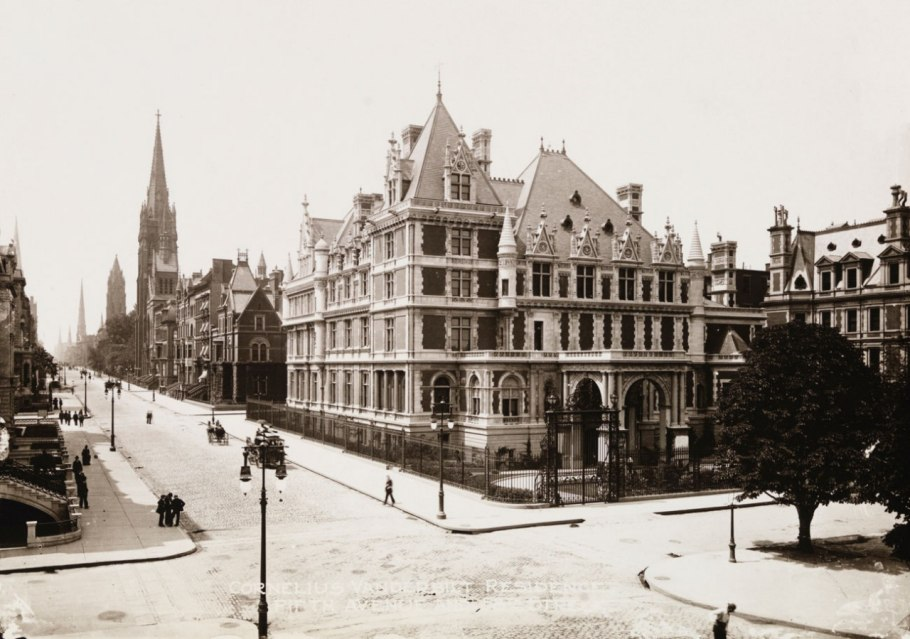
They built accordingly. In 1883, Cornelius and Alice oversaw construction of a Châteauesque mansion at 1 West 57th Street, at the northwest corner of Fifth Avenue, which became the largest private residence in New York City. The ground-floor dining room was large enough to double as an art gallery. In 1893, after fire destroyed their Newport summer house, they commissioned architect Richard Morris Hunt to build a replacement. The new house, the Breakers, was completed in 1895 at a cost of more than $7 million. It contained 70 rooms across five floors on 13 acres of oceanfront land in Newport, Rhode Island. It stands today on the National Register of Historic Places.
Alice moved through this world without performing it. Her sister-in-law Alva Vanderbilt waged open war against Caroline Astor and the old-money establishment, orchestrating guest lists and engineering social pressure with calculated precision. Alice simply appeared. At Alva’s housewarming ball on March 26, 1883, Alice wore a gown designed by the Parisian couturier Charles Frederick Worth: yellow satin threaded with gold and silver, set with glass beads and pearls in a lightning-bolt pattern. She carried a battery-powered torch above her head, a reference to the electrical lighting just installed across New York City. Alva had arranged the party. Alice’s dress was what the press led with the next morning. The gown survives today in the collection of the Museum of the City of New York.
Seven Children and the Losses That Followed
Alice and Cornelius had seven children. The oldest, a daughter named Alice after her mother, died in 1874 at the age of five. Their second, William Henry Vanderbilt II, contracted typhoid fever while studying at Yale University and died in 1892, aged 22. Alice and Cornelius funded Vanderbilt Hall at Yale in his memory. Their third child, Cornelius Vanderbilt III, was effectively cut off when he married Grace Graham Wilson against his parents’ wishes; his father slashed his inheritance, and the breach was never healed. Their fourth child, Gertrude Vanderbilt Whitney, became an artist and the founder of the Whitney Museum of American Art. Alfred and Reginald, born in 1877 and 1880, became the principal beneficiaries of their father’s estate. Gladys, born in 1886, married Count László Széchenyi of Hungary.
At the time of these births, the full weight of what each name would eventually cost Alice was not yet visible.
In 1896, Cornelius suffered a debilitating stroke. He recovered partially but never regained his health. On September 12, 1899, he died of a cerebral hemorrhage at 1 West 57th Street, aged 55. His estate was appraised at $73 million, diminished from what it might have been by decades of substantial charitable giving. Alice received a $7 million trust. Alfred, as principal heir, inherited $36.8 million. The remainder was divided among the surviving children.
Alice withdrew from New York society and focused on her family. What she observed alarmed her. Children and grandchildren spent on mansions, horses, and society at rates that bore no relationship to what was available to sustain them. Alice, living within her trust income and refusing to exceed it, watched the dynasty erode from the sidelines.
Alfred Drowned and Reginald Drank Himself Dead
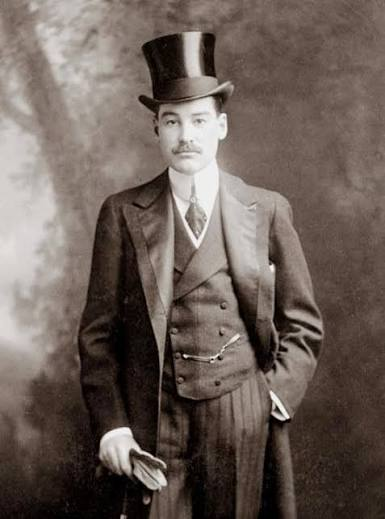
On May 1, 1915, Alfred Gwynne Vanderbilt boarded the RMS Lusitania in New York, bound for Liverpool to attend a meeting of the International Horse Breeders’ Association. On May 7, a German torpedo struck the ship off the coast of Ireland. Alfred was 37 years old. His body was never recovered. He left behind two infant sons from his second marriage to Margaret Mary Emerson, Alfred Jr. and George Washington Vanderbilt III, born in 1912 and 1914, who now had no father.
Ten years later, on September 4, 1925, Alice’s youngest son Reginald died in Portsmouth, Rhode Island, from cirrhosis of the liver. He was 45. He had gambled away the bulk of his inheritance and died deeply in debt, leaving behind a 17-month-old daughter named Gloria and a young widow who would become the source of Alice’s final, bitterest public humiliation.
Reginald’s death broke a 30-year estrangement. In 1926, Cornelius Vanderbilt III came to see his mother for the first time since before his father’s death. He was one of only three of Alice’s seven children still living. She received him.
Alice Outlasted Everyone the Fortune Destroyed
In 1926, Alice applied to sell the mansion at 1 West 57th Street for $7.1 million. Before the sale was finalized, she opened the house to the public for one week starting January 9. Up to 100,000 visitors paid a modest entrance fee that Alice directed to charity and filed through the Tiffany-decorated smoking room, the John La Farge ceiling paintings, and the dining room that had once displayed an art collection the size of a gallery. Then the house was demolished. The ornate wrought-iron gate at the entrance, designed by architect George B. Post and fabricated in Paris, was donated to the City of New York. In 1939, five years after Alice’s death, it was installed at the Conservatory Garden entrance to Central Park near 105th Street. It stands there today.
Alice moved to a townhouse at 857 Fifth Avenue and died there on April 24, 1934, aged 88. She left an estate containing more than $10 million in cash. She had lived within her trust income for 35 years while the heirs around her exhausted theirs. She was interred in the Vanderbilt Mausoleum at the Moravian Cemetery on Staten Island.
In October 1934, six months after her death, a New York courtroom opened the proceedings newspapers would call the trial of the century. At its center was Reginald’s daughter Gloria, ten years old, and a custody dispute between her mother Gloria Morgan Vanderbilt and her aunt Gertrude Vanderbilt Whitney. Seven weeks of testimony aired the family’s finances, private correspondence, and domestic failures before a Depression-era public that followed every day of proceedings. The Vanderbilt name Alice had spent nearly seven decades building into a national institution was reduced, in six weeks of testimony, to tabloid copy.
In her final years, Alice had called the prospect of such public exposure her deepest source of contempt.
She died six months before it arrived.
Leave a Reply