
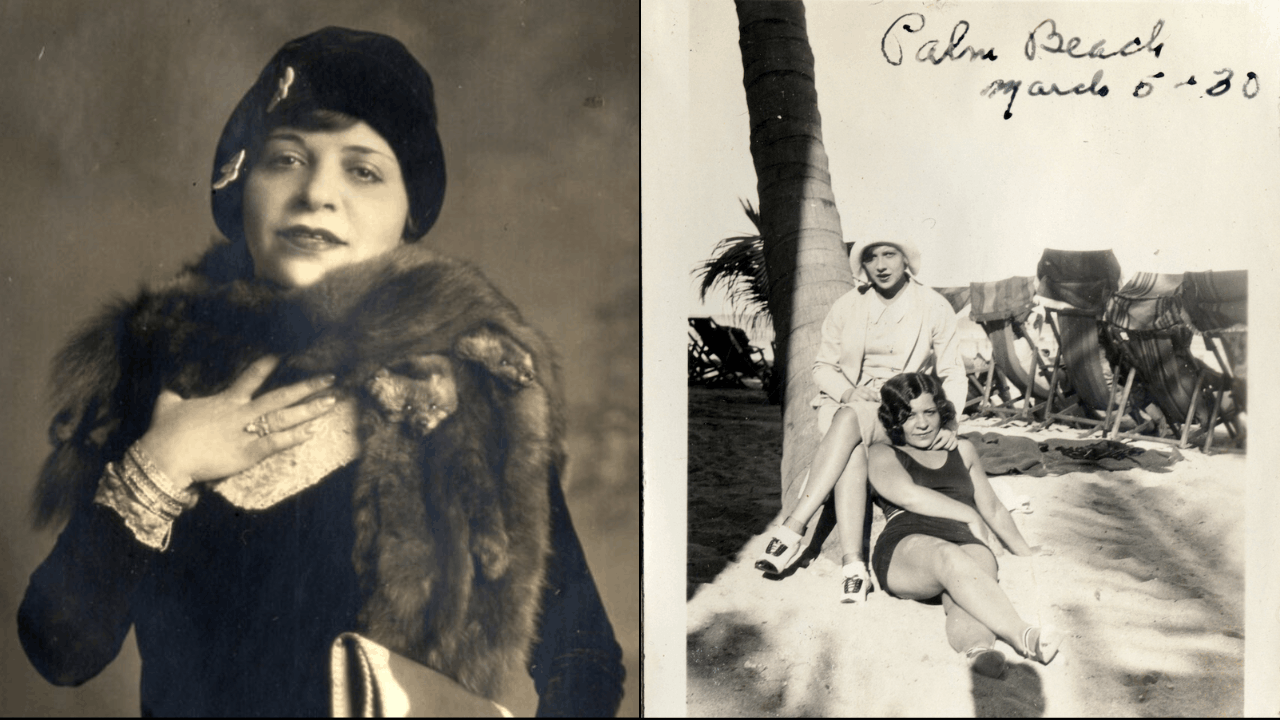
She arrived in New York as a teenager with no money, no family, and no English. By the time the police came for her the sixteenth time, in the summer of 1936, she had entertained half of the city’s criminal aristocracy and was widely considered the most powerful madam in American history. The address changed. The clientele evolved. The operation never stopped.
Her name was Pearl Adler. The city would know her as Polly.
A Tailor’s Daughter Crosses an Ocean
Pearl Adler was born on April 16, 1900, in the city of Yanow in the Russian Empire, in what is now Belarus. She was the eldest of nine children born to Morris Adler, a tailor, and his wife Gertrude Koval. The family was Jewish, and her early education came from the village rabbi. It would not stay that way for long.
Anti-Semitism was spreading across Europe with increasing ferocity in the early 1900s, and Morris Adler made a decision that would alter the trajectory of his daughter’s life permanently. The family would emigrate to the United States. They would go one by one. Pearl went first.
In the early 1910s she was sent to live with family friends in Holyoke, Massachusetts, where she worked as a domestic servant and learned English while waiting for the rest of her family to join her. The First World War ended that plan. The family could not cross. The money her parents had been sending dried up. She had no option but to move south to New York City, where she moved in with a cousin in Brooklyn. She enrolled in school. She found work in a corset factory earning five dollars a week.
In 1917, a foreman at the factory assaulted her. She fell pregnant. A doctor performed an abortion, charging her twenty-five dollars of the one hundred and fifty he typically asked for, and told her to use the remaining ten dollars to buy shoes and stockings. Her cousins cast her out. She was seventeen years old and entirely alone.
A Bootlegger Opens a Door
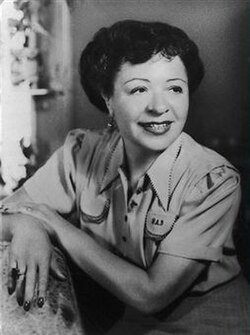
Pearl moved to Manhattan and continued in the factories for several years. Then, in 1920, her roommate introduced her to a man who identified himself only as Tony. He was a bootlegger, one of thousands operating in New York following the introduction of Prohibition earlier that year. Tony had a problem. He was conducting an affair with a married woman of some social standing and needed a private space where they could meet without attracting attention.
He offered Pearl a solution that suited them both. He would pay for an apartment. She could live there rent-free. When he and his companion needed it, she would be elsewhere.
The arrangement shifted quickly. Pearl began providing similar services for Tony’s associates, procuring female company for men who required discretion. Within a year or two she was earning over one hundred dollars a week. She had also discovered that Tony’s real name was Nick Montana, a prominent figure in the Italian-American underworld of New York City.
It did not last cleanly. Within months of beginning this work she was arrested by two police officers who charged her with procuring. The case was dismissed for lack of evidence, but the arrest shook her enough that she briefly tried legitimate work, opening a lingerie shop. It failed. She returned to the trade that was already shaping itself around her, this time with more sophistication.
The Bordello at the Center of Everything
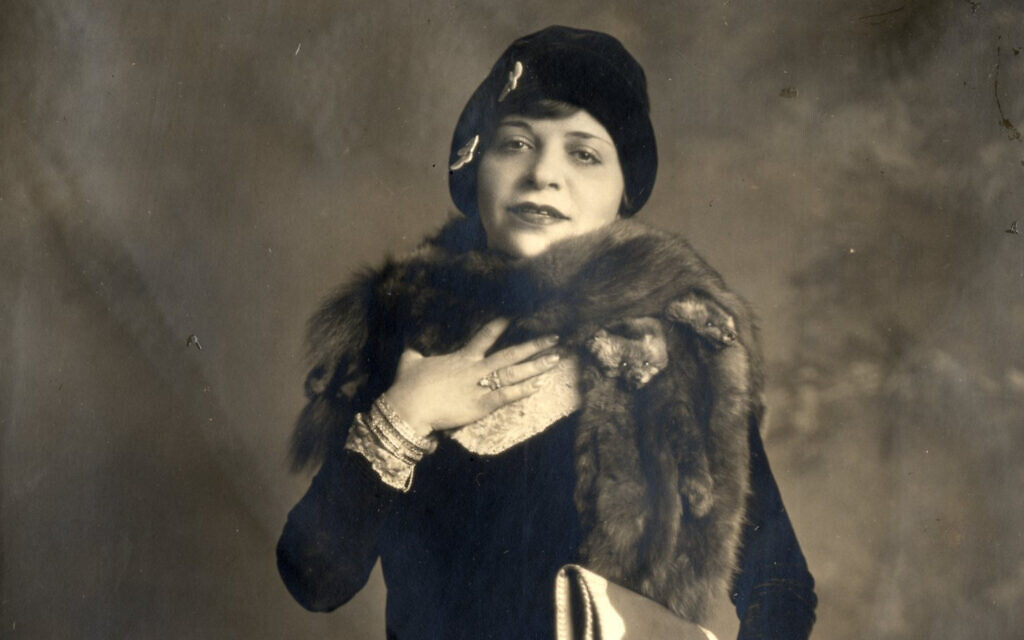
By the mid-1920s Pearl had become Polly, and Polly had become a madam of genuine consequence. She began cultivating relationships with police officers, using bribes to insulate her operations from the kind of exposure that had nearly undone her in 1922. She expanded her services and upgraded her establishments, modelling her primary house on the Everleigh Club of Chicago, the city’s legendary pre-Prohibition bordello.
At the height of Prohibition, her principal establishment operated from inside the Majestic Hotel at 115 Central Park West. It was not a house that announced itself. A labyrinth of private rooms and concealed stairways ran behind its ordinary facade, and through them passed some of the most recognisable names in the New York underworld. The building contained a Chinese Room where guests could play mahjong, and a bar built to resemble the excavated tomb of Tutankhamun, whose discovery in 1922 had gripped the world.
Adler never expressed a moral objection to the work. She described her entry into the business as a consequence of economics and circumstance. She was known for treating the women who worked for her with a degree of care unusual in her profession, actively encouraging them to continue their education, on the stated grounds that no one could work as a call girl indefinitely.
The city’s press had another name for her. They called her the Jewish Jezebel of New York. She accepted it without complaint.
The Seabury Commission Closes In
In 1931, Franklin Roosevelt, then Governor of New York, launched a joint legislative committee to investigate corruption and organised crime in the city. The inquiry was formally called the Hofstadter Committee. It became known by another name: the Seabury Commission, after Samuel Seabury, a former judge of the Court of Appeals whom Roosevelt appointed to lead its investigations.
The Commission was examining a network of connections between politicians, police officers, and the underworld figures who had profited so spectacularly from Prohibition. Adler sat precisely at the intersection of all three. Her links to figures such as Arnold Rothstein, the gambling kingpin who had allegedly bankrolled the fixing of the 1919 World Series before his murder in 1928, made her exactly the kind of witness Seabury’s prosecutors wanted in front of them.
She had watched what happened to witnesses who cooperated. Vivian Gordon, a fellow figure in the city’s sex trade who had been drawn into the Commission’s net, was found strangled in Van Cortlandt Park in the Bronx in February 1931. The message was not subtle.
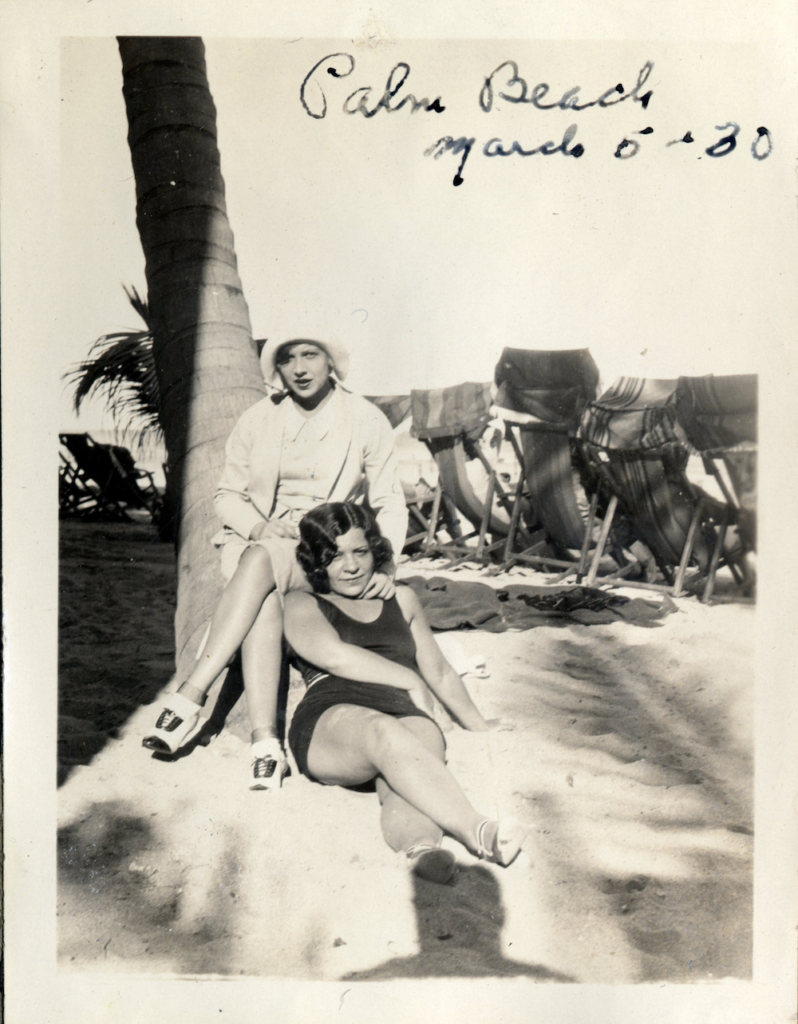
When Seabury himself called Adler in to explain why cheques connected to police officers and politicians had been used to pay for services at her establishments, she made her decision. She relocated to Florida for approximately six months. By the time she returned, Roosevelt was headed to the White House, Prohibition was nearing its end, and the Commission’s momentum had diminished, even as it remained the most extensive investigation into municipal corruption in American history.
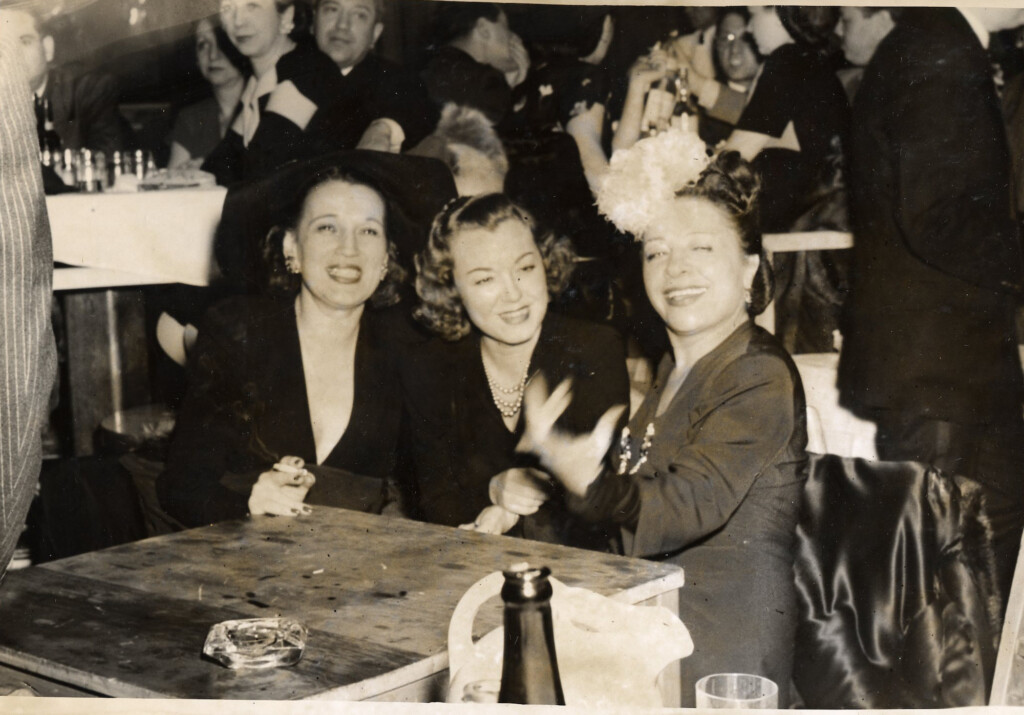
LaGuardia Ends the Golden Age
The Seabury Commission had not been the only legal pressure Adler had survived, and it would not be the last. What finally broke the world she had built was the arrival of a new mayor.
Fiorello LaGuardia was sworn in as Mayor of New York on January 1, 1934. Within minutes of taking the oath, he telephoned the chief of police and ordered the arrest of Charles “Lucky” Luciano, the Sicilian-born gangster born Salvatore Lucania who had restructured the American Mafia into its modern form. Luciano was not incarcerated immediately. But the order made plain what kind of administration New York would now have. He was ultimately convicted in June 1936 on sixty-two counts of compulsory prostitution and sentenced to thirty to fifty years in prison.
Adler was arrested in July 1936. It was the sixteenth time. On this occasion she did not resist. She pleaded guilty to maintaining a bordello and received a sentence of twenty-four days. The era she had helped define was ending.
A Memoir Outlasts the Empire
Following her release, Adler sought legitimate employment. Former contacts in New York and New Jersey who might have offered her work as a nightclub host or manager declined, citing her legal history as too great a liability. She briefly returned to her former trade in the late 1930s and early 1940s before finally accumulating enough money to retire to California in 1943.
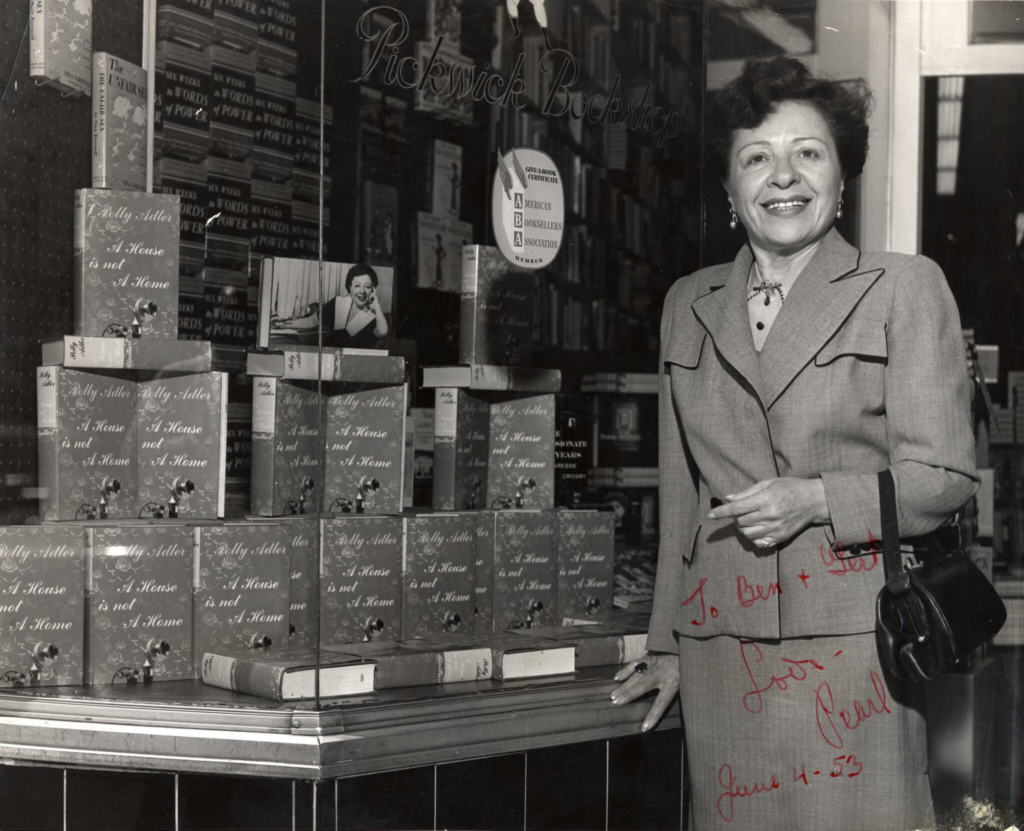
She settled in Burbank. She finished high school, a goal she had carried with her since girlhood. She enlisted the writer Virginia Faulkner to help her compose a memoir and published A House Is Not a Home in 1953. The book was a candid account of her years running brothels across Manhattan and her proximity to some of the period’s most notorious figures, including Charles “Lucky” Luciano, Nick Montana, and Meyer Lansky, widely known as the Mob’s Accountant. It sold over two million copies and made Adler a minor celebrity in a country that had spent decades pretending not to know her name.
In 1964 the book was adapted for film. Shelley Winters played Adler. Cesar Romero played Luciano. Robert Taylor played Frank Costigan, a thinly veiled version of Nick Montana. Adler did not live to see it.
A heavy smoker throughout her life, she died of lung cancer on June 9, 1962, aged sixty-two. In her final years she had taken to calling herself a madam emeritus, the title of someone who had retired from a distinguished position. It was the most Polly Adler thing she ever said.
What became of most of her family is not fully recorded. Several siblings eventually settled in Brooklyn with cousins. Her parents, after years in New York, joined the broader Jewish emigration to Palestine in the years when the possibility of a Jewish state was still a matter of hope rather than fact. How much contact Pearl maintained with any of them during the years she was running one of New York’s most infamous operations is not known.
The bordello is gone. The Majestic still stands at 115 Central Park West. No sign marks what happened inside it.
Category: Scandalshttp://Silo URL: https://crimsonshed.com/tag/Scandals/
Leave a Reply