
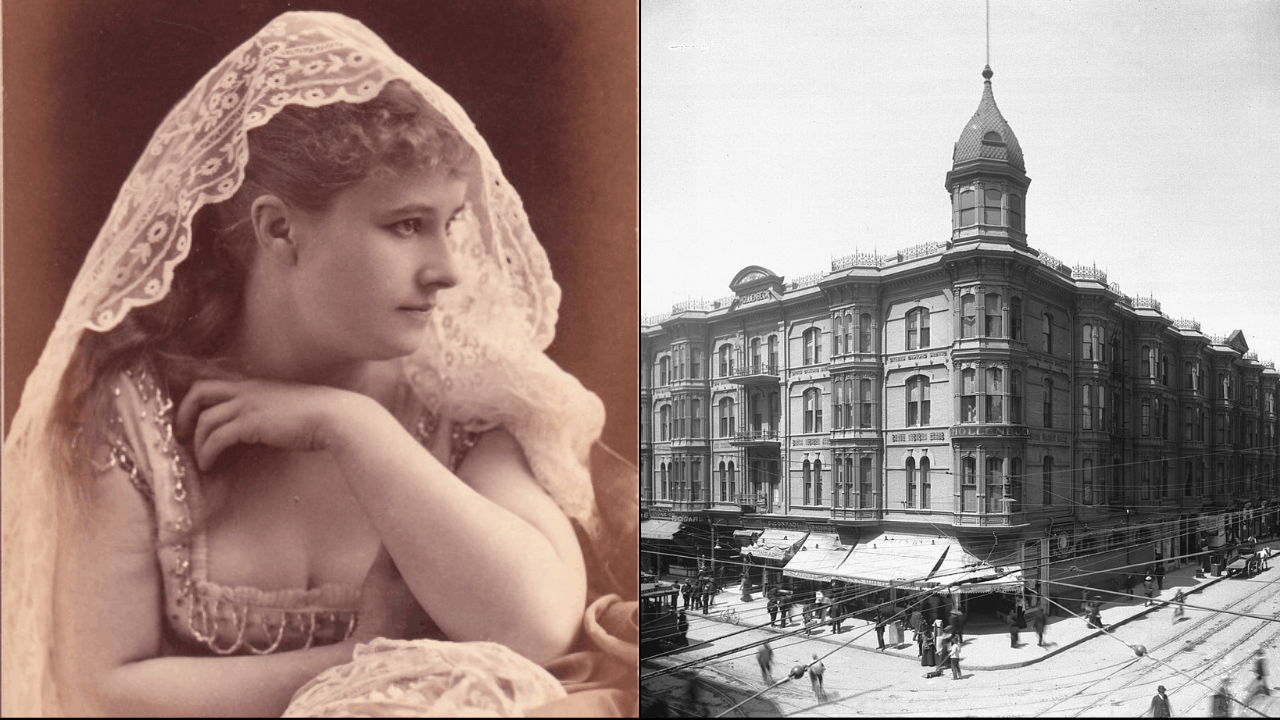
She arrived in Tombstone in the autumn of 1880 with a man who had promised to marry her and a name that was not entirely her own. By the time she left, she had acquired a more powerful man and a secret she would spend the rest of her life protecting. The Josephine Earp the public came to know was largely a fiction. The woman behind the fiction was considerably more interesting.
Josephine Sarah Marcus was born in New York City in 1861, the daughter of Hyman Marcus and his wife Sophia, Jewish immigrants who had emigrated from the Grand Duchy of Posen, Prussian territory that today forms part of Poland. When Josephine was seven, the family loaded onto a ship bound south for Panama, crossed the isthmus on foot, and caught a steamer north to San Francisco. Her father found work as a baker. They were comfortable, if not prosperous, and settled into the rhythms of a city still drunk on the memory of the Gold Rush.
Then Josephine left.
The precise age at which she walked away from her family home in San Francisco without looking back remains disputed, with estimates ranging from her early to mid-teens, as Josephine consistently told different versions of this story depending on her audience. She recalled later that she kissed her mother on the cheek as though heading to school and never returned.
She described what followed as “too much excitement in the air to remain a child,” which was her characteristic way of making something reckless sound romantic. What is not in dispute is that by the late 1870s she had spent several years moving through California and Arizona Territory under circumstances she spent the rest of her life concealing.
Evidence from period census records and stagecoach documents suggests she worked as a prostitute in Prescott and Tip Top under the name Sadie Mansfield before transitioning into burlesque performance.She later referred to this entire chapter of her life as “one big bad dream.” The instinct to erase it never left her.
By the late 1870s she had fallen in with Johnny Behan, a Democratic politician and county lawman who cut a charming figure across Arizona Territory. Behan had divorced his first wife Victoria, and their eight-year-old son Albert had been left partially deaf by scarlet fever.
Josephine formed a genuine attachment to the boy that would outlast the relationship with his father by decades. In September 1880 she relocated with Behan to Tombstone, arriving in a town that was still being built.
A Silver Town Built on Borrowed Time
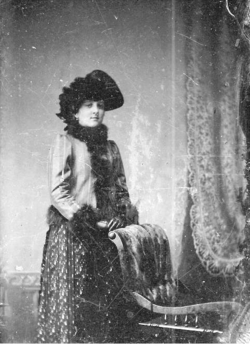
Ed Schieffelin had found silver in the hills east of the San Pedro River in 1877, filing his claims after fellow scouts at Camp Huachuca told him the only thing he would find out there was his own tombstone.He named his first mine accordingly.
Word spread, and within three years the settlement bearing that name had swelled to several thousand people, complete with four churches, two banks, a bowling alley, an ice cream parlour, and over a hundred saloons. It was the kind of place where fortunes and lives were made and lost inside of a season.
Into this charged environment the Earp brothers had arrived in 1879. Virgil held the position of town marshal, and both he and Wyatt had been commissioned as deputy US marshals.They represented the interests of Tombstone’s Republican business elite, a coalition that included Mayor John Clum, editor of The Tombstone Epitaph, and the town’s mining investors.
Directly opposed to them were the Cochise County Cowboys, a loosely organized faction of ranchers and cattle rustlers who operated across the US-Mexico border and enjoyed the political backing of Sheriff Johnny Behan, himself a Democrat.The Clantons and the McLaurys were the Cowboys’ most prominent families.
What appeared on the surface to be a law enforcement dispute was also, at its root, a contest for economic and political control of one of the fastest-growing towns in the American Southwest. Wyatt’s close acquaintance John Henry “Doc” Holliday, a Georgia-born dentist who had given up the profession for gambling when tuberculosis made the work impractical, had arrived alongside the Earps and further complicated Behan’s position by aligning firmly with the lawmen.
Josephine stepped into this situation already on the wrong side of it. Her partner Behan was the Cowboys’ man. Early in 1881, returning from a trip to San Francisco where she had taken Albert to seek treatment for his deafness, she found Behan in bed with the wife of a mutual friend. She ended the arrangement immediately.
What came next remains deliberately obscured. She had already come into contact with Wyatt Earp, and the two appear to have begun a liaison that could not be openly acknowledged, because Wyatt was still, in the eyes of most Tombstone residents, in a common-law marriage with Celia Ann “Mattie” Blaylock. Mattie had been with Wyatt since the early 1870s and had followed him to Tombstone, listing her surname as Earp in the 1880 census. She was, by most accounts, already dependent on laudanum by the time Josephine appeared.
Wyatt had grown increasingly indifferent. Neither Josephine nor Wyatt ever publicly clarified exactly when their relationship began, and the deliberate silence on the point strongly suggests it overlapped with Mattie’s presence in the household.
Thirty Seconds in October
On October 26, 1881, the accumulating tensions between the Earps and the Cowboys finally broke into the open. Ike Clanton had spent the night before the gunfight making drunken threats against the Earp brothers in several Tombstone saloons, and by the following afternoon Virgil had determined to disarm the Cowboys gathered in a vacant lot behind the OK Corral on Fremont Street.
The confrontation lasted approximately thirty seconds. Billy Clanton and brothers Tom and Frank McLaury were killed. Virgil, Morgan, and Holliday were wounded. Wyatt walked out unharmed.
The feud did not end with the gunfire. In December 1881, Virgil was ambushed from the shadows and shot, leaving his left arm permanently crippled. Then on March 18, 1882, Morgan Earp was shot through the back window of a Tombstone billiard parlour while playing pool.
He died within the hour. The specific perpetrators were suspected to be Cowboys Frank Stilwell, Pete Spence, and Florentino Cruz, acting under the broader organization of the Cochise County Cowboys faction. Wyatt identified the men responsible and set out with a federal posse on what became known as the Earp Vendetta Ride, a pursuit through the Arizona wilderness that settled accounts without recourse to courts.
He did not telegraph Mattie Blaylock, who had been sent with the other Earp women to California following Morgan’s death. She waited for a message that never came. He had already chosen. She eventually returned to prostitution in Globe, Arizona, and died of a laudanum overdose on July 3, 1888, her death ruled a suicide.
Josephine had gone ahead to San Francisco under the name Mrs. J. Earp. Wyatt joined her in Colorado early in 1883.
A Life in Constant Motion
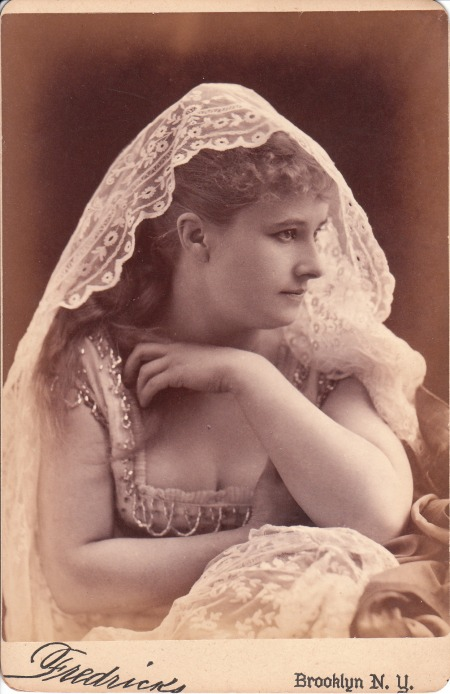
What followed was not a settled life by any measure. They moved through Eagle City in Idaho, where Earp opened a saloon, then through San Diego as the first railway reached the Pacific southwest, then to San Francisco, then north to Alaska during the Klondike Gold Rush of the late 1890s, where thousands flooded into Canada’s Yukon Territory chasing the latest promise of easy wealth.The Klondike proved no more generous to the Earps than to most of the people who went there, and they came back south having gained little.
Josephine gambled constantly and badly. The allowance sent by her family was frequently lost before it could be spent on anything useful. She berated Wyatt for his financial failures.He called her Sadie in their arguments, knowing it stung, the name evoking the years in Arizona she had laboured to bury.
She hated the name precisely because of what it implied about who she had been before she reinvented herself. He disappeared on long walks when the tension became too much, and on longer drinking sessions when the walks were not enough.
Their purported marriage in 1892, conducted on a yacht off the California coast and witnessed by those present, left no legal record. No certificate has ever been located.Wyatt’s legal entanglements with previous common-law arrangements made formal marriage complicated, and Josephine did not press the point publicly.
She began calling herself Josephine Earp regardless, and eventually, through sheer insistence, the name stuck. They were never able to have children; she had miscarried on at least two earlier occasions and did not conceive again.
In the early 1920s they settled into the rhythm of Los Angeles summers. Wyatt formed friendships among the Western film actors beginning to colonise Hollywood, serving as an informal consultant on frontier pictures and becoming close with stars including Tom Mix and William S. Hart. He had spent years working toward having his own story told properly on screen. He became seriously ill in 1928 and died at their Los Angeles apartment on January 13, 1929. Tom Mix wept openly at the funeral.
The Woman Who Outlived Her Own History
Josephine did not attend the burial. She was too grief-stricken to manage it, according to those who knew her in those years. What she could manage was fighting.
When journalist Stuart Lake published his biography Wyatt Earp: Frontier Marshal in 1931, Josephine had attempted throughout its writing to control the narrative, sending threatening letters, consulting lawyers, and pressuring Lake at every stage to omit details she found unflattering, particularly any reference to Mattie Blaylock or to the early years in Arizona.
Lake resisted many of her demands, and the resulting book portrayed Wyatt in heroically sanitized terms while leaving several inconvenient details intact. Josephine found this intolerable. When 20th Century Fox began production on a film adaptation with the working title Wyatt Earp, Frontier Marshal, she threatened legal action against the studio.
The title was changed to simply Frontier Marshal before the film’s release in 1939, though the project proceeded regardless. She had forced the same concession from Fox on an earlier 1934 adaptation, winning a financial settlement on that occasion.
She spent her last years in Los Angeles, the gambling habit unbroken, increasingly isolated, and by most accounts difficult to be around. She died on December 19, 1944, at the age of 83.
Her own memoir was published posthumously in 1976 under the title I Married Wyatt Earp, edited and annotated by Glenn Boyer, an acquaintance of Earp family relatives who claimed to have assembled it from two supporting manuscripts.The book became a bestseller and was treated for years as a primary historical source, cited in academic texts and drawn upon by filmmakers. Then, in the 1990s, researchers began identifying serious discrepancies.
A 1998 investigative inquiry found that Boyer could not produce one of the key manuscripts he cited as the basis for the Tombstone section of the book. Boyer eventually admitted, in his own words, that the book was “100 percent Boyer” — that he had inserted his own theories and inventions into Josephine’s voice and presented the result as her recollections.The University of Arizona Press, which had published the work, described it as a “fictional format.” It remains, as of this writing, in print.
This, then, is the final layer of the story. Josephine Marcus spent decades constructing a version of her life that obscured the prostitute, the burlesque dancer, the woman who left her family at thirteen and remade herself in the Arizona Territory. When she died, a man she had trusted with her papers did to her story exactly what she had done to her own history: invented a more convenient version and passed it off as fact.
She is buried beside Wyatt in the Hills of Eternity Memorial Park in Colma, California, under the name she insisted upon, next to the man she rewrote herself to deserve. The true account of what Josephine Marcus was before she became Josephine Earp may never be fully recovered. She made certain of that.
Leave a Reply