
How Lulu White Built New Orleans’ Most Notorious Empire
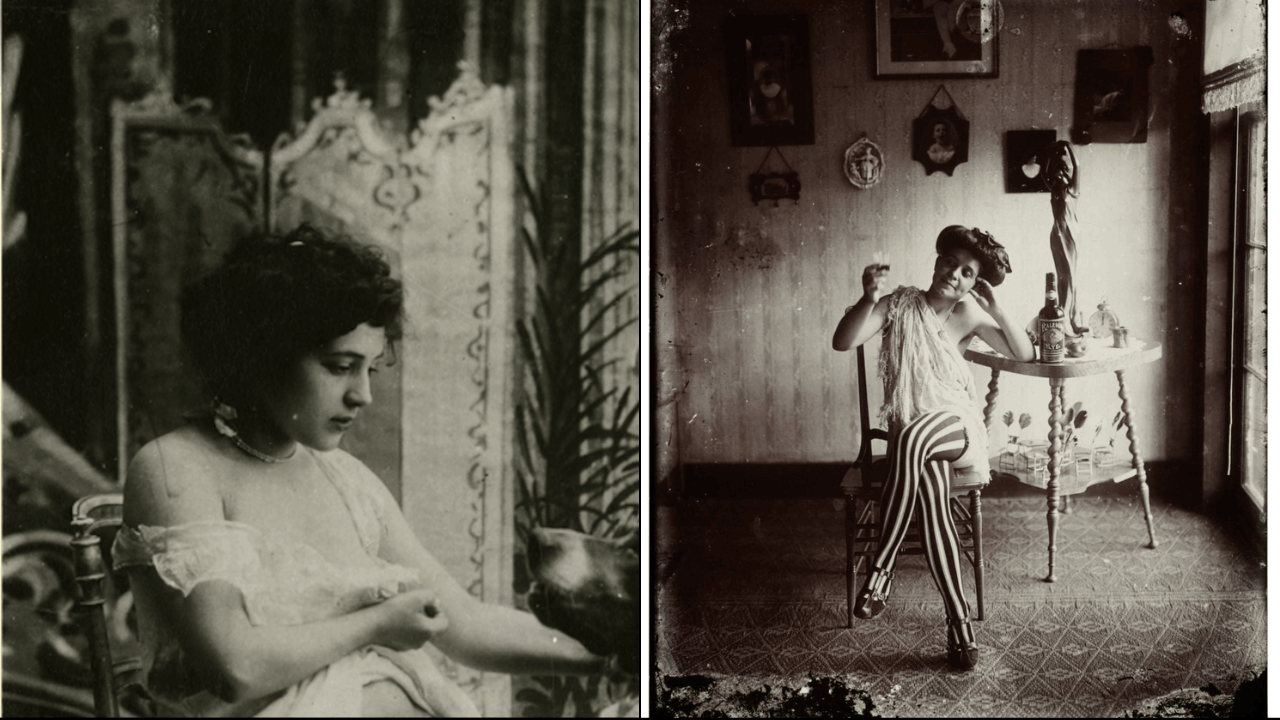
The woman who descended the staircase of 235 Basin Street wore diamonds on every finger, a red wig crowned with a tiara, and an expression that dared anyone in the room to underestimate her.Her name was Lulu White. In a city already notorious for its vices, she had managed to do something almost no one in Gilded Age America had done: build a million-dollar empire from nothing, across racial lines that were enforced at gunpoint, in a world that gave her no legal standing to do any of it.
Storyville Changed Everything for Her
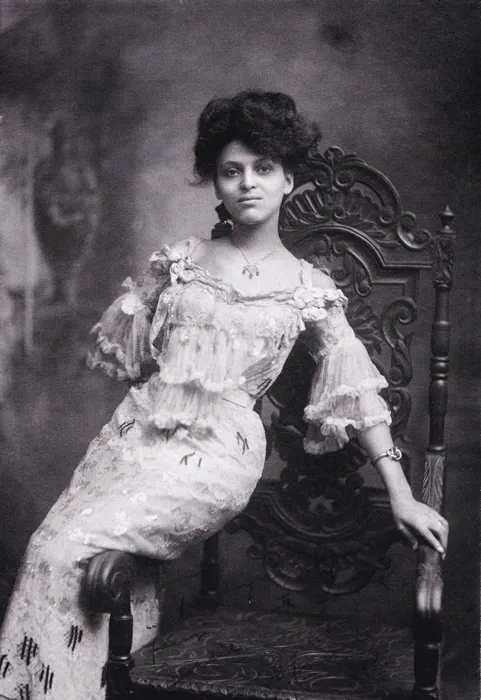
Lulu Hendley was born around 1868 on a farm outside Selma, Alabama, though historians have raised serious doubts about this date, with some placing her birth as far back as the early 1860s.No birth record survives. She was of mixed race and was described in the parlance of the era as an octoroon, a term denoting one-eighth Black ancestry.
She would later claim to be a Creole immigrant from the West Indies, listing Cuba, Jamaica, and other islands at different points in her life depending on who was asking. The truth of her origins, like much of what followed, she kept deliberately obscured.
She arrived in New Orleans in the early 1880s, possibly still a teenager, driven most likely by the grinding rural poverty that had gripped Alabama since the Civil War. She entered the city’s criminal economy quickly.She was arrested multiple times for petty theft and other misdemeanours, and she began working as a prostitute.By the late 1880s she had accumulated a clientele of wealthy white men. By the early 1890s she had capital to invest.
The timing was extraordinary. New Orleans in 1897 was in the midst of a significant political experiment. Alderman Sidney Story, responding to pressure over rampant street prostitution, pushed through an ordinance limiting the trade to a designated district in the Faubourg Tremé, a neighbourhood that had long been home to freed slaves and Creole immigrants from the Caribbean.
the ordinance did not technically legalise prostitution. It simply made the city’s enforcement of the law disappear within a defined perimeter. The district, much to Story’s reported mortification, became known as Storyville. Within those few dozen blocks, sex workers could advertise their services through publications called Blue Books, sold for 25 cents, and operate with the effective blessing of the city.
Mahogany Hall Crowned the Entire District
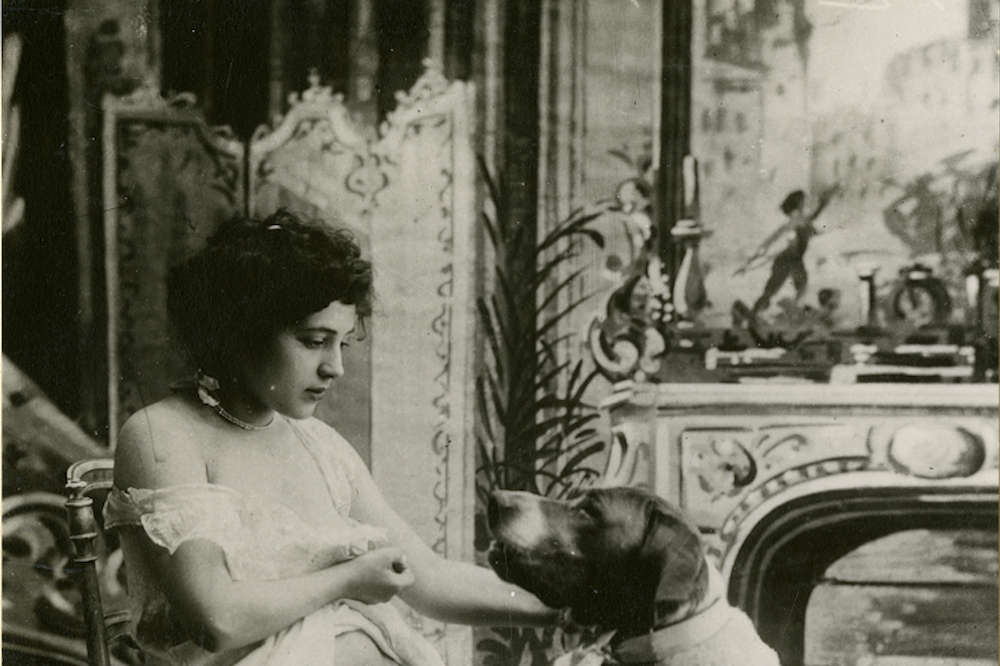
Lulu had already established herself in the neighbourhood before the ordinance passed, reportedly opening the first iteration of Mahogany Hall around 1894. But Storyville’s formal creation made her operation possible on a scale that had previously been unthinkable. She rebuilt and expanded Mahogany Hall into a four-storey mansion at 235 Basin Street, constructed at a reported cost of $40,000, a sum equivalent to well over a million dollars today.
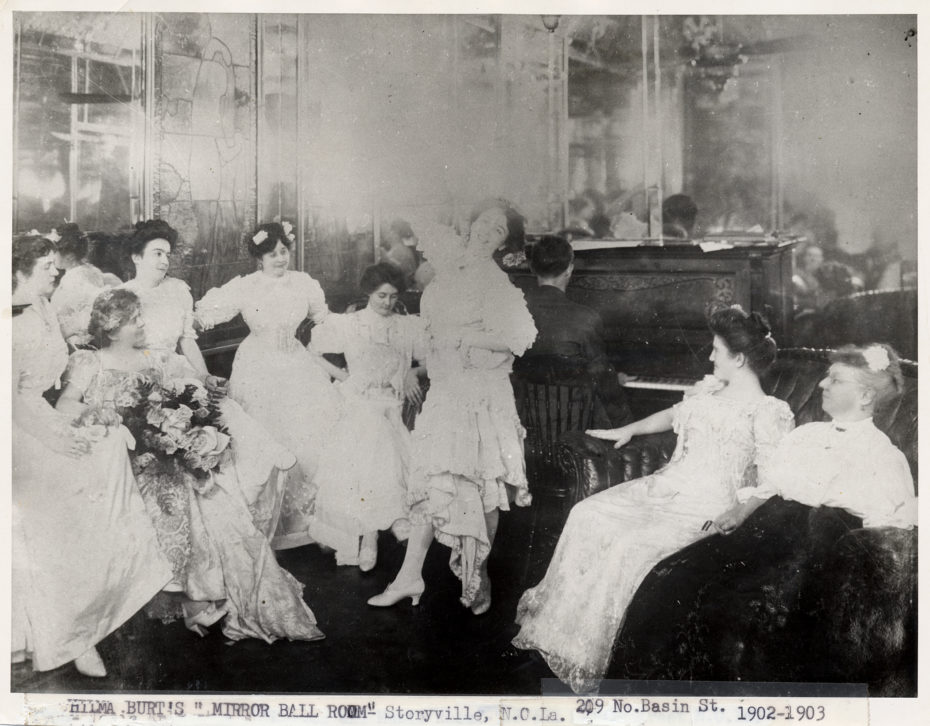
The building had fifteen bedrooms, each with its own private bathroom, five parlours including a celebrated mirrored hall, marble flooring in the common areas, mahogany-panelled surfaces throughout, and an elevator. It was marketed in the Blue Book as “the handsomest octoroon parlour in America” and was designed, from the ground up, for wealthy white clientele.
Lulu herself had stopped working as a prostitute by this point. She was the madam, the host, the brand. She appeared at Mahogany Hall wearing elaborate gowns and stacked jewellery, and became known across the city as “The Diamond Queen of the Demimonde.
” The Blue Book listings for 235 Basin Street carried her name at the top, followed by those of the roughly forty women she employed. She also produced separate promotional brochures distributed at her direction across New Orleans, advertising a level of luxury that few establishments in the city could match.
Mahogany Hall became one of the most significant jazz venues in early New Orleans alongside its other activities. Jelly Roll Morton played there regularly. Joe “King” Oliver, who would later serve as a crucial mentor to a young Louis Armstrong, performed across Storyville’s Basin Street establishments. The connection to that tradition deepened through Spencer Williams, Lulu’s nephew, who grew up at Mahogany Hall after his mother’s death and fell asleep as a child to the sound of piano music drifting up from the parlours below.
He would go on to compose some of the most enduring standards of the early jazz era, among them “Basin Street Blues.” In 1929, he immortalised his aunt’s establishment in a piece he called “Mahogany Hall Stomp,” recorded that year by Louis Armstrong and his Orchestra. Armstrong had grown up in New Orleans, raised in a neighbourhood known as “The Battlefield,” just a short distance from Basin Street, and had made his name playing in establishments not unlike Lulu’s.
The Empire Fell in Stages
The first serious blow came in 1906. Lulu ran into significant financial difficulties and relocated temporarily to California, moving back and forth between New Orleans and the West Coast for several years. She recovered, at least partially, and continued operating Mahogany Hall on her return.
The decisive strike came from Washington. In April 1917, the United States entered the First World War, and New Orleans became a critical embarkation point for troops headed to Europe. Secretary of War Newton Baker and Secretary of the Navy Josephus Daniels both applied pressure to close Storyville, arguing that it posed a public health threat to servicemen and undermined military discipline.
Daniels wrote directly to the Governor and the Mayor of New Orleans demanding closure. When four military personnel were killed in the district within weeks of one another, the argument for keeping it open collapsed entirely. On November 12, 1917, Storyville was officially shut down.
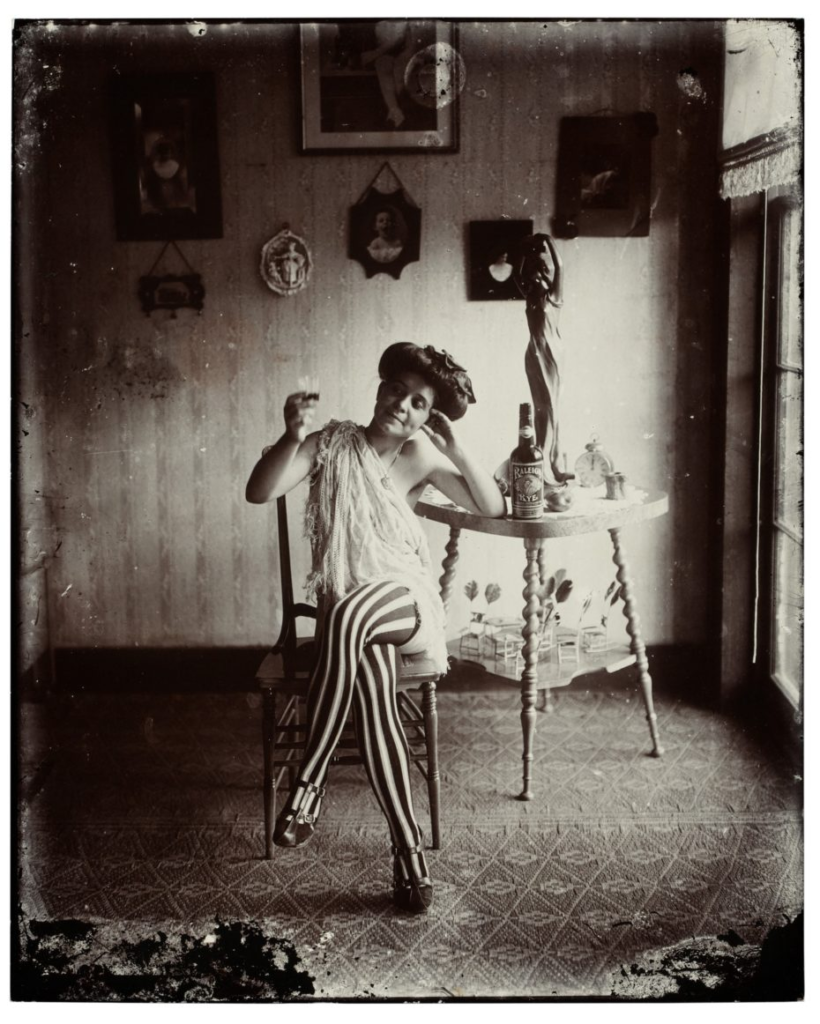
Mahogany Hall deteriorated rapidly. Without the protection of regulated tolerance, the business had no legal standing. The building sold in 1929 for $11,000, a fraction of the cost of its construction even before inflation is accounted for. Its new owner reportedly used what had been the most opulent brothel in the American South as a storage room for a department store.
The Volstead Act of 1919, which paved the way for Prohibition beginning in January 1920, killed Lulu’s second major business. The saloon she had opened in 1912 at the corner of Basin Street and Bienville Street pivoted to soft drinks. She was arrested for bootlegging throughout the 1920s, reportedly running illegal stills producing rum and whiskey across Louisiana. The charges never produced a lengthy prison sentence. She had survived too many things to be easily contained.
Her Legend Outlasted the Building
Exactly when and how Lulu Hendley died remains uncertain. Jazz historian Al Rose, in his 1974 study of Storyville, concluded she died on August 20, 1931, at the New Orleans residence of Willie Piazza, a fellow former madam. A later account complicated that conclusion: a bank teller at the National Bank of New Orleans reportedly testified that a Lulu White had made a significant withdrawal from the institution as late as 1941.
Whether that was her or someone else sharing her name, no one has been able to confirm.Mahogany Hall itself was finally demolished in the 1940s. The ground floor of her Bienville Street saloon, however, still stands.What survived Lulu White was not any single institution but the mythology she had created and the music her household produced.
A woman born on a farm in post-war Alabama, with no legal protections, no formal title, and no inheritance, had raised a building that became central to the development of American jazz, operated one of the most talked-about venues in the country for over two decades, and managed to remain a ghost in the historical record even as the songs written in her name played on. Spencer Williams wrote “Mahogany Hall Stomp.” Louis Armstrong made it famous. But neither of them built the hall.
Silo: Scandalshttps://crimsonshed.com/tag/Scandals/
Leave a Reply