
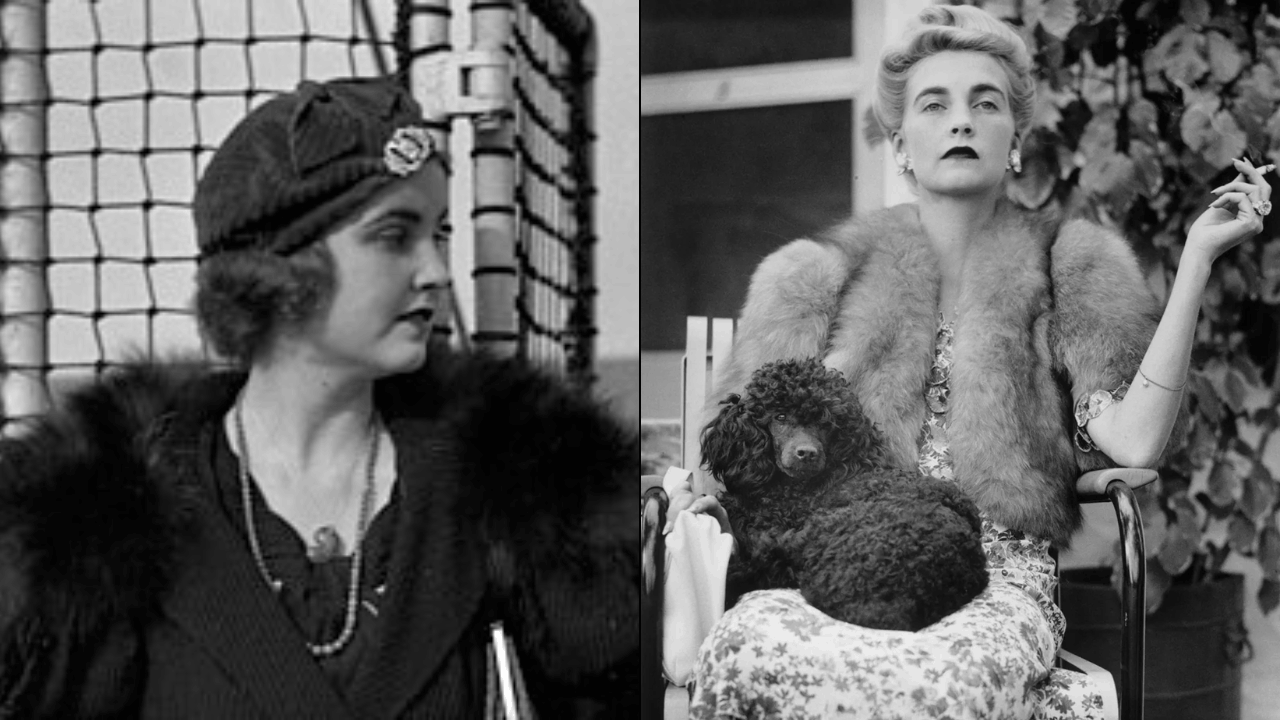
Born into the Woolworth retail dynasty in 1912, Barbara Hutton controlled more than $50 million before her thirtieth birthday and spent the final years of her life nearly blind and addicted to painkillers in a hotel penthouse, with an estimated $3,500 remaining.
In May 1979, a 66-year-old woman died alone in a penthouse suite at the Beverly Wilshire Hotel in Los Angeles. The death certificate listed heart failure as the cause.
What the certificate did not record was the trajectory of the life that preceded it: a billion-dollar fortune inherited before she turned thirty, seven marriages that consumed most of it, a son killed in a plane crash, and a body ravaged by decades of anorexia and addiction. The woman was Barbara Woolworth Hutton. Fifty years earlier, she had been one of the wealthiest people on earth.
“She was dubbed the Poor Little Rich Girl. The name referred simultaneously to her great fortune and to the tragedy of her early years. It was not meant kindly.”
Four-Year-Old Barbara Found Her Mother
Barbara Woolworth Hutton was born in New York City on November 14, 1912. Her father, Franklyn Laws Hutton, was a co-founder of E.F. Hutton & Company, a prominent New York investment banking firm. Her mother, Edna Woolworth, was a daughter of Frank Winfield Woolworth, the American retail magnate who had built one of the largest commercial empires of the nineteenth century.
Frank Woolworth’s rise had been grounded in a single, deceptively simple idea. In the late nineteenth century, he pioneered the “five-and-dime” store, a retail format in which every item was priced at either five or ten cents. The model proved transformative. Just months after Barbara’s birth, Woolworth opened the company’s namesake skyscraper in Manhattan, a $13.5 million construction that remained the tallest building in the world until 1930.
The wealth behind those towers meant nothing to a four-year-old girl in 1917.
On May 2, 1917, Barbara’s mother, Edna Woolworth Hutton, was found dead at the age of 33. The official coroner’s report attributed her death to suffocation caused by mastoiditis, a serious infection of the ear, nose, and throat. No autopsy was ever performed.
The manner of her death, the absence of a formal medical examination, and the circumstances of the discovery led many who knew the family to suspect she had taken her own life. The person who found her body was Barbara. She was four years old.
Her father, Franklyn Hutton, was by multiple accounts a serial philanderer and a heavy drinker who made little effort to conceal either habit. After Edna’s death, he handed Barbara to the care of governesses and enrolled her in a succession of private schools in New York City and Farmington, Connecticut. He did not, by the accounts available, involve himself meaningfully in raising her.
Woolworth Millions Landed on a Teenager
In 1919, Frank Winfield Woolworth died, leaving his estate to be divided among his heirs. Barbara’s maternal grandmother followed in 1924. As the only child of Edna Woolworth, Barbara inherited the one-third share of the Woolworth estate that would otherwise have descended to her mother. The sum amounted to approximately $30 million at the time, a figure equivalent to more than half a billion dollars today.
Barbara did not gain direct control of this inheritance immediately. Her father administered the estate during her minority and invested it with sufficient competence that by the time Barbara came into full control in the early 1930s, the value had grown to more than $50 million, a sum in excess of one billion dollars in present terms.
She was twenty years old and widely photographed. The money followed her everywhere. So did the press.
Debutante Ball Ignited a National Uproar
In late 1929, the Wall Street crash had accelerated the American economy into the Great Depression. By November 1930, millions of Americans were unemployed and destitute. It was in this context that Barbara’s family arranged an elaborate debutante ball for her eighteenth birthday in New York.
The event featured a live performance by Rudy Vallee, one of the most prominent entertainers of the era. The cost was reported at $60,000, a sum equivalent to more than one million dollars today.
The banking and investment class, including the Huttons, was widely blamed by the public for the financial ruin that had spread across the country.
The timing of the ball was not merely tone-deaf. It was, in the opinion of the American press, an act of open contempt.
Newspapers across the country savaged Barbara in print. The coverage attached a label to her that would follow her for the rest of her life: the “Poor Little Rich Girl.” The name referred simultaneously to her great fortune and to the tragedy of her early years. It was not meant kindly.
Seven Husbands Systematically Consumed Her Fortune
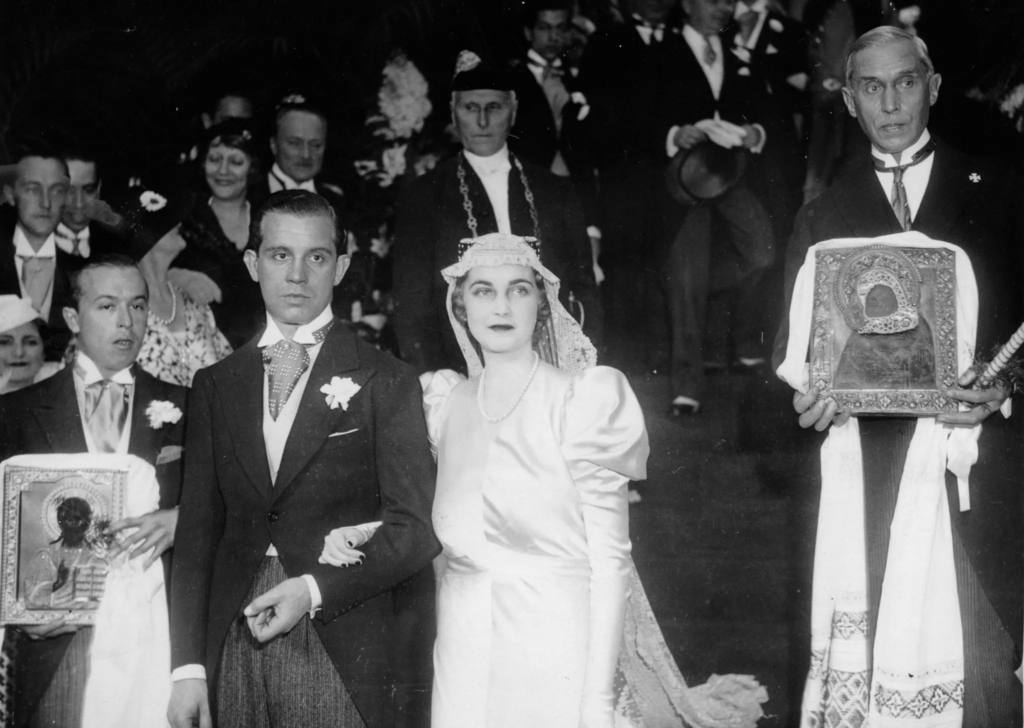
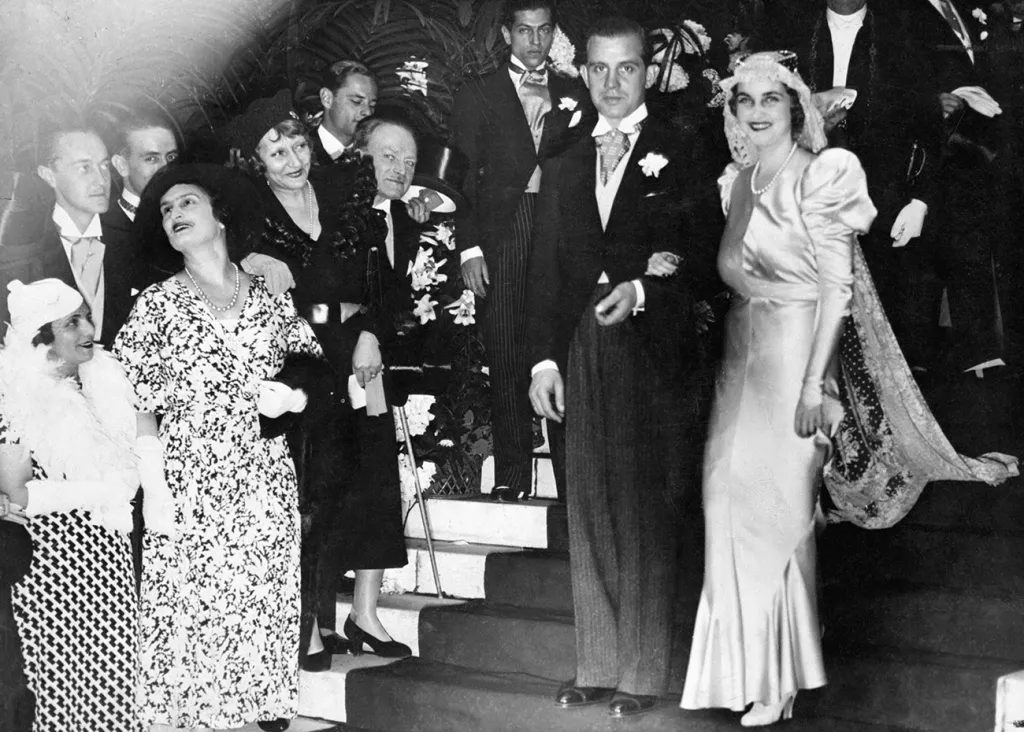
Barbara Hutton married for the first time at the age of twenty. The groom was Alexis Mdivani, a member of a Georgian family that had fled the Caucasus in the early 1920s, claiming persecution by Soviet authorities.
The Mdivanis were accomplished social climbers. When Alexis met Barbara, he was already married to Louise Van Alen, a wealthy socialite with Astor family connections. He divorced her and married Barbara on June 22, 1933. A dowry of one million dollars was provided to the Mdivani family as part of the arrangement.
The marriage was, in effect, a sustained financial extraction. Alexis spent Barbara’s money at a rapid pace on top of the dowry payment. By the time she recognized the pattern and divorced him in the summer of 1935, a considerable portion of her estate had been spent.
Her second marriage offered no improvement. Count Kurt von Haugwitz-Hardenberg-Reventlow was a Danish nobleman of German descent who was physically and emotionally abusive. The wedding took place weeks after her divorce from Alexis was finalized.
Barbara began drinking heavily during this marriage and developed anorexia, a condition that would affect her health for the remainder of her life. She also began using drugs. Their union produced one child, a son named Lance, born on February 24, 1936. Barbara successfully sought custody of Lance when the marriage ended in 1938, and while he was raised largely by governesses and educated at boarding schools, this reflected standard practice within her social milieu as much as any personal failing.
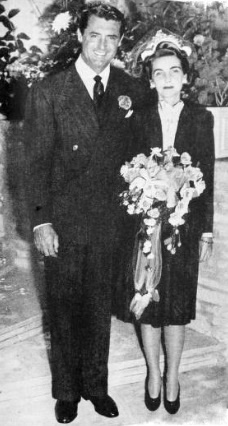
Cary Grant Refused Her Money Entirely
By the time the Second World War broke out in September 1939, Barbara had moved to California and became an active fundraiser for the Allied cause. She worked to build American support for Britain and France in the years before U.S. entry into the conflict, and sold war bonds after the attack on Pearl Harbor in December 1941. It was during this period that her relationship with the British-American actor Cary Grant deepened.
Barbara and Grant had first met through their mutual acquaintance, the industrialist Howard Hughes. Grant, by 1942, had appeared in Bringing Up Baby, His Girl Friday, and The Philadelphia Story, and was one of the most prominent actors in Hollywood. They married in July 1942. The press immediately branded them “Cash and Cary.”
The marriage was, by all subsequent accounts, one of the more functional of her seven. Grant never attempted to access Barbara’s fortune. They divorced in 1945, and both maintained publicly, and seemingly sincerely, that they had parted as friends. It remained, anomalously, the one marriage she appeared to exit with her finances intact.
Divorce Settlements Compounded the Financial Damage
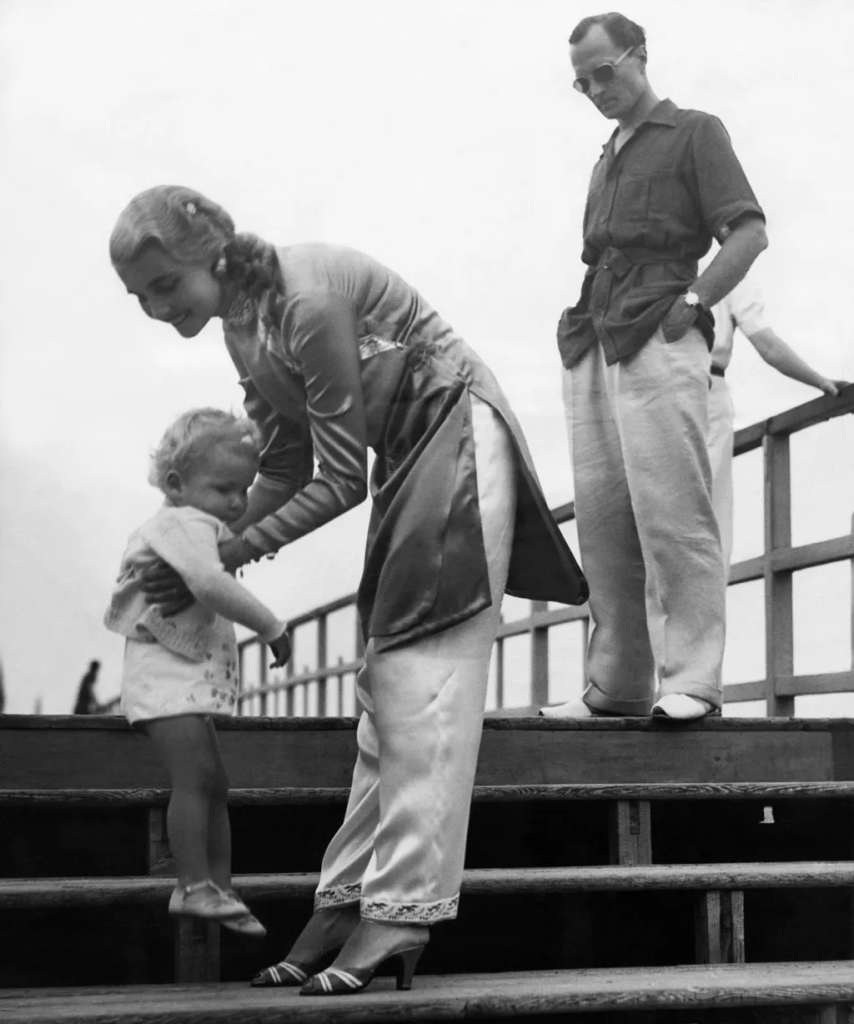
After the war, Barbara moved to Europe. In 1947, she married Prince Igor Troubetzkoy, a Lithuanian-born prince of Russian descent based in France, who was pursuing a career as a racing driver during the sport’s post-war expansion. He used Barbara’s money to fund that pursuit. They divorced in 1951.
The collapse of her fourth marriage, combined with her worsening alcohol and drug dependency, reportedly led Barbara to attempt to take her own life. News of the attempt reached the press in the early 1950s. Coverage revived the “Poor Little Rich Girl” label, more than two decades after it had first been applied.
In December 1953, Barbara married for the fifth time. The groom was Porfirio Rubirosa, a diplomat and notorious playboy from the Dominican Republic. The union had a peculiar precedent: Rubirosa had previously been married to Doris Duke, the American heiress to the Duke tobacco fortune who, like Barbara, had been born in 1912 and was considered one of the wealthiest women in the United States.
The two women had maintained a long-standing rivalry. Rubirosa had collected a substantial financial settlement in his 1947 divorce from Duke, reportedly including a converted B-25 bomber aircraft among other assets. Barbara appeared to compound the rivalry by marrying him next.
The marriage lasted 53 days. Rubirosa departed with another large settlement. Barbara married twice more.
Her sixth husband was Baron Gottfried von Cramm, a German professional tennis player who had won the French Open in 1934 and 1936. They married in 1955 and divorced in 1959. Her seventh and final husband was Pierre Raymond Doan, a French-Vietnamese artist and chemist who had been adopted into the former royal house of Champassak in Laos. The union lasted just over two years, ending in 1966.
Health and Wealth Collapsed in Parallel
By the time Barbara’s seventh marriage ended, the consequences of three decades of alcohol and drug use, sustained anorexia, and compulsive generosity toward those who sought her patronage had become irreversible. She sold properties to stabilize what remained of her finances. In the mid-1970s, she moved into the penthouse of the Beverly Wilshire Hotel in Los Angeles.
She was, by that point, addicted to painkillers, largely housebound, and nearly blind.
In 1972, her son Lance was killed when a small aircraft went down near Aspen, Colorado. He was 36 years old. Barbara did not recover from the loss.
She died of a heart attack at the Beverly Wilshire on May 11, 1979. She was 66 years old. Reports at the time placed her remaining liquid assets at approximately $3,500, though the full picture of any remaining property holdings was never disclosed. Whether the figure was precise or symbolic, it described a woman who had once controlled more than one billion dollars in present value and had spent fifty years finding ways to part with it.
The press ran one final obituary. Most of them used the same headline they had used for five decades.
Leave a Reply