
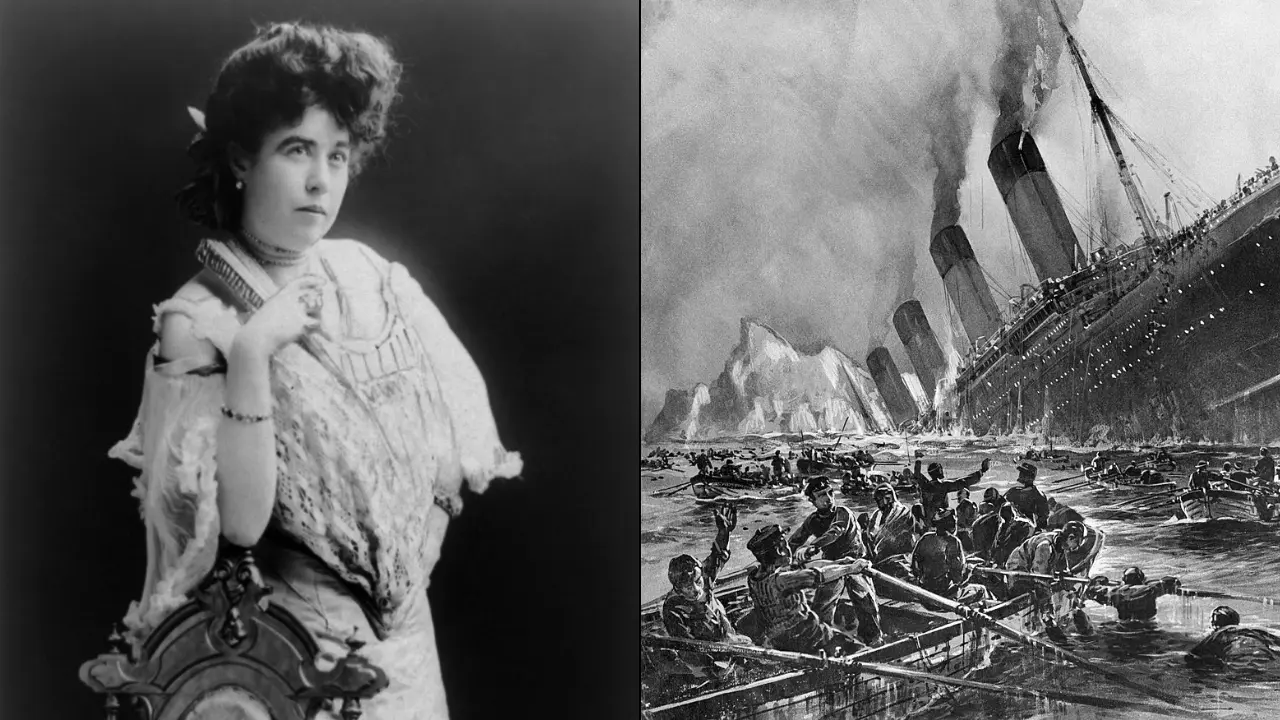
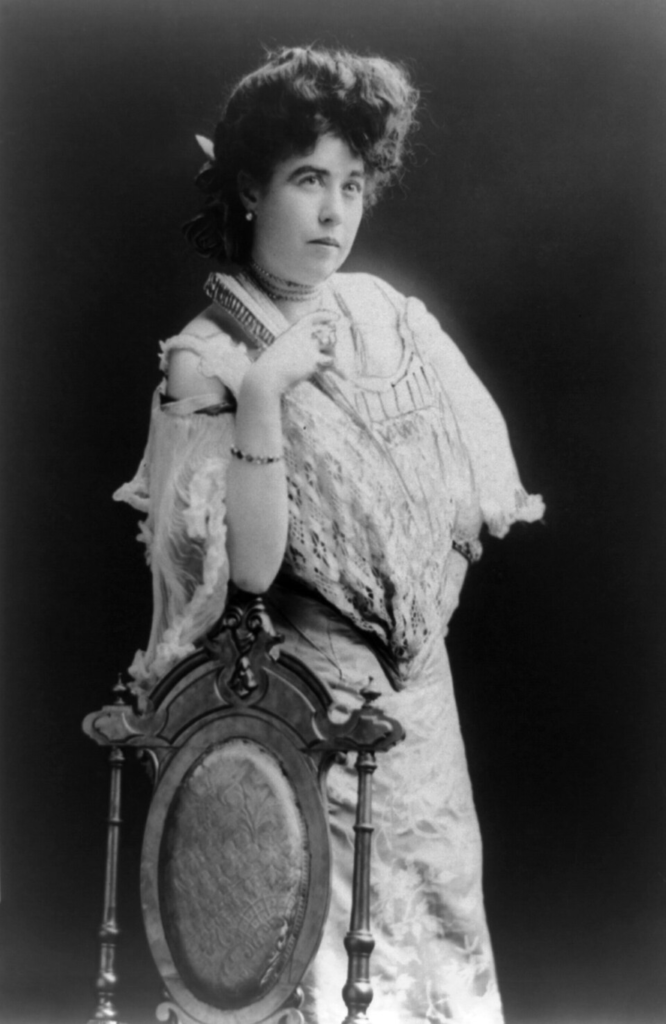
Born in a three-room Missouri cottage on July 18, 1867, Margaret Brown survived the Titanic, organized relief for hundreds of survivors before the rescue ship docked in New York, and died in 1932 never once having answered to the name Molly.
Just after midnight on April 15, 1912, the RMS Titanic completed its descent into the North Atlantic. Margaret Brown was already in Lifeboat 6, fighting. Quartermaster Robert Hichens, the crewman in command of the boat, refused to turn back into the debris field. Going back, he argued, would cause suction to pull the lifeboat under. The people still in the water would swamp them trying to board. Brown and the other survivors pushed back. Hichens held firm. Around 1,514 people died that night while Lifeboat 6 rowed away from the wreckage.
Margaret Brown took an oar and rowed toward the rescue ship. She was not done working.
A Laborer’s Daughter Follows Her Siblings West
Born on July 18, 1867, in a three-room cottage near the Mississippi River in Hannibal, Missouri, Margaret Tobin was the daughter of Irish Catholic immigrants John Tobin and Johanna Collins Tobin. Her father worked as a laborer at the Hannibal Gas Works. The family was large and perpetually stretched, living in a tight-knit Irish Catholic neighborhood where people were working their way westward toward better prospects. Margaret left school at 13 to contribute to household finances, taking work at Garth’s tobacco company stripping tobacco leaves.
In 1883, her half-sister Mary Ann Collins moved with her husband John Landrigan to Leadville, Colorado, a prosperous silver mining town. Her brother Daniel followed shortly after, finding work in the mines. At 18, Margaret joined them. She found work at the dry goods firm Daniels, Fisher and Smith, selling carpets and draperies. Leadville in 1886 was a city built entirely on extraction. Margaret Tobin was, at that point, one more Irish immigrant hoping the West might offer something Missouri had not.
It was at a church picnic that summer that she met James Joseph Brown, known as J.J. He was the son of Irish immigrants, imaginative, self-educated, and not wealthy. She married him for love regardless. “I wanted a rich man, but I loved Jim Brown,” she recalled years later. “I decided that I’d be better off with a poor man whom I loved than with a wealthy one whose money had attracted me.” They wed at Leadville’s Annunciation Church on September 1, 1886.
They would have two children: Lawrence Palmer Brown, born in 1887, and Catherine Ellen Brown, born in 1889. When Margaret’s sister-in-law died, the couple also raised three of Margaret’s nieces, Grace, Florence, and Helen Tobin, alongside their own children.
J.J. was not interested in the social world Margaret was building around herself. The gap between them grew slowly, over years, until it became a fact they could no longer ignore.
The Little Jonny Mine Changes the Family’s Position
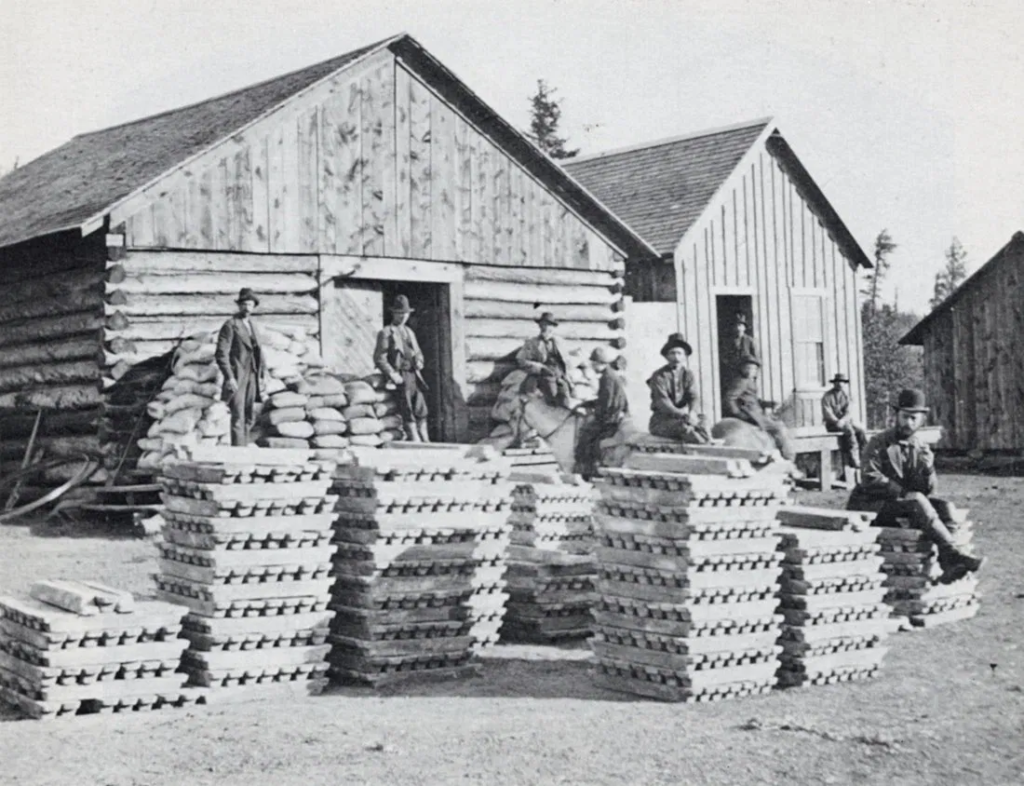
In 1893, Leadville collapsed. Silver prices fell and unemployment reached approximately 90 percent across the mining district. The Browns were spared. J.J.’s mining engineering work at the Little Jonny Mine, owned by the Ibex Mining Company, had located a substantial ore seam at depth that the mine’s operators had not previously reached. His employer rewarded him with 12,500 shares of stock and a seat on the board of directors. The fortune arrived suddenly and completely.
In 1894, the Browns purchased a Victorian mansion in Denver for $30,000. In 1897, they built a summer house, Avoca Lodge, in southwest Denver near Bear Creek. Margaret threw herself into the city’s civic and cultural life with the same determination she had brought to tobacco stripping in Hannibal. She became a charter member of the Denver Women’s Club, a group devoted to improving women’s lives through continuing education and philanthropy.
She co-founded a Denver branch of the Alliance Française to promote French language and culture. She grew fluent in French, German, Italian, and Russian. She helped raise funds for Denver’s Cathedral of the Immaculate Conception, completed in 1911. Alongside Judge Ben Lindsey, she worked to establish one of the United States’ first juvenile courts. She lobbied for women’s right to vote. She raised two children and three nieces. She did all of this at the same time.
Denver’s most exclusive social circle, the “Sacred 36,” rejected her. The group was controlled by hostess Louise Sneed Hill, who ran bridge parties and dinners for the city’s inner elite. Brown was Irish and Catholic. Those two facts were sufficient. The invitation never came. She kept building the city’s civic infrastructure regardless.
After 23 years of marriage, Margaret and J.J. privately signed a separation agreement in 1909. She received a $700 monthly allowance to continue her travels and political work. Their separation was quiet and without the bitterness the legal process might have invited. When J.J. died on September 5, 1922, Margaret told newspapers: “I’ve never met a finer, bigger, more worthwhile man than J.J. Brown.” The couple had been apart for thirteen years by then.
She meant it anyway.
A Telegram from Denver Puts Brown on the Titanic
In the first months of 1912, Margaret Brown was in Paris, traveling as part of the John Jacob Astor IV party, when word reached her that her eldest grandchild, Lawrence Palmer Brown Jr., was seriously ill in Denver. She booked passage immediately on the first available liner sailing for New York. It was the maiden voyage of the RMS Titanic. On the evening of April 10, she boarded at Cherbourg, France, conveyed to the ship by the small tender SS Nomadic, and settled into her first-class quarters.
Her daughter Helen had originally planned to travel with her but chose at the last moment to take a side trip to London with friends instead. Margaret sailed without her. Friends and family who knew Helen had stayed behind assumed Margaret had also remained in London. She had not.
Four days later, at approximately 11:40 p.m. on April 14, the Titanic struck an iceberg. By 2:20 a.m. on April 15, the ship was gone.
Lifeboat Six Refuses to Go Back
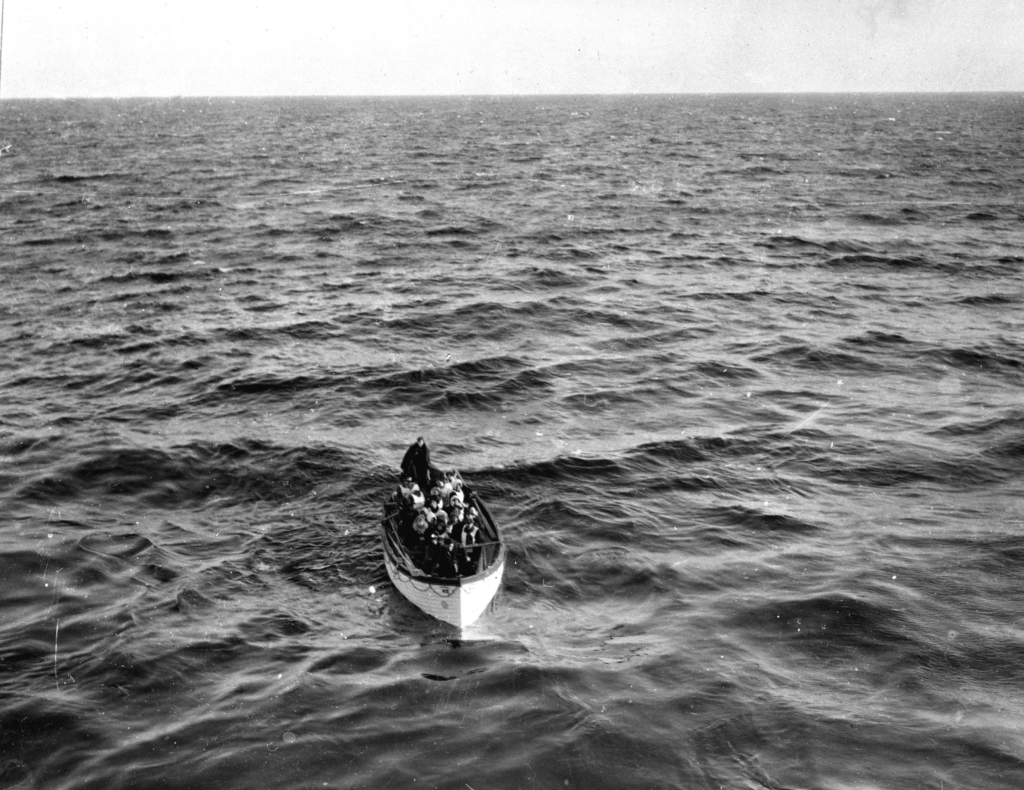
Brown left the Titanic in Lifeboat 6, the second boat to leave from the port side. Around 1,514 of the approximately 2,224 people aboard the ship perished in the water that night. Quartermaster Robert Hichens, in command of Lifeboat 6, refused Brown’s repeated demands to turn back. His reasoning was specific: returning into the debris field would risk suction pulling the lifeboat under as the ship went down, and survivors struggling in the water would swamp the boat trying to board it.
Brown and the other passengers continued to press him. Hichens did not change course. Brown took an oar and helped row, keeping the survivors moving and, as far as she was able, focused on what came next rather than what was behind them.
When the RMS Carpathia arrived and pulled the survivors aboard, Brown organized a committee of first-class survivors to secure basic necessities for the second- and third-class passengers who had lost everything. Her fluency in French, German, Italian, and Russian made her the only person in the room who could communicate with survivors from across Europe who did not speak English and had no idea where they were going or who would help them.
The committee raised funds for the most destitute survivors during the voyage to New York. By the time the Carpathia docked, Brown had chaired the Survivors’ Committee and formally presented Captain Arthur Henry Rostron with a silver Loving Cup in recognition of his crew’s rescue effort. Each crew member received a medal.
She was the last survivor to disembark. She waited until every Titanic passenger had been met by family, friends, or emergency assistance before she left the ship.
From the Carpathia, she wrote to her daughter. “After being brined, salted and pickled in mid-ocean,” she told her, “I am now high and dry.” She wrote separately to her attorney in a similar register. “Water was fine and swimming good,” she reported. “Neptune was exceedingly kind to me.”
She was not being flippant. She was describing her relationship to disaster, which was one of practical management rather than personal devastation.

Brown Uses Her Fame for Every Cause She Already Had
Margaret Brown used the public attention that followed the Titanic to keep pressing the causes she had been pressing for years. She published accounts of the night of April 14 in newspapers around the world. She lobbied for labor rights, women’s rights, and education for children.
In 1914, six years before the Nineteenth Amendment granted women the right to vote, she ran for Colorado’s U.S. Senate seat. She ended the campaign to serve abroad. That she ran at all, six years before the legal right existed, she treated as straightforward rather than remarkable.
Also in 1914, she contributed aid to the families of miners and workers killed in the Ludlow Massacre. Colorado National Guard troops had attacked striking workers and their families at a mining camp in Ludlow, Colorado, killing more than 20 people, including women and children sheltering in tents. The operators of the mines and those responsible for the attack had suppressed news of the massacre as thoroughly as they could manage. Brown brought it to international attention. That same year, with the help of Alva Vanderbilt Belmont, she helped organize an International Women’s Rights conference at Marble House in Newport, Rhode Island, attended by human rights activists from across the world.
During the First World War, she donated her Newport summer home to the American Red Cross and traveled to France to serve as director of the American Committee for Devastated France. She coordinated reconstruction behind the front lines, organized female ambulance drivers, nurses, and food distributors, and worked alongside wounded French and American soldiers.
At a hotel in Palm Beach, Florida, some years later, a fire broke out during the night. Margaret Brown took charge, led the other guests to safety via the fire escape, and waited until all of them were clear.
She kept doing this. It was simply how she operated.
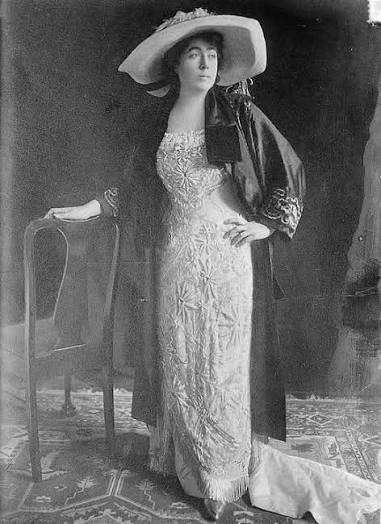
Hollywood Invents the Woman She Never Was
In 1932, the French government awarded Margaret Brown the Legion of Honor, recognizing specifically her wartime work organizing relief, reconstruction, and medical care. It was France’s highest civilian honor.
Margaret Tobin Brown died in her sleep at 10:55 p.m. on October 26, 1932, at the Barbizon Hotel in New York, at 65. She had been in the city working with a young actress. A subsequent autopsy revealed a brain tumor. She was buried beside J.J. at the Cemetery of the Holy Rood in Westbury, New York, following a small ceremony attended by close friends and family on October 31. There was singing. No eulogy was delivered.
The year after she died, journalist Gene Fowler referred to her as “Molly Brown” in his 1933 book Timber Line. The name took root. By 1934, newspapers were using it without explanation. In 1960, a Broadway musical opened at the Winter Garden Theatre: The Unsinkable Molly Brown, starring Tammy Grimes, running for 532 performances. The 1964 film of the same name starred Debbie Reynolds, who received an Academy Award nomination for Best Actress. Both productions centered on a woman consumed by the desire for social acceptance from the Denver elite who had shut her out.
Denver’s “Sacred 36” had indeed rejected Margaret Brown. She had then gone on to help establish one of the country’s first juvenile courts, co-found the Alliance Française in Denver, run for the Senate six years before women could legally vote, organize Titanic disaster relief, raise funds for a cathedral, expose a labor massacre, coordinate wartime reconstruction in France, and receive the Legion of Honor from a country she had helped rebuild.
The gap between that life and the Broadway musical is not a minor inaccuracy. It is a replacement.
Her Denver home has been a museum since 1971. The Molly Brown House Museum, at 1340 Pennsylvania Street, carries the name Fowler invented. It is a house built by a woman whose friends called her Maggie, from the day she was born in Hannibal to the day she died in New York, without interruption.
The woman named Molly was someone else’s story. She never had a chance to correct it.
Leave a Reply