
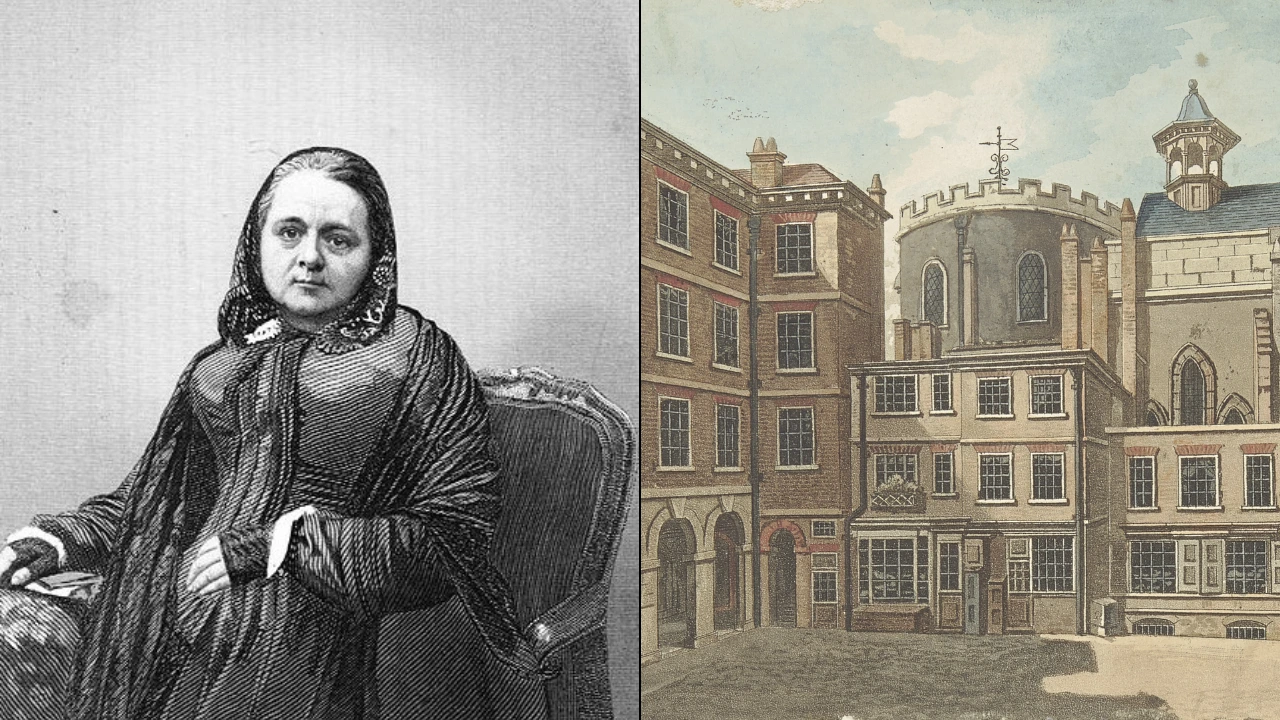
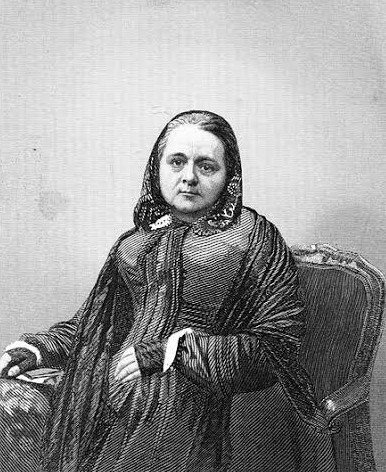
For sixty years, Jane Luson refused to wash, sealed her Clerkenwell house in its own grime, and wore the fashions of King George I as empires rose and fell around her then died in 1816 claiming to be 116 years old. One burial record quietly disagrees.
On 9 June 1816, readers of The Observer opened to an obituary the paper had titled “A Singular Character.” The piece described a woman named Jane Lewson who had died two weeks earlier at her home in Coldbath Square, Clerkenwell, at the reportedly stupendous age of 116. She had been born, the paper explained, during the reign of King William III. She had lived through five monarchs. She remembered events from 1715 as though they were recent. And she had spent the better part of a century in a house so thoroughly sealed from the outside world that its windows no longer admitted light.
London was fascinated. The obituary was reprinted across the country.
The burial record at Bunhill Fields registered her age as 96.
A Widow in the Making
The legend says Jane Vaughan was born in 1700 in Essex Street, off the Strand in London, the daughter of a respectable family. The legend says she married a merchant named Lewson in 1726, that he died when she was twenty-six, leaving her with one daughter to raise alone, and that she never remarried.
The records disagree on almost every particular.
Her burial at Bunhill Fields on 3 June 1816 registers her surname not as Lewson but as Luson an important distinction, because it points toward the man she actually married: Robert Luson, a very wealthy merchant from Great Yarmouth. The couple wed on 21 July 1751 at St Mary-le-Strand, Somerset House Chapel twenty-five years later than the legend claims. If she was born around 1720, as the burial record implies, she would have been roughly thirty-one at the time of the marriage. Not a young bride, but not implausible.
They had four children together: three daughters, Maria, Elizabeth, and Hepzibah, and a son, Robert, who was buried in 1759. Robert Luson died in 1769, approximately eighteen years after the wedding, leaving Jane well provided for but distributing his principal estates, including Blundeston Hall in Suffolk, to his daughters. Maria received the Hall. Hepzibah and Elizabeth received separate Blundeston holdings. Jane kept the house in Coldbath Square.
She would not leave it again. Not really. Not in any meaningful sense.
The House That Stopped
What followed was one of the most deliberate acts of withdrawal in the social history of Georgian London.
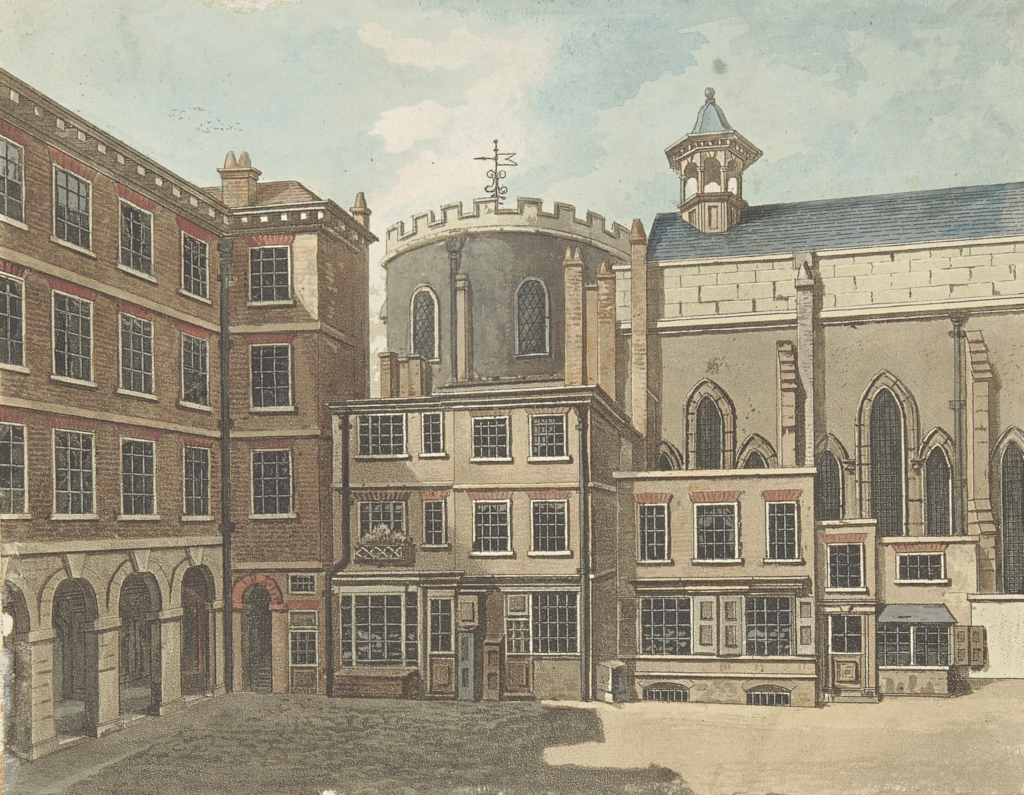
Jane Luson known to the neighbourhood as Lady Lewson, on account of her clothes sealed herself into the Coldbath Square house and began, methodically, to let it decay around her. The beds in the spare rooms were kept freshly made. No one had slept in them for decades. The windows were never washed, on the grounds that washing them risked breakage, and that broken glass would admit germs. As the years accumulated, the grime accumulated with them. By the time she died, the windows no longer admitted light. The interior of the house existed in a permanent dusk of her own engineering.
She refused to wash herself. The reasoning was identical: water caused colds. Instead, she coated her face and hands in hog’s lard, which she considered soft and lubricating. She drank her tea exclusively from one favourite cup. She ate only while seated in one particular chair, with her cutlery arranged in a pattern she would not permit to vary. She refused doctors. She refused medicine. An old female servant attended her until the late 1780s, then died. Jane briefly hired replacements, found none acceptable, and eventually settled on an elderly man who managed several properties in the square. He became, in her household, simultaneously her steward, butler, cook, and housekeeper. Her only other companions were two old lap-dogs and a cat.
Her neighbours remembered her garden as the one part of the property she maintained with genuine care. In summer months she would sit in it for hours with a book. Occasionally she spoke to Mr Jones, the local grocer. She visited one or two old acquaintances. But the world that had once known her was dying off steadily around her, and she outlasted all of it.
The Fashion That Did Not Move
What made her a London celebrity long before her death was what she wore.
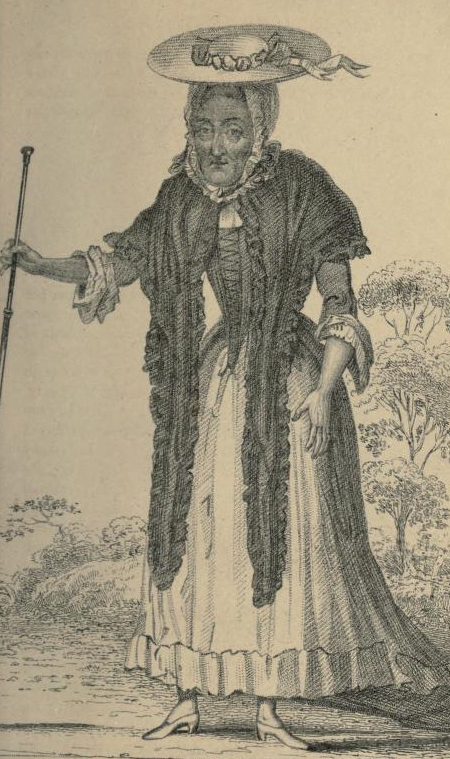
The Observer devoted considerable space to her costume. She wore powder, and a large tête of horsehair on her head near half a foot high, her hair turned up over it, with a cap knotted under her chin and three or four curls hanging down her neck. She wore silk gowns with long trains and deep flounces, a very long waist laced tightly to the neck with a ruff or frill at the collar. The sleeves came below the elbow, with cuffs attached below them. A large flat straw bonnet, high-heeled shoes, a large black silk cloak trimmed with lace, and a gold-headed cane completed the ensemble.
This was the fashion of the reign of King George I, which ended in 1727.
She had worn it, the paper reported, for approximately eighty years.
She could be seen walking around the square in this costume. This was why the neighbourhood called her Lady Lewson. There was nothing ironic in the title. She carried herself as though the world had not moved on, and in her own domestic universe, it had not.
The Age She Claimed
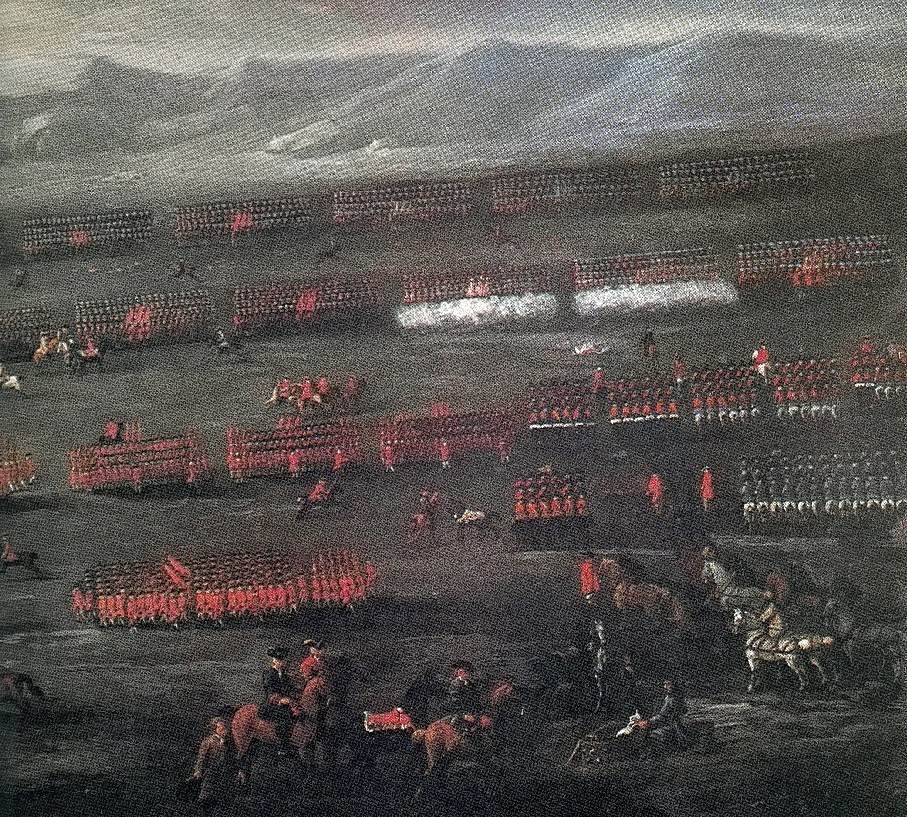
By her final years, Jane Luson was being described as a living repository of English history. She was said to recall events of 1715 with clarity the first Jacobite rising. She had lived, according to the popular account, through the Seven Years War with France from 1756 to 1763, the American War of Independence from 1775 to 1783, and the entirety of Britain’s involvement in the French Revolutionary and Napoleonic conflicts from 1793 to 1815. She had outlasted, by this account, five monarchs and nearly everyone who had known her as a young woman.
In the middle of May 1816, an elderly woman who lived down the street died suddenly. Jane Luson observed the death, declared that her own time was near, and died at home on 28 May 1816.
The Observer reported her age as 116. A biography, A True and Wonderful Account of Mrs. Jane Lewson, was published that same year. The story circulated nationally. Readers were captivated by the image of a woman born under William III who had endured nearly the entire eighteenth century and most of the nineteenth.
The burial record at Bunhill Fields, dated 3 June 1816, says she was 96.
If the burial record is accurate, she was born not in 1700 but around 1720. A feasible baptismal record exists: dated 3 February 1720 at the Temple Church, The Strand, listing parents named Thomas and Jane. It cannot be confirmed as hers. But it is consistent with the marriage record, with the ages of her children, with the timing of Robert Luson’s death, and with the burial register. The 116 figure, by contrast, is supported only by the legend she or the people writing about her chose to propagate.
She was likely 96. Which is still extraordinary.
The House After She Left It
One witness who entered the house following her death reported being startled by what he found. The doors and windows were reinforced with bolts and bars. The ceilings of the upper floors had been lined with additional bars as though to prevent entry through the roof. The cinder ashes from the hearth had not been cleared in years. They were piled so high they resembled beds.
Jane Luson’s will, dated 11 May 1816 just seventeen days before her death named her servant William Brunton as the principal beneficiary, receiving household belongings and an annuity for the remainder of his life. The executor was William Anthony, a watchmaker of Red Lion Street, Clerkenwell. She made no provision for any surviving family members. Whatever legal disputes followed, she had arranged, with precision, to give the house’s contents to the man who had actually kept her alive in her final years, and nothing to the relatives she had outlived.
The Character She Became
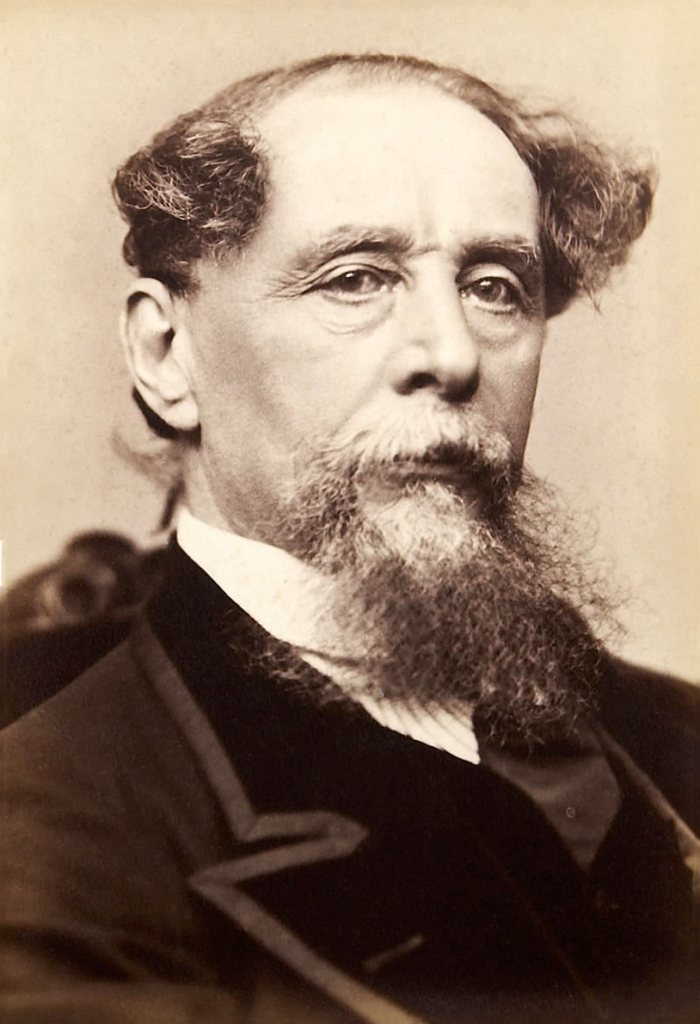
Charles Dickens was four years old when Jane Luson died. He could not have known her. But her story circulated in print for decades, and it is widely speculated that she furnished at least some of the materials from which he constructed Miss Havisham in Great Expectations, published in 1861. A wealthy woman in a decaying house. A costume frozen in time. Windows that admitted no light. The beds perpetually made for guests who would never arrive.
Multiple other figures have been proposed for the same inspiration, among them Eliza Emily Donnithorne, an eccentric recluse of Newtown, Sydney, who was jilted by her fiancé in 1856 and reportedly spent the following thirty years in her house, her wedding breakfast left to rot on the table. The connections to Miss Havisham are compelling in both cases. Whether Dickens drew on Jane Luson directly, or on the type of woman she had come to represent in the popular imagination, cannot be established.
What is established is the burial record: Luson, Jane, Coldbath Square, aged 96.
The woman who spent sixty years sealed inside an eighteenth-century costume, in a house that had stopped moving, may have done the same thing with her own biography. The number she chose was more dramatic. The truth, if the burial register is to be believed, was merely that she had survived nearly everything and had decided, at some point, that nearly everything was not enough.
Leave a Reply