
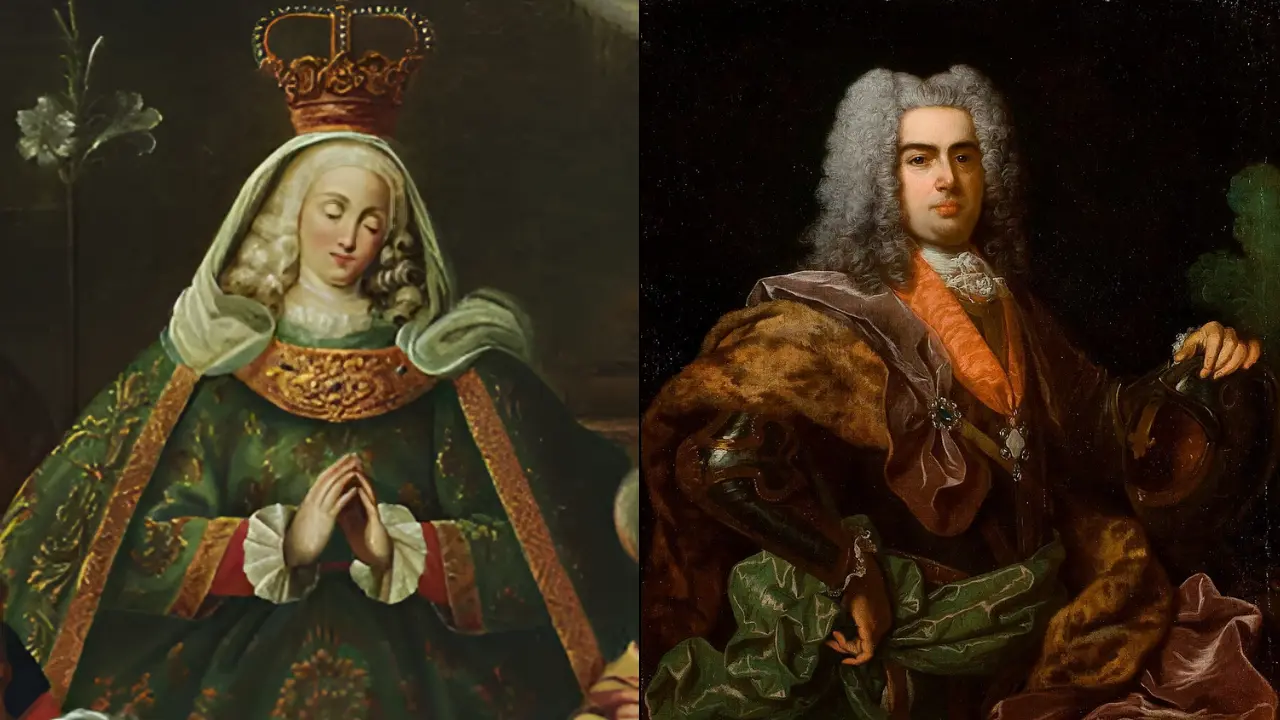
In 18th-century Portugal, a teenage novice took her vows of chastity at a monastery near Lisbon and emerged years later as the most famous royal mistress in the country, the mother of an acknowledged prince, and the abbess of the most scandalous religious house in Portugal, her private apartments draped in velvet and paid for with Brazilian gold.
A Rebellious Girl Takes Holy Vows
On 8 September 1720, inside the walls of the Monastery of Saint Denis of Odivelas, a nineteen-year-old nun named Paula Teresa da Silva e Almeida gave birth to a son. She named him José of Bragança. The father was the King of Portugal.
Paula had professed her vows of chastity less than four years earlier. She was now the mother of a royal bastard, and she was about to become the most powerful woman in the country.
Paula Teresa da Silva e Almeida was born on 17 June 1701 in the parish of Santa Justa on the outskirts of Lisbon. Her family carried modest but respectable standing. Her grandfather, João Paulo de Bryt, had been a German soldier in the imperial guard of Charles V before settling in Lisbon as a goldsmith. The trade passed down, and by the time Paula was born, her father, Adrião de Almeida Paulo, was a goldsmith as well. He was also in serious financial difficulty. He had three daughters to provide for: Maria Micaela da Luz, Paula, and Leocádia Felícia. He could afford a dowry for none of them.
The solution was the convent. In August 1704, when Paula was three years old, her older sister Maria Micaela entered the Monastery of Saint Denis of Odivelas as a novice. In time, both Paula and Leocádia followed. Paula entered as a novice on 31 January 1717, at sixteen. She professed her vows on 22 February. Her new life was to be one of prayer at dawn, care of the sick, cooking, cleaning, sewing, and the total surrender of self to God.
The Monastery of Saint Denis of Odivelas had other arrangements in mind.
King John V Discovers the Young Nun
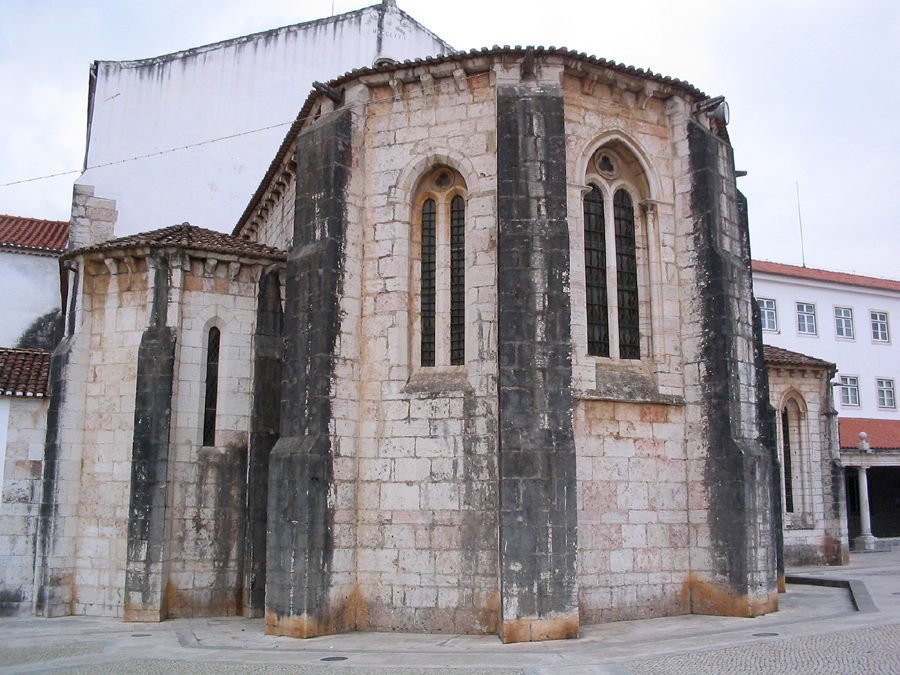
Saint Denis of Odivelas housed around 300 nuns, many of them young, many of them the daughters of families who could not afford to keep them. This made the convent a destination of intense interest for the Portuguese nobility, though not for spiritual reasons. Wealthy and powerful men arrived regularly. They read poetry to the nuns through the monastery grilles. They sang. They flirted. Those who wanted more bribed doorkeepers, threatened abbesses, corrupted priests, disguised themselves as nuns, and scaled the outer walls. The practice was apparently so widespread that one observer wrote in 1777: “The clergy, which is very numerous and powerful, is absolutely ignorant and debauched; even the monks and nuns live in the most scandalous libertinism.”
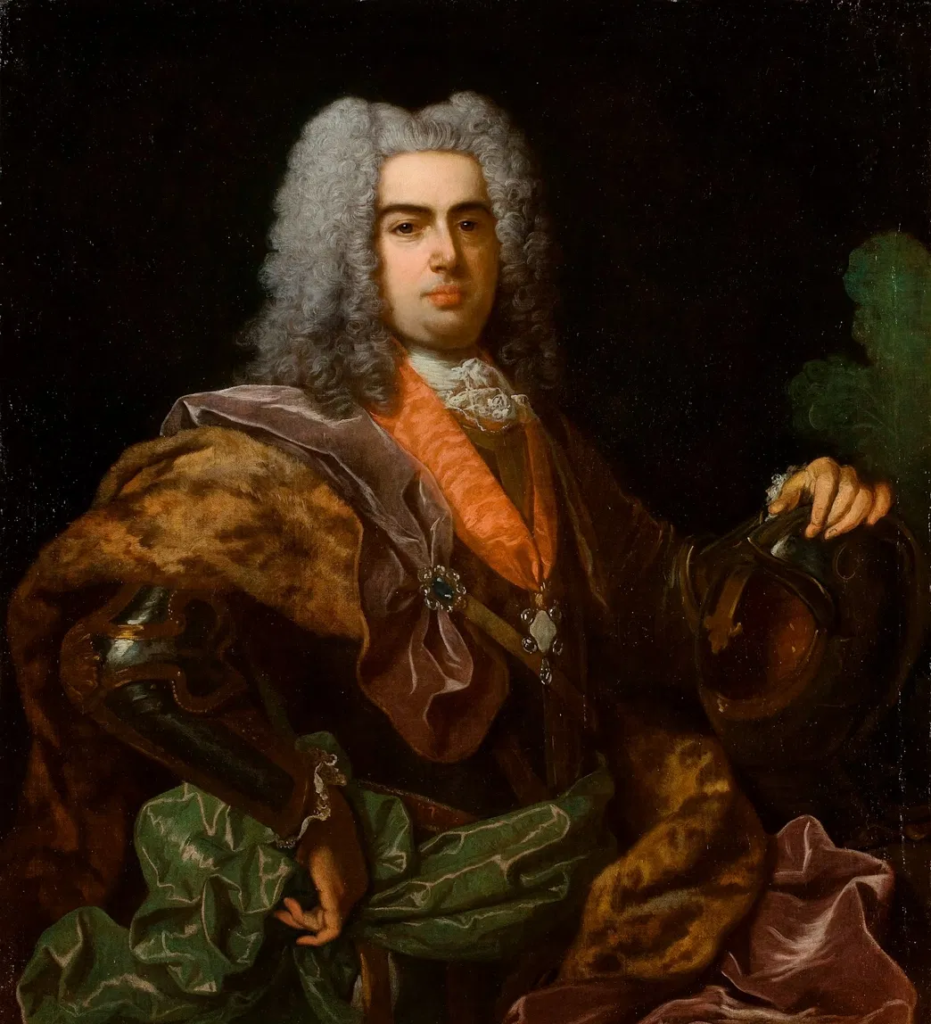
King John V was among the most frequent visitors. He had come to the throne in December 1706, at seventeen years of age, and his reign had quickly become one of the most prosperous in Portuguese history. The gold mines of Brazil were pouring extraordinary wealth into the crown, and John spent it on art, architecture, the church, and the young women of Odivelas. Contemporary accounts describe him as a devoted patron of the monastery and, by reputation, a committed nun-lover. Rumours spread of a private passage connecting his nearby residence directly to the convent.
Paula first drew the attention not of the king but of Francisco de Portugal, 8th Count of Vimioso. That affair was brief. John V saw Paula and wanted her for himself. He reportedly arranged for the Count to withdraw. Exactly when the relationship between John and Paula began is unclear, but by September 1720, when she gave birth to José of Bragança, it was fully established.
The King Makes Her Abbess of Portugal’s Richest Convent
John V did not conceal what had happened. He acknowledged the child formally and immediately moved to secure Paula’s position. He appointed her Abbess of Saint Denis of Odivelas, transforming the woman who had vowed poverty and obedience into the head of one of the country’s most prominent religious houses.
Paula was known almost immediately as arrogant, imperious, and intolerant of any slight to her dignity. On one occasion, when a group of noble ladies failed to rise in her presence as protocol demanded, she turned to them and said: “Do not stand up for free who lies for money.” Nobody challenged her. Her position was protected by the King of Portugal, and everyone in the room knew it.
The wealth that followed her appointment was extraordinary. In 1728, the royal chancellery registered two separate annual grants in Paula’s name: 210,000 reis on 28 April and a further 210,000 reis on 10 May, along with a third pension extending to Paula and both her sisters. An anonymous observer produced a detailed account of Paula’s private apartments, a manuscript that survives today in the Biblioteca Nacional de Portugal. The word “gold” appears thirty times in eleven paragraphs.
The apartments contained velvet curtains threaded with gold. Gilded mirrors in every room. Carved golden ceilings. A bed mounted with solid gold statues of saints. Sheets of fine Holland linen. The oratory entirely gilded. Nine maids to attend the Abbess. And then there was the bathtub. King John V had commissioned it in 1724: 3,580 ounces of silver, gilded inside and out. The Swiss traveller César de Saussure later encountered it in London and recorded his astonishment at the sight of it. Brazilian gold had built Paula’s world.
Paula’s Family Rises With Her
Paula’s elevation transformed her family alongside her. On 15 September 1722, her father, Adrião de Almeida Paulo, received the habit of the Order of Christ, the successor organisation to the Knights Templar in Portugal. He was knighted and awarded a pension from the customs revenues of Lisbon. No explanation was required. Everyone understood.
Paula’s son benefited on a far larger scale. King John V had fathered several illegitimate children. Three of them were raised together in a palace in the Palhavã district on the outskirts of Lisbon: António, born in 1714; Gaspar, born in 1716; and José, Paula’s son, born in 1720. They were known collectively as the Children of Palhavã. All three received a rigorous Roman Catholic education. All three rose to senior positions within the Portuguese church. José, the son of a king and a nun, eventually became General Inquisitor of the Portuguese Inquisition.
The most feared religious official in Portugal was the illegitimate child of an abbess who had never kept her vows.
The King Dies and Lisbon Falls
King John V died on 31 July 1750, at sixty years of age, from dropsy and the complications that followed. His legitimate son succeeded as King Joseph I. Joseph showed no initial inclination to move against his father’s former mistresses or illegitimate children. Paula remained Abbess of Saint Denis and continued to occupy the apartments John had furnished for her.
Then, on 1 November 1755, an earthquake struck Lisbon. Estimated at a magnitude of 8.5 or greater, it remains one of the deadliest seismic disasters in European history, killing tens of thousands and reducing much of the city to rubble. The Monastery of Saint Denis of Odivelas was badly damaged. Paula spent the years that followed overseeing its reconstruction.
Meanwhile, her son José had grown into a figure of considerable and contested power. As Inquisitor General, he oversaw the expulsion of the Jesuit order from Portugal and its colonies in the late 1750s, a campaign driven primarily by Sebastião José de Carvalho e Melo, the Marquis of Pombal, the dominant minister of Joseph I’s government. The relationship between Pombal and the illegitimate sons of John V eventually broke down entirely. In 1760, José was exiled to the mountainous Buçaco region of Portugal, along with one of his brothers. He would not be permitted to return to Lisbon until 1777.
Paula did not live to see his return.
Mother Paula de Odivelas died on 4 July 1768, at sixty-seven years of age. She was buried in the Chapter House of the Monastery of Saint Denis, the same institution she had entered as a sixteen-year-old novice more than fifty years earlier, the same walls within which she had made her vows of chastity, poverty, and obedience.
The tower King John V had built for her was demolished in 1948. The velvet curtains, the gilded ceilings, and the rooms attended by nine maids were gone. The anonymous document that catalogued them, with its thirty mentions of gold, became the only record of what the convent had contained.
In the 19th-century novel Baltasar and Blimunda, José Saramago gave John V a single line about her: “a cloistered flower with the fragrance of incense, glorious flesh.” It is the king’s voice, writing his own version of events, as kings always do.
Paula’s version survives in one line. The noble ladies were sitting down when they should have been standing. She looked at them, and she spoke.
“Do not stand up for free who lies for money.”
Leave a Reply