
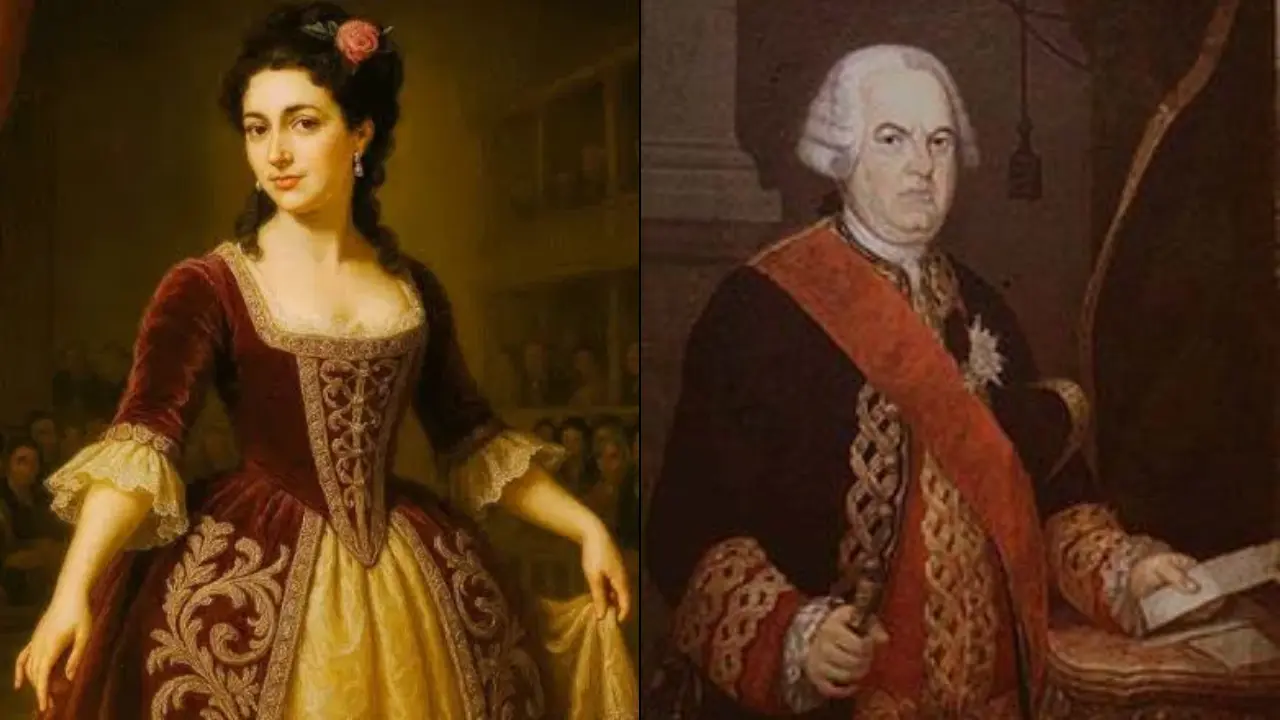
Born in Lima in September 1748, Micaela Villegas debuted at the Coliseo de Comedias at 14, captivated the Viceroy of Peru for eleven years, and outlived him by 37.
In October 1761, Manuel de Amat y Junyent entered Lima beneath a canopy of gold and crimson. Cavalry preceded him. University professors in academic robes followed. The city’s magistrates walked on foot in scarlet velvet. He was the 31st Viceroy of Peru, the King of Spain’s personal representative across the largest empire in the Western Hemisphere, and he arrived with the full ceremonial weight of that office. He was 54 years old, a veteran of campaigns in northern Africa and Italy, a Field Marshal who had reorganized the army of Chile. No one in the crowd considered the possibility that the Viceroy’s most-discussed act in the coming decade would not be administrative reform or military readiness, but an actress on a stage.
Within a few years, he was building fountains for her.
A Shattered City Gave Birth to Its Greatest Star
On 28 October 1746, an earthquake measuring 8.6 on the moment magnitude scale destroyed Lima in three to four minutes. Of the city’s 3,000 houses, just 25 remained standing. The port of Callao, roughly 90 kilometers from the epicenter, was consumed by a tsunami that killed nearly all of its 6,000 inhabitants. The family of Don José Villegas and Doña Teresa Hurtado de Mendoza lost their home and their livelihoods. They were still recovering when their sixth child arrived two years later, on 28 September 1748. She was baptized at Lima Cathedral on 1 December 1748 as María Micaela Villegas Hurtado de Mendoza.
Whether she was born in Lima or in the village of Tomayquichua in the highland province of Huánuco became a contested question almost immediately after her death. The documentary record gives no support to Tomayquichua. All legal records and her baptismal entry place her in the capital. The rural origin story persisted because it suited a particular version of her legend, the one in which her mixed indigenous and Spanish blood was made more picturesque by geography. In reality she was a child of Lima, born into a city still piecing itself back together.
She Debuted at Fourteen and Left No Rivals
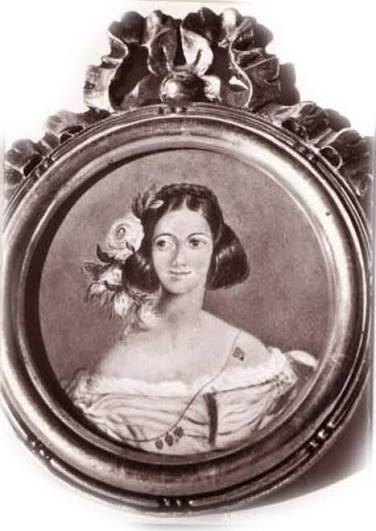
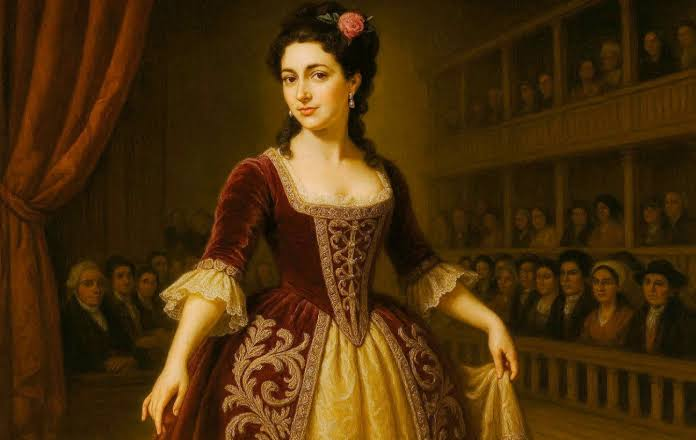
Micaela Villegas walked onto the stage of the Coliseo de Comedias in 1763, at the age of fourteen, and within months was the most discussed actress in the Viceroyalty. She had not been formally trained. She had absorbed scenes from Alarcón and Lope de Vega by listening to them and could reproduce them without understanding every word, performing them with an authority observers noted should have been impossible given her age and experience.
She played the harp and Spanish guitar, sang, danced, and had a gift for mime that extended her range well beyond what other actresses at the Coliseo attempted. One contemporary account recorded her thus: she astonished her family and their friends by her natural aptitude for music and acting, learned whole scenes which she recited immediately afterwards without understanding a word of them, played the harp, sang, danced, and mimed.
She soon acquired a nickname whose exact origin would be disputed for two centuries. La Perricholi. One theory holds that the word derives from the Catalan petritxol, meaning “my delight” or “pretty little thing,” and that the Viceroy himself called it out admiringly from his box during a performance. Another holds that it was an insult coined during a lovers’ quarrel, a garbling of perra chola, meaning “half-breed bitch,” distorted by Amat’s Catalan accent. The historian Guillermo Lohmann Villena found records showing the surname Perricholi already existing in Lima around 1750, which complicates both accounts considerably. What is certain is that the name attached, and that Micaela eventually made it her own.
The Viceroy Saw Her and Was Lost
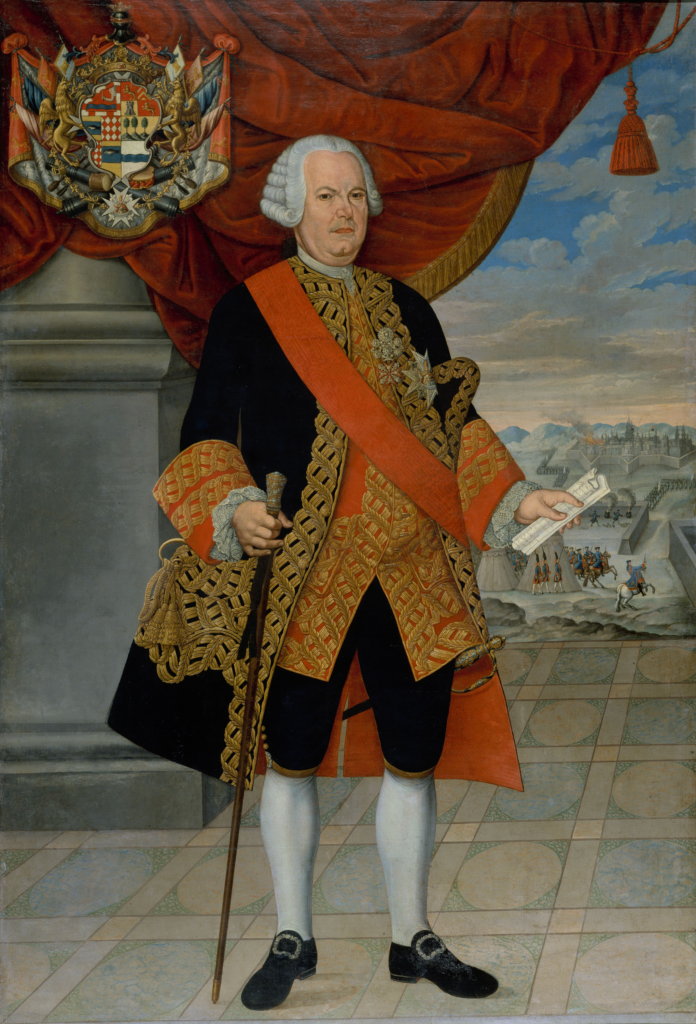
Manuel de Amat y Junyent was born in March 1707 in Vacarisses, in the Province of Barcelona, into an aristocratic Catalan military family. He had distinguished himself at the Battle of Bitonto in May 1734, where Spanish forces defeated the Austrians during the War of the Polish Succession. He later served as Royal Governor of Chile from December 1755, arrived in Lima as Viceroy in October 1761, and in Peru oversaw the post-earthquake rebuilding program, expelled the Jesuit order on Madrid’s orders, and organized naval expeditions that explored previously uncharted Pacific islands. He was, by any measure, a man who had earned his authority through decades of hard service. He was also, when he first encountered Micaela at the theater, a bachelor closing on 60.
His infatuation was not discreet. All Lima knew within weeks. The city’s aristocracy, which already resented Amat’s strict enforcement of the King’s tax edicts, raged that their Viceroy had made himself the slave of a mixed-blood actress from the Coliseo. He made no concessions to their outrage. Micaela began riding in his official retinue. She eventually ceased performing entirely, it being judged incompatible with her position for the Viceroy’s lover to appear on stage.
They had a son together, named Manuel de Amat y Villegas. He would go on, in July 1821, to sign Peru’s declaration of independence from Spain.
Amat’s devotion left visible marks on Lima’s urban landscape. The Paseo de Aguas, an ornate promenade with fountains and gardens built in Lima’s Rímac district between 1770 and 1776, is the most famous of these. Legend holds that when Micaela told the Viceroy she wanted the moon and stars at her feet, he built her a reflecting pool. Historians note the promenade was primarily a project of urban renewal for the then-dilapidated San Lázaro neighborhood. Both things may be true.
A Theater Slap Ended Their Eleven Years
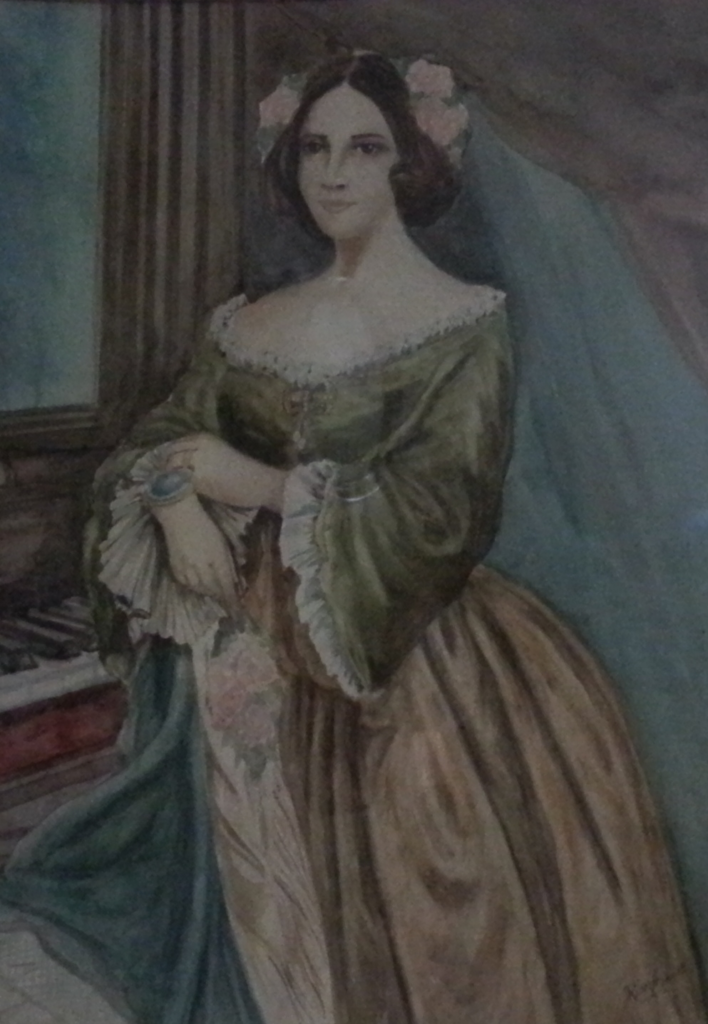
The affair ended in the theater where it had begun. During a performance, the impresario Bartolomé Maza leaned toward Micaela mid-scene and murmured that she lacked passion, and that another actress would have played the role better. Micaela raised her hand and slapped him in front of the audience. The Viceroy watched from his box. The house erupted.
The scandal that followed was political as much as theatrical. As the King’s representative in South America, Amat could not publicly condone the behavior of the woman his enemies had spent eleven years using to humiliate him. He ended the relationship that same night, walking to Micaela’s house with a lantern and telling her it was over.
The city assumed it had seen the last of her. The best roles went to a rival. Lima’s aristocracy allowed itself to gloat openly.
Then Amat went back.
He lasted months without her before arriving at her house again. She returned to the stage to a standing ovation, with the Viceroy reportedly calling out encouragement from his box. From that evening she performed under the name La Perricholi. The insult, whatever its origin, had become her identity, and she carried it without apology.
There is one story from these years that Lima repeated for generations. Determined to scandalize the aristocracy that had enjoyed her brief disgrace, Micaela commissioned a gilded coach with four mules, an equipage reserved by colonial convention for the Castilian nobility. She dressed in silks and jewels and set out through the city’s streets. Then a priest passed, carrying the last sacrament to a dying parishioner. Micaela stopped the coach, helped the priest inside, and walked the rest of the way on foot. The coach and its four mules she donated to the parish, to be used only for the dying. Lima told the story for decades.
Amat’s viceroyalty ended in 1776. He returned to Barcelona, eventually married a young Catalan woman named María Francisca de Fivaller, and built the Palacio de la Virreina on La Rambla, which still stands today. He died on 14 February 1782. He and Micaela never met again.
She Outlived Him and Made His Name Her Legend
Micaela returned to the stage and continued performing through her late forties. In the late 1780s she retired and turned to theater management, eventually acquiring the Real Coliseo de la Comedia. Her later years were marked by increasing piety; she worked with Lima’s Carmelite community and gave generously to the poor. Around the turn of the century she married the actor Fermín Vicente de Echarri.
She lived to see her son sign Peru’s declaration of independence. She died in Lima on 16 May 1819, at the age of 70, in the city where she had been baptized.
The legend outlasted her by centuries. In 1829, the French writer Prosper Mérimée dramatized the golden coach episode in his play Le Carrosse du Saint-Sacrement. In 1868, Jacques Offenbach used Mérimée’s play as the basis for his operetta La Périchole, which premiered in Paris on 6 October 1868 and reached Brussels, New York, Vienna, Stockholm, and London within the year. Thornton Wilder’s 1927 novel The Bridge of San Luis Rey, which won the Pulitzer Prize in 1928, drew on the historical Perricholi for one of its central figures. Jean Renoir’s 1952 film The Golden Coach adapted Mérimée’s play with Anna Magnani in the lead.
The Paseo de Aguas stands in Lima’s Rímac district still. Its fountains were built by a man who controlled an empire, for a woman who controlled him.
Leave a Reply