
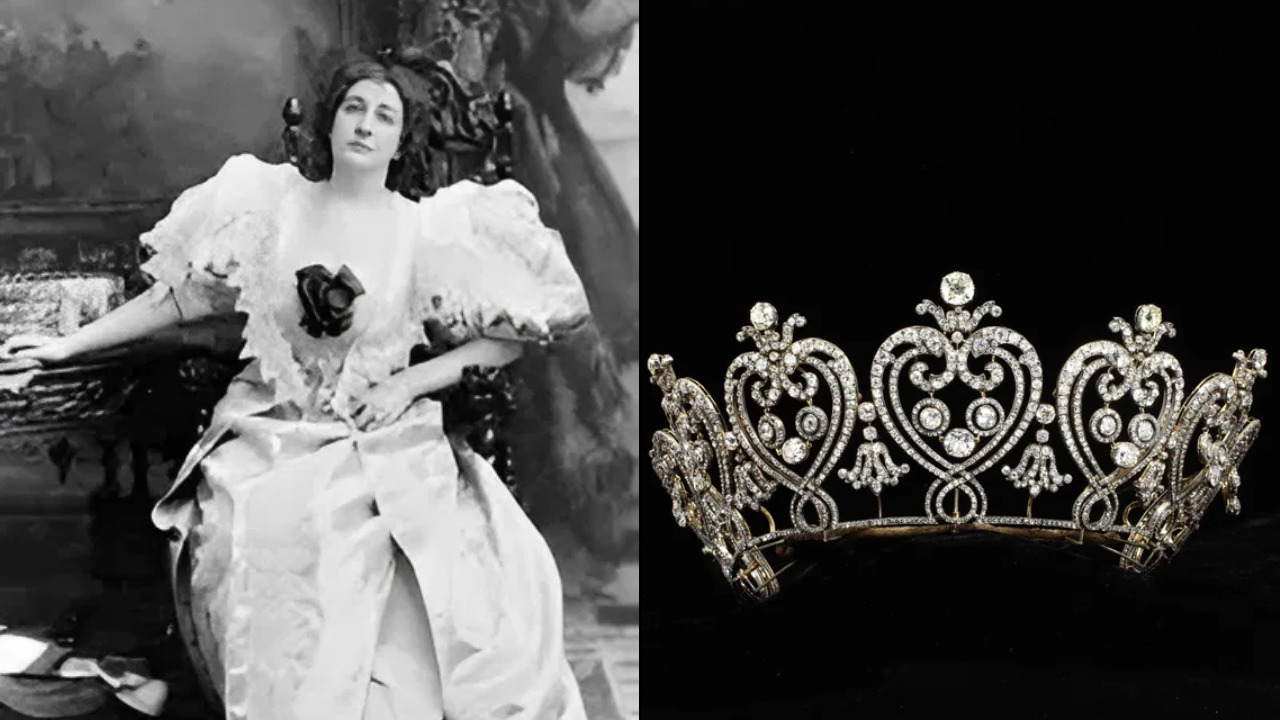
Born into a Cuban American dynasty barred from New York society despite their vast plantation fortune, Consuelo Yznaga married a debt-ridden British viscount in 1876 and spent three decades reshaping the social map of England even as her husband dismantled everything she had brought him.
A Cuban American Heiress Arrives at Grace Church
On May 22, 1876, a young Cuban American woman walked into Grace Church in Manhattan before a crowd that would have denied her entry to their dinner parties the previous evening. Consuelo Yznaga was marrying George Victor Drogo Montagu, Viscount Mandeville heir to the 7th Duke of Manchester and a man his own set had already identified as a spectacular financial risk. He was charming, handsome, and almost entirely without capital. Consuelo had a great deal. By the end of the ceremony, the Yznaga fortune had been redirected.
In exchange, a Cuban American family barred from the top of New York society received something money had previously been unable to purchase outright: a direct line into one of England’s premier ducal houses.It was exactly the transaction both families had agreed to. It was not, by any measure, a marriage.The Yznagas Could Buy New York. New York Refused to Sell.
Consuelo was born in 1853 in New York City as María Francisca de la Consolación Yznaga, the second of four children of Don Antonio Modesto Yznaga del Valle and Ellen Maria Clement. Her father’s family were Cuban grandees sugar plantation owners with centuries of wealth and Spanish aristocratic connections stretching back before the family’s migration to the island. The source of that wealth was explicit: it had been built on the backs of enslaved people powering the Caribbean sugar trade. By 1860, Antonio Yznaga held 145 enslaved people on Ravenswood Plantation in Concordia Parish, Louisiana, one of the properties where Consuelo spent her childhood.
Her mother’s family brought different money. The Clements of Dutchess County, New York had grown prosperous through early investment in the steamboat trade on the Hudson River, joining a cohort of industrialists that included Cornelius Vanderbilt. Consuelo was educated in part under the court of the Empress Eugénie in France before the Franco-Prussian War sent the family home in 1870, polished and multilingual and perfectly equipped for a society that would not have her.
The problem was not poverty. The Yznagas had more money than most of the families who refused them. The problem was the specific arithmetic of Gilded Age New York, where Caroline Schermerhorn Astor maintained a list of precisely 400 people worth knowing, and the Yznagas Cuban blood, plantation money, one generation from the Caribbean could not make that list on any terms. Social acceptance, it turned out, was not a commodity their fortune could purchase. The British aristocracy offered a different arrangement.
The Viscount Is Everything His Family Feared He Would Be
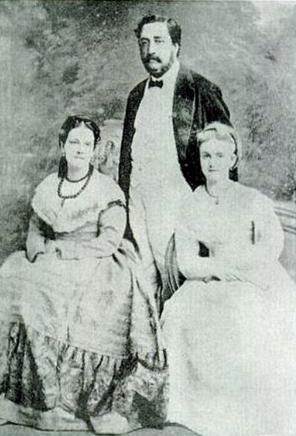
In the fall of 1875, Consuelo met George Montagu at her father’s country estate near Morristown, New Jersey. He was 22, styled Viscount Mandeville, eldest son of William Drogo Montagu, 7th Duke of Manchester a family whose lineage began with Drogo de Montagud, who accompanied William the Conqueror to England in 1066. What eight centuries of Norman blood had not secured was fiscal discipline. The Manchester estates were mortgaged, the lifestyle intact, the income inadequate to either.
Consuelo fell in love with George. His family opposed the match. His circle in England had observed his habits gambling, music halls, expensive women and drawn the obvious conclusion. None of it slowed the wedding. The ceremony at Grace Church transferred what the record suggests was a substantial sum from the Yznaga estate to the Montagu line. The family was now solvent. The bride was now a viscountess. Within a year George had returned to Bessie Bellwood, a music hall singer widely known in London’s entertainment world. The arrangement was not discreet. It was a public humiliation, reported in the papers, and it persisted.
The 7th Duke eventually intervened. He exiled the couple to Tandragee Castle in County Armagh, Ireland, calculating that distance from London might impose some restraint on his heir’s spending. It did not. The castle at least produced children: William arrived in 1877, and would one day carry the dukedom. Two daughters followed in 1879 Jacqueline Mary, known as May, and Alice Eleanor, called Nell. Consuelo raised all three largely alone.
The Duchess Reinvents Herself in a Country That Finally Wants Her
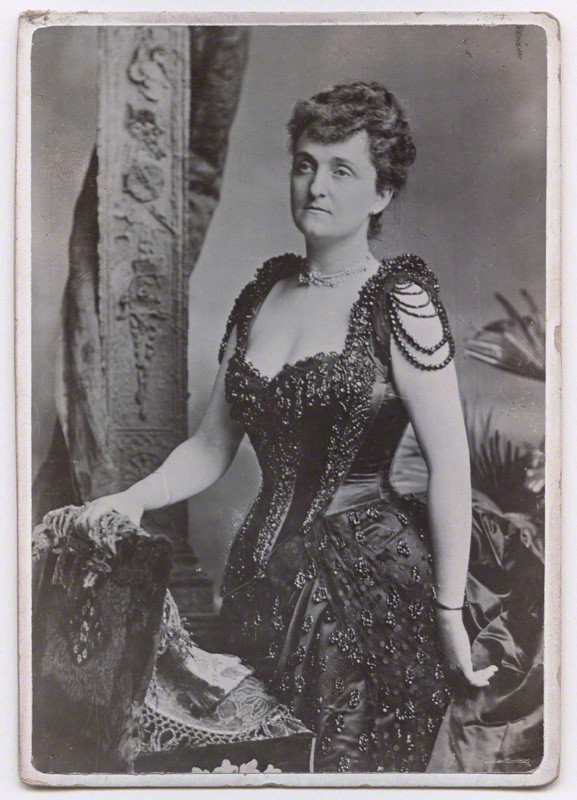
By 1883 the 7th Duke had permitted the family’s return to England. On March 26 of that year, Consuelo’s childhood friend Alva Vanderbilt née Erskine Smith, married to William Kissam Vanderbilt threw the most spectacular party of the Gilded Age. One thousand two hundred guests arrived at the new Vanderbilt mansion on Fifth Avenue dressed in elaborate historical costume. Consuelo was named guest of honor. It was a social triumph on paper. George had by then resumed life with Bessie Bellwood.Consuelo had decided to build something of her own.
The American heiresses scattered across England’s aristocratic houses found each other and formed a set. Albert Edward, Prince of Wales, noticed them and approved. Consuelo became one of his particular favourites hosting intimate card soirées and dinners where she played the banjo, told risqué stories, and smoked cigars with the kind of uninhibited ease that delighted the Marlborough House Set and horrified nobody who mattered. Princess Alexandra was equally charmed. Every door in England, as a consequence, began to open.
On March 22, 1890, the 7th Duke of Manchester died in Naples. George inherited the title and became the 8th Duke of Manchester. That same year, 1890, he was declared bankrupt. Two years into the dukedom, on August 18, 1892, George died at Tandragee Castle. He was 39. The cause was cirrhosis of the liver. His son William, the new 9th Duke of Manchester, was 15 years old and inheriting an ancient title emptied of the funds required to support it.
The Dowager Duchess Becomes the Woman Every Heiress Needs
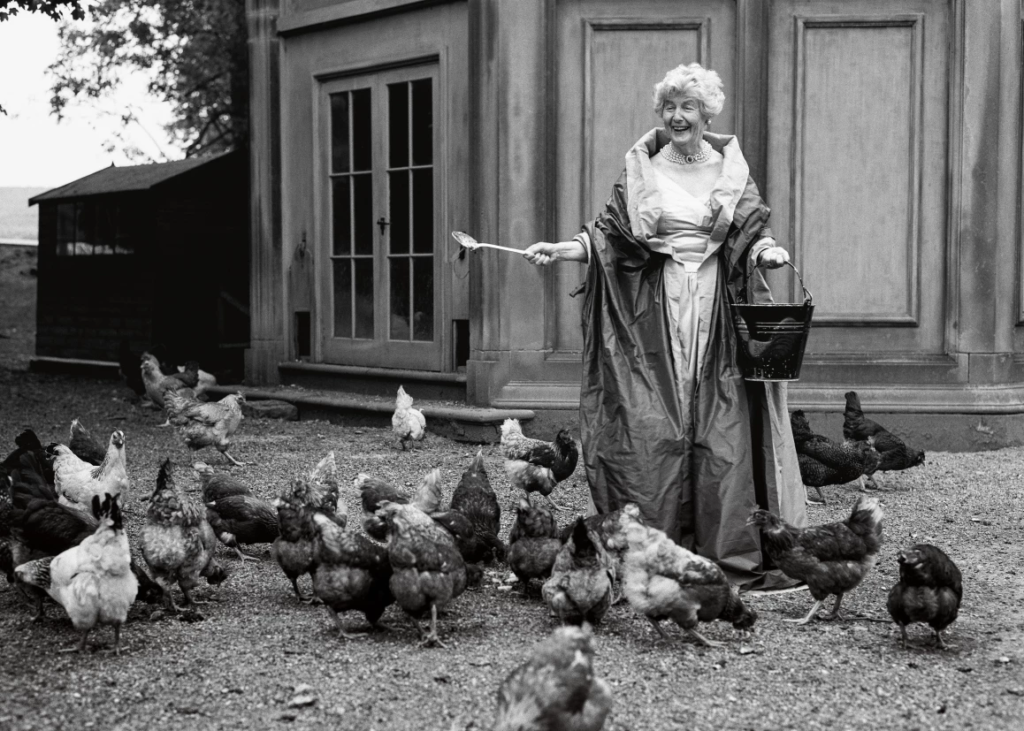
Widowed at around 39, Consuelo was, in several respects, more formidable without George than she had ever been with him. The social capital she had accumulated through a decade of suffering was now entirely hers to spend.American heiresses were arriving in England in increasing numbers through the 1890s, each navigating the same unfamiliar terrain Consuelo had crossed. She offered professional guidance: etiquette lessons, advice on what to wear and where to live for the season, introductions to eligible bachelors, carefully hosted teas and dinners where reputations could be established before any formal presentation.
She had paid the highest possible price for her own education in the English aristocracy. She was now monetising it on behalf of others.The match that cemented her reputation arrived on November 6, 1895 at St. Thomas Episcopal Church in New York. Her goddaughter Consuelo Vanderbilt Alva’s daughter, named in her honour married Charles Spencer-Churchill, the 9th Duke of Marlborough. Consuelo Yznaga had helped facilitate the connection. The wedding captivated society on both sides of the Atlantic. Alva, who had forced her daughter into the marriage against her will, rewarded Consuelo handsomely.
For a woman whose son’s financial affairs were a perpetual emergency, it was useful income.A further rescue arrived in the early 1900s when her brother Fernando died, leaving her a substantial bequest. The acute pressure eased. It was around this time that Consuelo commissioned the most extravagant object she would ever own.
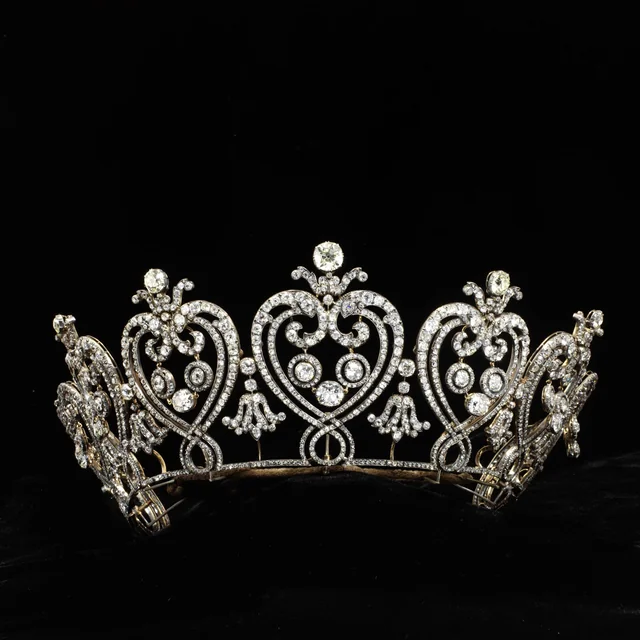
One Thousand Five Hundred and Thirteen Diamonds
In 1903, Consuelo approached Cartier in Paris. She supplied them with over a thousand brilliant-cut diamonds and more than 400 rose-cut diamonds from her own collection, and instructed them to build something worthy of the material. The result was the Manchester Tiara: seven graduated heart-shaped openwork motifs in gold and silver, C-scroll ends flanking each heart, three detachable surmounts each carrying a collet diamond, a scroll, and three pendant drops. The design drew on 18th-century French architectural ironwork. It is now considered one of the finest surviving examples of Edwardian garland-period tiara work in any public collection.
That she was commissioning a tiara in 1903 while her son William managed debt on estates the family could barely maintain said something precise about where Consuelo understood herself to stand. The tiara was hers. It had been bought with resources she had accumulated independently. The Manchester fortune had eaten itself across two generations of men with the same talent for spending. The Manchester Tiara was not their asset to waste.She was making sure of it.
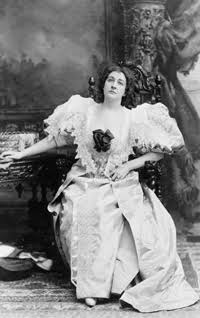
Consuelo Dies at 5 Grosvenor Square, and the Tiara Survives Everything Else
In the mid-1900s Consuelo developed neuritis a severe inflammation of the central and peripheral nervous systems. She was living at 5 Grosvenor Square, attended by Sir Alfred Fripp, Surgeon in Ordinary to King Edward VII. The King enquired about her condition daily. On the morning of November 20, 1909, Consuelo Yznaga died, aged 55 or 56.
Her sisters Natica and Emilie were at her bedside. She had not outlived either of her daughters: May had died of tuberculosis in 1895; Nell, of the same disease, in January 1900. Her surviving child was William, 9th Duke of Manchester, who had inherited his father’s relationship with money.Her body was taken by train to Kimbolton for a funeral on November 24. A memorial service was held the same day at the Chapel Royal, St. James’s Palace. The King had continued to ask after her until the end.
The descent the Montagus had been managing since the 1870s continued without interruption. The 10th Duke sold Kimbolton Castle in the 1950s. The 12th and 13th Dukes each served prison sentences n fraud and attempted burglary, respectively. In 2007, the Manchester Tiara was accepted by the British government in lieu of inheritance taxes the family could no longer pay, and allocated to the Victoria and Albert Museum. It is on permanent display there now.Consuelo Yznaga had supplied the diamonds herself. She understood, by the time she ordered the tiara in 1903, that was the only way to ensure they remained hers.
Leave a Reply