
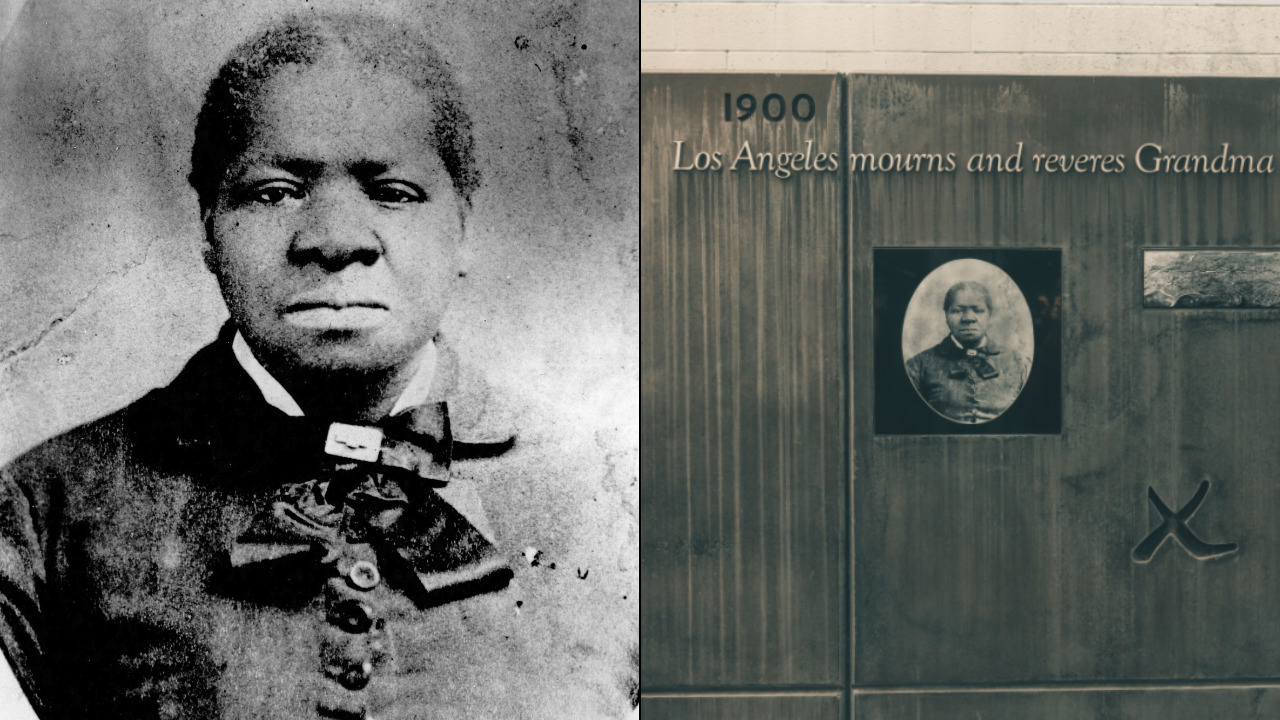
Born a slave in 1818, Bridget “Biddy” Mason walked 2,000 miles across America in chains, spent five years illegally held in a state where slavery was banned, won her freedom in a landmark 1856 court ruling, and died one of California’s wealthiest women buried in an unmarked grave.In December 1855, Robert Marion Smith loaded his family, his furniture, and the thirteen Black people he still considered his property onto wagons and attempted to flee California for Texas. He had been warned his enslaved people were entitled to their freedom under California law. His answer was to move them to a slave state before any court could act.
He did not get far. Robert Owens, a free Black rancher in Los Angeles whose son was courting Smith’s eldest daughter Ellen, had alerted the county sheriff. At Cajon Pass, a posse that included Owens, his sons, and hands from the Owens ranch stopped the wagons. Within a month, Bridget Mason who had been born into slavery thirty-seven years earlier in the Deep South, who had walked behind a wagon train for seven months across the American continent, who had been held illegally in California for nearly five years stood before a Los Angeles county court and waited to hear whether she and her daughters would be freed or returned to the man who claimed to own them.
On 19 January 1856, Judge Benjamin Hayes ruled that Mason and the twelve other enslaved people in Smith’s custody were, in his words, “free forever.”She was thirty-seven years old. She owned nothing. She had never been permitted to learn to read or write. Within thirty years, she would be worth $300,000.
John Smithson Gave Biddy Away as a Wedding Present at Eighteen
Bridget Mason was born on 15 August 1818, probably in Hancock County, Georgia, though some historians give her birthplace as Mississippi. Her parents’ names were never recorded. As a child she was separated from them and sold multiple times across Georgia, Mississippi, and South Carolina, working on plantations in each state. She spent much of her childhood on the South Carolina plantation of John Smithson, where she learned from older enslaved women the herbal medicine traditions carried from Africa, and the skills of the midwife.
In 1836, Smithson gave Biddy then eighteen years old along with two other female house servants and a blacksmith, to his cousins Robert Marion Smith and Rebecca Crosby Smith as a wedding present. She was their property now. She moved with them to their plantation in Logtown, Mississippi.
It was there, over the following years, that Biddy gave birth to three daughters. Ellen was born in October 1838, Ann in 1844, and Harriet in approximately 1847. Most historians who have examined the record conclude that Robert Smith was probably the father of all three.
Robert Smith Forced Biddy to Walk 2,000 Miles in a Mormon Wagon Train
Mormon missionaries arrived in Mississippi in 1847. They taught the Smith household, and Robert and Rebecca converted. Smith then joined the westward migration of the Church of Jesus Christ of Latter-day Saints formally organised by Joseph Smith on 6 April 1830 in Fayette, New York toward the Salt Lake Valley, where Brigham Young was establishing the settlement that would become Salt Lake City.
On 10 March 1848, Smith’s group departed Fulton, Mississippi. The convoy consisted of 56 white settlers and 34 enslaved people. Their route ran through Tennessee, Kentucky, Missouri, Iowa, Nebraska, and Wyoming roughly 2,000 miles of overland trail.Biddy walked every mile of it. Her role was to herd the cattle and livestock at the rear of the wagons, prepare meals, and act as midwife for the women, both enslaved and free, who gave birth during the crossing.
Her youngest daughter Harriet was barely a year old. She carried her on her back.After seven months, the group arrived in the Holladay-Cottonwood area of the Salt Lake Valley. They settled there, not far from the nascent Mormon capital. Utah at the time remained legally part of Mexico, and Brigham Young made clear that the Church of Latter-day Saints did not oppose slavery. Robert Smith remained Biddy’s enslaver.
Smith Kept Biddy Illegally Enslaved in California for Five Years
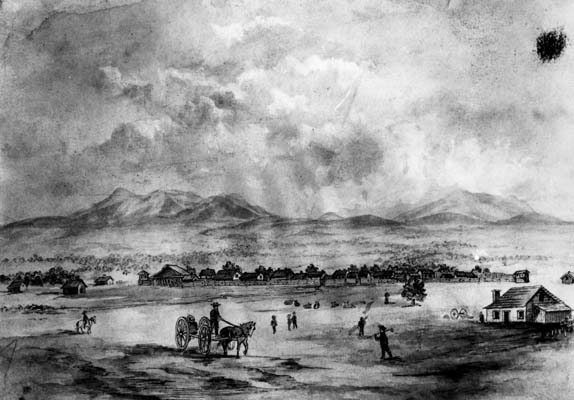
In 1851, Brigham Young dispatched a mission south-west to San Bernardino, California. Smith joined it, moving his family and enslaved people to the new settlement. There was a complication he chose to ignore: California had entered the Union in 1850 as a free state. Any enslaved person who crossed its border was entitled to their freedom.Smith did not inform his enslaved people of this. Most were entirely unaware of their legal status.And the California authorities of the early 1850s showed little appetite for prosecuting slaveholders who quietly continued their arrangements inside a free state.
Biddy remained in captivity.It was her daughter Ellen’s relationship with Charles Owens son of the free Black rancher Robert Owens that changed everything. Through the Owens family, Biddy learned for the first time that California law had banned slavery, and that she had grounds to petition the court. When Smith announced in December 1855 that he was moving everyone to Texas, the Owens family acted. The sheriff was notified. The wagons were stopped at the pass.
Judge Hayes Ruled Biddy Free on 19 January 1856
Because she was enslaved, Biddy could not testify in open court against Smith. Judge Hayes resolved this by inviting all fourteen affected individuals into his private chambers, where they told him what had happened. Smith, who had assured the court that his enslaved people had agreed voluntarily to accompany him to Texas and would be freed there, found his account disbelieved.
Hayes ruled immediately. All fourteen people Biddy, her three daughters, and ten other enslaved women and children Smith had held were freed. It was the first ruling of its kind in California, and it set a precedent that shaped subsequent freedom cases in the state.
Biddy chose a surname for the court documents. She selected Mason the middle name of Amasa Lyman, Mormon Apostle and mayor of San Bernardino, in whose household she had worked for several years and for whom she retained a measure of respect. She also asked for a personal copy of her freedom papers. She wanted proof she could hold.
Biddy Mason Saved $250 to Buy Her First Piece of Los Angeles
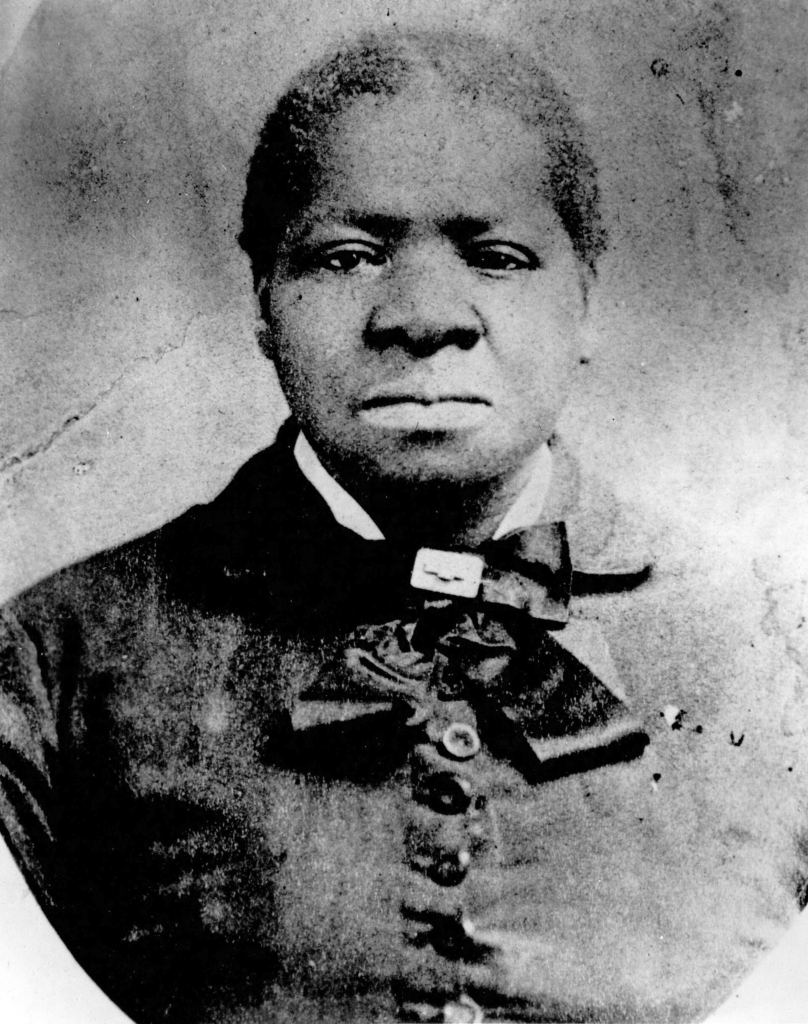
Mason moved with her daughters to Los Angeles and took work as a nurse and midwife under a local doctor, leveraging the skills she had learned in slavery to build the first income of her life. California was ravaged by a smallpox epidemic in the late 1850s and early 1860s, and demand for Mason’s expertise was constant. She spoke Spanish fluently, which made her invaluable to a practice that served the city’s diverse population.She spent nothing she did not have to.
By 1866, she had saved $250 enough to purchase a lot on Spring Street, on the western edge of Los Angeles. It was a cheap plot at the periphery of a still-small city. She understood that it would not remain peripheral.She was correct. As Los Angeles expanded through the 1870s, the Spring Street property became increasingly central.
Mason bought more land on the outer edges of the growing city, waited for development to catch up, and sold at profit. She used those profits to erect commercial buildings, which she rented out as office spaces. The compounding continued.By the late 1880s, Biddy Mason the woman who had been given away as a wedding gift at eighteen and who had never been permitted to learn to read had accumulated a personal fortune of approximately $300,000.
The Woman Who Fed Flood Victims and Founded Los Angeles’s First Black Church
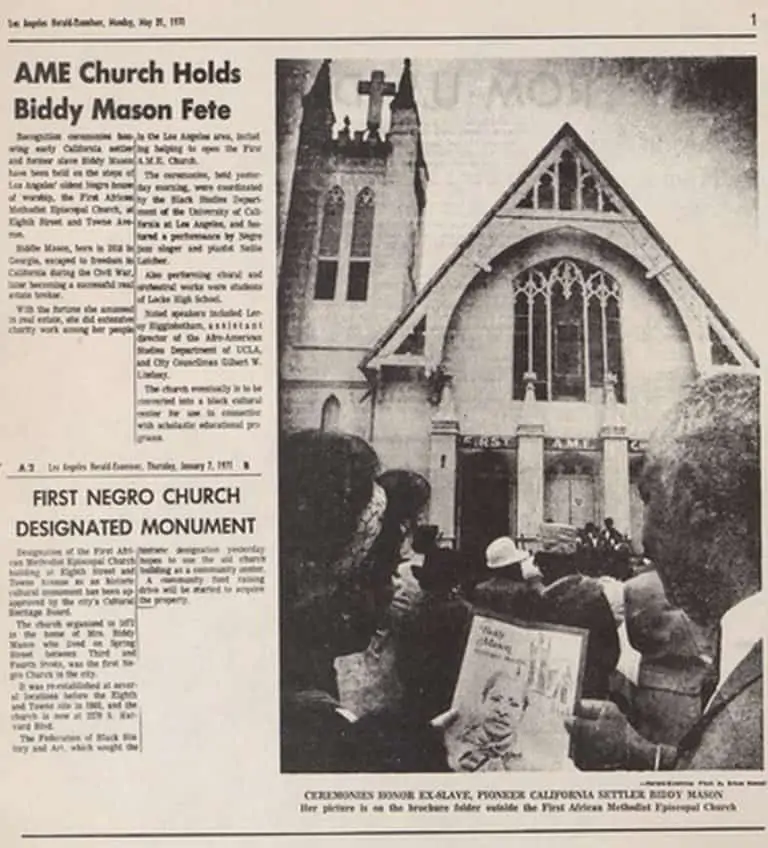
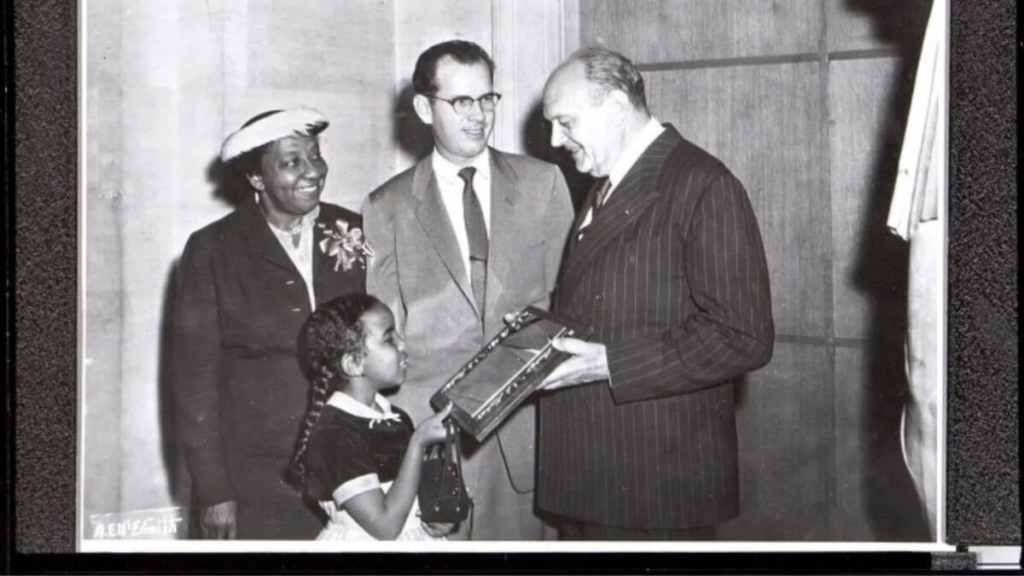
Mason did not hold the money. In 1872, she opened her Spring Street home for the founding meetings of what would become the First African Methodist Episcopal Church of Los Angeles the city’s oldest African American congregation. The land on which the first church building was constructed was donated directly by her.
When severe floods struck Los Angeles in the 1880s and left thousands of families destitute, Mason walked to several grocery stores in the city and opened accounts in her own name. The store owners were instructed to allow flood victims to collect supplies and charge them to her. She kept the accounts open for weeks.
In her later years, her home on Spring Street functioned, in practice, as an orphanage and an informal care home. People arrived at the gate every day. When her health declined and she could no longer meet them outside, her grandson brought them in to see her.The Los Angeles community called her Grandma Mason.
Buried Without a Stone in the City She Helped Build
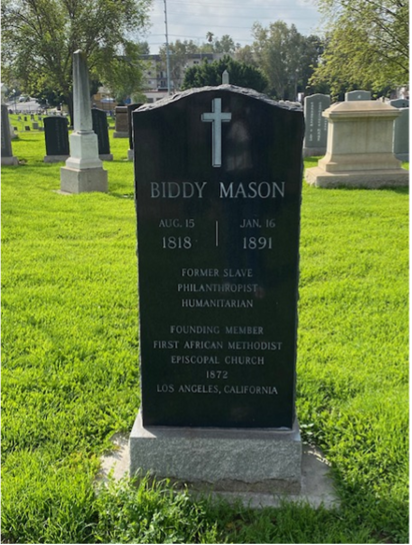
Mason died on 15 January 1891, five months short of her seventy-third birthday. She was buried at Evergreen Cemetery in the Boyle Heights district of Los Angeles in an unmarked grave.For nearly a century, the grave remained unmarked. In 1988, Mayor Tom Bradley attended a ceremony at Evergreen where a headstone was finally placed over her plot.
A year later, the California Afro-American Museum declared 16 November 1989 Biddy Mason Day, and the city opened Biddy Mason Memorial Park in her honour in downtown Los Angeles built, as it happens, on land not far from the Spring Street lot she had purchased for $250 in 1866.The open hand is blessed, she is reported to have said. For it gives in abundance, even as it receives.Biddy Mason had both.
Leave a Reply