
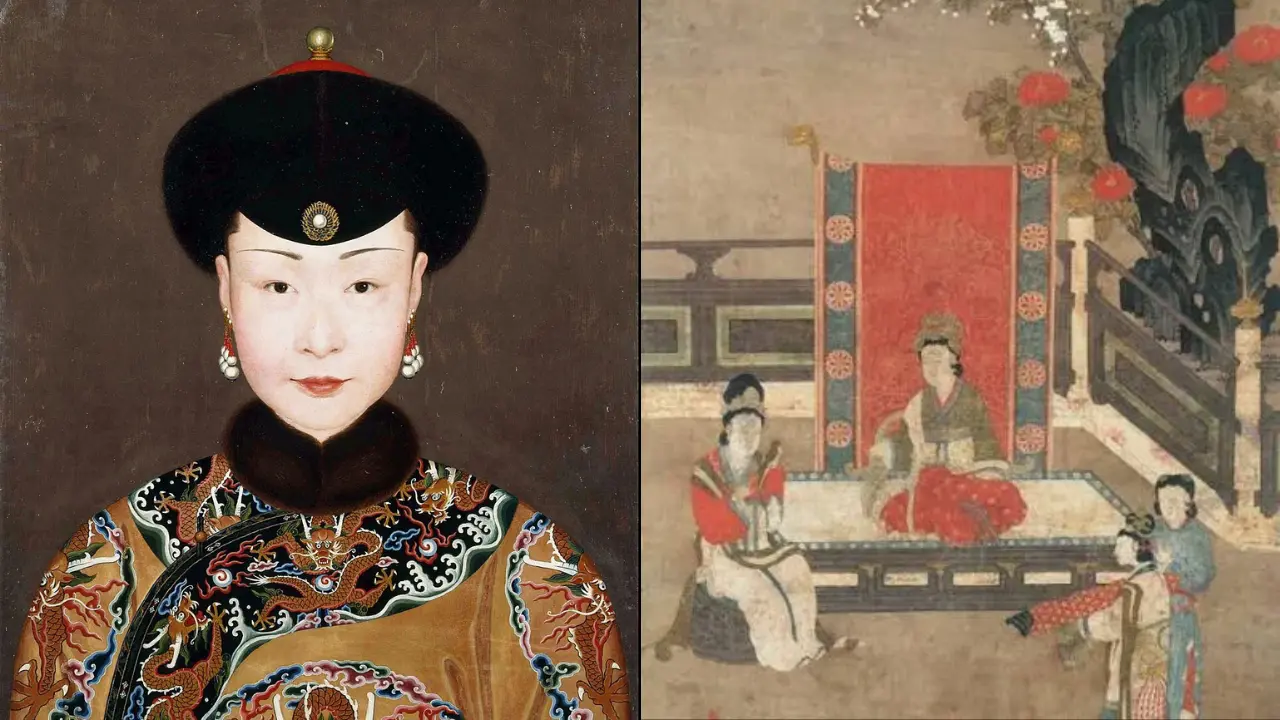
On the morning of 7 April 1765, Empress Nara of China received her breakfast portion of assorted meats from the hand of the Qianlong Emperor. It was a routine gesture in the coded language of the Qing imperial court, a daily signal of favour and warmth. By dinner that same evening, her name had been covered with yellow paper on the court records. She would never receive a portion from him again.
What happened in the hours between breakfast and dinner on that spring day in Hangzhou has occupied Chinese historians for more than two centuries. The Empress, whom history would come to call the Step-Empress, cut her hair short in front of the assembled imperial retinue. The act lasted moments. The consequences lasted the rest of her life, and then continued after it.
She was escorted back to Beijing in disgrace. Her four imperial titles were confiscated. Her household staff was reduced to the level of the lowest-ranked concubine. She was dead within sixteen months. When she died, the Qianlong Emperor was on his annual hunting excursion. He did not return to attend her funeral. He sent their teenage son instead.
Then he began erasing her.
Nara Rose Through Imperial China’s Dangerous Court
The woman history calls Empress Nara was born on 11 March 1718 into the Manchu nobility of the Bordered Blue Banner, one of the eight elite military-administrative divisions of Qing China. The precise identity of her clan has been contested ever since. The Draft History of Qing, the most comprehensive account of the period, names her a member of the Ula Nara clan. Genealogical records of her father, Narbu, a military assistant captain, place the family within the Hoifa Nara clan. The Factual Record of Qing, a separate primary source, sidesteps the dispute entirely and refers to her simply as of the Nara clan.
The debate over her maiden clan has never been resolved. It was, perhaps, the first fact about her to slip through the cracks.
In December 1734, when Nara was around sixteen, the Yongzheng Emperor appointed her as the secondary consort of his son Hongli, the heir to the Chinese throne. She was the second-ranked woman in his household, young and favoured. The position placed her in direct line to become Empress of China. One woman stood between her and that title: Fuca, Hongli’s first consort, who would be known to history as Empress Xiaoxianchun.
Nara would wait fourteen years.
The Death of a Rival Cleared Nara’s Path
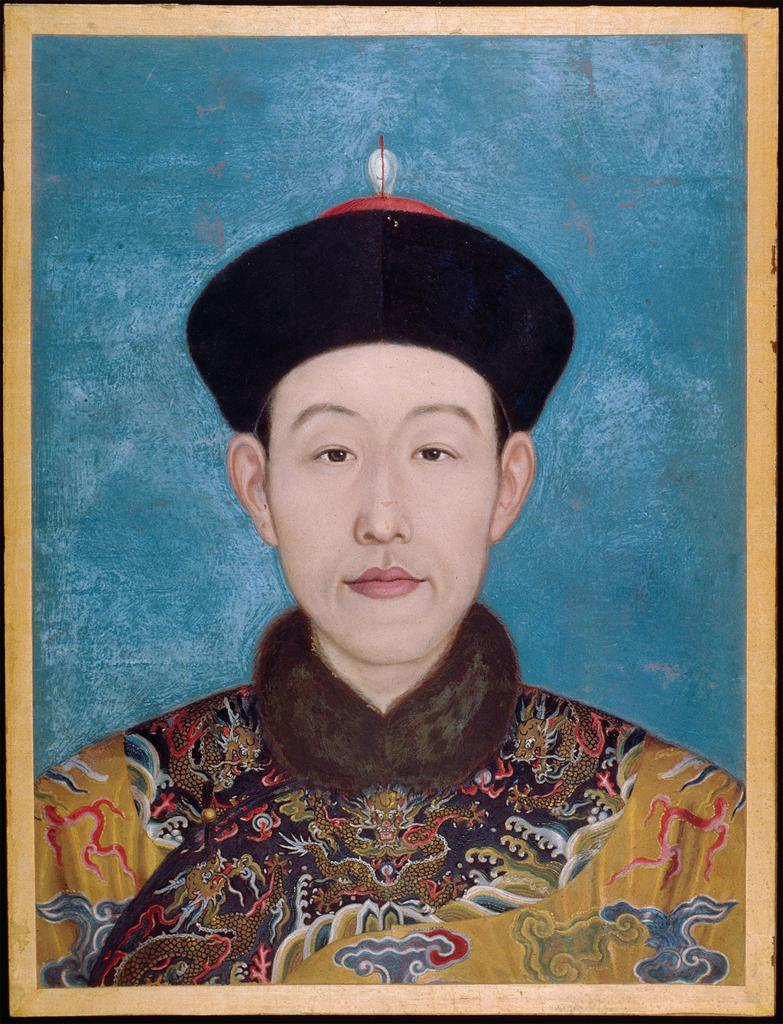
In 1735, Hongli succeeded his father as the Qianlong Emperor, the fifth ruler of the Qing dynasty. His reign would last sixty-one years and reshape China’s borders beyond anything his predecessors had attempted. Within his first decades, he launched what his court celebrated as the Ten Great Campaigns, extending Qing rule westwards into Central Asia, claiming the territories now comprising western China, Tibet, and Outer Mongolia.
The conquest of the Dzungar Khanate of Outer Mongolia was among the most brutal. Of an estimated 600,000 Dzungars, approximately 30 per cent were killed outright by the Emperor’s forces. Another 40 per cent died when smallpox swept through their depleted population. More than 150,000 fled westwards into the Russian Empire. Fewer than 100,000 remained alive in their ancestral lands.
Nara accompanied the Emperor on many of these campaigns. How much of the violence she witnessed directly is not known. She was present.
Through these years, her position at court remained secure. In December 1745, she was promoted to Noble Consort Xian, a rank reflecting the Emperor’s continuing approval and the active goodwill of his mother, Empress Dowager Chongqing, who had developed a particular regard for the second consort. Then, in 1748, Empress Xiaoxianchun died. The circumstances were not well documented by historical sources. Some accounts say she died on a boat in Dezhou; others hold that she made it back to the Forbidden City in Beijing before she died. The cause is not confirmed.
Whatever the cause, Empress Xiaoxianchun’s death changed everything.
Nara Became Empress After Fourteen Years of Waiting
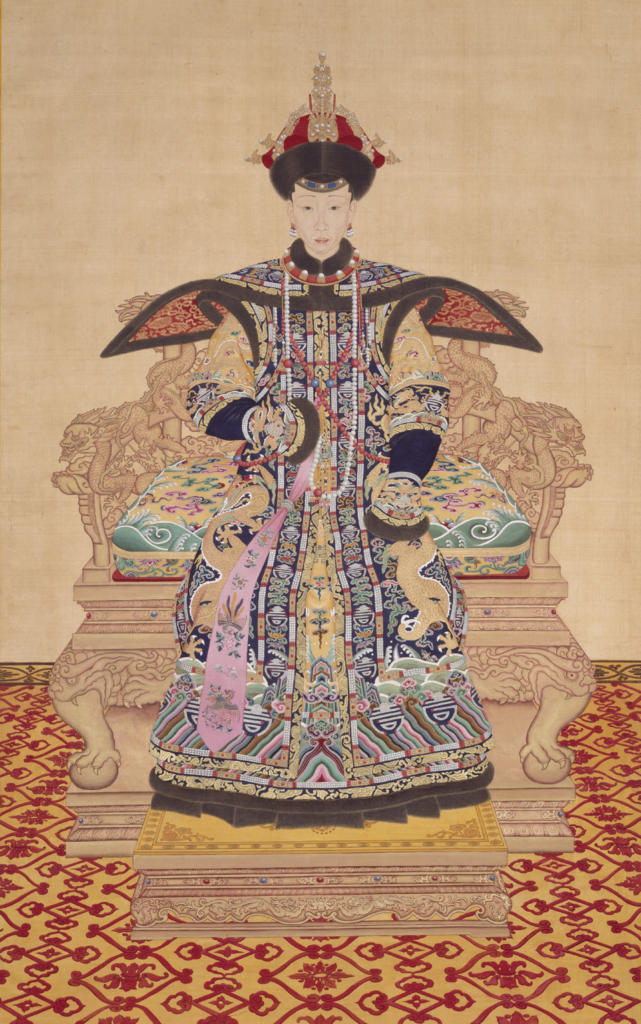
Within a year of Empress Xiaoxianchun’s death, the Qianlong Emperor elevated Nara to the position of Imperial Noble Consort, granting her administrative authority over the imperial harem as acting empress. He then observed the required two-year mourning period for his first wife. On 2 September 1750, a formal edict raised Nara to the rank of Empress Consort of China. She had waited since 1734 for this title. She was thirty-two years old.
As Empress, her obligations multiplied. She accompanied the Emperor on tours, ancestral worship ceremonies, and hunts across an empire that now stretched to the Himalayas. Between 1752 and 1756, she gave birth to three of the Emperor’s children: Yongji, the twelfth imperial prince, born on 7 June 1752; an unnamed daughter, born 23 July 1753, dead before her second birthday; and Yongjing, the thirteenth prince, born 22 January 1756, dead before his second year. In the calculations of dynastic succession, two of three were losses. Yongji survived to adulthood. He would never inherit the throne.
The Empress served in her role for fifteen years. She managed the harem. She attended every ceremony that required her presence. She promoted Confucian values among the newly conquered peoples to the west. Nothing in the surviving historical record suggests that this period was anything other than conscientious.
Then the Emperor fell in love.
A Favourite’s Rise Set the Rupture in Motion
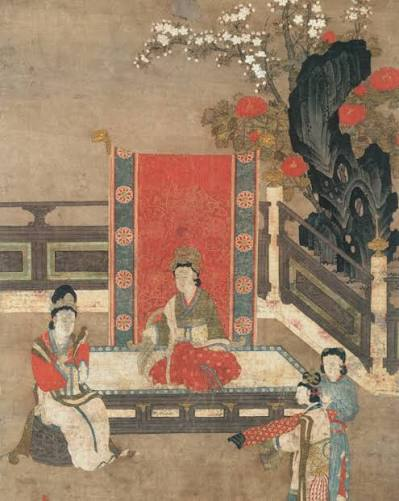
Sometime in the late 1750s, the Qianlong Emperor’s attention settled on a young woman of the Wei clan, sixteen years his junior. He elevated her through the consort ranks with unusual speed. By 1760, she held the title of Noble Consort Ling. She was not the Empress. She was, increasingly, everything else.
Whether the existence of Noble Consort Ling was the direct source of the rupture that followed, or whether other grievances had been accumulating unseen, is not certain. One account describes a confrontation during the 1765 southern tour in which the Empress demanded that Noble Consort Ling be denied promotion to a rank that, by tradition, could only be granted if no Empress lived to hold it. Another account claims the break came from the Emperor’s behaviour with local women encountered during the tour, and that he wished to elevate one of them to consort status. The historical record confirms neither version. Both may be accurate. Neither can be proved.
What is documented is the moment itself.
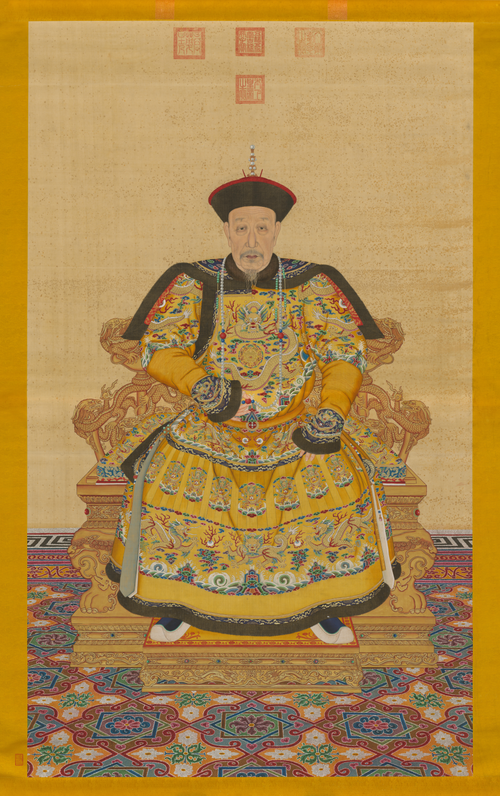
On 7 April 1765, during the imperial tour of southern China, the Empress Nara cut her hair short in the city of Hangzhou. Manchu custom reserved this gesture for a single occasion: the death of a husband. Applied to a living emperor, it carried the force of a public curse. The assembled retinue understood it immediately as a gesture directed against the Qianlong Emperor and the Empress Dowager alike.
She was removed from the tour that day. Fulong’an, a son-in-law of the Emperor and the nephew of the late Empress Xiaoxianchun, escorted her back to Beijing by waterway.
Qianlong Reduced Her to the Rank of a Servant
In the immediate weeks after the dismissal, Nara’s practical circumstances in the capital remained unchanged. Court records show she continued to receive the food and charcoal rations of an empress. Five eunuchs and two cooks remained in her service.
When the Emperor returned to Beijing on 1 July 1765, that ended.
He ordered the confiscation of all four written edicts that had bestowed her imperial ranks, along with every gift that had accompanied them over fifteen years. Her household of ten maids was reduced to two, the precise allocation given to a second class attendant, the lowest rank in the entire imperial consort hierarchy. Half a month after returning to the capital, the Emperor conferred the title of Imperial Noble Consort on Noble Consort Ling.
Nara remained Empress in name only. She held no authority. She held no household.
She was already seriously ill by the summer of 1766. Despite her condition, the Emperor did not delay his journey to the summer residence at Chengde. She died in the Forbidden City on 19 August 1766. At the time, the Qianlong Emperor was at the Mulan Hunting Grounds. He did not end his excursion. He sent their son Yongji, fourteen years old, to handle the funeral.
By imperial order, the ceremony was to be conducted at the level of an imperial noble consort. In practice, it was more modest than that. The customary cancellation of cabinet meetings for five days was not carried out. Princesses and high court officials were not required to attend. Her coffin was made from low-quality wood. She was interred not beside the Emperor’s own future mausoleum, but next to Imperial Noble Consort Chunhui in the Yu Mausoleum of the Eastern Qing Tombs at Zunhua, approximately 125 kilometres north-east of Beijing.
When a palace official petitioned for three years of mourning to be observed in her honour, the Emperor exiled him for life.
The Emperor Destroyed the Record of Her Existence
The absence of a posthumous title was not an oversight. Qing tradition required that every empress receive one. Without it, Nara had no official identity as the Emperor’s consort. She would be called only the Step-Empress in perpetuity: the woman who had stood in for someone else, whose own name the court could not bring itself to record.
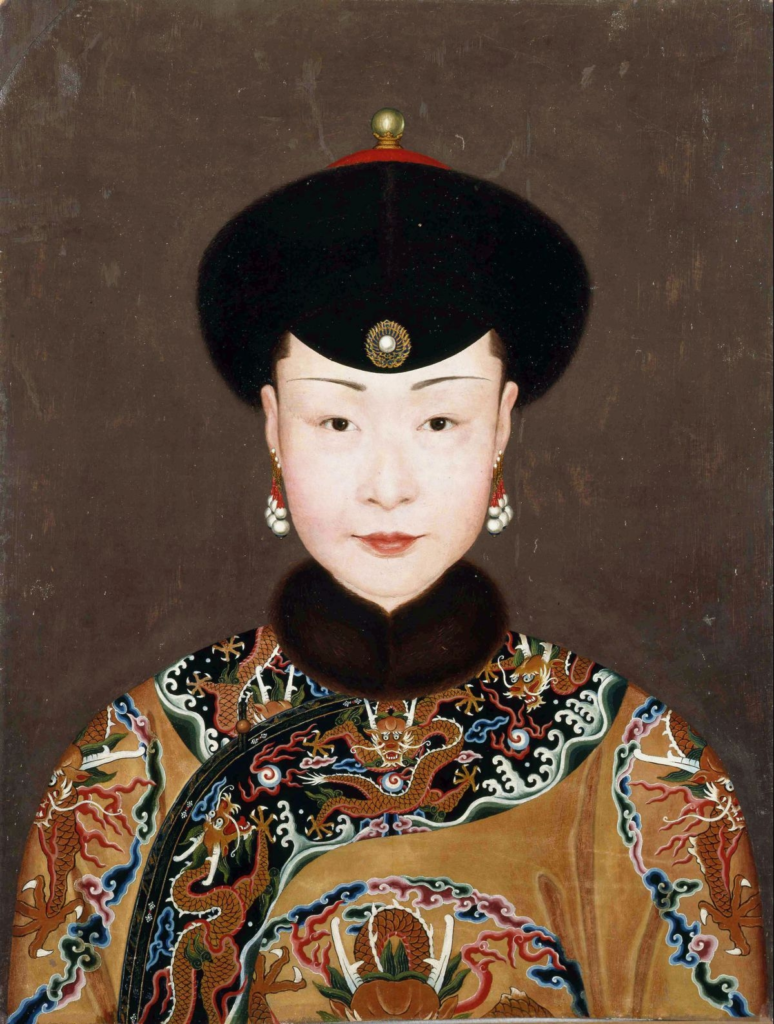
What followed her death was systematic. The Draft History of Qing, compiled in the early years of the Chinese Republic using sources that no longer exist, covers her fifteen-year reign as Empress Consort only in fragments. The Factual Record of Qing contains gaps where her name should appear. No verified official portrait of Nara survives. The images believed to depict her remain unconfirmed by historians. The portraits that do exist were likely edited or destroyed at the Emperor’s instruction.
Her immediate predecessor and successor as Empress Consort, both of whom reigned for substantially shorter periods, left substantially more complete records. Scholars have pointed to this discrepancy as evidence that the destruction of Nara’s documentation was not the result of archival accident.
In 2019, Chinese author Li Shu published research that identified the precise moment of the rupture using Qing court records of daily food portion grants. The Emperor’s granting of a food portion to a consort was a coded act of favour; its withdrawal signalled displeasure. Li Shu’s analysis placed the break between breakfast on 7 April 1765, when Nara received her portion, and dinner that same evening, when her name first appeared covered with yellow paper on the record. Starting from that dinner, it was covered every time thereafter.
An entire reign, reduced to an empty space on a court ledger.
The Question Her Own History Cannot Answer
The cutting of her hair may have been defiance. It may have been grief, for the children she had buried, or for the marriage she had effectively lost years before the southern tour. It may have been a deliberate provocation, a calculated attempt to force a rupture the Emperor had no formal mechanism to arrange. Historians have argued for each of these interpretations. None can be confirmed.
What is harder to explain is the scale of what followed. Hair-cutting in breach of Manchu custom, however serious the breach, does not ordinarily produce a decades-long campaign to eliminate a person from the historical record. The erasure is disproportionate to the offence that survives on paper.
Something more was at stake. The historical record no longer contains what it was.
Empress Nara died at forty-eight, without her name restored, without her portrait preserved, without her tomb placed beside the man she had served for more than three decades. She is buried in a mausoleum that was not built for her, in a grave the Emperor never visited, next to a woman she never knew. The Qianlong Emperor outlived her by thirty years and is remembered as one of the greatest rulers in the history of China.
She is remembered, to the extent she is remembered at all, as a question no one has been able to answer.
Leave a Reply