
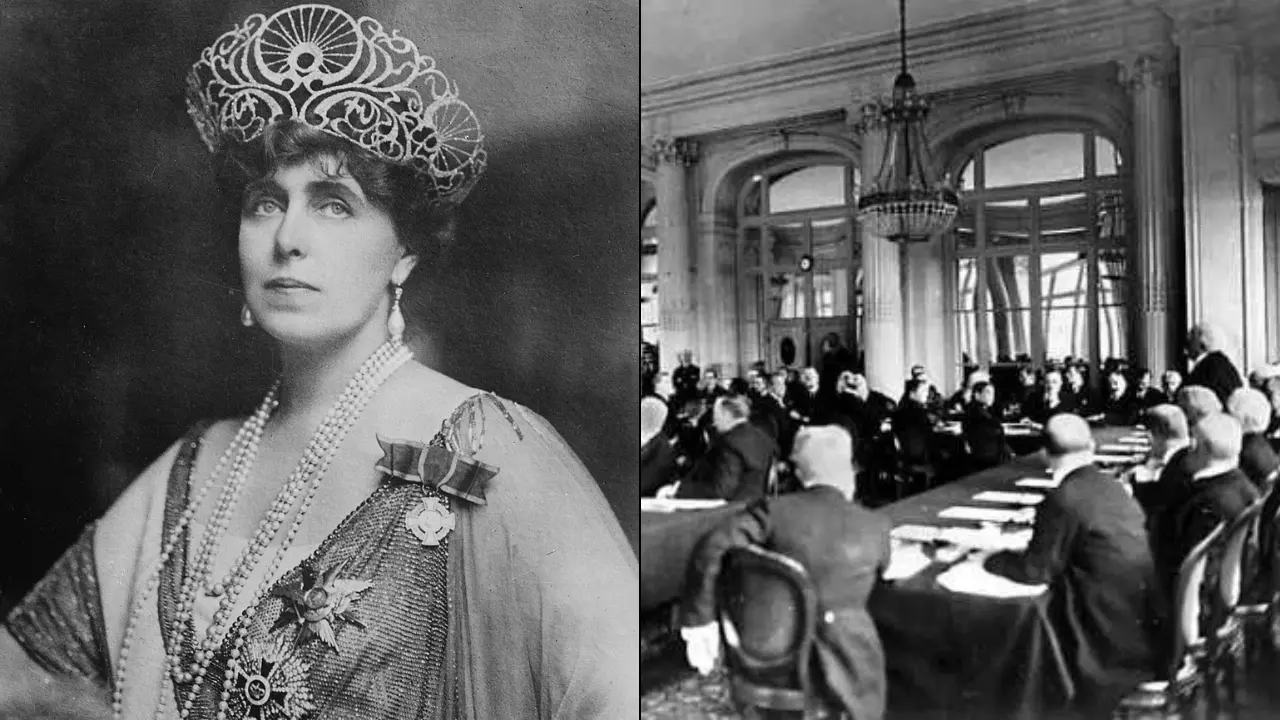
Born the granddaughter of both Queen Victoria and Tsar Alexander II, Marie of Romania arrived at the 1919 Paris Peace Conference, waved her ministers aside, and personally negotiated her adopted country nearly to double its former size.
On March 6, 1919, Queen Marie of Romania walked into the Paris Peace Conference without a delegation and without the room. Romania’s official negotiators had abandoned the talks weeks earlier after alienating the Allied leaders with their intractability. France’s Prime Minister Georges Clemenceau, who held the postwar map of Europe in his hands, had made his feelings about Romania’s position unmistakably plain. He had no diplomatic reason to receive this woman.
He received her anyway.
Upon their introduction, Clemenceau told her directly: “I don’t like your Prime Minister.” She replied without hesitation: “Perhaps then you’ll find me more agreeable.” He did. When he accused Romania of behaving like a lion seeking too large a share of territory, Marie looked at him and replied: “That is why I came to see his first cousin, the Tiger.” French President Raymond Poincaré observed a measurable shift in Clemenceau’s entire attitude toward Romania within days. By the time the conference concluded, Romania had recovered all the territory it had surrendered during the war and gained Transylvania, Bessarabia, Dobruja, and Bukovina besides. The kingdom grew from roughly 137,000 to 295,000 square kilometres. Ten million new subjects came with it.
Marie had arrived in Romania twenty-six years earlier as a seventeen-year-old English bride who could not speak Romanian. She left it, in 1938, as its last queen and the woman most directly responsible for its modern borders.
She Left England at Seventeen and Never Returned
Marie Alexandra Victoria was born on October 29, 1875, at Eastwell Park in Kent, the second child and eldest daughter of Prince Alfred, Duke of Edinburgh, son of Queen Victoria, and Grand Duchess Maria Alexandrovna of Russia, daughter of Tsar Alexander II. She was, by birth, a grandchild of the two dominant dynasties of nineteenth-century Europe. Her baptism took place at Windsor Castle. Her godparents included a Russian empress and the Tsarevich of Russia.
Her childhood moved between England and the Mediterranean. From 1886, when her father was named commander-in-chief of the Mediterranean Fleet, she lived at San Antonio Palace in Malta, which she later described as “the happiest memory of my existence.” The family relocated to Coburg, Germany in 1889. Her mother, the Duchess of Edinburgh, was cultured and independent but emotionally remote, a woman who believed in the formal separation of generations and never permitted the kind of easy closeness that might have made her daughter’s childhood warmer.
Marriage into a European royal house was never in question. For a time, her cousin Prince George of Wales was considered. He had become second in the line of succession to the British throne after the death of his elder brother Prince Albert Victor in 1892, and Queen Victoria approved the match. It did not proceed. Marie’s mother opposed marriages between first cousins and had no desire to keep her daughter in England. The engagement quietly collapsed. Queen Victoria later wrote: “Georgie lost Missy by waiting and waiting.”
King Carol I of Romania was searching for a bride for his nephew, Crown Prince Ferdinand, to secure the succession. The Duchess of Edinburgh suggested her daughter. Marie and Ferdinand met at a gala dinner, conversed in German, and found each other agreeable. He was shy. She was not. On January 10, 1893, they were married at Sigmaringen Castle in Germany in three separate ceremonies: one civil, one Catholic for Ferdinand’s faith, and one Anglican for Marie’s. The night before the wedding, her father summoned Marie to inform her that her dowry had been settled at one million French francs. Then he burst into tears and declared he had hoped for a different destiny for her.
She boarded a train for Bucharest. She was seventeen years old. It was the last time she would call England home.
Romania Changed Her, and She Changed It Back
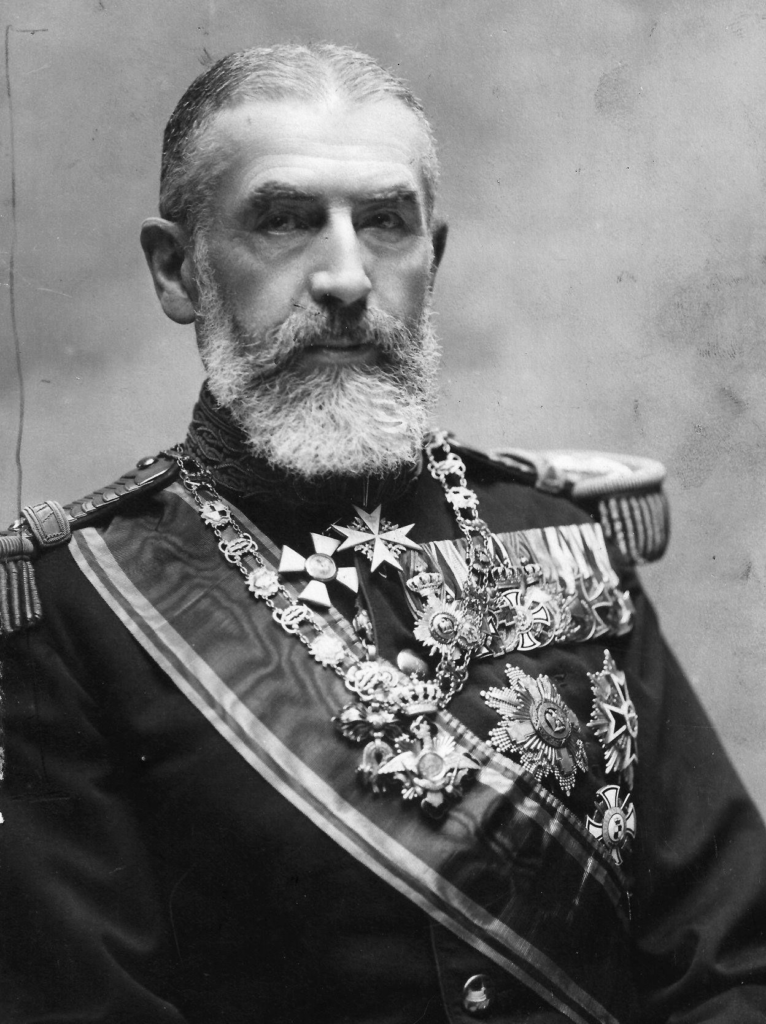
Romania was a young state. It had achieved independence from the Ottoman Empire following the Russo-Turkish War of 1877 to 1878, after which a prince of the German royal house of Hohenzollern-Sigmaringen had been crowned as King Carol I. He was Marie’s new father-in-law, a domineering figure who had spent decades shaping his court in his own rigid image. Ferdinand, pleasant and intelligent, had been shaped accordingly. Marie found the atmosphere suffocating. She later wrote that she had been “imported to be trimmed, educated, cut down and trained according to the great man’s conception of things.”
Her first son, Prince Carol, was born on October 15, 1893, nine months after the wedding. King Carol and Queen Elisabeth promptly removed him from his parents’ care. They believed royal children should be raised in a separate household, and they repeated the practice with each subsequent child. Five more followed across two decades: Princess Elisabeth, Princess Maria, Prince Nicholas, Princess Ileana, and finally Prince Mircea, born in 1913.
As the years passed, Marie grew into her adopted country and became genuinely popular with the Romanian people in a way no previous member of the Hohenzollern-Sigmaringen dynasty had managed. She learned the language. She wore Romanian folk costume in public. She gave the monarchy a human face it had not previously possessed. She also engaged in a series of affairs. The most significant, with Lieutenant Gheorghe Cantacuzène, a member of an ancient Romanian princely family, reportedly produced a pregnancy in the late 1890s. Marie traveled to Coburg, almost certainly to give birth. Historians believe the child was either stillborn or placed in an orphanage. None of it materially damaged her marriage to Ferdinand, which settled into a cordial working partnership, or her standing with the Romanian people, who adored her regardless.
Then the Balkan Wars began, and she found what she was built for. On June 29, 1913, Bulgaria declared war on Greece, triggering the Second Balkan War. Romania allied with Greece in a conflict that lasted barely a month. A cholera epidemic swept through the field hospitals and made them more lethal than the front itself. Marie ignored the warnings. She traveled between Romania and Bulgaria, nursing the wounded alongside a Red Cross nurse named Sister Pucci. She held the hands of dying men. She refused to wear a mask, arguing that to do so would dehumanize the sick in their last moments.
Romania’s next queen had introduced herself.
She Demanded War, Then Nursed Its Wounded
On October 10, 1914, King Carol I died. Ferdinand became king regnant and Marie became queen consort. She immediately made her position on the war consuming Europe clear: Romania would enter on the side of Britain, France, and Russia. It took nearly two years of diplomatic pressure, persuasion, and ultimately outright demand. The French minister to Romania, Count of Saint-Aulaire, later noted that Marie was twice an ally to France: once by birth and once by heart. On August 27, 1916, Romania formally declared war on Austria-Hungary.
The early military showing stalled against larger opponents. Bucharest fell to Austrian troops in December 1916. The royal court fled to Iași, in Moldova. On November 2, 1916, Marie’s youngest son, Prince Mircea, died of typhoid fever at Buftea. He was three years old. She wrote in her journal: “Can anything ever be the same?” Then she dressed as a nurse and went to the train station to receive the wounded.
She did this every morning. She collected injured soldiers from arriving trains and transported them to hospitals, throughout the months of Romania’s darkest crisis, in a wartime capital under constant pressure.
The situation collapsed further in 1917. The Russian Revolution destroyed Romania’s eastern ally. Surrounded by Central Powers with no prospect of relief, Ferdinand signed an armistice in December 1917. In May 1918, Romania signed the Treaty of Bucharest, surrendering territory, disbanding much of its army, and leasing its vast oil fields to Germany. Marie vehemently opposed the treaty. She was described at this point as “truly the only man in Romania.”
Romania re-entered the war on November 10, 1918. One day later, the armistice ended the fighting in Europe. Romania had lost the war. The peace was another matter entirely.
She Walked Into Paris and Rewrote the Map
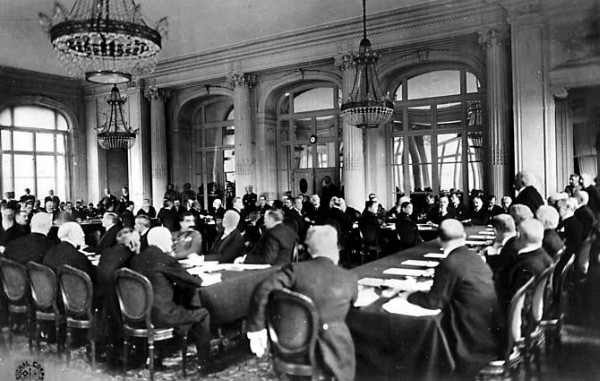
Romania’s official delegation at the Paris Peace Conference had made itself unwelcome. Prime Minister Brătianu’s intractability had driven the Allied leaders to open contempt. The delegation walked out. Count of Saint-Aulaire proposed that Marie be sent instead.
She arrived on March 6, 1919. The French people, who had heard of her wartime nursing and her role in bringing Romania into the war on the Allied side, received her with something approaching adoration. The writer Colette, reporting for Le Matin that day, observed that Marie “carried her light within her.” In London, she lodged at Buckingham Palace and worked through a roster of political figures: Lord Curzon, Winston Churchill, Nancy and Waldorf Astor. She visited her son Nicky at Eton. King George V declared at a state dinner that “Her Majesty the Queen, my dear cousin, is British born.” Back in Paris, she waved her ministers aside and negotiated directly, telling startled officials: “Never mind, you’ll all just have to get used to accepting me with the faults of my virtues.”
Romania gained Transylvania, Bessarabia, Dobruja, and Bukovina. The kingdom grew to 295,000 square kilometres and absorbed ten million new subjects.
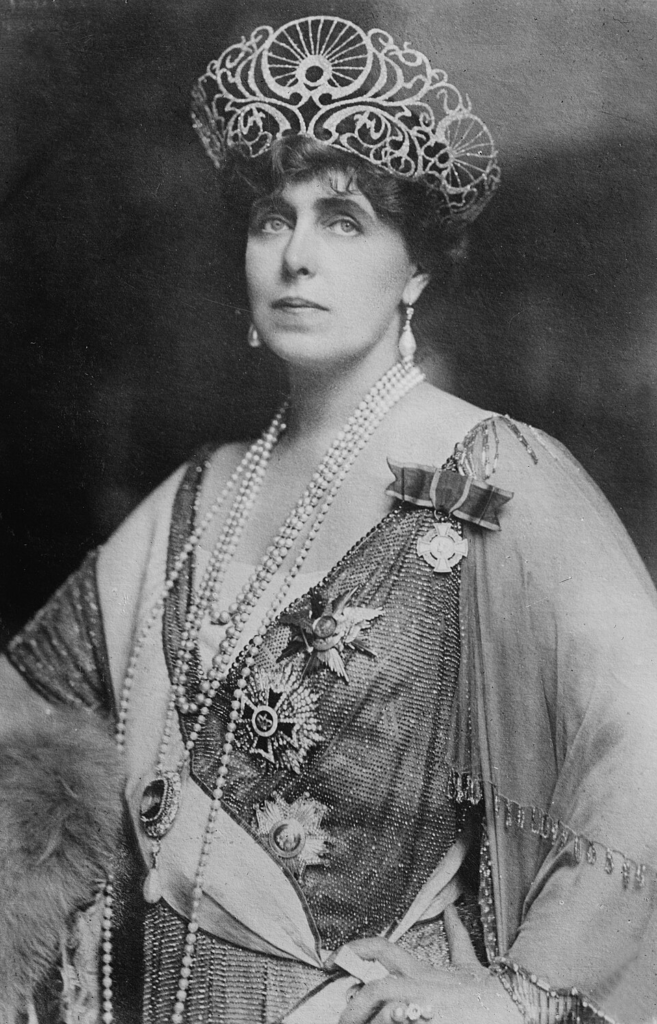
Ferdinand and Marie were crowned at Alba Iulia on October 15, 1922, as king and queen of Greater Romania. Marie’s crown was fashioned from Transylvanian gold in the Art Nouveau style by a Parisian jewelry house, modeled on the crown of a sixteenth-century Wallachian queen. More than 20,000 peasants were served roast steaks at the coronation feast. In 1926, Marie traveled to the United States accompanied by Prince Nicholas and Princess Ileana.
She disembarked in New York on October 18 to steamers, gunfire salutes, and cheering crowds in a stinging rain. Mayor Jimmy Walker greeted her formally at the dock. She toured several cities, found President Calvin Coolidge so grim that she lingered less than two hours at the White House dinner, and declared the American people themselves magnificent. Dorothy Parker surveyed the sensation Marie created across New York drawing rooms and responded with a verse that circulated for years: “And I am Marie of Roumania.”
Marie wrote in her diary that she and her children had “but one dream: to return.” She never did. Ferdinand died on July 20, 1927, of intestinal cancer, aged sixty-one. He had been king for thirteen years. She had been, in effect, the determining intelligence behind Romania’s foreign policy for most of that time. Now the succession collapsed without him.
Her Son Took the Throne and She Went Home to Die
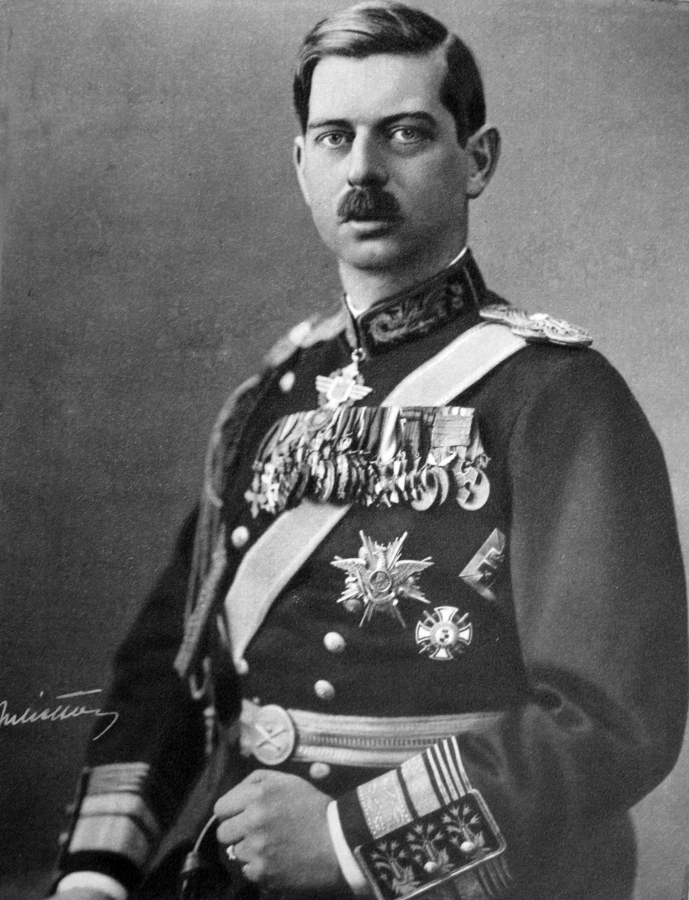
Crown Prince Carol had renounced his rights to the throne in January 1926 over a very public extramarital affair, leaving his five-year-old son Michael as heir. When Ferdinand died eighteen months later, a regency council took charge on Michael’s behalf. Marie declined to be part of it. The press, and even Princess Helen, promptly accused her of plotting a coup against her own grandson.
She was not. It was his father who overthrew him.
On June 6, 1930, Carol returned from abroad, marched into the Romanian parliament, and had the Act of Succession declared null. He became King Carol II. He refused his mother’s counsel, excluded her from court, and launched a sustained campaign to destroy her popularity among the Romanian people. Marie retreated to Bran Castle in Transylvania, given to her by local officials in 1920 and restored over the seven years that followed, and to Balchik on the Black Sea, where she tended her garden and wrote. By the time of her death she had published thirty-four books and many short stories, including a three-volume autobiography that Virginia Woolf reviewed in print.
During the summer of 1937, Marie fell ill. Her personal physician suspected pancreatic cancer. The official diagnosis was cirrhosis of the liver. Marie had never consumed alcohol. Upon hearing the cirrhosis finding, she reportedly said: “Then there must be a non-alcoholic cirrhosis of the liver, because I have never in my life tasted alcohol.” She was sent to a sanatorium in Italy, then transferred to one in Dresden as she grew steadily weaker. She asked to be brought back to Romania to die. Carol refused her a flight. Hitler offered a medical aircraft. She declined. She returned by train to Pelișor Castle in Sinaia.
On July 18, 1938, at 5:38 in the afternoon, Queen Marie of Romania died, eight minutes after lapsing into a coma. She was sixty-two. Her eldest children, Carol and Princess Elisabeth, were at her bedside alongside her grandson Michael.
At her own request, her heart was removed from her body and placed in a small golden casket embellished with the emblems of the Romanian provinces. It was interred in her chapel at Balchik, at the edge of the Black Sea. When Southern Dobruja was ceded to Bulgaria in 1940, the casket was transferred to Bran Castle, where it remains today in a marble sarcophagus inside the chapel her daughter Ileana built for it.
She had spent her life making Romania larger. She asked only that her heart remain inside its borders.
Leave a Reply