
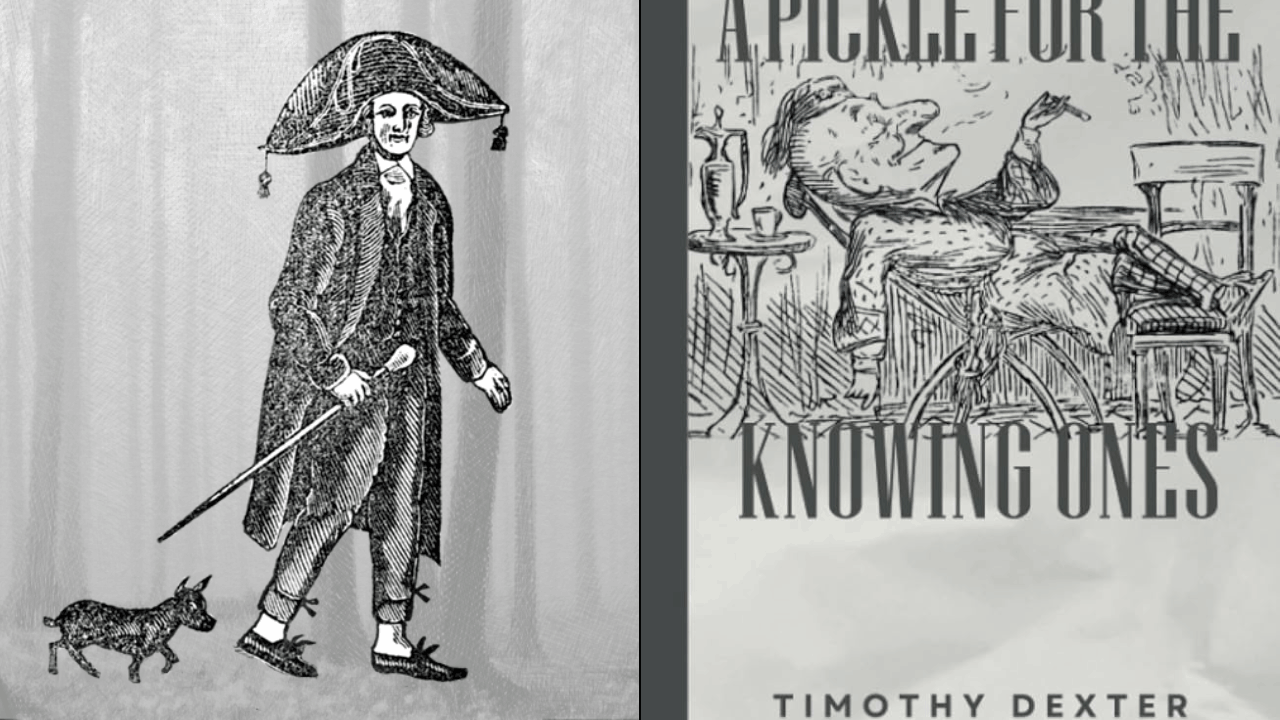
When Newburyport’s merchant class fed Timothy Dexter deliberately ruinous advice, telling him to ship coal to England’s mining capital and bed warmers to the tropics, he followed every word and became one of Massachusetts’s wealthiest men.On October 23, 1806, Lord Timothy Dexter died at his High Street mansion in Newburyport, Massachusetts, surrounded by more than three dozen painted wooden statues of the famous dead. His published obituary called him “truly ridiculous,” a man of intellectual endowments “not of the most exalted stamp.” The Massachusetts Probate Office later valued his estate at $35,027.39.The man New England’s educated merchant class had spent decades trying to destroy had died rich.
A Farm Boy Walked to Newburyport
Timothy Dexter was born on January 22, 1747, in Malden, Massachusetts, the descendant of an Irish immigrant family that had arrived in the colonies roughly a century before and found little in the way of fortune. His education lasted until he was eight years old. At that point he was put to work as an indentured servant on a farm, laboring there for the next six years. At 14, he walked to Charlestown, Massachusetts, and apprenticed as a leather dresser, learning to craft breeches and gloves for the colonial market.
By every available account, he was a quiet and diligent apprentice. When he completed his indenture, his employer rewarded him with a freedom suit, the standard parting gift to an apprentice who had served honestly. Dexter sold it immediately for $8.20 and used the money to relocate to the booming seaport of Newburyport, arriving sometime around 1769.
He moved quickly once he got there. He purchased a small plot of land. Then, in May 1770, he married Elizabeth Frothingham, a 32-year-old widow nine years his senior whose first husband, a glazier named Benjamin Frothingham, had recently died, leaving her with four children and a house on the corner of Merrimack and Green Streets. Dexter set up a leather shop in the basement, selling moosehide trousers, gloves, hides, and whale blubber. Elizabeth opened a notions shop alongside him.
By the end of the American Revolution, they had saved several thousand dollars. Upper-class Newburyport regarded the marriage with undisguised contempt. The widow Frothingham had lowered herself considerably. Her new husband was a semiliterate former farm laborer with no social connections, no education, and no family name worth mentioning.That contempt would define everything that followed.
Worthless Currency Made Dexter Suddenly Rich
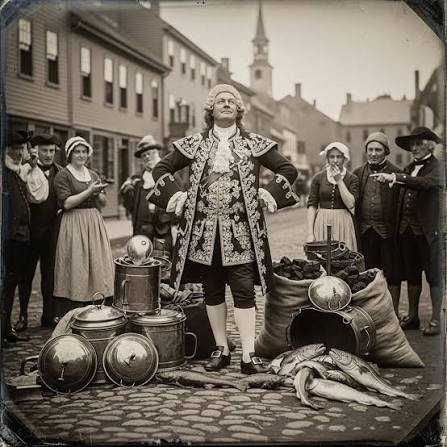
As the Revolution ended, the Continental currency Congress had issued to finance the war had collapsed so thoroughly that it had generated its own idiom. “Not worth a Continental” meant not worth anything at all. Educated merchants, bankers, and men of business agreed unanimously: purchasing Continental currency was the act of a fool.Dexter spent every dollar he had saved on it.
No record survives of his reasoning. When the new U.S. Constitution came into force and the federal government moved to honor Continental money in exchange for bonds, Dexter’s accumulated pile of near-worthless paper became real wealth. By around 1791, he was, without question, rich.
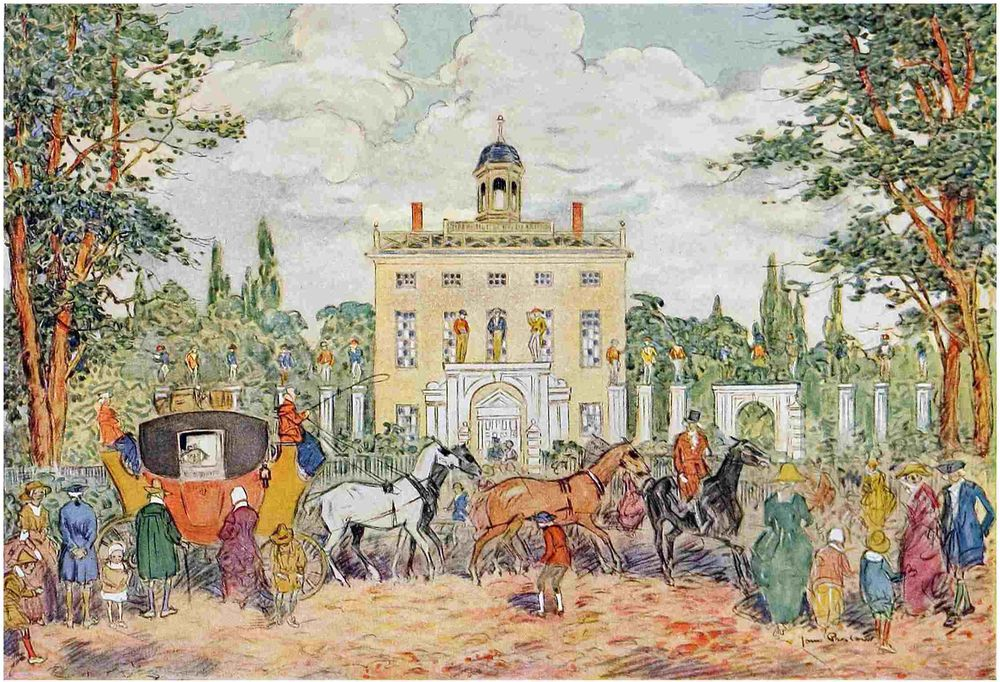
He moved at once. He purchased a mansion on High Street that had previously belonged to Nathaniel Tracy, one of Newburyport’s most celebrated merchants. He acquired cream-colored horses and a coach monogrammed with his initials. He presented himself at the social gatherings of his betters, uninvited, and expected to be welcomed. He was not.
Every Rival’s Advice Made Dexter Richer
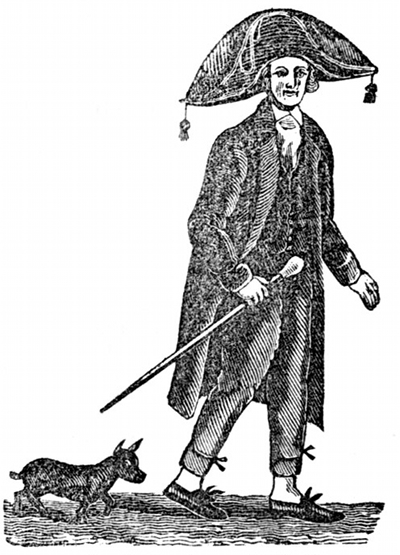
The merchant class of Newburyport saw opportunity in Dexter’s ignorance. They began feeding him investment advice, advice calculated to be so transparently absurd that only a man without commercial training could follow it, and designed to reduce his fortune to nothing. They offered each piece of counsel with straight faces. Dexter followed all of it.
A rival suggested he ship bed warmers, the heavy brass pans New Englanders used to warm their beds in winter, to the West Indies. Dexter bought approximately 42,000 of them and dispatched them south into tropical heat. His ship’s captain, unable to sell heating equipment in a climate that required none, marketed them instead as ladles for the local molasses industry. They sold at a profit.
Someone recommended shipping wool mittens to the same destination. Dexter complied. Asian merchants aboard a vessel bound for Siberia purchased the entire cargo on the way through. He exported Bibles to the East Indies and found Eastern missionaries ready to buy them. He dispatched gloves to the South Sea Islands and arrived in time to sell them to Portuguese traders heading for China. He collected stray cats from the streets of Newburyport, placed an advertisement offering to pay for them, and shipped the resulting animals to the Caribbean, where plantation owners paid a premium for their use against rat infestations.
He purchased a large stockpile of whalebone, the baleen harvested from the creatures being hunted along the New England coast, without any clear commercial purpose in mind. At the time of purchase, most whalebone was simply discarded into the sea. Then French fashion embraced the corset. Corsets required whalebone stays. Dexter’s warehouse became a market.Then someone told him to ship coal to Newcastle.
Newcastle, England, was one of the world’s most famous coal-producing cities. The phrase “coals to Newcastle” had existed in the English language for over a century as the definition of pointless redundancy. Dexter loaded his ships.When the cargo arrived, the Newcastle miners were on strike. No coal was being produced. His shipment sold at a premium.The men who had spent years engineering his ruin had, collectively, made him one of the wealthiest merchants in Massachusetts.
Dexter Built a Palace Around Himself
Unable to purchase acceptance through commerce, Dexter attempted to purchase it through spectacle. On the grounds of his High Street mansion he erected approximately 40 painted wooden statues of recognized figures from history and public life. George Washington stood directly in front of the main entrance. Thomas Jefferson and John Adams flanked him on either side. Among them stood Napoleon, Louis XVI, Adam and Eve, and rows of generals, philosophers, politicians, and statesmen.
Two statues bore Dexter’s own likeness. One of them carried an inscription: “I am the first in the East, the first in the West, and the greatest philosopher in the Western world.”His servants were required to address him as Lord Timothy. He purchased an estate in Chester, New Hampshire, where he styled himself the Earl of Chester. Children who addressed him by his title received a quarter. Adults got dinner and drinks.
His wife, who had long since exhausted her tolerance for his behavior, was declared by Dexter to be a ghost. He refused to acknowledge she was alive. He told visitors that the woman moving through his house was her spirit, haunting it. Their two children, Samuel and Nancy, fared no better. Samuel became, according to contemporaries, a reckless drunk who lost a ship’s worth of his father’s cargo at gambling. Nancy, by most accounts, was simply an alcoholic.
Curious about how his death would be received, Dexter staged his own funeral. He secured his family’s cooperation. He had a mahogany coffin prepared and a sunlit tomb built to his specification. Approximately 3,000 people attended the mock wake.Dexter watched from hiding.He watched until his gaze reached his wife. She was not crying. He emerged from wherever he had concealed himself and beat her in the kitchen for her insufficient grief. His son, also present and unable to stand upright, avoided punishment only because his condition was mistaken for sorrow.

His Punctuation-Free Book Became a Hit
In 1802, Dexter published A Pickle for the Knowing Ones; or, Plain Truths in a Homespun Dress, a short autobiographical work self-published in Salem, Massachusetts. The book contained 8,847 words. It had no punctuation. Its capitalization was erratic and its spelling was entirely its own.One passage opened: “Ime the first Lord in the younited States of A mercary Now of Newburyport it is the voise of the peopel and I can’t Help it and so Let it goue.”
Critics mocked it immediately and at length. In the second edition, Dexter responded by adding an extra page containing nothing but punctuation marks, with an instruction to readers to “peper and solt it as they plese.”The book went through eight editions.
The question his rivals could never settle and no one since has resolved was whether Timothy Dexter was catastrophically lucky or quietly shrewd. His obituary dismissed him as “truly ridiculous,” a man of intellectual endowments “not of the most exalted stamp.” His estate, filed with the Massachusetts Probate Office, stood at $35,027.39.His book is still in print. The men who told him to ship coal to Newcastle have no names in the record.
Leave a Reply