
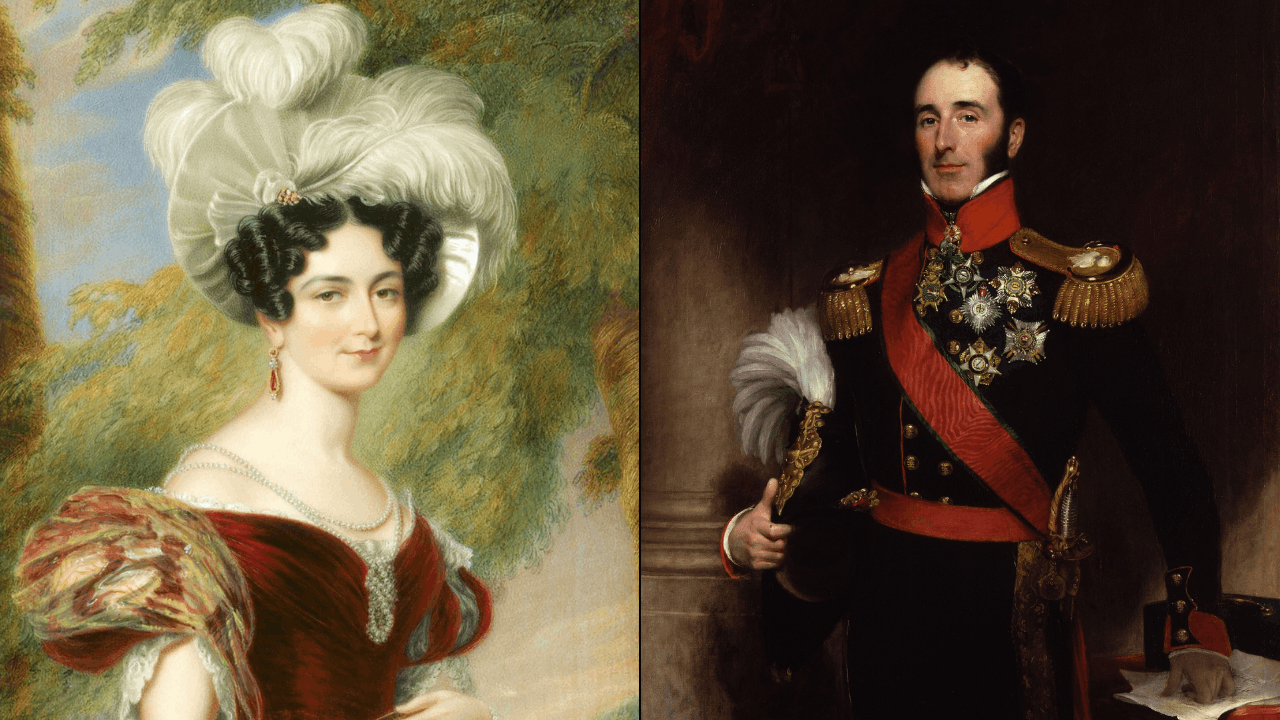
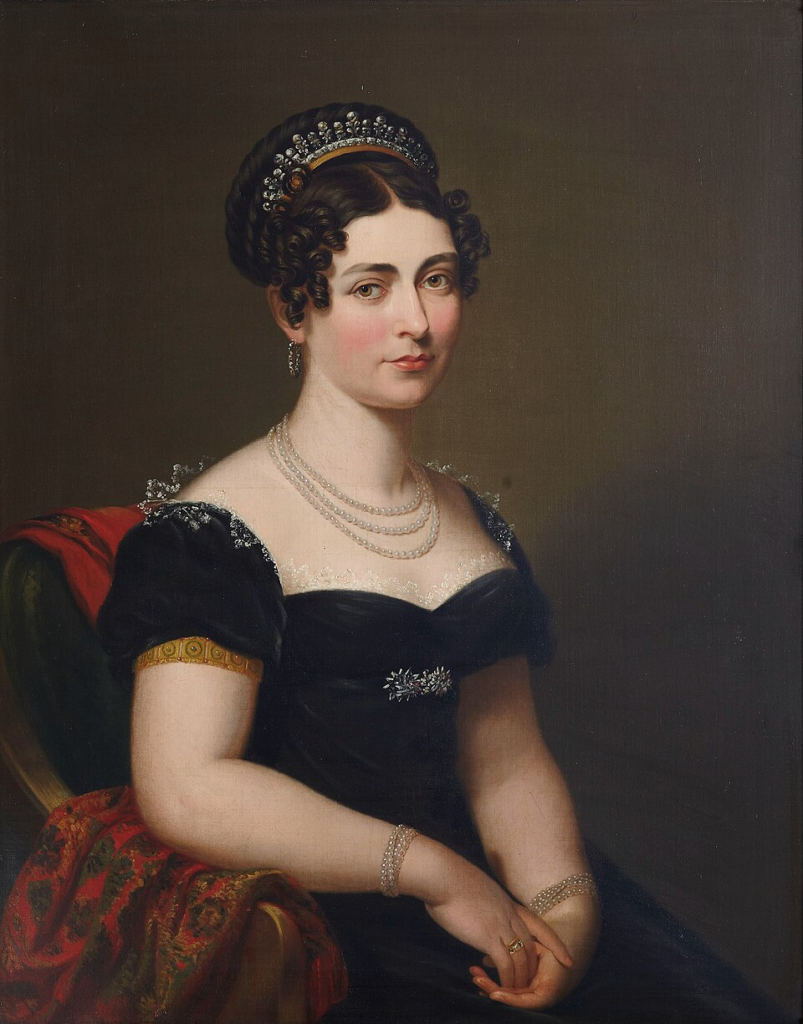
Born the fourth daughter of a minor German duke in 1786, Victoria of Saxe-Coburg-Saalfeld married twice into European royalty, governed a principality as regent, and designed an elaborate system of isolation around the future Queen Victoria that the two women spent two decades trying to undo.On the morning of June 20, 1837, the Archbishop of Canterbury and the Lord Chamberlain arrived at Kensington Palace just after six o’clock.
King William IV had died at Windsor in the small hours, and his niece, Princess Victoria, was now Queen of the United Kingdom.She was 18 years old. She asked for half an hour alone.It was the first such half-hour of her life. From the night of her birth, Princess Victoria had slept in the same room as her mother, the Duchess of Kent. She had never walked down a staircase without holding someone’s hand. She had been denied contact with most of her royal relatives.
Every visitor, every journey, every hour of the day had been governed by a set of rules designed to keep her utterly dependent on her mother and on the man who had designed those rules: Sir John Ponsonby Conroy, the Duchess’s ambitious comptroller.The system was called the Kensington System. It had been operational for nearly 18 years. That morning, it collapsed.Queen Victoria did not share a bedroom with her mother again.
A German Princess Married Her Aunt’s Widower
Marie Louise Victoire was born on August 17, 1786, in Coburg, then part of the Holy Roman Empire. She was the fourth daughter and seventh child of Franz Frederick Anton, Duke of Saxe-Coburg-Saalfeld, and Countess Augusta of Reuss-Ebersdorf. The duchy was a small but strategically ambitious principality, and through a series of calculated marriages the House of Saxe-Coburg-Saalfeld was climbing toward something larger.
Victoria’s younger brother Leopold demonstrated just how far. In 1831, following Belgian independence, Leopold became the first King of Belgium.Victoria’s own introduction to political marriage came early and, by any measure, strangely. On December 21, 1803, at the age of 17, she married Emich Karl, Prince of Leiningen, as his second wife. He was 40.His first wife had been her aunt, Countess Henriette of Reuss-Ebersdorf.The principality of Leiningen lay in what was then the western edge of Germany, much of it now part of eastern France.
The marriage lasted eleven years and produced two children: a son, Karl, born September 12, 1804, and a daughter, Feodora, born December 7, 1807. When Emich Karl died on July 4, 1814, Karl was nine years old. Victoria was 27. She became regent of Leiningen in her son’s name and governed the principality alone.
A Succession Crisis Reached Coburg
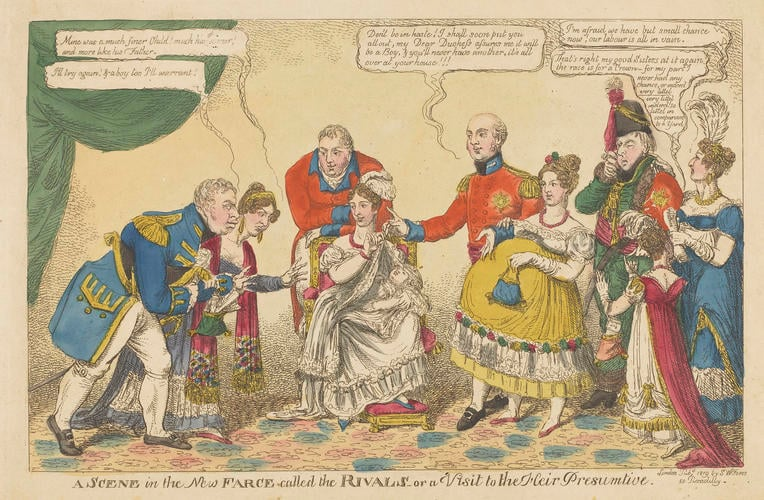
She might have remained there indefinitely. Then, in November 1817, news arrived from Britain. Charlotte, Princess of Wales, the only legitimate grandchild of King George III, had died from complications following childbirth. She was 21. The child died with her.The succession crisis was immediate. George III had fifteen children but only one legitimate grandchild. Without an heir, several of the king’s sons raced to produce one. One of them was Prince Edward, Duke of Kent, the fourth son of George III. He proposed to Victoria. She accepted.
The couple married in two ceremonies: first on May 29, 1818, at Amorbach in Germany, then again on July 11, 1818, at Kew Palace in England, in a joint celebration alongside the Duke of Clarence and his new wife, Adelaide of Saxe-Meiningen. Two royal brothers marrying on the same day, racing toward the same prize.Edward was 50. Victoria was 31. The age difference was approximately 19 years, somewhat less than her first marriage but almost exactly the same pattern.
The couple moved briefly to Germany after the wedding. When Victoria fell pregnant, they returned to England. Their daughter was born at Kensington Palace on May 24, 1819 and named Alexandrina Victoria. Eight months later, on January 23, 1820, Edward died of pneumonia at Sidmouth. Six days after that, King George III died too. The infant Victoria was now third in the line of succession to the throne.She was eight months old. Her mother was a German widow alone in a foreign country, with a baby, a modest apartment in Kensington Palace, and no reliable allies.
Conroy and the Duchess Built a Cage
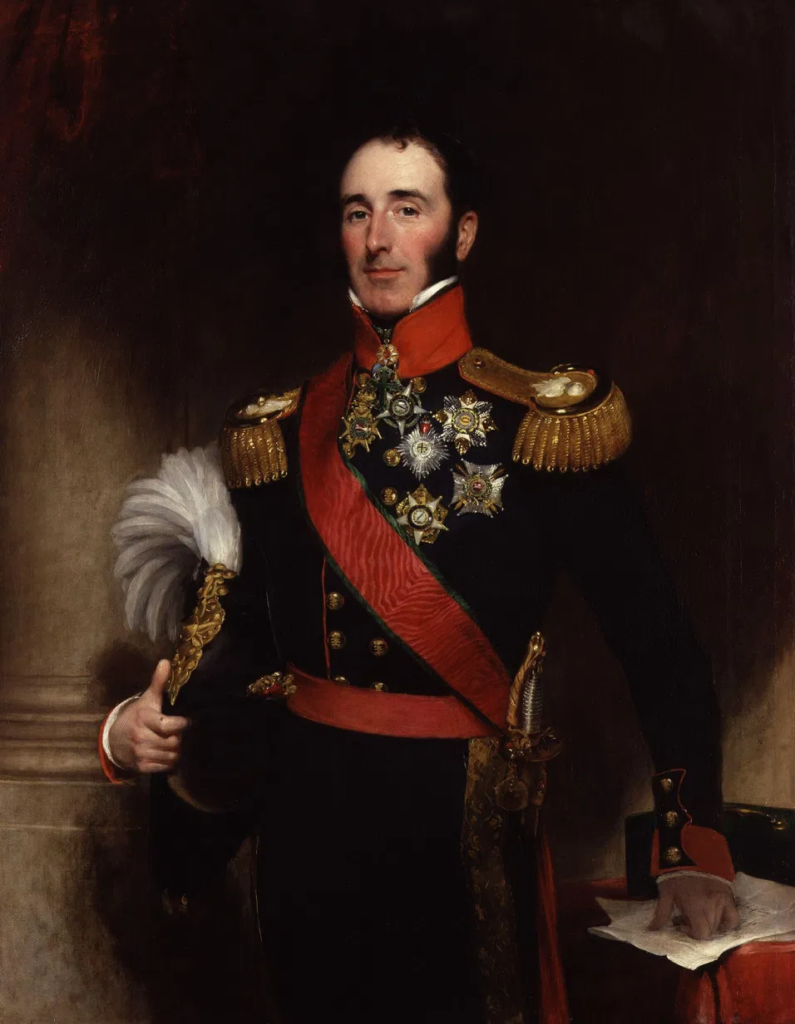
Sir John Ponsonby Conroy had served as equerry to the Duke of Kent before his death and maneuvered his way into the position of comptroller and private secretary to the Duchess afterward. What he wanted, according to historians who have studied the period, was influence over a future queen. To achieve it, he needed the Duchess to depend on him entirely, and he needed the future queen to arrive on the throne needing them both.He persuaded the Duchess that the royal family intended to separate her from her daughter.
He manufactured a justification for total control. Parliament, he argued, was indifferent to the Duchess’s interests; the royal family, which had provided only a modest household allowance, had demonstrated as much. The Duchess, isolated and genuinely anxious, listened.The result was the Kensington System: a regime in which Princess Victoria slept in her mother’s room every night, never walked the stairs without holding a hand, never met members of the royal family without supervision, and never passed a waking hour without an adult keeper present. Conroy was known to bully and demean the young princess directly.
He attempted, during a period of serious illness in 1835, to force Victoria to sign a document appointing him her personal secretary when she became queen. She refused.The princess’s only childhood companions were Baroness Lehzen, her German governess, and the Conroy children. She distrusted Victoire Conroy in particular, convinced that Victoire reported their conversations to her father. Her only genuine friendship in those years was with her half-sister Feodora, who had left England in February 1828, at the age of 20, upon her marriage to Ernst I, Prince of Hohenlohe-Langenburg. Feodora later wrote to Victoria that she had “escaped some years of imprisonment, which you, my poor dear sister, had to endure after I was married.”
King William Called His Sister-in-Law Incompetent
By the 1830s, the Kensington System had generated its own political turbulence. In 1830, George IV died and was succeeded by his brother, who became King William IV. William also had no legitimate heir. Princess Victoria became heir presumptive. The prospect of a regency governed by the Duchess and Conroy began to alarm those who understood what was happening inside Kensington Palace.
Court gossip held that Conroy and the Duchess were lovers. William IV privately called Conroy “King John.” He grew furious at what he read as deliberate provocation: Conroy had organized a series of royal tours presenting the future queen to her future subjects while studiously limiting her contact with the current kinThe tours created public goodwill for the princess and public resentment in the palace.The confrontation came at the king’s birthday banquet in August 1836, attended by a hundred guests, including the Duchess and Princess Victoria. After the toasts, William rose to speak.
The Duchess sat at his right hand.He said: “I trust to God that my life may be spared for nine months longer… I should then have the satisfaction of leaving the exercise of the Royal authority to the personal authority of that young lady, heiress presumptive to the Crown, and not in the hands of a person now near me, who is surrounded by evil advisers and is herself incompetent to act with propriety in the situation in which she would be placed.”The Duchess sat in silence. Princess Victoria wept at the table.William IV survived his birthday banquet by less than a year. He died on June 20, 1837, weeks after Victoria turned 18. His dying wish had been fulfilled. The Duchess of Kent would not become regent.
Victoria Acceded and Closed the Door
The new queen’s first act of governance was to refuse Sir John Conroy a position in her household. Her second was to move to Windsor Castle without her mother.The Duchess was given separate apartments at Buckingham Palace. She would later recall, in letters, the isolation she felt in those years. Queen Victoria felt something considerably different. At her coronation on June 28, 1838, according to accounts of the ceremony, she greeted her aunt, the dowager Queen Adelaide, with an embrace, and acknowledged her mother with a handshake. The rift was not subtle.
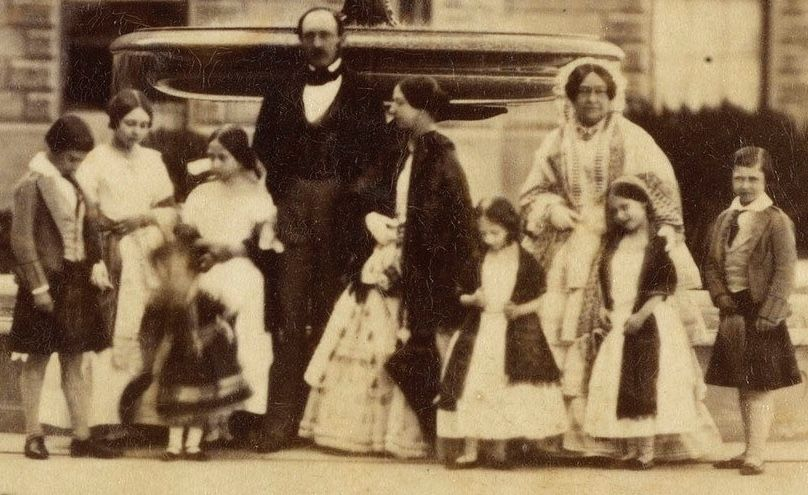
Relations began to improve only after Victoria’s marriage to Prince Albert of Saxe-Coburg and Gotha on February 10, 1840. Albert was the Duchess’s nephew, and he worked quietly to repair what had been broken. Conroy, stripped of his household position, gradually retreated from court. With him gone, the architecture of the Kensington System had no engineer.
The Duchess became a grandmother. The grandmother grew into the role. It was she who noticed, around 1855, that the young Prince Leopold, one of Victoria and Albert’s children, was struggling with inexplicable and prolonged recoveries from ordinary childhood falls, repeatedly confined to his nursery for days at a time. The condition that was eventually identified as haemophilia would spread through Europe’s royal lines across the following decades.
The Diaries Revealed What Words Had Hidden
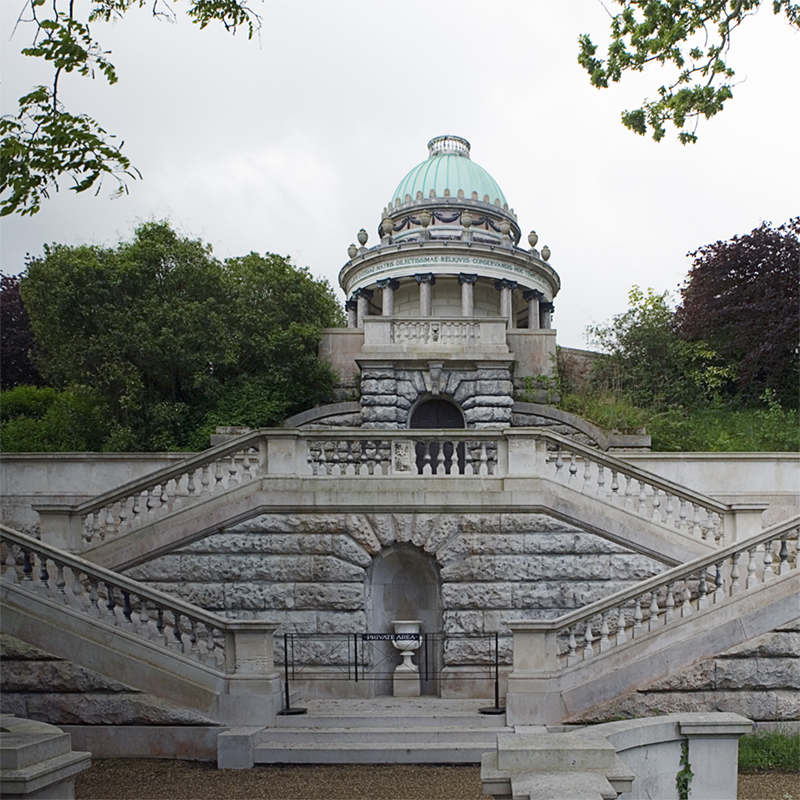
Victoria, Duchess of Kent, died on March 16, 1861, at Frogmore House, Windsor. She was 74. The cause was cancer. She was interred temporarily at the Royal Vault of St George’s Chapel before being moved on August 1, 1861 to the Duchess of Kent’s Mausoleum at Frogmore.In the weeks after her mother’s death, Queen Victoria went through the personal papers. What she found could not be reconciled with the story she had told herself for 20 years.
The letters and diaries were full of love: unqualified, anxious, devoted love for a daughter whom the Duchess had been terrified, since the night of Edward’s death, of losing. Every controlled staircase, every monitored visitor, every shared bedroom had been accompanied, in the private record, by a woman who believed she was the only thing standing between her child and a court that wished to take her.The Duchess had been right that the environment was hostile. She had been wrong, or manipulated, about almost everything else.
Queen Victoria went into mourning. Less than nine months later, Prince Albert died. In the years that followed, she grew obsessively attached to her youngest child, Princess Beatrice, whom she raised within her own household and refused for decades to allow to marry. Beatrice did not leave her mother’s side until the age of 28.The daughter who had spent 18 years breaking down a door had become the mother who would not open one.
Leave a Reply