
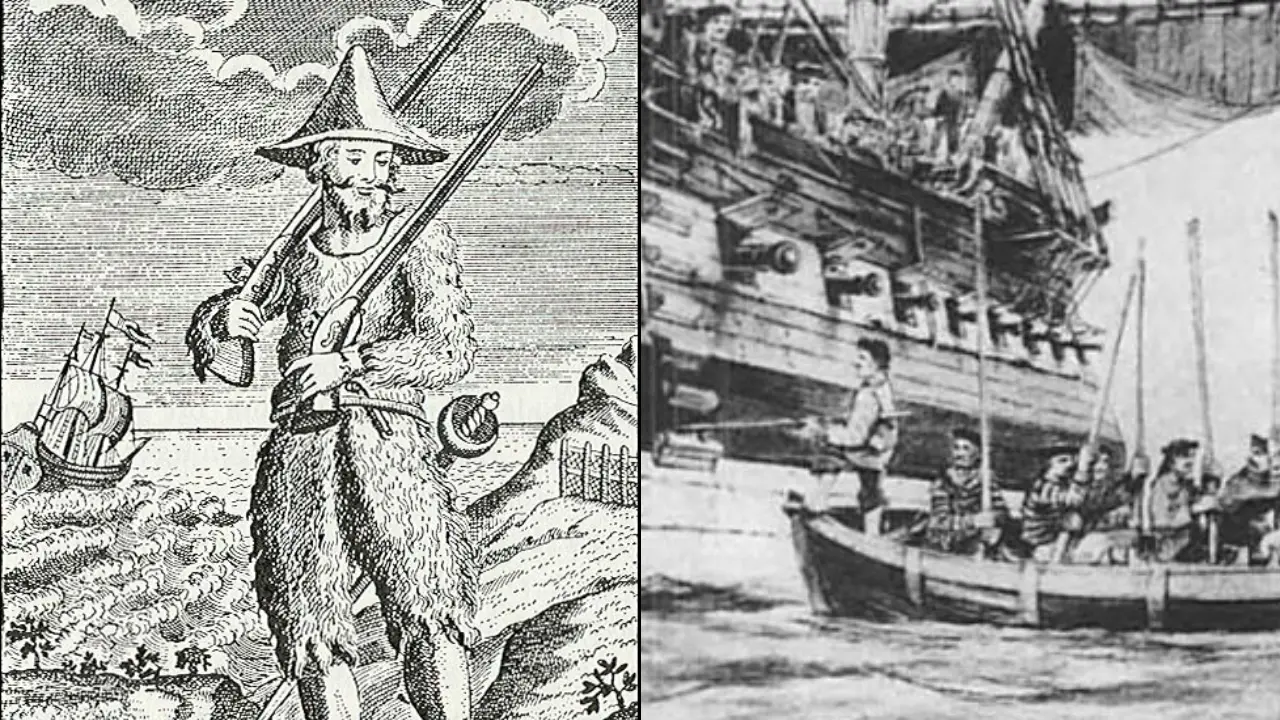
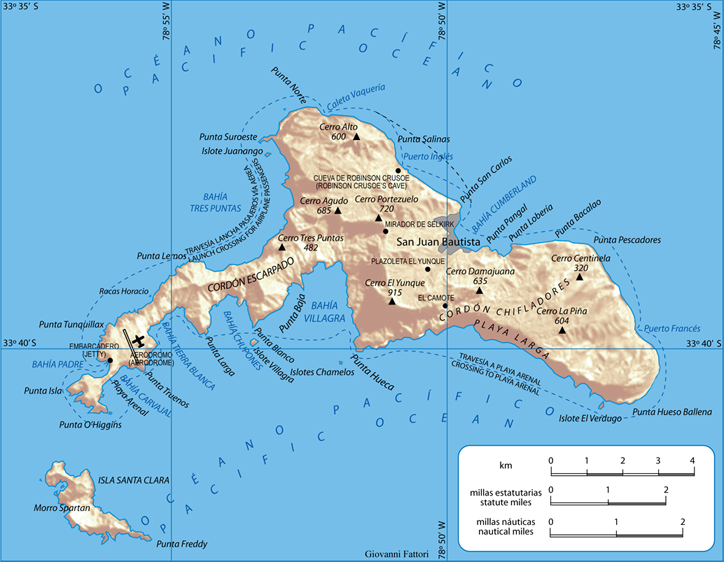
In September 1704, on a remote island 670 kilometres off the coast of Chile, a Scottish sailor stood on the shoreline and watched his ship sail away without him. He had demanded to be left behind. He had declared that he would rather take his chances on an uninhabited rock in the South Pacific than continue aboard a vessel he considered too leaky to survive. The captain had called his bluff.
As Cinque Ports shrank to a dark shape on the horizon, Alexander Selkirk understood the full weight of what he had done. He was 28 years old. The nearest human being was over 600 kilometres away. He would not see another friendly face for four years and four months.
A Scottish Troublemaker Joins the South Pacific Privateers
Alexander Selkirk was born in 1676 in Lower Largo, a small fishing village in Fife, Scotland. His father was a shoemaker and tanner. From early youth, Selkirk displayed what the Kirk Session of his local church formally recorded, in August 1693, as “indecent conduct in church.” He did not appear to answer the charge. He had already gone to sea.
He returned to Lower Largo in 1701 long enough to assault his brothers and draw the attention of church authorities again. Then he was gone once more. By the time he joined the privateer William Dampier’s South Pacific expedition in 1703, setting sail from Kinsale, Ireland, on 11 September, he was an experienced sailor with a reputation for quarrelsomeness that would eventually strand him on an island alone.
Dampier commanded St George. Selkirk served as sailing master aboard Cinque Ports, the companion vessel, under Captain Thomas Stradling. Their letters of marque from the Lord High Admiral authorised their armed merchant ships to attack foreign shipping during the War of the Spanish Succession. In theory, it was sanctioned plunder. In practice, the expedition fractured almost from the beginning.
The two ships fought an inconclusive battle with a French vessel that escaped to warn the Spanish. A raid on the Panamanian gold mining town of Santa María failed in an ambush. When the expedition captured a laden merchantman called Asunción, Dampier abruptly set it free, judging the prize not worth the effort. In May 1704, Stradling broke from Dampier entirely and sailed on alone.
Selkirk had grave doubts about the ship beneath him. He was right to have them.
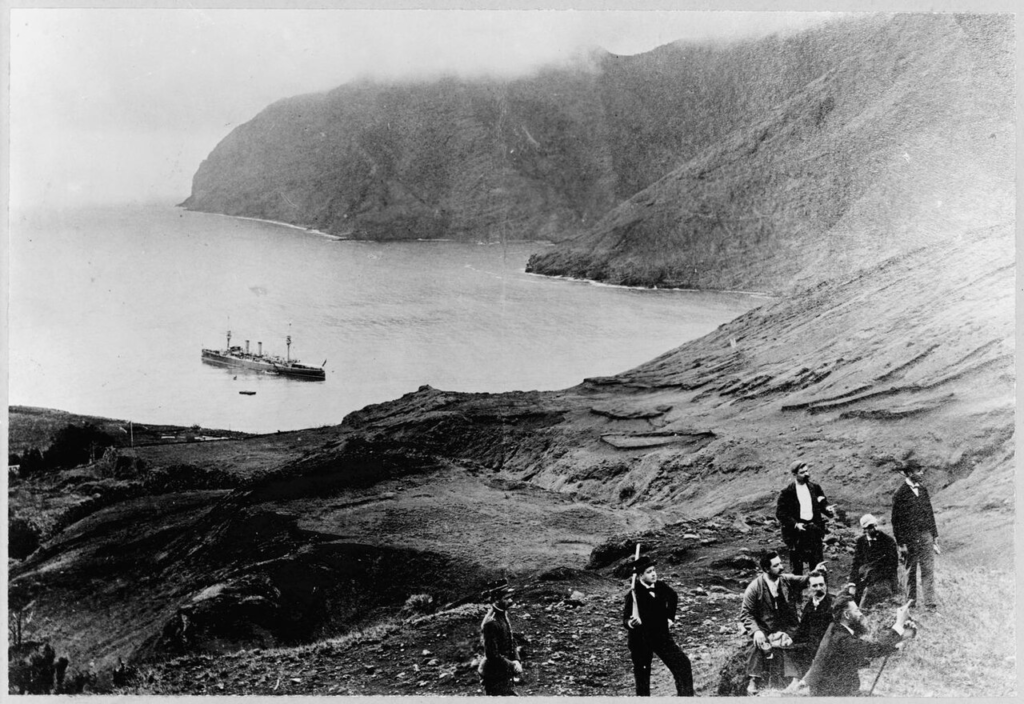
Selkirk Demanded to Be Left Behind and Immediately Regretted It
In September 1704, Cinque Ports put in at Más a Tierra, an island in the Juan Fernández archipelago, for a resupply of fresh water and provisions. Selkirk examined the vessel’s condition and declared the ship dangerously unseaworthy. He announced he would rather stay on the island than continue in a leaking hull heading deeper into the Pacific.
Stradling took him at his word.
Selkirk stepped ashore with a musket, a hatchet, a knife, a cooking pot, a Bible, bedding, and some clothes. The moment Cinque Ports made sail, he understood his mistake. He ran to the water’s edge and begged to be taken back. Stradling refused.
The ship later foundered off the coast of what is now Colombia. Stradling and a handful of survivors were captured by the Spanish and taken to Lima, where they endured years of harsh imprisonment before eventually returning to England. Selkirk knew none of this. He stood on his empty beach, alone, scanning an ocean that offered nothing.
Four Years Alone Turned a Sailor Into a Wild Man
At first, Selkirk barely left the shoreline. He ate spiny lobsters, scanned the horizon daily for rescue, and suffered from loneliness and remorse. Then the sea lions arrived. Enormous and raucous in the mating season, they drove him from the beach into the island’s interior. It was the best thing that could have happened to him.
The interior proved far more hospitable. Feral goats, introduced by earlier sailors, provided meat and milk. Wild turnips grew in abundance. The leaves of indigenous cabbage trees were edible, and dried Schinus fruits offered variety. Selkirk built two huts from pepper trees: one for cooking, one for sleeping. He forged a new knife from barrel hoops left on the beach. When his gunpowder ran out, he hunted goats on foot.
During one chase, he tumbled from a cliff and lay unable to move for about a day. His prey had broken his fall. It probably saved his back.
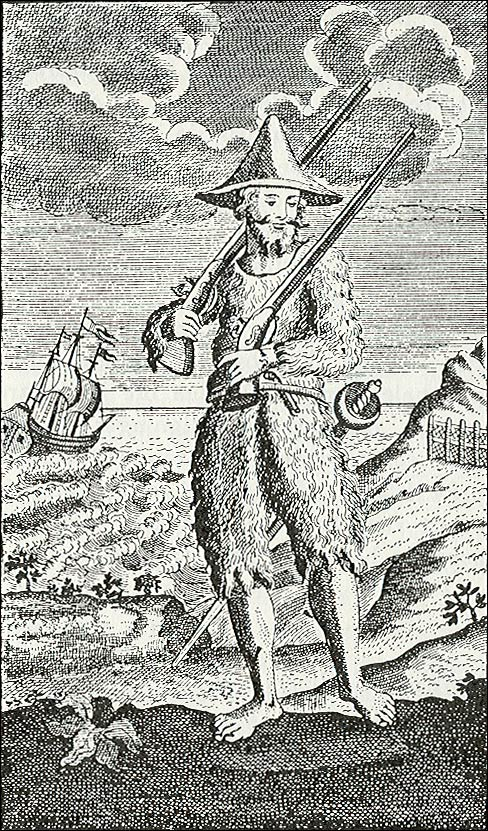
His childhood served him in ways he could not have anticipated. His father’s tanning work had taught him to work leather. When his clothes wore out, he sewed new garments from goatskins using a nail as a needle. His feet toughened until he no longer needed shoes. He read his Bible and sang psalms, keeping his faith and his English intact. Feral cats, gradually tamed, kept the rats from attacking him at night.
Two Spanish ships anchored during his time on the island. Both times, Selkirk hid. As a British privateer, capture would have meant imprisonment in Spanish colonial hands. Once, Spanish sailors chased him into the trees. His pursuers urinated at the base of the tree he was hiding in and sailed away without looking up.
He was on the island for four years and four months. By the time rescue came, he was lean, darkly tanned, and dressed entirely in goatskin. He had become something the civilised world had never quite seen before.
Woodes Rogers Pulled a Governor Off His Island
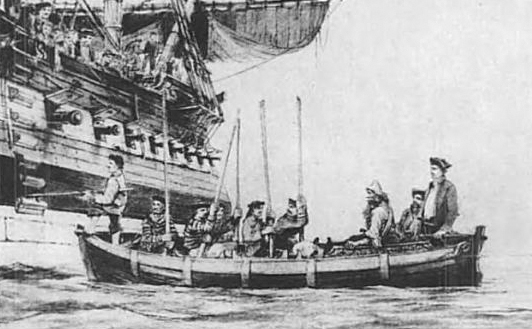
On 2 February 1709, the privateer vessel Duke anchored off Más a Tierra. Thomas Dover led the landing party ashore. They found a man who was, after four years without human contact, almost incoherent with joy.
Duke’s captain was Woodes Rogers, and he was accompanied by William Dampier, the same man whose 1703 expedition had set the entire story in motion. Dampier confirmed Selkirk’s identity. Rogers, with dry humour, referred to the castaway as the governor of the island.
Selkirk was catching two or three goats a day. The expedition’s crew had developed scurvy. He restored their health. Rogers observed him carefully and noted that “solitude and retirement from the world is not such an insufferable state of life as most men imagine, especially when people are fairly called or thrown into it unavoidably, as this man was.”
Rogers made Selkirk Duke’s second mate, later giving him command of a prize ship. Selkirk returned to privateering without hesitation. At Guayaquil, in present-day Ecuador, he led a boat crew upriver to loot gold and jewels that wealthy Spanish women had hidden inside their clothing. He served as sailing master aboard the captured Spanish galleon Nuestra Señora de la Encarnación y Desengaño, renamed Bachelor, on a voyage to the Dutch East Indies. He completed a full circumnavigation of the globe, arriving off the English coast on 1 October 1711.
He had been away for eight years.
Daniel Defoe Stole His Life and Made It Immortal
Britain was fascinated. Edward Cooke, a fellow crewman, included Selkirk’s account in his 1712 book chronicling the expedition. Rogers published a more detailed version within months. Richard Steele wrote a feature about him in The Englishman newspaper. Selkirk claimed his share of the plunder, approximately £800, roughly equivalent to £140,000 today, though legal disputes made the exact payment uncertain.
He was celebrated. He was also miserable.
“I am now worth eight hundred pounds,” he reportedly said, “but shall never be as happy as when I was not worth a farthing.”
In September 1713, he was charged with assaulting a shipwright in Bristol. He returned to Lower Largo, where he met a young dairymaid named Sophia Bruce. They eloped to London and married on 4 March 1717. He was soon at sea again, having joined the Royal Navy. In 1720, while visiting Plymouth, he married a widowed innkeeper named Frances Candis, the question of his first marriage apparently unresolved.
He served as an officer aboard HMS Weymouth on an anti-piracy patrol off the West African coast. As the ship moved south, men began contracting yellow fever and typhoid from the mosquito-thick forests near Cape Coast Castle. By September 1721, a makeshift hospital had been erected on shore. Selkirk fell ill in November. He died on 13 December 1721, aged 45. He and a shipmate named William King were buried at sea. Three more crewmen died the following day.
In 1719, Daniel Defoe had published The Life and Surprising Adventures of Robinson Crusoe. Crusoe’s island is set in the Caribbean, not the Pacific, and most literary scholars now accept that Selkirk was one of several survival narratives Defoe had absorbed rather than the sole direct source. But the novel’s first illustration showed a solitary man standing on an island’s shoreline, dressed in rough goatskins, staring inland.
Selkirk had said it himself, in the clearest terms he could manage, years before the fever took him. Civilisation, wealth, and celebrity had not made him whole. The island had. He was buried somewhere in the Atlantic, in a grave with no marker, while Robinson Crusoe lived on.
Leave a Reply