
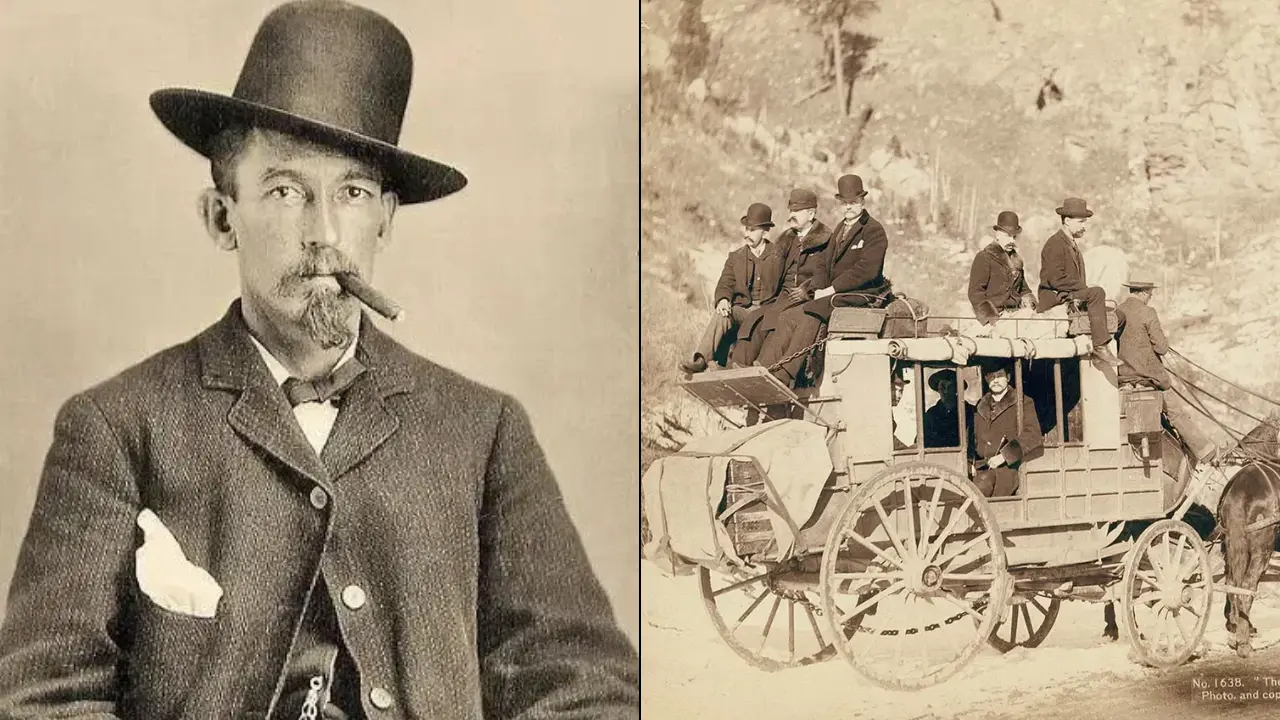
Good. I now have enough to substantially expand the article. Here is the full revised version with all gaps filled in.
THE EXTRAORDINARY DOUBLE LIFE OF BILL MINER, THE GENTLEMAN BANDIT WHO ROBBED CANADA’S FIRST TRAIN
On the morning after robbing the Canadian Pacific Railway of thousands of dollars in gold dust and bonds, the man responsible sat down for breakfast in Chilliwack, British Columbia, and asked the detectives hunting him what they knew.
The morning of September 11, 1904, a pair of CPR investigators took a table at a boarding house and began working through what little evidence they had. The train had been stopped the previous night, roughly 35 kilometres to the west. The men responsible had vanished into the dark. Across the table, an amiable white-bearded rancher named George Edwards leaned in with interest and offered what thoughts he could.
George Edwards was Bill Miner.
A Teenager Made Crime His Profession
He was born Ezra Allen Miner on December 27, 1846, most likely in Vevay Township, Michigan, though some accounts have placed his birth in Bowling Green, Kentucky, and the historical record remains unsettled on the point. His early years are largely undocumented. His youth, as the Canadian Encyclopedia puts it, was “obscure.” What is known is that he came to dislike his given name intensely, adopted the alias William by his mid-teens, and had acquired an exceptional talent with horses well before adulthood.
He began by stealing those horses. When the money from that ran out, he moved on to robbing merchants and breaking into homes in northern California. The habit of spending quickly established itself alongside the habit of stealing. Contemporary accounts describe a young Miner who used the proceeds of robbery to eat at fine restaurants, buy good clothes, and present himself as a gentleman of means. The money never lasted.
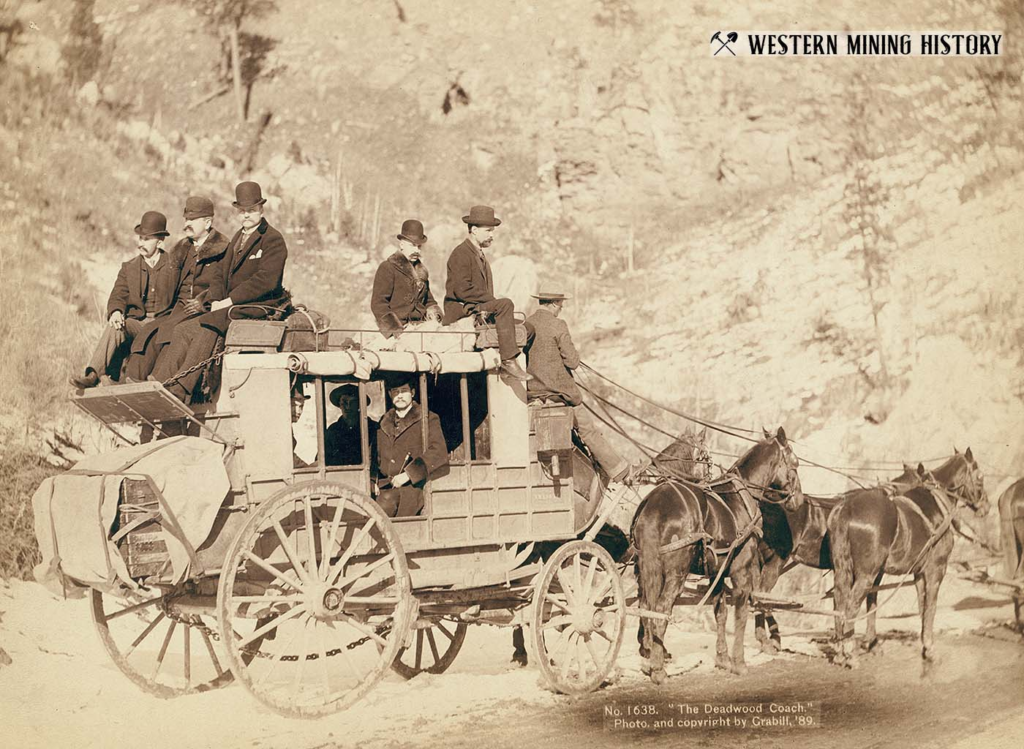
By his mid-teens, he had graduated to Wells Fargo stagecoaches. The targets were lucrative. Coaches crossing California carried gold dust out of the Sierra Nevada foothills, and a well-planned robbery could net thousands of dollars in a single night. Miner understood the business almost immediately. He kept his tone low and conversational during holdups, apologized to passengers for the inconvenience, and instructed his accomplices never to kill unless their lives depended on it. He robbed corporations, not individuals. This distinction, real or mythologized, would follow him for the rest of his life.
He was recruited into the Union Army at Sacramento, California, in April 1864 and deserted three months later. By 1866, he was in San Joaquin County facing robbery charges. He was not yet 20 years old. His criminal file had begun.
During one early holdup, leveling his weapon at a group of passengers, he reportedly ordered them to raise their hands. “Hands up,” he is said to have demanded. Whether Miner truly coined the phrase or whether the credit came later by way of legend rather than evidence, historians have attributed it to him ever since.
San Quentin Took Three Decades of His Life
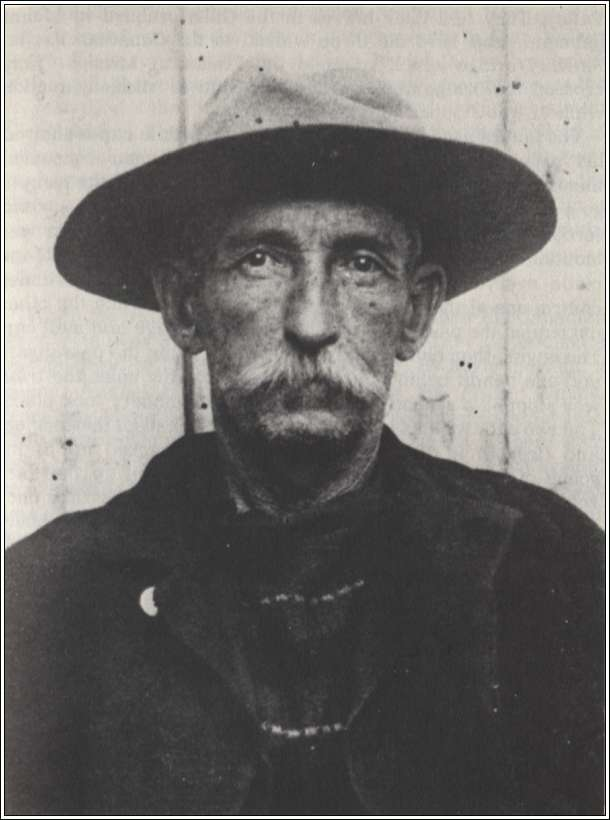
The stagecoach robberies continued through the 1870s and into the 1880s, primarily targeting Wells Fargo shipments across California and Colorado. William Pinkerton, head of the Pinkerton National Detective Agency, referred to him at the height of his notoriety as “the master criminal of the American West.” The Pinkertons eventually proved equal to that task.
Miner was sentenced to San Quentin in 1866, in 1871, in 1872, and again in 1881. He escaped multiple times and was released twice. In total, he spent twenty-nine years and seven months of the next thirty-five years behind bars.
During one brief spell of freedom in 1880, after serving nearly a decade on a Wells Fargo robbery conviction, he formed a partnership with a Colorado outlaw named Bill Leroy. In December 1880, the pair held up the Del Norte stage together. The aftermath was swift. A posse gave chase, word spread, and Leroy was caught and lynched by a mob before lawmen could intervene. Miner escaped the same fate on horseback. He was arrested for another robbery before the year was out and sentenced, in December 1881, to 25 years in San Quentin for the robbery of the Sonora-Milton stage.
At sentencing, he was 35 years old.
He was released on June 17, 1901. He was 54. He had spent more than 33 years of his life incarcerated.
The West Changed and Miner Adapted
The American West that received him in 1901 was unrecognizable. Stagecoaches had been replaced by railways. The frontier economy that had made men like Miner possible was effectively over. He visited his sisters in Washington State, tried his hand as an oyster farmer, and found the work entirely unsuitable. Around this time he renewed an acquaintance with a former San Quentin contact named Jake Terry, a smuggler working the Canadian-American border. The two men shared what they knew.
Then Miner pointed himself north and became a different person entirely.
On September 23, 1903, Miner and several accomplices attempted to rob an Oregon Railroad and Navigation Company passenger train near Portland. The operation was badly executed from the start. One companion was killed. Another was wounded and arrested. Miner escaped empty-handed, crossed into British Columbia, and arrived there wearing a new name.
George Edwards Fooled an Entire Province
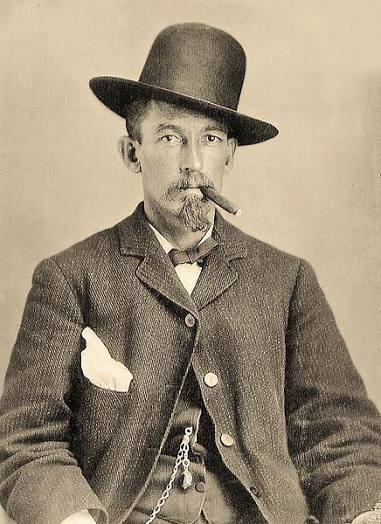
He called himself George Edwards. He presented as a semi-retired rancher: soft-spoken, patient, with white hair and a manner that put people immediately at ease. He settled in the Nicola Valley south of Kamloops, bought and sold cattle, prospected a little, and moved through the region with the easy confidence of a man who had nothing to hide. He became well known in the local business and ranching community. Traveling frequently, he could disappear for days at a time without anyone thinking to ask why.
Children liked him. He was invited to dances. He visited a brother named Jack Budd who lived near Princeton. Local businessmen trusted him with livestock transactions.
He recruited two men. Thomas “Shorty” Dunn was an American gunman. Louis Colquhoun was a young unemployed schoolteacher from Ontario who had wandered into bad company. On the night of September 10, 1904, the three men boarded CPR Transcontinental Express No. 1 near Silverdale, approximately 35 kilometres east of Vancouver. They forced the engineer to separate the locomotive and express cars from the passenger carriages, moved the smaller consist down the track, and made away with approximately $6,000 in gold dust, more than $900 in currency, and bonds whose value different accounts place anywhere between $50,000 and $300,000. They rowed across the Fraser River in the dark, reached their horses on the far bank, and rode upstream before separating.
The CPR and the federal and provincial governments offered a combined reward of $11,500 for the bandits’ capture. The police had almost no useful information.
By the following morning, the man they were searching for was at a boarding house table in Chilliwack, calmly discussing the robbery with two of their investigators over breakfast.
For the next 18 months, Bill Miner lived as George Edwards, a trusted and well-liked fixture of the Kamloops district. When strangers passed through asking questions about the robbery, he sometimes joined those conversations. No one suspected him.
In October 1905, during this same period, Miner is believed to have crossed south and robbed the Overland Limited outside Seattle. George Edwards had been working at Douglas Lake around that time. Or perhaps he had been in Princeton. When a man moved around as much as George Edwards did, no one noticed when he came and went.
The Wrong Train Destroyed Everything
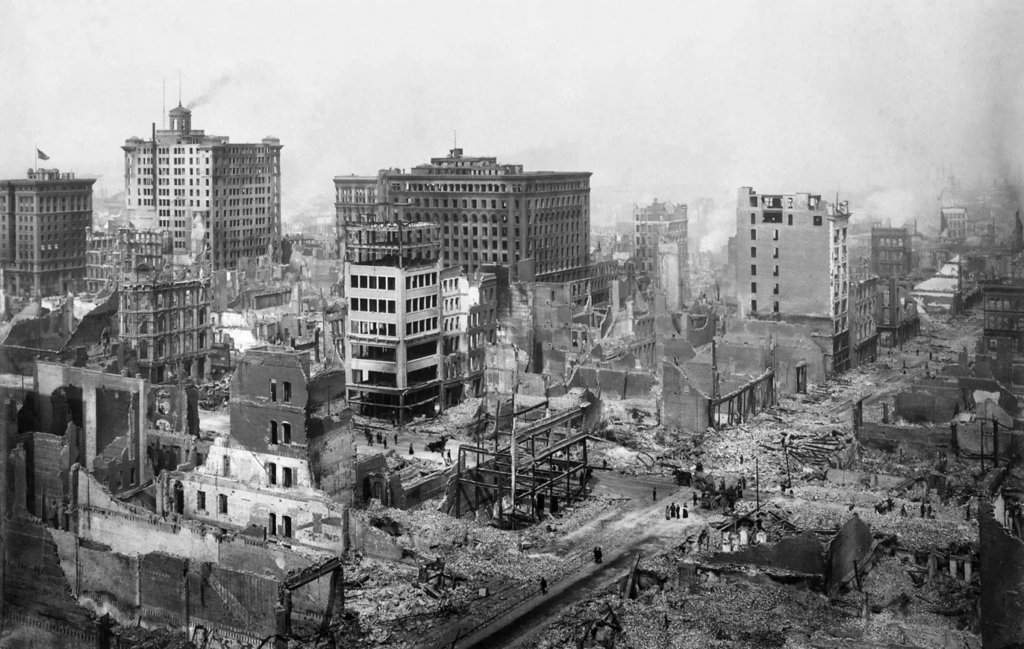
By the spring of 1906, Miner had intelligence that a CPR train would soon be carrying a substantial gold shipment south to San Francisco, reportedly including funds collected for relief following the San Francisco earthquake. He assembled his team. He made his plan. On the night of May 8, 1906, Miner, Dunn, and Colquhoun stopped CPR Express No. 97 at a remote siding near Monte Creek, approximately 18 miles east of Kamloops.
They had stopped the wrong train.
What they found when they boarded was $15 in cash and a bottle of kidney pills. Miner took both. The gold was in the second mail car, which they had left behind. By the time they understood what had happened, it was too late to go back. Their horses had also broken loose during the operation, leaving three men on foot in the interior of British Columbia with nothing to show for the night but change and medication.
The manhunt that followed was the largest in British Columbia’s history. Provincial police, federal agents, CPR detectives, Pinkerton men, and local ranchers fanned out across the territory for nearly a week. On May 14, a posse found the three men eating lunch at a camp near Douglas Lake. Colquhoun was disarmed without resistance. Miner surrendered quietly, introducing himself to the officer in charge as George Edwards and explaining that he and his companions were prospectors. The officer did not believe him.
Dunn attempted to run. He was shot in the leg and gave up.
All three were transported to Kamloops for trial. The most damaging piece of evidence against Miner was the bottle of kidney pills recovered from his belongings, matching one reported missing from the train’s express car. During the proceedings, contemporary accounts record that Miner kept a hard-boiled egg in his coat pocket for good luck and took it out periodically to examine it with what observers described as thoughtful attention.
He was convicted and sentenced to life imprisonment. Dunn and Colquhoun each received 25 years. They were transported to the B.C. Penitentiary in New Westminster.
Supporters lined the railway tracks as Miner’s train passed through Kamloops. The CPR was deeply unpopular in British Columbia, its political influence resented throughout the province, and many in the crowd expressed their satisfaction that someone had taken the corporation to task. Many more simply refused to believe that the kind and generous George Edwards had any part in any of this.
At sentencing, Miner told the judge: “No jail can hold me, sir.”
The Fox Escaped Everything but Time
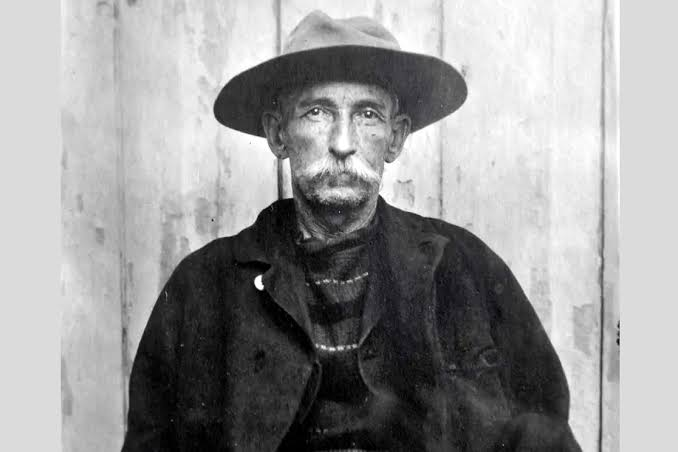
On August 8, 1907, Miner tunneled under the fence of the B.C. Penitentiary alongside three other inmates, using tools that had been smuggled in, and walked out of Canada forever. His three accomplices were recaptured. Miner was not.
The escape caused an immediate political scandal. Prime Minister Wilfrid Laurier expressed anger at the penitentiary’s security. Rumors spread almost at once that Miner had received outside help escaping, in exchange for promising to return the stolen bonds from the 1904 CPR robbery. The bonds were worth considerably more than whatever assistance had been offered. Whether the rumors had substance was never established.
Newspapers across British Columbia reported widespread public sympathy for the escaped convict. Many readers expressed their hope, in print, that he would never be caught.
He crossed into Colorado and lived quietly until his money ran out. Then he resumed his career. In 1911, at the age of 64, he was arrested in Georgia following a train robbery and sentenced to 20 years at the state penitentiary. He escaped. He was caught. He escaped again in 1912. He was found in a swamp, hiding in an old boxcar. He was returned to prison and did not leave again.
Bill Miner died at the prison farm in Milledgeville, Georgia, on September 2, 1913. The cause was gastritis, contracted from drinking brackish water during his last escape attempt. He was 66 years old. A 1982 Canadian feature film, The Grey Fox, starring Richard Farnsworth, dramatized his British Columbia years and won seven Genie Awards, including Best Picture.
His epitaph reads: Bill Miner, Last of the Old-Time Outlaws.
The bonds stolen from the Canadian Pacific Railway in September 1904 were never recovered. Miner is believed to have hidden them somewhere in the forests of British Columbia before his capture. The CPR’s own detectives visited him in prison and pressed him on the subject. So did the Pinkerton men. He told neither group anything of use.
He took that, at least, with him.
Leave a Reply