
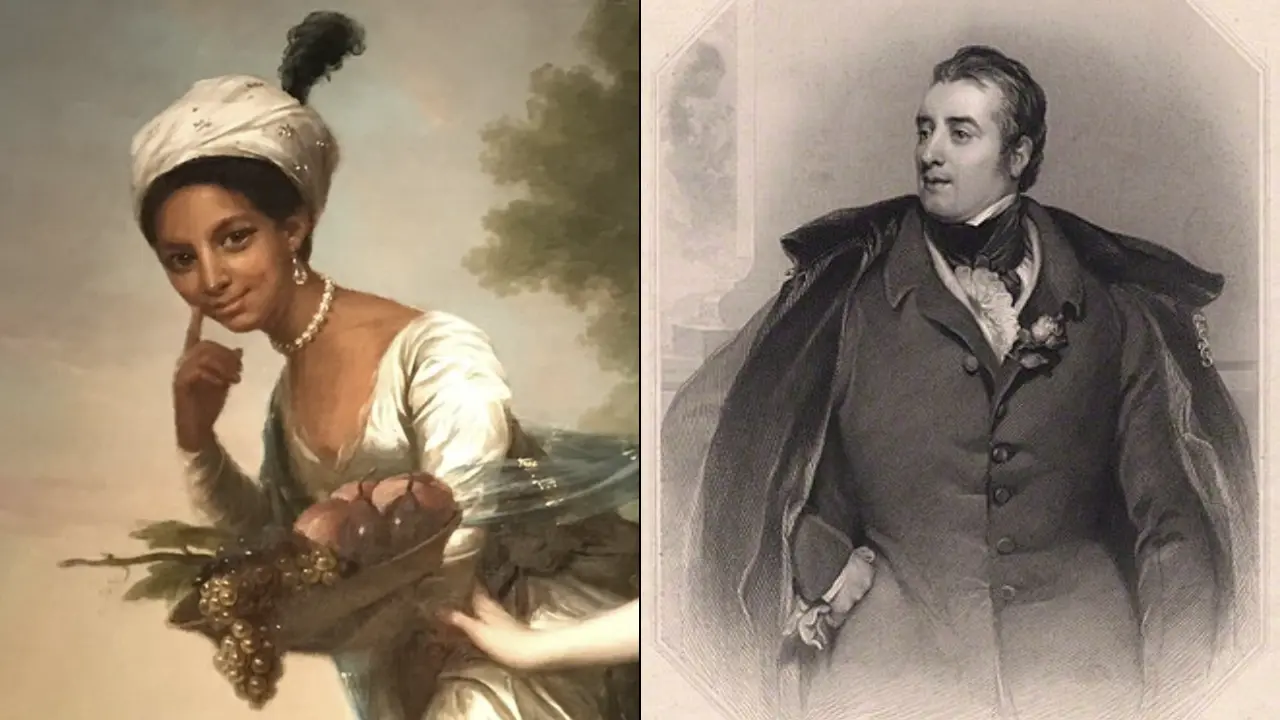
Born in 1761 to a captured teenage slave and a British naval captain who would never publicly claim her, Dido Elizabeth Belle spent thirty years inside the household of England’s Lord Chief Justice educated above her contemporaries, excluded from the world that education should have opened, and present in the room when the men around her decided the legal fate of thousands.
In July 1779, Thomas Hutchinson arrived for dinner at Kenwood House in Hampstead as a guest of William Murray, first earl of Mansfield. Hutchinson had governed the colony of Massachusetts before the American Revolution drove him to London, and he moved at the highest levels of British society. After the meal, a young Black woman walked into the drawing room and sat with the ladies. She linked her arm through another woman’s arm. She strolled with the company through the garden. Lord Mansfield, the Lord Chief Justice of England, called upon her every minute for this and that, and she attended to everything he said.
Hutchinson recorded what he saw in his diary that evening. He noted her high cap. He noted the frizzled hair at her neck. He noted that Lord Mansfield had been, as Hutchinson put it, reproached for showing a fondness for her, and he entered a careful judgment: “I dare say not criminal.”
The woman’s name was Dido Elizabeth Belle. She had lived at Kenwood for more than a decade. English society had no settled vocabulary for what she was.
Lindsay Captured Her Mother From a Spanish Ship
Sir John Lindsay was born in 1737 into a family of Scottish nobility. His father was Sir Alexander Lindsay, third Baronet of Evelix, and his mother Amelia Murray was the daughter of the fifth Viscount of Stormont. John entered the Royal Navy and rose to command, and by the late 1750s he held the rank of captain. The Seven Years’ War had drawn Britain and France into conflict across their colonial territories in North America, India, and the Caribbean, and Lindsay was stationed in the West Indies aboard HMS Trent.
In the early 1760s, Lindsay’s forces seized a Spanish vessel somewhere in those waters. On board was a young enslaved African woman named Maria Belle. The Pensacola property record dated August 22, 1774, later confirmed her age: it described her at that point as “a Negro Woman Slave about 28 years of age,” which placed her at approximately fourteen when Dido was conceived. Historians note that a consensual relationship between a fourteen-year-old enslaved captive and her captor is unlikely.
Dido Elizabeth Belle was born in June 1761. Lindsay brought both mother and child to England in 1765, spending time in Pensacola, Florida, where he was stationed between 1764 and 1765, before the family’s return. In 1766, he deposited Dido into the household of his uncle, William Murray, at Kenwood House. On November 20, 1766, she was baptised as Dido Elizabeth Belle Lindsay at St George’s in Bloomsbury. Her mother’s name appeared in the baptism record.
Lindsay’s did not. Records place him in Jamaica that same month, registering the births of two other illegitimate daughters by two other women. By the end of his life he had fathered at least five illegitimate children by five different women, and he publicly acknowledged none of them. Dido accordingly used her mother’s surname rather than his.
Dido was also not publicly acknowledged as his daughter, so she bore her mother’s surname, Belle, throughout her life at Kenwood.
Maria Belle remained in England until 1774. That year, Lindsay formally paid two hundred Spanish milled dollars for her manumission and transferred a plot of land to her in Pensacola, with the condition that she build a house on it within ten years. After that document, Maria Belle disappears entirely from the record. There is no account of where she went, how she lived, or whether she ever saw her daughter again.
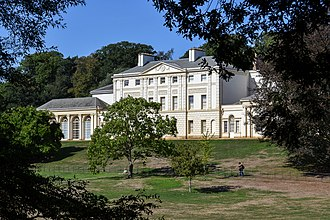
The Mansfields Educated Belle and Excluded Her Equally
Kenwood House stood at the northern boundary of Hampstead Heath, between Hampstead and Highgate, and served as the primary London residence of the most senior judge in England. William Murray and his wife were childless, but they were already raising a great-niece: Lady Elizabeth Murray, born in 1760, whose mother had died. When Lindsay deposited Dido at Kenwood in 1766, the two girls were raised together as second cousins. They shared the estate, they shared tutors, and they received an education that exceeded the standard available to most children of the English gentry, not only women of African descent.
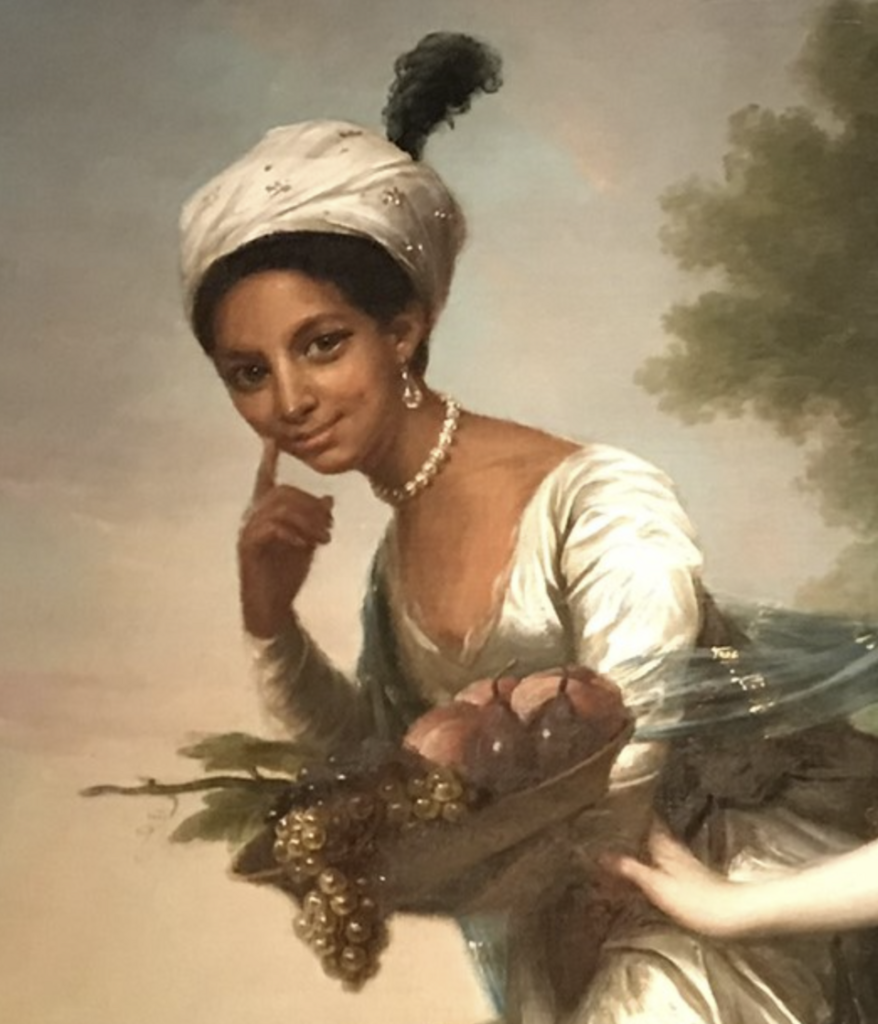
In 1778, the Scottish artist David Martin painted them together at Kenwood. The portrait shows two elegantly dressed young women in a garden setting: Dido, dark-skinned and smiling, holds a bowl of fruit and points toward her companion; Lady Elizabeth turns toward her with an ease that speaks of long familiarity. Historic England has described the painting as unique in eighteenth-century British art for depicting a Black woman and a white woman as near equals.
The key word is near.
Dido managed the dairy and the poultry yard, an occupation typical of ladies of the gentry rather than household servants. In Lord Mansfield’s later years she served as his amanuensis, taking dictation of his personal correspondence, a role conventionally held by a male clerk. James Beattie, a Scottish philosopher who encountered her at Kenwood, later recorded in print that she recited poetry with an elegance that would have been admired in any English child, and noted in a footnote that she had been in Lord Mansfield’s family, performing at his specific request. Beattie did not know she was Mansfield’s great-niece.
Her annual allowance was £20, with additional sums paid at Christmas and on her birthday. Lady Elizabeth Murray received £100 annually. The difference in payment structure compounded the gap: Belle’s allowance was paid quarterly, meaning she received £5 every three months. Lady Elizabeth received £50 every six months. At any given moment, Belle held significantly less purchasing power. For context, a female domestic housekeeper in a high-status London household earned between £20 and £70 a year. A lieutenant in the Royal Navy drew approximately £100.
Belle was not invited to the royal balls Lady Elizabeth attended. When Hutchinson visited in 1779, Dido joined the ladies after dinner in the drawing room rather than sitting at table with the guests. Lady Mansfield’s close friend Mrs. Boscawen visited Kenwood in 1782 and wrote warmly of the family in her letters: “my Lord has gone to London, but my lady and 3 Miss Murrays made me almost forget to go home.” She did not mention Dido. Mary Hamilton, a royal governess and diarist who visited Kenwood repeatedly through the 1780s, described Lord Mansfield, Lady Elizabeth, Lady Elizabeth’s three half-siblings, two unmarried aunts, and the parish priest. Across years of entries, Dido does not appear once.
What these records document, taken together, is not cruelty. It is something more difficult to name: a woman educated beyond her contemporaries, permitted to walk in the garden arm in arm with a cousin, and systematically excluded from every formal event that would have confirmed her as an equal in the world she had been raised to inhabit.
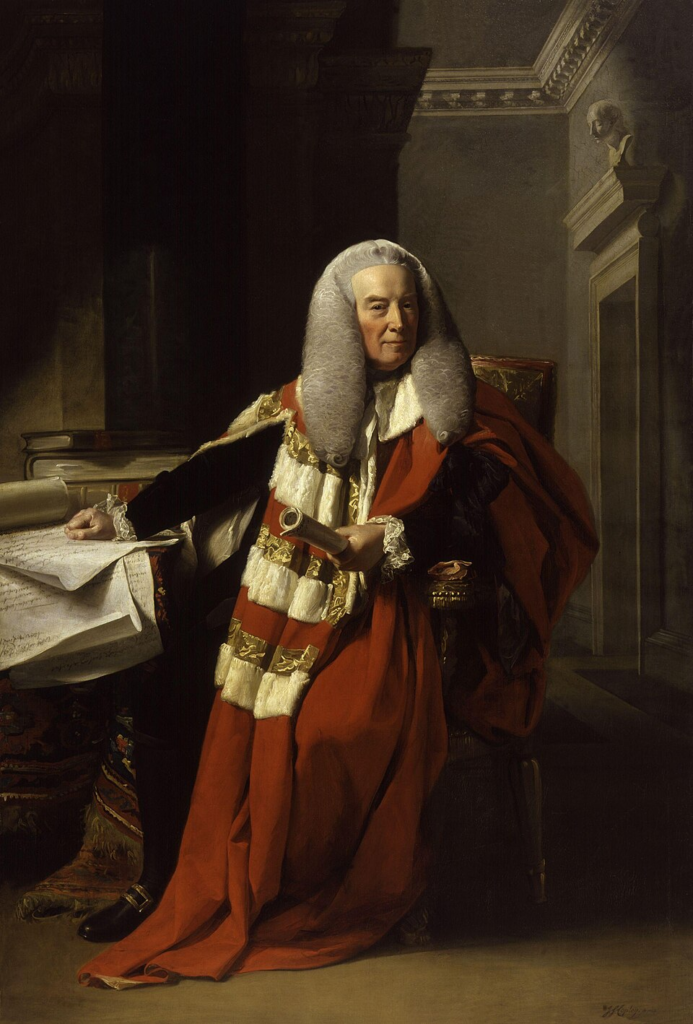
Two Landmark Cases Tested What Mansfield Actually Believed
In 1772, six years after Dido arrived at Kenwood, Lord Mansfield was called to rule on Somerset v Stewart. The case concerned James Somerset, an enslaved man whose owner, a Scottish customs officer named Charles Stewart, intended to send him back to the West Indies for sale. Mansfield attempted to prevent the case coming to trial at all. He suggested that Somerset’s abolitionist supporters purchase his freedom outright and settle the matter quietly. They refused. The trial proceeded.
Mansfield ruled that slavery had no basis in English common law and had never been established by positive law in England. The man, he decreed, must be discharged. He then said publicly that his ruling applied only to the specific case before him and was not intended as a general abolition of slavery in England. Abolitionists immediately seized the Somerset decision as the moment slavery became illegal on English soil and used it to advance their broader cause for the next three decades, extending the ruling well beyond what Mansfield had stated or intended. He was not an abolitionist. He was a judge who had made a limited ruling under sustained public pressure and then spent years attempting to define its precise boundaries.
A Jamaican plantation owner, told of the Somerset decision, reportedly observed that the outcome was predictable: Lord Mansfield, he said, “keeps a Black in his house which governs him and the whole family.” The remark was intended as contempt. Whether Dido Belle’s presence at Kenwood shaped Mansfield’s thinking in the Somerset case is not documented. That London drawing rooms were asking the question during her lifetime is.
Nine years later, in November 1781, the crew of the British slave ship Zong threw 133 enslaved Africans overboard into the Atlantic Ocean off the coast of Jamaica. The captain’s stated reasoning was that the ship had run dangerously low on water and food following navigational errors, and that the insurance policy covering the voyage would pay out for enslaved people lost at sea under specific emergency conditions but would not cover deaths from disease or malnutrition on board. The owners subsequently filed an insurance claim for the lives of those thrown overboard. The case came before Lord Mansfield in 1783.
The case before Mansfield was not a murder trial. It was an insurance dispute. The insurers argued that the massacre was not the kind of maritime emergency that triggered their liability. Mansfield allowed a retrial on narrow grounds relating to the insurance law at issue. No member of the ship’s crew was ever charged with a crime. The Solicitor-General, appearing for the insurers, argued that the deliberate killing of human beings could not be treated as the equivalent of throwing cargo overboard. Mansfield listened.
He ruled on the insurance question. The abolitionist campaign used the Zong case as its most powerful public argument in the years that followed, and it became one of the pivotal events in the sequence of political pressure that produced the Abolition of the Slave Trade Act of 1807.
Lord Mansfield presided over both cases. He did so from a house where a woman born into slavery managed his dairy, took his dictation, walked in his garden, and sat with his family after dinner. What he made of that proximity, and whether he made anything of it at all, he did not record.
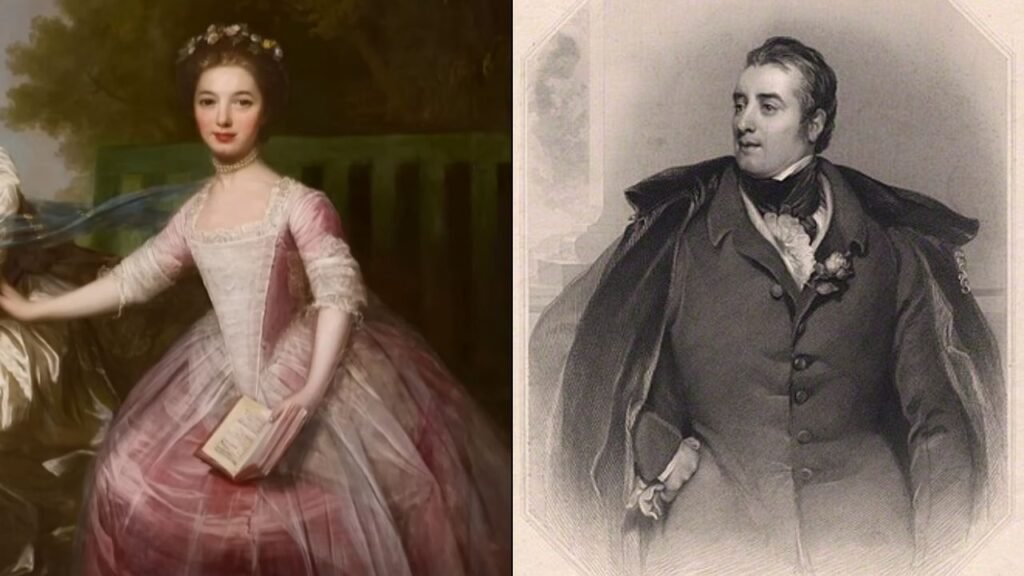
Mansfield’s Death Freed Belle and Fixed Her Worth
Lady Mansfield died in April 1784. Lady Elizabeth Murray married George Finch Hatton, a wealthy aristocratic landowner, in December 1785, and left Kenwood at the age of twenty-five to begin her married life between two vast estates. The companion of Belle’s entire childhood was gone. Lindsay died in 1788 without legitimate heirs. His will left £1,000 to be shared between two of his illegitimate children, John and Elizabeth Lindsay. Dido received nothing, despite being the eldest of his known illegitimate children.
Lord Mansfield died in March 1793. His will, originally drafted in 1782, had been revised before his death. The original draft intended Belle only the £100 annual income. He subsequently added £500 as an outright lump sum, noting: “I give Dido the sum of two hundred pounds to set out with… I think it right considering how she has been bred and how she has behaved to make a better provision for Dido.” The final bequest was £500 outright and a £100 annuity.
He referred to Lady Elizabeth Murray, Lady Anne, and Lady Margery Murray as his nieces. He did not call Dido that. Lady Elizabeth inherited £10,000 directly, with her father in line for the broader Murray estate, placing her total expected inheritance at approximately £40,000.
Mansfield’s will officially confirmed Dido’s freedom. What legal status she had held during his lifetime is uncertain. She had lived at Kenwood for thirty years as a free woman in practical terms, but the legal basis for that freedom had never been formally recorded before the will.
Nine months after Mansfield’s death, on December 5, 1793, Dido Elizabeth Belle, aged thirty-two, married Jean Louis Charles Davinière at St George’s in Hanover Square. Davinière was French, from Ducey in Normandy. He had been baptised on November 16, 1768, making him seven years younger than his wife. He had left France for England in the late 1780s and found work as a valet or steward, the precise terminology varying across sources.
His employer at the time, a man named John Craufurd, later referred to him in his own will as “his valet.” Their wedding at St George’s was witnessed by a local acquaintance and a dairy maid from Kenwood named Martha Darnell. The Kenwood household that had shaped Belle’s entire life sent a dairy worker to stand for her on her wedding day.
The couple settled at 14 Ranelagh Street North in Pimlico, then on the outskirts of London, in a two-room house with a garden. Their neighbours were bakers, gardeners, clock makers, barbers, and butchers. Belle’s £100 annual income, supplemented in 1799 by a further £100 inherited from Lady Margery Murray, one of Mansfield’s unmarried nieces, was sufficient for a modest house outside the city. It would not have kept a female domestic servant in a high-status London household.
Three sons followed. Twins Charles and John were baptised on May 8, 1795. William Thomas was baptised on January 26, 1802. The six-year gap between pregnancies suggests Belle experienced significant illness in the intervening years. During her time at Kenwood, she had received expensive medical care as a matter of course. That provision was gone now.
The Portrait Outlasted Everything She Was Given
Dido Elizabeth Belle died in July 1804, aged forty-three. She was buried at St George’s Fields in Westminster, a burial ground near what is now Bayswater Road. In the 1970s the site was redeveloped. Her grave was relocated. The new location has not been publicly identified.
Two of her sons, William Thomas and Charles, secured employment with the East India Company. William worked in England. Charles went to India, where he served with the Madras Army, rising from ensign in 1811 through lieutenant, captain, and major, before retiring on health grounds as a lieutenant colonel in the mid-1840s. In 1823, a woman named Susan Douse, wife of a former Kenwood servant, left William Thomas a miniature portrait of Lord Mansfield in her will.
The bequest suggests Belle had maintained contact with Kenwood’s household staff until the end of her life: not the family, but the people who worked alongside her. Her last known direct descendant was a great-great-grandson named Harold Davinier, a motor mechanic who died childless in South Africa in 1975 and left an estate of £250.
The David Martin portrait, completed in 1778, spent generations in relative obscurity. Its significance was gradually recognised across the twentieth century, and in 2013 it provided the basis for director Amma Asante’s film Belle, which introduced Dido’s name to a broad international audience for the first time. The film is substantially fictionalised, but the portrait that inspired it is not.
What the portrait shows is two women, both dressed in silk, both positioned with equal assurance in the same garden frame, their arms almost linked, their expressions directed toward each other with something that reads, across nearly two and a half centuries, as uncomplicated warmth. What the records show is the quarterly allowance, the missed dinners, the royal balls attended by one woman and not the other, the will that gave her £500 and a hundred pounds a year and declined to call her family. Hutchinson, the man who sat across from Dido Belle at dinner in 1779, noted in his diary that Lord Mansfield had been reproached for his fondness for her.
He also recorded his own assessment: “neither handsome nor genteel.” He was writing about a woman who had been educated in one of England’s finest private households, who recited poetry at the request of the Lord Chief Justice, who managed an estate dairy and dictated the private correspondence of the most senior judge in England, and whose great-uncle apparently thought it wise to pretend, to a dinner guest, that she was not his great-niece at all.
Hutchinson left Kenwood without knowing that. He had thought she was a Black woman who lived in someone else’s house. She was sitting in her own.
Leave a Reply