
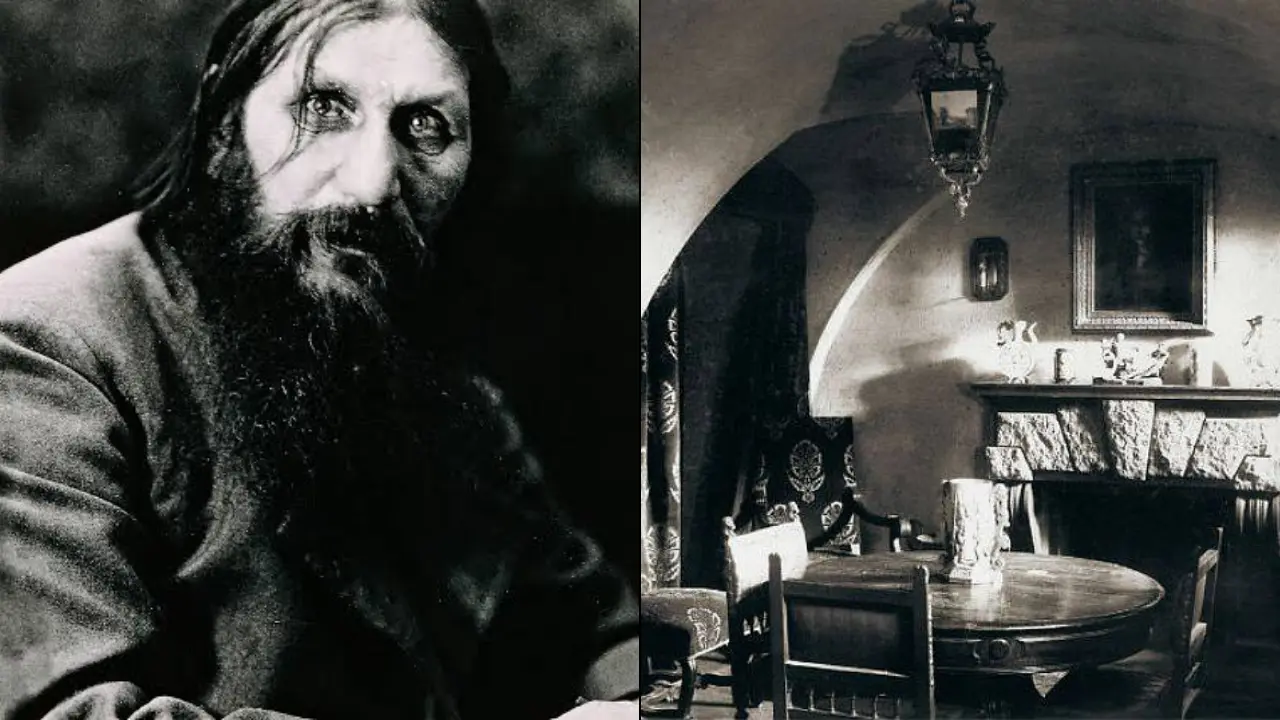
A barely literate Siberian peasant exploited the most closely guarded secret of Russia’s imperial dynasty, became Empress Alexandra’s most trusted adviser, and made himself the most feared and hated man in the empire before three nobles finally managed to kill him in December 1916.
In the summer of 1912, Tsarevich Alexei Nikolaevich was dying. The heir to three centuries of Romanov rule had suffered a hemorrhage following a jolting carriage ride near the imperial hunting grounds at Spała. His thigh and groin swelled grotesquely. Delirious with fever, the young boy lay in agony for eleven days while his doctors watched and admitted they could do nothing.
Empress Alexandra, certain she was about to watch her only son die, turned not to her physicians but to a wandering Siberian peasant monk more than 1,500 miles away in Pokrovskoye. She sent a telegram. Grigori Rasputin sent one back. The bleeding stopped the following day.
Dr. S. P. Fedorov, one of the attending physicians, later confessed: “Rasputin would come in, walk up to the patient, look at him, and spit. The bleeding would stop in no time. How could the empress not trust Rasputin after that?”
No one has ever fully explained what happened at Spała. But from that morning forward, Russia effectively belonged to Rasputin.
A Siberian Peasant Discovers His Calling
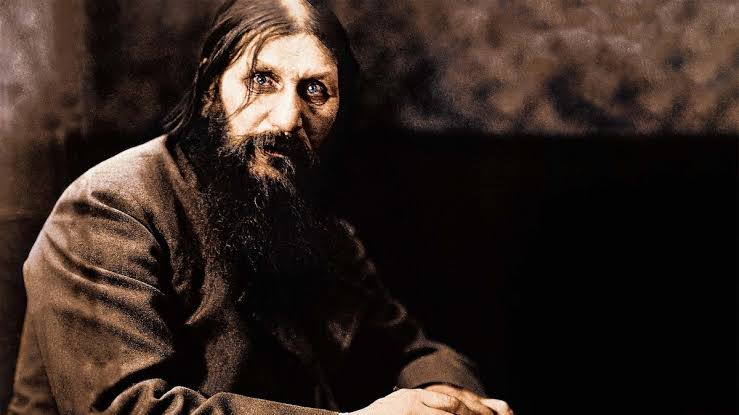
Born on January 21, 1869, in the small village of Pokrovskoye along the Tura River in Siberia, Grigori Yefimovich Rasputin came from nothing. His father, Yefim, was a peasant farmer and church elder. His mother, Anna Parshukova, bore eight children, of whom only Grigori survived to adulthood. Like most Siberian peasants of his generation, Rasputin received no formal education and remained illiterate well into his early adult years. Local archival records suggest a somewhat unruly youth, possibly involving drinking and petty theft, though many of the more dramatic crimes attributed to him as a young man appear to have been fabricated by later enemies.
In 1886, the 17-year-old Rasputin traveled to the town of Abalak, where he met a peasant woman named Praskovya Dubrovina. They married in February 1887. The couple had seven children together, though only three survived to adulthood: Dmitry, Maria, and Varvara.
Then in 1897, at the age of 28, something shifted. Rasputin left Pokrovskoye and traveled to the St. Nicholas Monastery at Verkhoturye, embarking on the first of what would become years of spiritual wandering across the Russian Empire. His reasons remain unclear. Some sources suggest he left to escape punishment for horse theft. Others claim he experienced a religious vision. Historian Douglas Smith has written that the decision “could only have been occasioned by some sort of emotional or spiritual crisis.” Whatever drove him from Siberia, Rasputin returned from Verkhoturye a changed man.
He became a vegetarian, swore off alcohol, and began praying with an intensity that unsettled everyone who knew him. He subsequently spent years as a strannik, a holy wanderer, travelling from village to village and living off charity, presenting himself as a man of God with powers to heal the sick and foresee the future.
It was whispered that Rasputin had aligned himself with the Khlysty, an underground sect within the Russian Orthodox tradition whose rituals were rumoured to include ecstatic self-flagellation and sexual orgies. Repeated official investigations, however, failed to establish that Rasputin was ever a member of the sect. The association was promoted by his enemies and appears to have been, at least in part, fabricated.
St. Petersburg Discovers Its New Holy Man
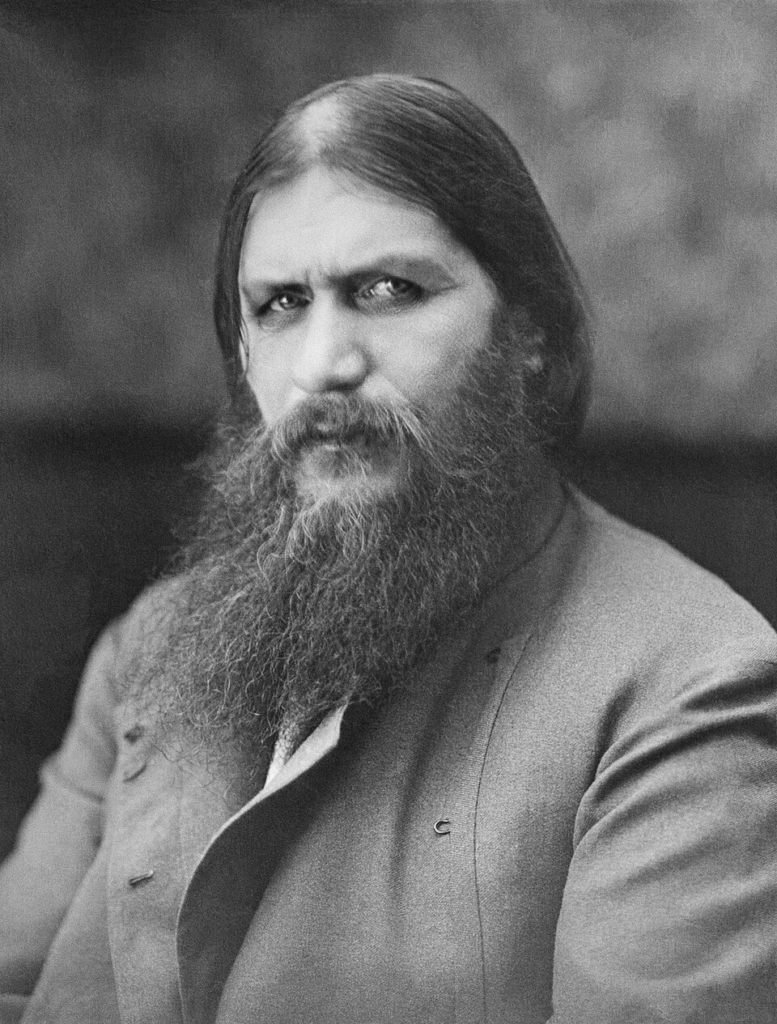
In 1903, Rasputin arrived in St. Petersburg, the glittering capital of the Russian Empire. The city’s aristocracy had developed a consuming fascination with mysticism and the occult. Alternative religious movements, spiritualism, and theosophy had already taken hold among the elite, who were, according to historian Joseph T. Fuhrmann, “bored, cynical, and seeking new experiences.” Rasputin, a rough-hewn Siberian with wild eyes and no social credentials, was precisely the kind of figure they had been waiting for.
Archimandrite Theofan, inspector of the theological seminary at the Alexander Nevsky Monastery and confessor to the imperial family, was so struck by Rasputin that he invited him to stay in his home and began introducing him to the salons of the St. Petersburg elite. Word spread quickly. By 1905, Rasputin had cultivated friendships with two Montenegrin princesses, Militsa and Anastasia, who had married cousins of Tsar Nicholas II and were deeply drawn to mystical figures.
On November 1, 1905, at Peterhof Palace, Rasputin was formally introduced to Tsar Nicholas II and his empress consort, Alexandra Feodorovna. Nicholas recorded the encounter in his diary, writing that he and Alexandra had made the acquaintance of a “man of God” from Tobolsk province. The impression was immediate. It would prove catastrophic for the Romanov dynasty.
The Boy Who Could Not Bleed
To understand what Rasputin did to Russia, it is necessary to understand what Russia was hiding.
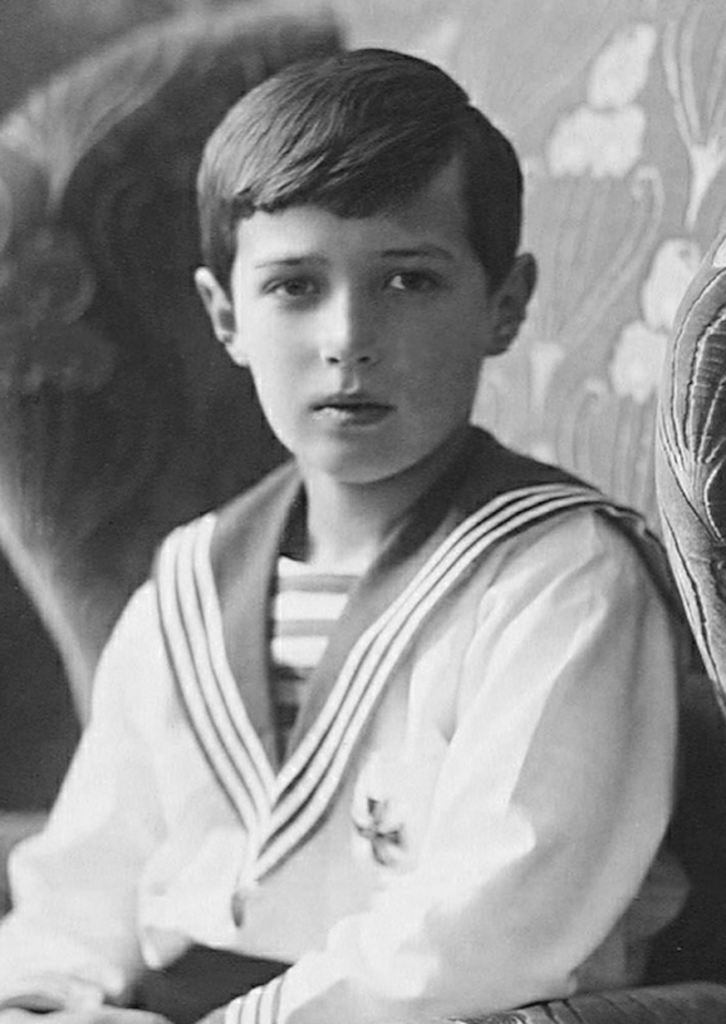
Alexei Nikolaevich, born in August 1904, was the long-awaited male heir to the Romanov throne, the only son among Nicholas and Alexandra’s five children. He was also a hemophiliac. His blood could not clot properly, meaning the slightest internal injury could produce a bleeding episode that lasted for days and threatened his life. The family kept the diagnosis a closely guarded secret, terrified of what it might mean for the dynasty’s future. The burden fell most crushingly on Alexandra, who watched her son suffer through crisis after crisis while her physicians admitted they were powerless to provide a reliable cure.
Into that atmosphere of secrecy and desperation, Rasputin arrived as though sent.
He was first summoned to pray for Alexei in the spring of 1907, when the boy suffered an internal hemorrhage. Alexei recovered the following morning. Alexandra’s lady-in-waiting, Anna Vyrubova, became immediately convinced of Rasputin’s miraculous powers and became one of his most forceful advocates at court. But it was the summer of 1912 and the crisis at Spała that transformed Rasputin from a useful figure into an indispensable one.
How he accomplished what the doctors could not remains genuinely disputed. Some historians, including Robert K. Massie, have suggested hypnosis, which modern physicians acknowledge can be effective in managing hemophilia. Others, including Alexei’s French-language tutor Pierre Gilliard, have speculated that Rasputin’s key intervention was insisting on the removal of aspirin, then routinely administered for pain, but unknown as an anti-clotting agent until the 1950s.
Still others suggest Rasputin’s primary effect was on Alexandra herself: by calming the empress, he reduced her son’s emotional distress, and with it, his symptoms. No single explanation has ever been confirmed.
What was confirmed was the result. Rasputin had made himself indispensable to the most powerful family in Russia. He had found the one wound the Romanov dynasty could not expose, and positioned himself as the only bandage.
The Monk Built a Reputation He Could Not Control
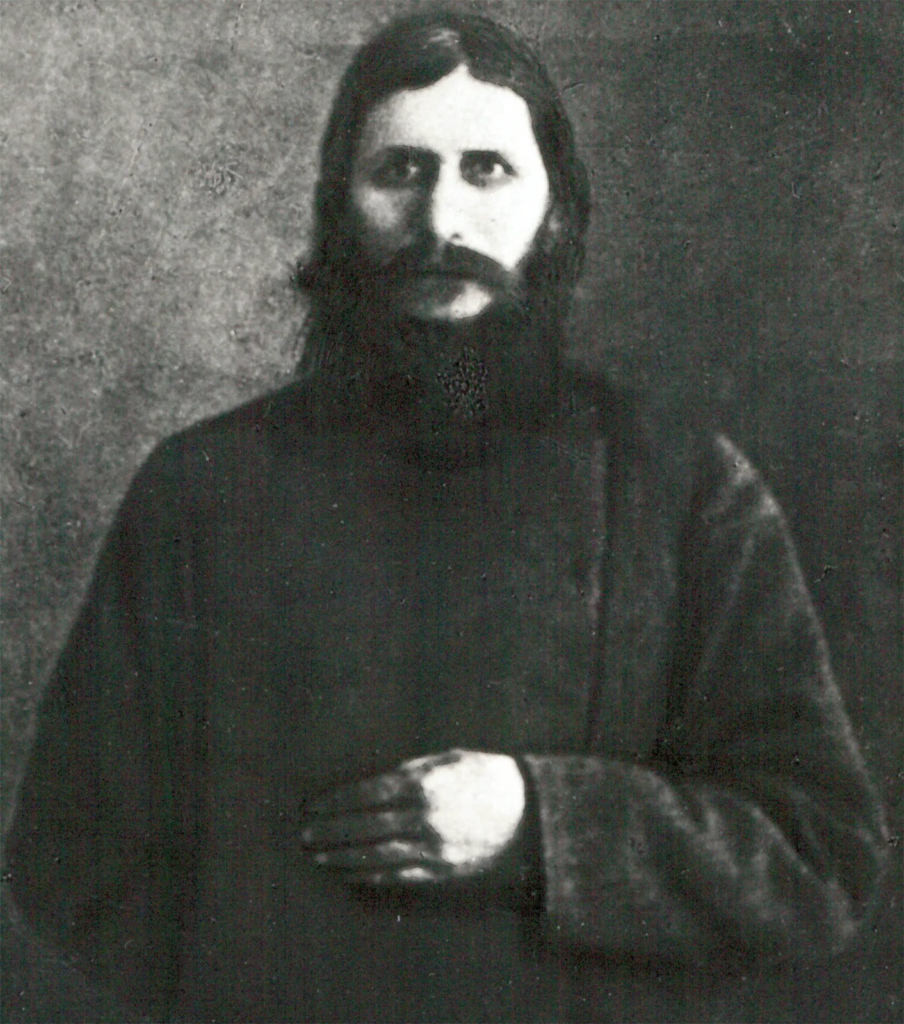
Inside the palace, Rasputin presented himself as a devout and humble servant of God. Outside it, he was something else entirely. He frequented brothels, pursued affairs with women of every social class, and told his followers that physical contact with him carried divine grace. By 1911, his conduct had become a national scandal.Journalists and politicians used his closeness to the imperial family to argue that the Tsar’s government was being manipulated by a debauched Siberian peasant.Lurid pamphlets circulated. Pornographic caricatures depicting Rasputin with the Empress and her daughters were printed and passed hand to hand.
Prime Minister Pyotr Stolypin confronted Nicholas directly, presenting documented accounts of Rasputin’s behaviour and demanding his exile from St. Petersburg. Nicholas briefly complied. Alexandra brought him back.
The honest measure of Rasputin’s political influence was considerably more limited than his enemies claimed. His sway over Nicholas was concentrated almost entirely on the question of Alexei’s health. But the perception of his power was corrosive, and perception, in an empire already under strain, carried its own destructive force.
Alexandra’s Adviser Began Governing the Empire
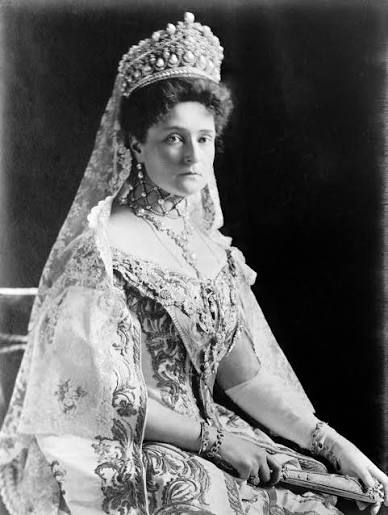
In September 1915, with the First World War consuming Russia’s armies on the Eastern Front, Nicholas left the capital to take personal command of his forces. He left Alexandra to govern in his absence. Alexandra, whose German origins had already made her deeply unpopular with the Russian public, turned for counsel to the man she trusted most entirely. Rasputin began advising her on ministerial appointments and church positions.
Ministers who criticised him were dismissed. Warnings from court officials were ignored. When soldiers on the front lines heard reports of a German-born empress and a Siberian monk governing the empire in the Tsar’s absence, the resentment building in Russia grew into something far more dangerous.
On July 12, 1914, a 33-year-old peasant woman named Khioniya Guseva had already attempted to kill Rasputin, stabbing him in the stomach outside his home in Pokrovskoye. He recovered after surgery. The attempt was only the first. Several others followed. All failed.
Three Nobles Tried What Poison Alone Could Not Finish
By December 1916, a group of conservative noblemen had concluded that Rasputin had to be removed if the monarchy was to survive. The principal conspirators were Prince Felix Yusupov, husband to the Tsar’s niece Irina; Grand Duke Dmitri Pavlovich; and the right-wing Duma politician Vladimir Purishkevich.
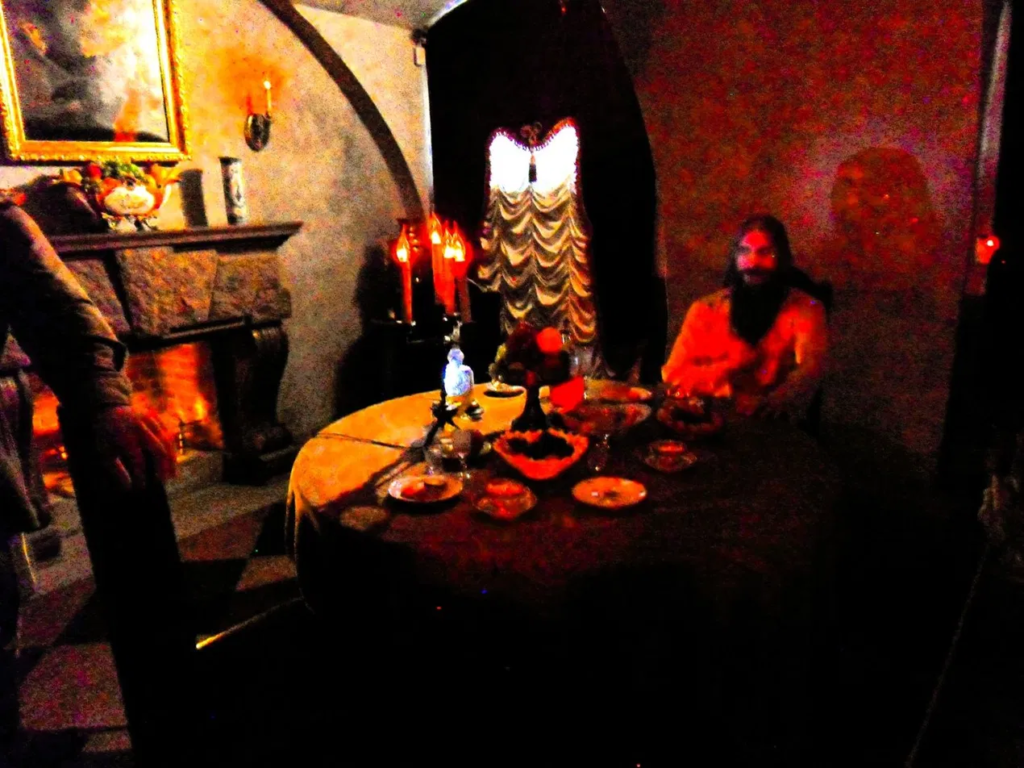
On the night of December 30, 1916, they invited Rasputin to Yusupov’s palace on the Moika Canal in Petrograd and led him to a basement room. According to Yusupov’s subsequent account, they offered him cakes and Madeira wine that had been laced with cyanide. Rasputin ate and drank without apparent effect. Yusupov then shot him once in the chest. Rasputin survived. Purishkevich shot him again in the courtyard. The conspirators wrapped his body in cloth, drove it to the Petrovsky Bridge, and dropped it into the Little Nevka River.
The autopsy surgeon Dmitry Kosorotov examined the body and found three gunshot wounds, one at close range to the forehead. He found no evidence of poisoning. He found no water in Rasputin’s lungs. The legend of a man impossible to kill, already forming before the body was recovered, was not supported by a single finding in the official medical record.
Russia Killed Rasputin and Then Lost Everything Else
Among the Russian peasantry, Rasputin’s death was mourned. Among the aristocracy, it was celebrated as the salvation of the empire.
Both were wrong about what his death meant.
Fifteen months after his body was pulled from beneath the ice of the Little Nevka, the entire Romanov family was dead, shot in a Yekaterinburg basement by Bolshevik revolutionaries in July 1918. Rasputin had not been the cause of their collapse, whatever his enemies had believed. He had been a symptom: the most visible and grotesque expression of a dynasty too secretive, too isolated, and too desperate to govern a country coming apart at the seams. Removing him changed nothing. The forces that would destroy the Romanovs were already in motion.
Before his death, Rasputin reportedly wrote to Nicholas warning that if he were killed by members of the nobility, the imperial family would not survive the year. The letter’s authenticity has never been fully confirmed. Whether he wrote it or not, those who read it afterward found it difficult to argue with.
His body was exhumed and burned on the orders of the Provisional Government in March 1917, so that his grave would not become a royalist shrine. The ashes were scattered. The son he had kept alive died at the age of 13.
Leave a Reply