
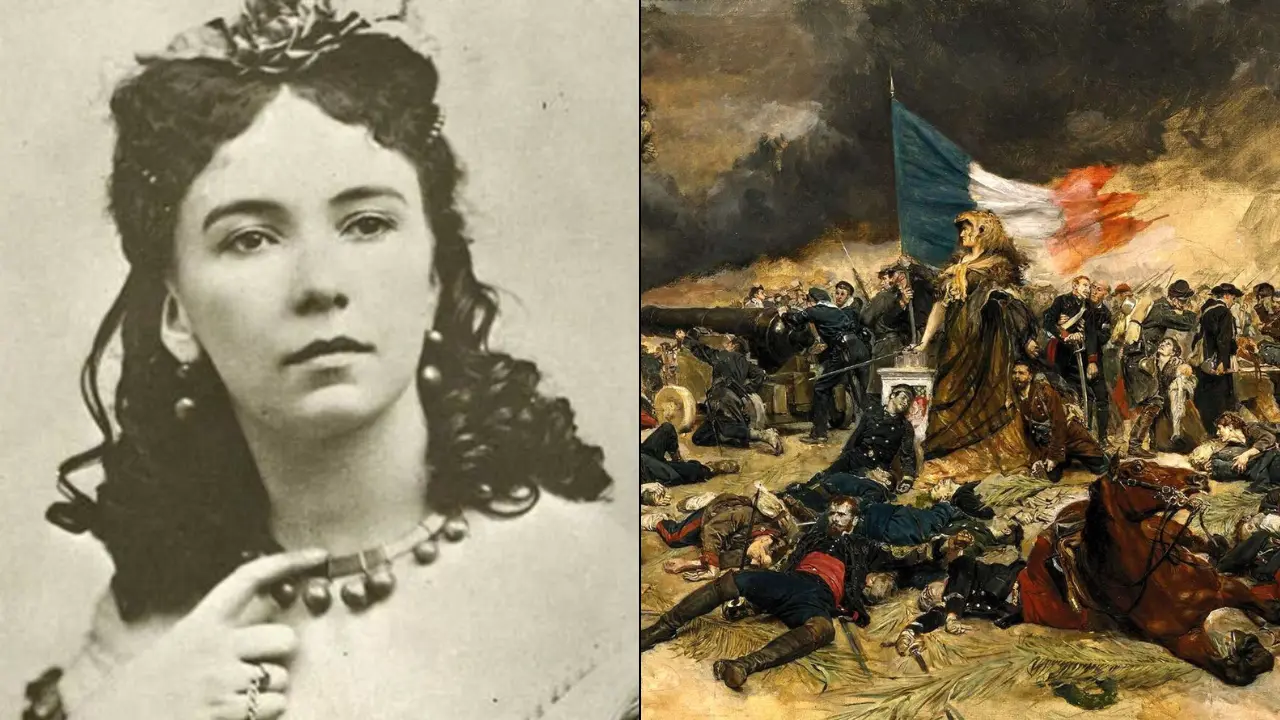
Born Eliza Emma Crouch in Plymouth, the abandoned daughter of a runaway composer, she reinvented herself as Cora Pearl in Paris and commanded up to 10,000 francs for a single evening’s entertainment during the reign of Napoleon III.
Sometime in the mid-1860s, Cora Pearl dared the fifteen or more guests assembled at her dinner table to cut into the next dish. The Château de Beauséjour glittered for the occasion, its stained-glass windows throwing colored light across the silverware. The chef had been instructed to spare no cost. The guests complied.
Four large men carried in the dish. On a silver platter, garnished with parsley, lay Cora Pearl herself.
That image is the one that survives her most readily. But the woman capable of staging it had arrived in Paris with nothing more than an English accent and a lesson, absorbed at fifteen, that she intended to survive.
A Musician’s Daughter Learns the Cost of Dependence
She was born Eliza Emma Crouch in Plymouth, England, in December 1836. Her father, Frederick Nicholls Crouch, was a cellist and composer of some local standing, best known for the Irish-inflected ballad Kathleen Mavourneen. Her mother, Lydia, née Pearson, sang contralto. Both were musicians whose gifts exceeded their constancy. By April 1841, Frederick had left his wife and daughters in Plymouth and returned to London. By 1849, he had left for America, quietly abandoning two households and a growing number of children who would not see him again.
Lydia brought Richard William Littley into the household, regarded as a stepfather by the children. Eliza was sent to a convent boarding school in Boulogne, where she learned French. In 1850 she returned to London to live with her paternal grandmother, Anna Maria Watts.
On a Sunday in 1851, a servant failed to collect 15-year-old Eliza from church. An older man approached her on the street. He took her to a drinking den, bought her cakes and alcohol, and raped her. When she woke, he was gone. On the table he had left a five-pound note, more money than she had ever seen. She later said the experience left her with “an instinctive horror of men.”
She did not return to her grandmother’s house. She rented a room in Covent Garden.
Eliza Crouch Burned the Passport and Became Cora Pearl
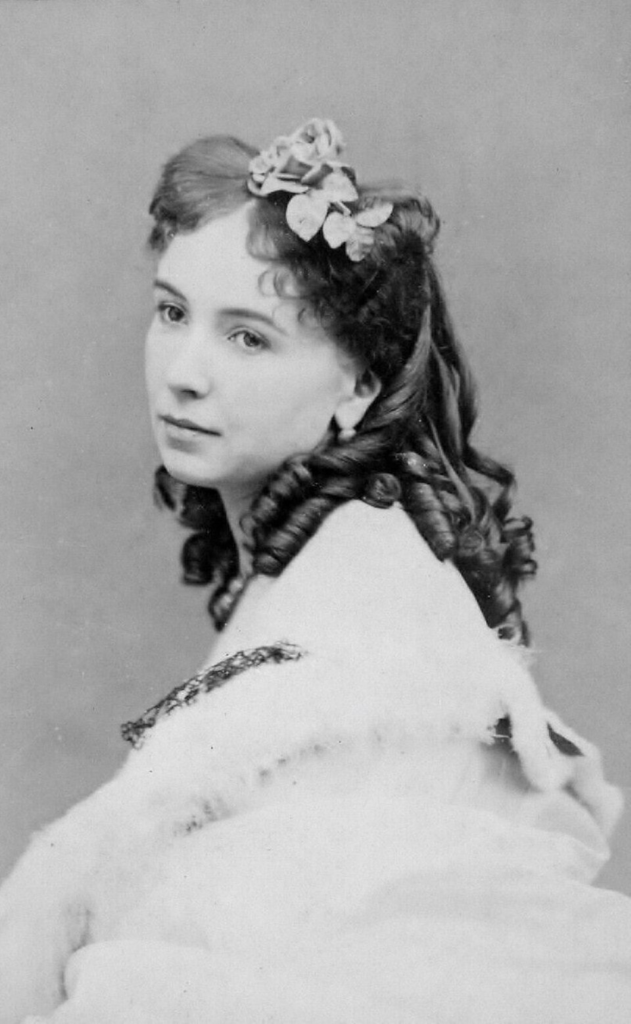
She made the acquaintance of Robert Bignell, proprietor of the Argyll Rooms, a notorious pleasure establishment in London that provided a bar, a dance hall, and private alcoves where couples could retire for sexual activity. She became his mistress and moved into a suite at the Rooms. Studying the trade around her, she concluded with the logic of someone who had already survived its worst outcome that she would practise it on entirely different terms. Common prostitution offered two destinations: poverty or disease. She intended neither.
Bignell took her to Paris. She refused to leave. She insisted he return to London without her. One account holds that she threw his passport into the fire to settle the matter. He paid the hotel bill and went. She stayed, rechristened herself Cora Pearl, and started again.
Starting over in Paris meant starting at the bottom, as before. Her connection with a high-class procurer named Monsieur Roubisse provided the staging. He set her up in suitable quarters, tutored her in the business, and spent six years positioning her for the world she intended to enter. In 1860, she made her debut among the elite of Parisian society.
Pearl Pitted Her Admirers Against Each Other and Named Her Price
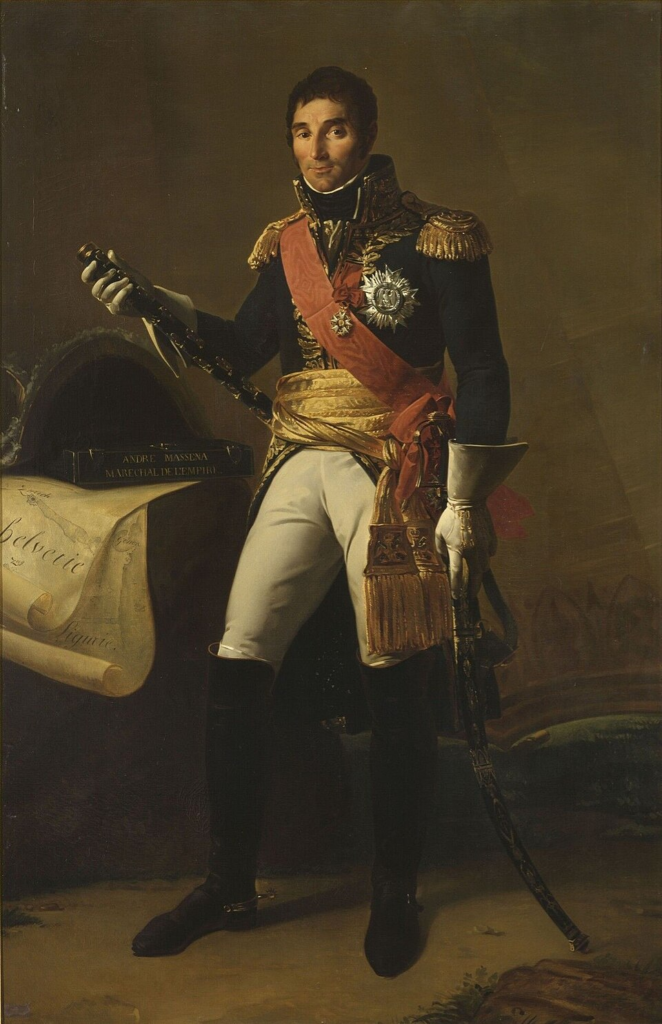
Her first lover of distinction was Victor Masséna, Duke of Rivoli, grandson of Napoleon I’s celebrated marshal. He was 25 years old. Masséna showered her with money, jewels, servants, a private chef, and the funds to gamble at the fashionable resort of Baden, Germany. He bought her first horse. She became an accomplished horsewoman; contemporaries said she “rode like an Amazon, and was kinder to her horses than to her lovers.” Their liaison lasted five years. Throughout it, she simultaneously maintained a relationship with Prince Achille Murat.
By 1860, she was among the most celebrated courtesans in Paris. Her lovers included the Prince of Orange, heir to the throne of the Netherlands; Ludovic, Duc de Grammont-Caderousse; and Charles, Duc de Morny, half-brother of the Emperor Napoleon III. Prince Napoleon, the Emperor’s cousin, would become her most enduring protector, a relationship that lasted nine years.
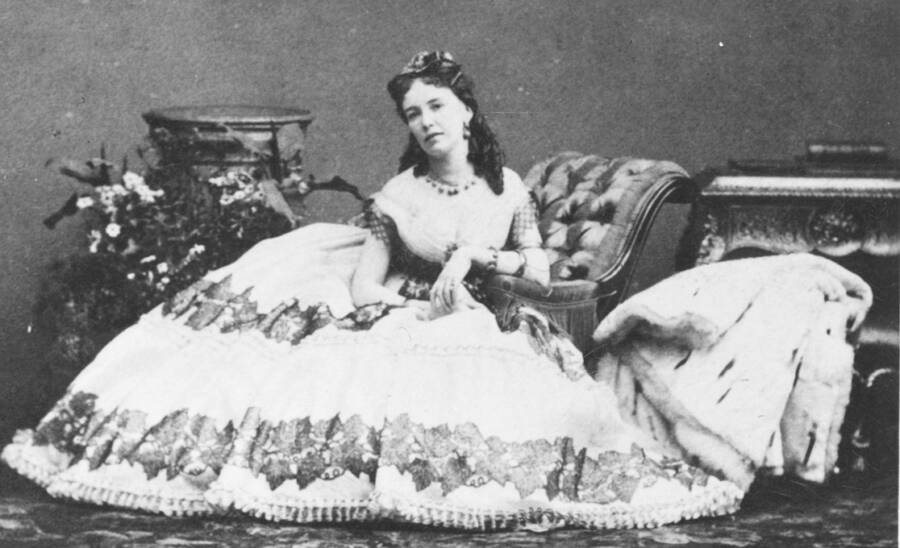
She was not, by contemporary accounts, a great beauty. She had small eyes, high cheekbones, and a round face of striking complexion that earned her the nickname “La Lune Rousse,” the Red Moon. What she possessed instead was an intelligence that made her the most entertaining woman in whatever room she entered. She pitted her admirers against each other, escalating the competition for her company until the price rose to match. At the height of her powers, she commanded up to 10,000 francs for a single evening.
Her jewel collection alone was valued at 1 million francs. She owned three homes simultaneously. Her clothing was made exclusively by Charles Frederick Worth, the era’s most celebrated couturier. At the Château de Beauséjour in the Loiret, she threw gala entertainments of calculated outrageousness. The custom-made bronze bath in her boudoir was monogrammed with her initials in gold. She started the fashion for courtesans to ride in open carriages through the Bois de Boulogne during peak hours. The women of Paris, including those at court, copied her clothes, her hair, and her manner.
In 1867, she took to the stage of the Théâtre des Bouffes-Parisiens, appearing as a singing Cupid in Jacques Offenbach’s operetta Orphée aux Enfers. She arrived half-naked before an audience that included, according to contemporaries, the entirety of the Paris Jockey Club and every name of French nobility worth knowing. Boxes sold at 500 francs each. Orchestra stalls fetched 150 francs. On the twelfth night, she was hissed from the stage. She never returned to it.
The writer Alfred Delvau observed of Pearl in his 1867 book Les Plaisirs de Paris: “You are today, Madame, the renown, the preoccupation, the scandal and the toast of Paris. Everywhere they talk only of you.”
A Discharged Pistol Ended What the War Had Begun
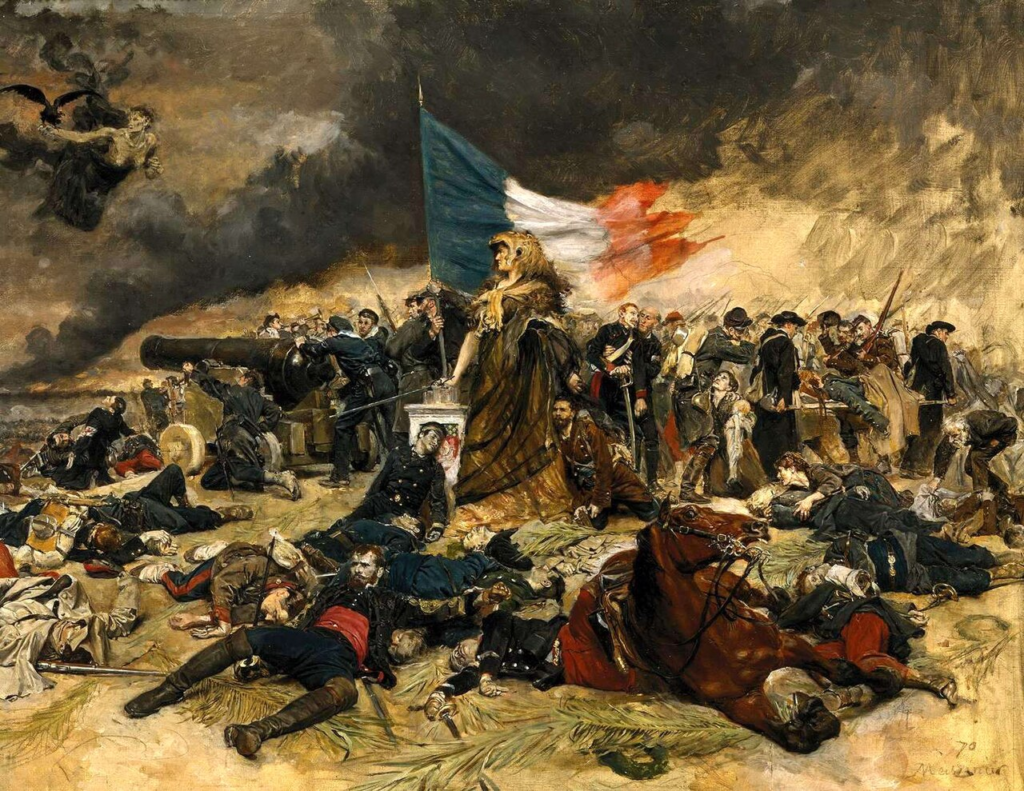
The Franco-Prussian War of 1870 began the unraveling. Napoleon III was captured by the Germans. The Second Empire collapsed. The Third Republic that followed was more austere and conservative, with little patience for the demi-monde that had defined its predecessor. Pearl converted her homes into military hospitals and spent 25,000 francs of her own money on care for the wounded. The war commissioners refused to recognize her contribution. When she appealed through legal channels, she recovered 1,500 francs.
What the war began, Alexandre Duval completed.
Duval was 27 years old, the son of Pierre Louis Duval, founder of the Bouillons Duval restaurant chain. He was ten years younger than Pearl and consumed by an obsession for her that proved, in financial terms, spectacular and, in every other term, ruinous. He spent his entire fortune in her company, giving her jewels, fine horses, and money. At one point, he presented her with a 100-page bound book in which every page was bookmarked by a 1,000-franc note. She dismissed him. He could not accept it.
On December 19, 1872, after pacing for hours outside her home, Duval forced his way inside. He confronted Pearl with a pistol drawn from his coat. The weapon discharged, wounding him gravely in the chest. Contemporary press accounts claimed Pearl slammed the door and left him bleeding on her doorstep without summoning help. The New York Times reported she had called for medical assistance. Duval eventually recovered. Pearl did not.
The scandal, named l’affaire Duval by the French press, destroyed what remained of her standing. Authorities expelled her from Paris. Over the following years, she was expelled, at various times, from Baden, Monte Carlo, Nice, Vichy, and Rome. The contents of her Paris home were sold. Prince Napoleon ended their nine-year relationship in 1874 with a carefully worded letter of regret. He could no longer, he wrote, sustain the emotional and professional toll.
She returned to Paris on clumsily forged documents. The world that had made her possible was gone.
Pearl Sold Her Silence and Died Under Her Real Name
In her final years, suffering from intestinal cancer and living in a modest boarding house on the Rue de Bassano, Cora Pearl wrote her memoirs. She sent advance sheets to every man named within, offering to change the names for a fee. Most paid. The Mémoires de Cora Pearl were published in Paris in 1886. The Dictionary of National Biography recorded that the work “proved dull reading and gave little information.”
On July 8, 1886, she died of cancer, aged approximately 49.
Her remaining possessions were sold at auction in October of that year. She was buried in Batignolles cemetery in Paris, in a grave rented for five years, under the name she had spent most of her adult life discarding: Emma Eliza Crouch.
In the memoirs, she had written: “I have never deceived anybody, because I have never belonged to anybody. My independence has been all my fortune, and I have known no other happiness; it is still what attaches me to life.”
In 1891, the lease on the grave expired. Her remains were moved to an ossuary. The plot was reused.
Leave a Reply