
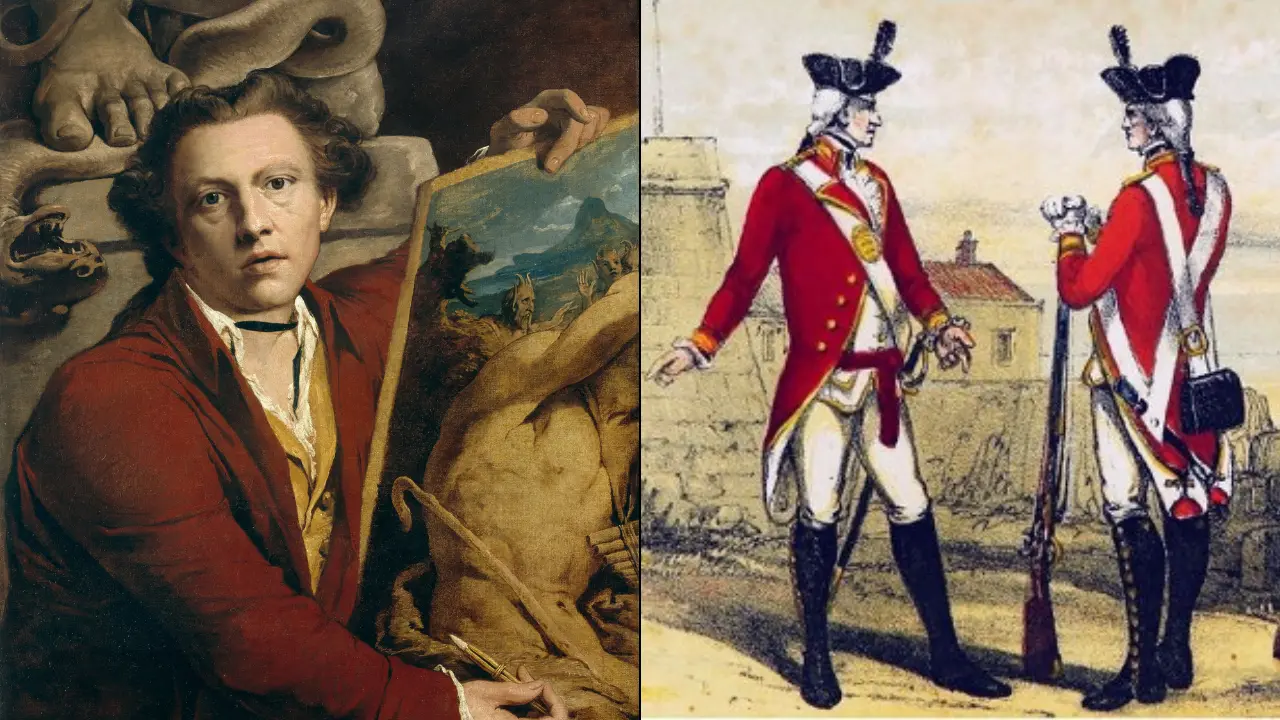
Deck: Born Margaret Anne Bulkley in Cork around 1789, Barry rose to Inspector General of British Army hospitals while carrying a secret the Army sealed from public record for a century after his death.
On the morning of July 25, 1865, a charwoman arrived at 14 Margaret Street in London to lay out the body of Inspector General Dr. James Barry, who had died of dysentery that day. Barry had left standing instructions. The body was to be wrapped in its bedsheets and buried without further examination. The charwoman did not comply.
What she discovered upended five decades of military history. The British Army responded by sealing Barry’s service records for the next 100 years.
Margaret Anne Bulkley Vanished One November Morning
Born Margaret Anne Bulkley in Cork, Ireland, around 1789, Barry came from a family in accelerating decline. His mother, Mary Anne, was the sister of James Barry, a celebrated Irish painter and professor at London’s Royal Academy. His father, Jeremiah, ran the weigh house at Merchant’s Quay in Cork, a government position he lost as anti-Catholic sentiment intensified after the 1798 uprising. Financial mismanagement followed. Jeremiah Bulkley ended up in the Marshalsea debtors’ prison in Dublin, leaving Mary Anne and her children without any support.
When James Barry the painter died in 1806 without leaving a will, Mary Anne and her child made their way to London to claim a share of his estate. They received little. But among the painter’s circle of liberal-minded friends and patrons, including General Francisco de Miranda, the Venezuelan revolutionary, and physician Edward Fryer, who became Barry’s personal tutor, a plan took shape. Since British universities admitted only men, Margaret Anne Bulkley would simply cease to exist. She would be replaced by James Barry, the young nephew of the late painter.
On November 30, 1809, Barry and his mother sailed for Edinburgh. In a letter sent two weeks later, Barry referred to his mother as “my aunt” and to himself as her gentleman protector. The envelope was addressed to Miss Bulkley. That envelope, kept by the family’s solicitor, would eventually allow historians to confirm what the Army tried to bury for a century.
A Boy Suspicious, an Earl Persuasive, a Degree Conferred
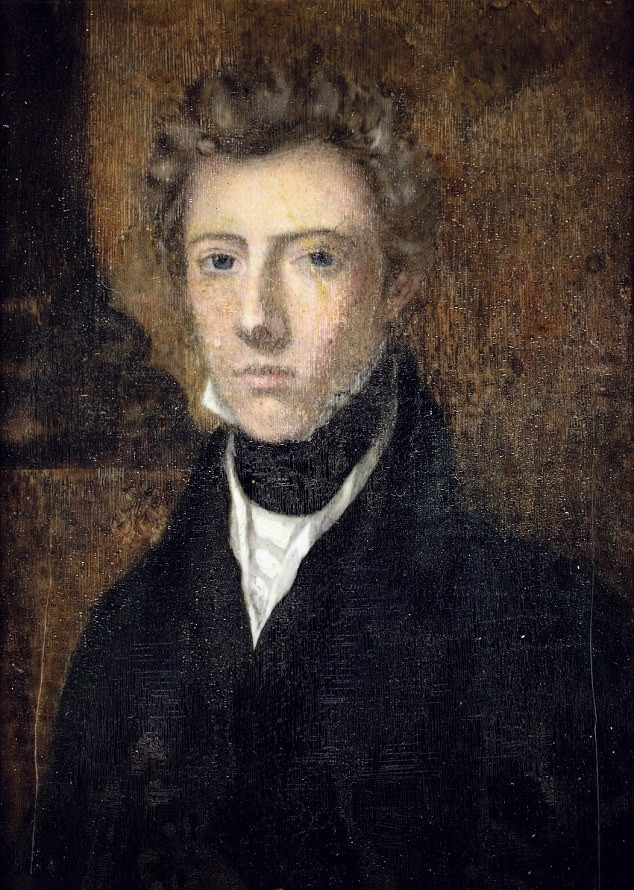
Arriving at the University of Edinburgh in late 1809, Barry faced immediate suspicion. Short in stature, with an unbroken voice and smooth skin, he was widely assumed to be a pre-pubescent boy who had no business sitting university examinations. The Senate moved to block his final exams. The Earl of Buchan, a patron with ties to Barry’s late namesake, intervened personally. The Senate relented. In 1812, Barry qualified as Medicinae Doctor, writing his thesis on femoral hernia.
He moved to London and trained under the celebrated surgeon Astley Cooper at the United Hospitals of Guy’s and St Thomas’. On July 2, 1813, he passed the examination of the Royal College of Surgeons of England. Days later, he was commissioned as a Hospital Assistant in the British Army.
General Francisco de Miranda, the patron who had spoken of building an equal society in Venezuela, one where Barry might have reassumed his female identity and practiced medicine openly, had been arrested on charges of treason in 1812 and imprisoned in Cadiz, Spain. The possibility closed with him.
Cape Town Built Barry and Nearly Broke Him
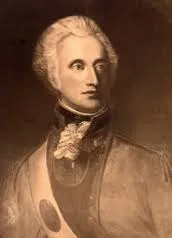
Posted to Cape Town, South Africa in 1816, Barry arrived carrying a letter of introduction to the colony’s governor, Lord Charles Somerset. When Somerset’s daughter fell seriously ill, Barry treated her successfully. Somerset drew the young surgeon into his family circle. In 1822, he appointed Barry Colonial Medical Inspector, an extraordinary promotion for a man of Barry’s low military rank, and one that came with significant responsibility.
Over a decade at the Cape, Barry transformed conditions for the colony’s most vulnerable populations. He overhauled sanitation and water systems, fought for improved treatment of enslaved people, prisoners, and the mentally ill, and established a sanctuary for the leper population. He accumulated enemies in direct proportion to his reforms, clashing loudly with local officials over medical standards. On one occasion, the confrontations escalated to a formal pistol duel with Captain Josias Cloete of the 21st Light Dragoons. Barry’s aim was better. His bullet struck Cloete’s military cap and removed its peak, dissipating its force. Both men walked away.
On July 26, 1826, Barry was called to attend Wilhelmina Munnik, a woman whose labor had become life-threatening. Natural delivery was no longer possible. The only option was a caesarean section, a procedure that had, to that point, almost always killed the mother. Barry had read of only three recorded cases in which both patients survived. None had been performed in Africa. He operated through the night, paying meticulous attention to hygiene and technique. Both Wilhelmina Munnik and her son survived. It was the first recorded successful caesarean section by a European in Africa in which both mother and child lived. In honor of the surgeon, the Munniks named the boy James Barry Munnik. The name passed through the family for generations. James Barry Munnik Hertzog served as Prime Minister of South Africa from 1924 to 1939.
The professional triumph did not protect Barry from what came next. On June 1, 1824, an accusation appeared on a bridge post in Cape Town, claiming that a witness had observed Lord Charles Somerset and Dr. Barry in a compromising position. For Barry, the accusation posed two equally catastrophic alternatives. To face arrest on charges of sodomy was to risk death. To reveal his biological sex was to lose his medical career, his military rank, and the identity he had spent 15 years constructing. An investigation produced no concrete evidence. Both men were exonerated. Somerset was recalled to England in 1826 to answer other criticisms of his administration. He never returned to Cape Town.
The Empire Was Large Enough to Keep Posting Him
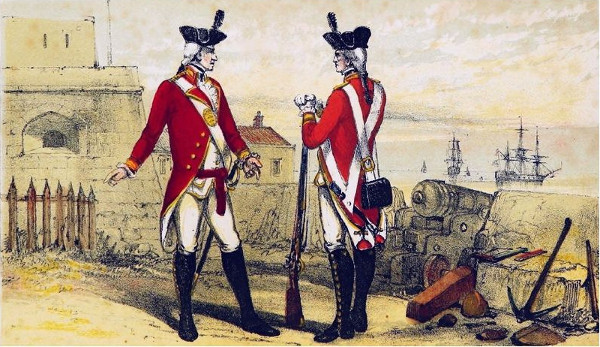
What followed Somerset’s departure was, in aggregate, a remarkable career. Mauritius in 1828. Jamaica. Saint Helena in 1836. The Leeward and Windward Islands in 1840. In 1845, Barry contracted yellow fever and was evacuated to England to recover. After being cleared for duty, he was posted to Malta in 1846, then to Corfu in 1851, where he was promoted to Deputy Inspector-General of Hospitals. In 1857, he was posted to Canada and granted the local rank of Inspector General of Hospitals, equivalent to Brigadier General, the second-highest medical office in the British Army. At each posting, the pattern repeated: improved sanitation, better conditions for soldiers and civilians alike, fierce confrontations with officials who obstructed reform.
During the Crimean War, Barry inspected the military hospital at Scutari and publicly dressed down Florence Nightingale in the hospital courtyard, keeping her standing before a crowd of soldiers while he delivered his verdict from horseback. After Barry’s death, Nightingale wrote that she had never received such a dressing down in her life. She described Barry as behaving like a brute, and added that she had never met a more hardened creature.
In 1859, the Army forcibly retired Barry on grounds of ill health and old age, overriding his protests. He spent his final years in London. He died on July 25, 1865.
The Bedsheets Were Not Enough
Barry had been explicit. The body was to be wrapped in its bedsheets without inspection. The charwoman who laid out the corpse did not comply. When Barry’s physician, Major D. R. McKinnon, refused to pay her for services he considered incomplete, she took the story to the press. She claimed the body was biologically female and bore marks consistent with a past pregnancy.
McKinnon wrote to the Registrar General that the matter was “none of my business” and stated that his own impression was that Barry might have been neither male nor female. An “imperfectly developed man,” he wrote, was his best characterization. The Army sealed Barry’s service records for the next 100 years.
Whether Barry was biologically female, intersex, or something the 19th century had no adequate language for remains, in the absence of any professional post-mortem examination, genuinely uncertain. What is not uncertain is the scale of what Barry built across 56 years. The first successful caesarean section in Africa. Decades of public health reforms stretching from Cape Town to Canada. A medical career constructed at a time when the door to medicine was not open to him, through a university that had tried to block his final examinations, inside an army that, in the end, would rather bury the record than acknowledge what he had done.
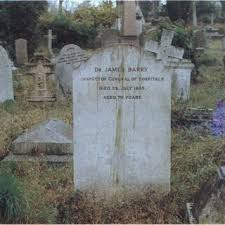
Barry was interred at Kensal Green Cemetery in northwest London. The headstone reads: Dr James Barry, Inspector General of Hospitals.
He had asked not to be examined after death. No one had thought to ask him anything while he was alive.
Leave a Reply