
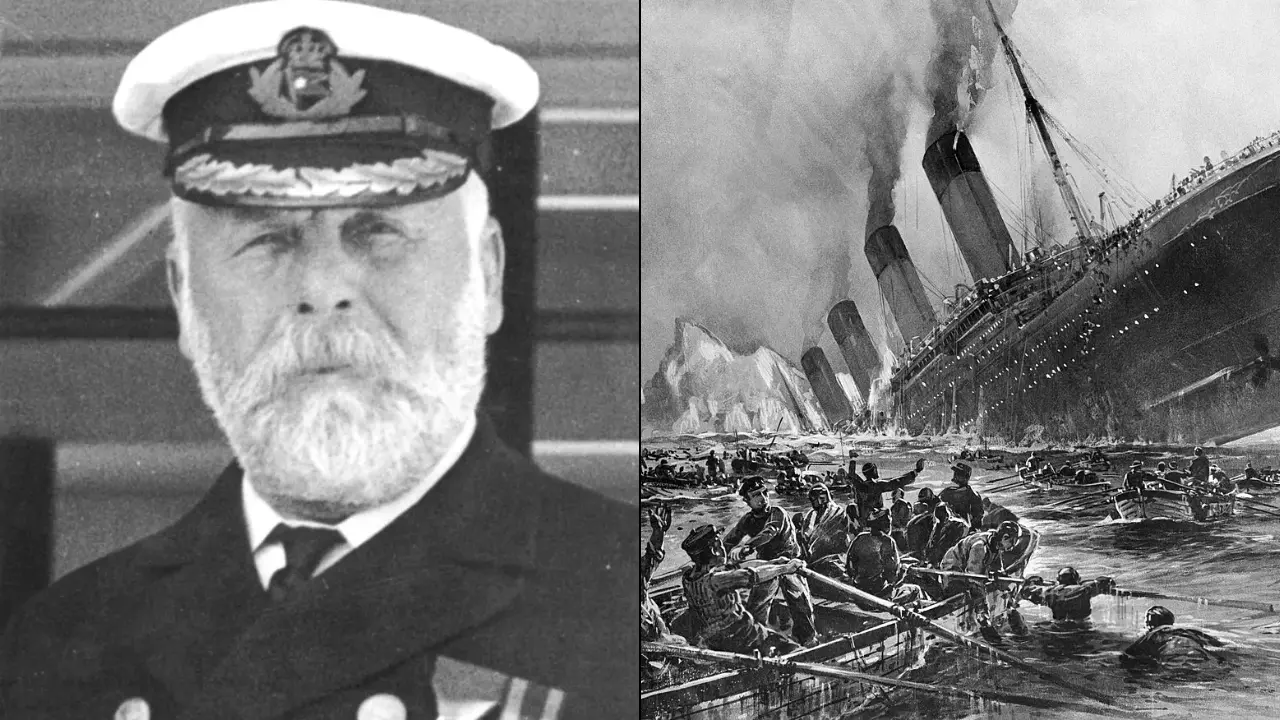
Captain Edward J. Smith spent 40 years at sea without losing a ship before the RMS Titanic struck an iceberg on April 14, 1912, and carried 1,500 people, including Smith himself, to the bottom of the North Atlantic.
At 11:40 p.m. on April 14, 1912, lookout Frederick Fleet spotted an iceberg directly ahead of the RMS Titanic from his post in the crow’s nest. He rang the warning bell and telephoned the bridge. Thirty-seven seconds passed between the sighting and the collision.
The ship struck the iceberg along her starboard side below the waterline, tearing open six of her forward watertight compartments. Captain Edward J. Smith was summoned to the navigation bridge from his cabin. Thomas Andrews, the Titanic’s designer, followed with his findings and delivered a single verdict: the ship would sink in under two hours.
Smith was 62 years old. He had commanded ships at sea for four decades without a single catastrophic incident. What he did in the hours between that assessment and the Titanic’s final plunge is contested, unverified, and subject to accounts that cannot be reconciled with each other.
His body was never recovered.
A Potter’s Son Chose the Sea
Edward John Smith was born on January 27, 1850, in Hanley, Staffordshire, the son of Edward Smith, a potter, and Catherine Hancock. He attended Etruria British School until the age of 13, then left to operate a steam hammer at the Etruria Forge. At 17, following his half-brother Joseph Hancock, who was already serving as a ship’s captain, Smith made his way to Liverpool and signed on as an apprentice aboard the Senator Weber, owned by A. Gibson and Co. of Liverpool.
He rose through the ranks methodically. By 1875, he had earned his master’s certificate, qualifying him to command his own vessel. In March 1880, he joined the White Star Line as Fourth Officer of the SS Celtic, and in 1887 received his first White Star command: the SS Republic. He earned his Extra Master’s Certificate in February 1888 and joined the Royal Naval Reserve as a lieutenant, adding the letters “RNR” to his name and making himself available to the Royal Navy in wartime. He retired from the Reserve in 1905 with the rank of Commander.
On January 13, 1887, Smith married Sarah Eleanor Pennington at St. Oswald’s Church in Winwick, Lancashire. Their daughter, Helen Melville Smith, was born on April 2, 1898. When White Star transferred its transatlantic operations from Liverpool to Southampton in 1907, the family relocated to a red-brick house called Woodhead in Highfield, Southampton.
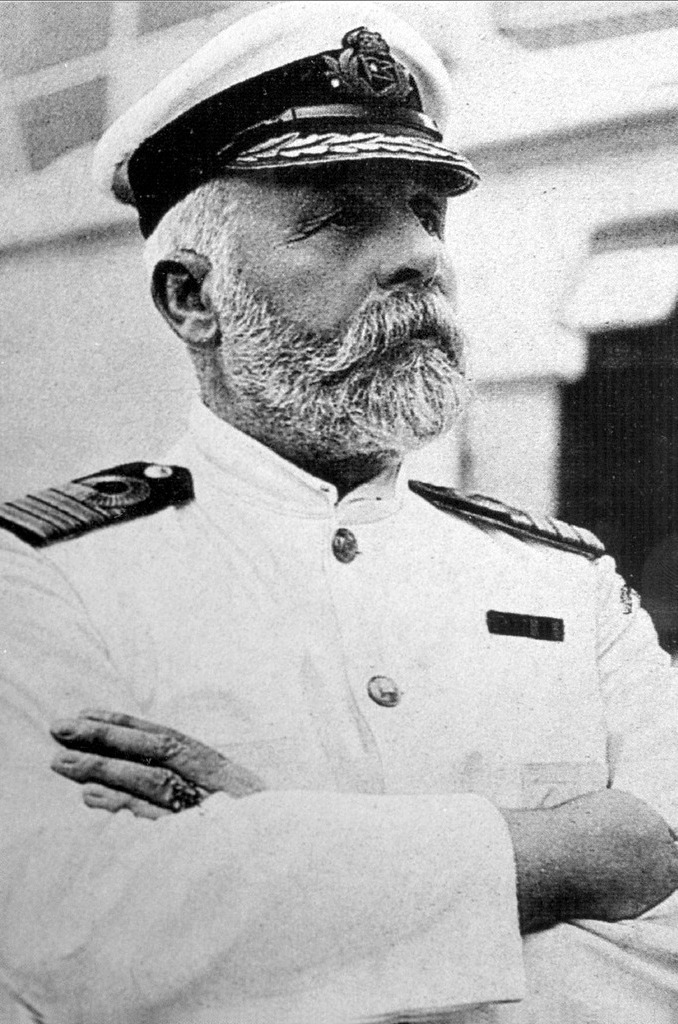
Smith Became the Millionaire’s Captain
Smith took command of the Majestic in 1895 and captained her for nine years. When the Second Boer War broke out in 1899, the Majestic was requisitioned to transport British Imperial troops to the Cape Colony. Smith made two round trips to South Africa, both without incident, and King Edward VII awarded him the Transport Medal in 1903 for his service.
From 1904, White Star reserved its most prestigious assignments for Smith. He commanded the Baltic on her maiden voyage from Liverpool to New York on June 29, 1904. The Baltic was the largest ship in the world at the time of her launch. After three years on the Baltic, Smith was given command of the Adriatic, then the fastest ship he had captained. Her 1907 maiden voyage went without incident. Smith also received the Reserve Decoration for Officers of the Royal Naval Reserve during his time on the Adriatic.
Wealthy transatlantic passengers followed Smith from ship to ship. Some booked Atlantic crossings specifically because he was in command. A nickname found him and stayed. He was called the Millionaire’s Captain.
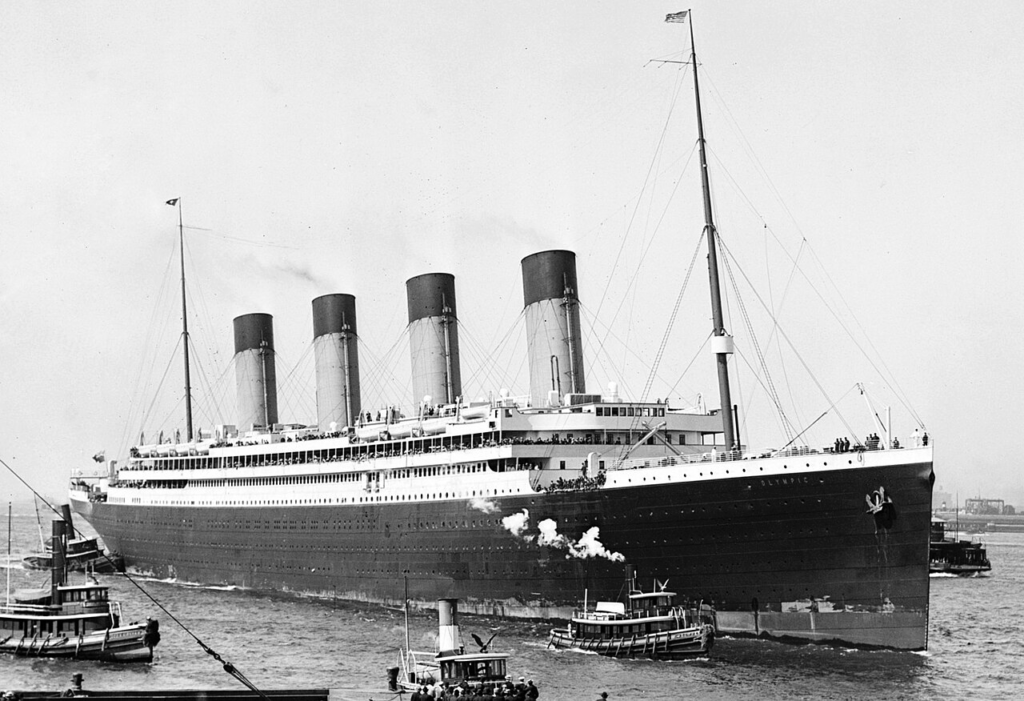
Olympic’s Collision Delayed the Titanic
In 1907, the White Star Line announced plans to build a new class of ocean liners, a direct response to competition from Cunard’s Lusitania and Mauretania. The first of the new ships was the RMS Olympic, the largest vessel in the world. Smith was chosen to command her on her maiden voyage, which concluded successfully on June 21, 1911.
The first major accident of Smith’s career followed that September. On September 20, 1911, while the Olympic was navigating the Solent, she collided with HMS Hawke, a British Royal Navy warship. Hawke lost her prow. The Olympic’s propeller shaft twisted. Both vessels made port, and the inquiry that followed determined that Olympic’s enormous displacement had generated a suction force pulling Hawke into her side. White Star bore the liability. The financial consequences were severe.
The accident forced Harland and Wolff to divert propeller shafts and materials originally designated for the Titanic to repair the Olympic. The Titanic’s maiden voyage was pushed back from March 20 to April 10, 1912. White Star appealed the finding unsuccessfully.
Smith was appointed to command the Titanic regardless. Some sources suggest he intended to retire once the crossing was complete. Years earlier, a friend had asked him what would happen if his ship struck ice and was badly damaged. “Some of us would go to the bottom with the ship,” Smith replied.
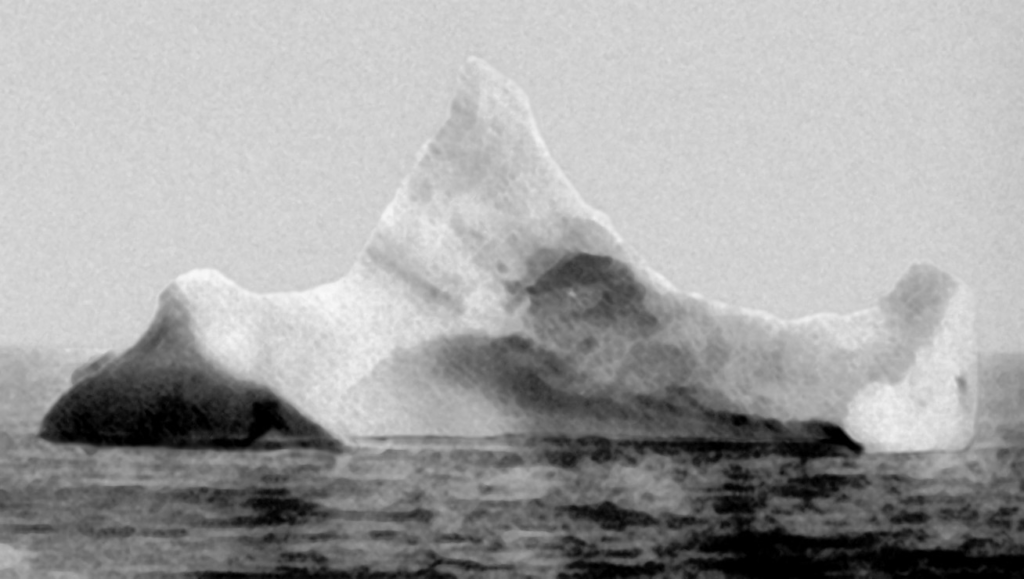
Ice Warnings Failed to Slow Titanic
The Titanic left Southampton on April 10, 1912. As she cleared the harbor, the displacement of water her hull produced tore the moored ocean liner SS New York from her moorings, sending her swinging toward the Titanic’s side. Tugboat intervention prevented a collision. The Titanic stopped briefly in Cherbourg, France, then at Queenstown, Ireland, before heading out across the North Atlantic with more than 2,200 passengers and crew.
On April 14, Titanic’s wireless operators received six ice warnings from nearby ships. Smith posted the first warning on the bridge and adjusted the ship’s course slightly southward. By afternoon, passengers could see ice in the water off the ship’s bow. The speed remained at 22 knots, two knots below her maximum. This decision was later criticized as reckless. It reflected standard maritime practice: the custom among North Atlantic liners was to proceed and rely on lookouts to spot ice with enough time to alter course. Punctuality mattered more than caution, and ships that struck ice and survived were common.
In 1907, Smith had told an interviewer that he could not “imagine any condition which would cause a ship to founder.” He had watched ships bump ice and keep sailing for four decades.
That evening, Smith attended a dinner party held in his honor in the first-class restaurant on B Deck. At around 9 p.m., he conferred with Second Officer Charles Lightoller on the bridge and agreed there was adequate visibility to spot ice ahead. He went to bed. Wireless operator Jack Phillips was meanwhile overwhelmed with passenger telegrams. When a warning from the SS Mesaba arrived that evening reporting icebergs directly in the Titanic’s path, Phillips acknowledged receipt but did not forward the message to the bridge. A later warning from the SS Californian was cut off mid-transmission. The officers on watch had no knowledge that the ship was sailing into an ice field.
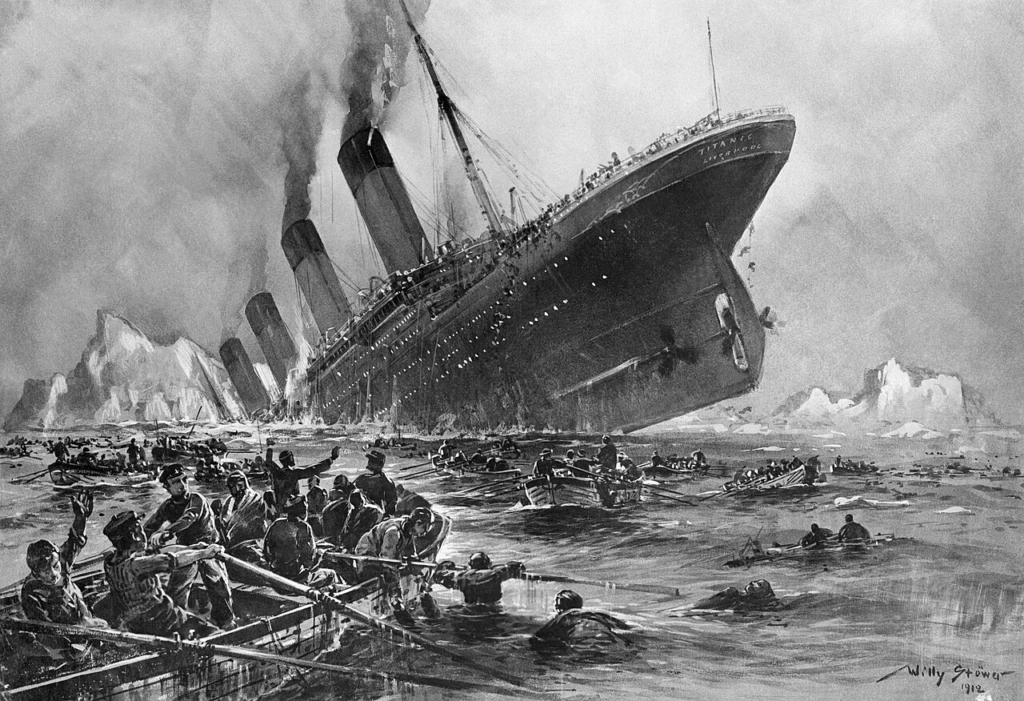
Witnesses Gave Smith Contradictory Verdicts
After the collision and Andrews’s assessment, the accounts split and never reunite.
One set of witnesses described a captain working under impossible conditions with controlled authority. According to these accounts, Smith went below decks to personally inspect the flooding, ordered the crew to begin uncovering lifeboats before Andrews had confirmed the ship was doomed, summoned wireless operators Phillips and Bride and ordered them to prepare to broadcast a distress call, and was observed across multiple decks directing passengers into boats. Second Officer Lightoller recalled that Smith had to cup both hands around his ears to communicate above the noise of escaping steam, and that Smith nodded when Lightoller shouted the recommendation to begin loading women and children. Smith personally helped load Lifeboats 8, 6, and 2.
Another set of accounts described a man overtaken by the magnitude of what was unfolding. According to these witnesses, Smith withdrew to his quarters at some point during the sinking, failed to coordinate lifeboat loading, did not ensure his orders were carried out, and never issued a formal order to abandon ship. Many lifeboats left the Titanic significantly less than full.
Both sets of accounts come from survivors describing events in dim light, freezing temperatures, amid the noise of escaping steam and the chaos of a ship going under. Neither set can be confirmed.
Just before 2 a.m., Smith released Phillips and Bride from their duties at the Marconi room. He walked the deck, telling crew members: “Now it’s every man for himself.” At approximately 2:10 a.m., Steward Edward Brown heard Smith call out to the remaining crew to do their best for the women and children and look out for themselves. Smith returned to the bridge.
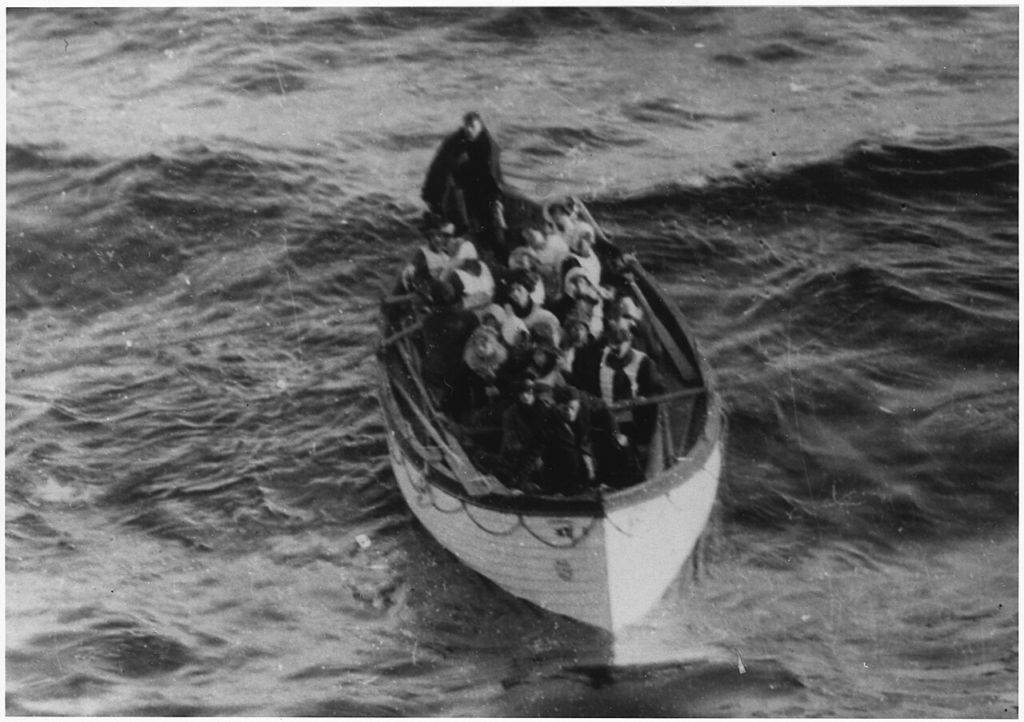
The Captain Returned to His Bridge
The Titanic sank at 2:20 a.m. on April 15, 1912, approximately 400 miles south of Newfoundland, Canada. Around 1,500 people died. Smith was among them. His body was never found.
Conflicting accounts of his final minutes appeared in the weeks that followed. Initial rumors claimed he had shot himself on the bridge. Some survivors on Collapsible B reported an unidentified swimmer in the water nearby who spoke encouragingly to the men aboard, declined to be pulled out, and died in the water. Fireman Walter Hurst, who survived on Collapsible B, was certain the swimmer was Smith. Other witnesses placed Smith at the bridge when the water rose over it. No account can be verified against another.
A plaque in Hanley Town Hall stated that Smith “having done all man could do for the safety of passengers and crew remained at his post on the sinking ship until the end.”
Whether that is an accurate account of his last hours, or the verdict a nation needed to give a man it had trusted with its most celebrated ship, is a question the North Atlantic settled for itself.
Leave a Reply