
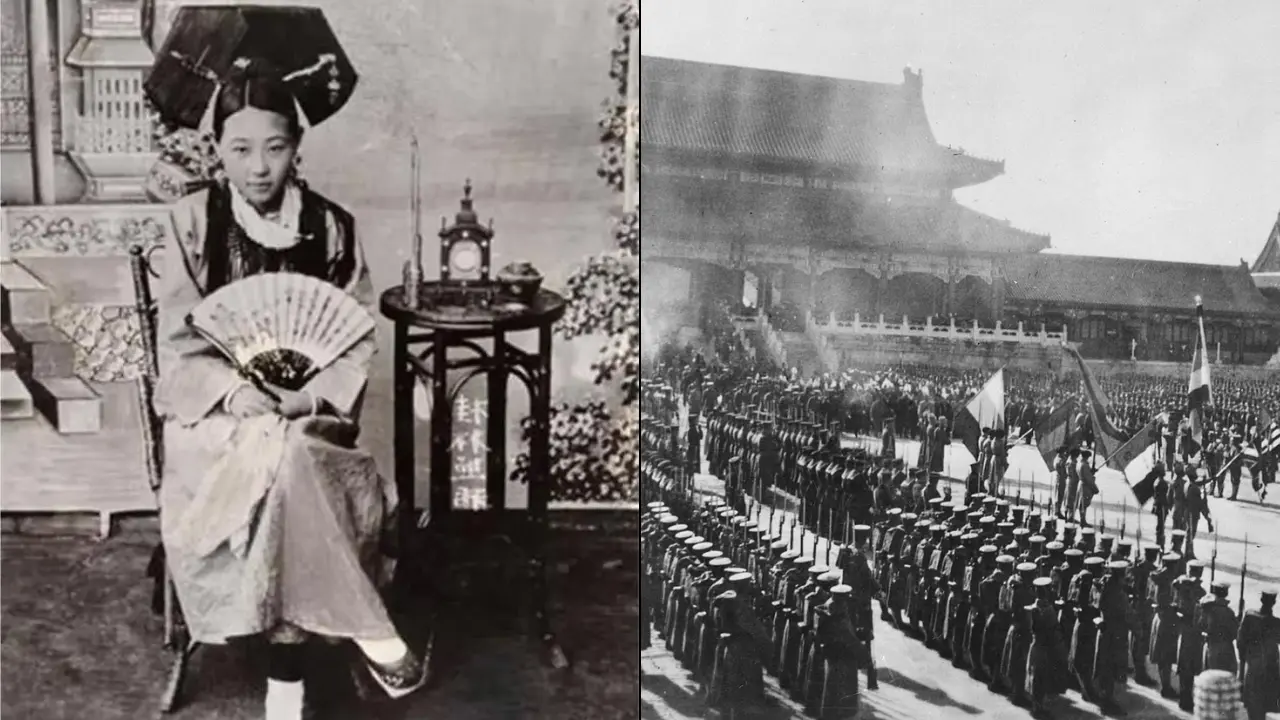
Sold onto a Suzhou flower boat at 13 and later made concubine to one of the Qing dynasty’s most senior diplomats, Sai Jinhua socialized with Kaiser Wilhelm II in Berlin and returned to China just in time for the Boxer Rebellion of 1900, where legend credits her with persuading the occupying German commander to spare the city.
In the summer of 1900, German soldiers marched into a Beijing brothel. They expected what occupying armies always expect. What they found instead was a Chinese woman who addressed them in fluent German.
That woman was Sai Jinhua. She had learned the language fifteen years earlier, in Berlin, at the side of one of the Qing dynasty’s most senior diplomats. By 1900 she was running her own establishment, her European past reduced to a selling point. What happened next would make her one of the most argued-over women in modern Chinese history.
A Flower Boat Shaped Her Fate
Sai Jinhua was born Zhao Lingfei on October 9, 1872, in Yixian, Anhui Province. Her family name was Cao, though she later claimed it was Zhao, and historians have never fully resolved the question. She entered the world in the final decades of the Qing dynasty, China’s last imperial line, which had already suffered through two Opium War defeats, mass rebellions that killed millions, and the growing humiliation of Western commercial concessions. A baby girl born into a poor household in this collapsing empire occupied the very lowest rung available to her.
She did not remain in her family home for long. After her father died and left her mother unable to support the household, Jinhua was sold. She was 13. She was put to work on a flower boat, one of the floating brothels that moved along Suzhou’s canals, where she danced for patrons and performed what was required of her.
Two years passed. Then, in 1887, a government official named Hong Jun visited one of the establishments where she worked. He was 48. She was 15. He was one of the most senior figures in the Qing diplomatic corps, a zhuangyuan, meaning he had placed first in the empire-wide imperial examinations, and had risen to become a trusted envoy of Empress Dowager Cixi. Hong Jun was smitten. In 1888, he paid one thousand taels of silver for her freedom and made her his concubine. He was 33 years her senior. His principal wife remained at home.
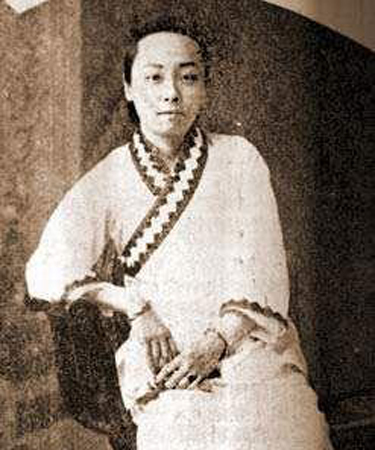
Sai Jinhua Reached the Courts of Europe
Empress Dowager Cixi appointed Hong Jun as the Qing envoy to Russia, Germany, Austria-Hungary, and the Netherlands. His wife was unwilling to travel to foreign countries. Jinhua took her place. At 16, with bound feet that caused her constant pain, she boarded a ship and left China.
The couple traveled to Saint Petersburg, then settled in Berlin. Hong Jun barred Jinhua from attending most of his official parties, protective of his diplomatic standing and aware of the awkward position she occupied. At the gatherings she did attend, her bound feet made dancing impossible. She sat at the edges of rooms where history was being made. During her time in Berlin she reportedly met Kaiser Wilhelm II, Chancellor Otto von Bismarck, and Empress Victoria, the eldest daughter of Queen Victoria and widow of Emperor Frederick III.
She also became acquainted with Alfred von Waldersee, then serving as Chief of the German General Staff. He was 56. She was 16. The nature of that early acquaintance has been disputed ever since.
Jinhua used the time to teach herself German. She moved through Berlin’s diplomatic margins with a persistence that charmed nearly everyone she encountered. She would need what she learned there sooner than she anticipated.
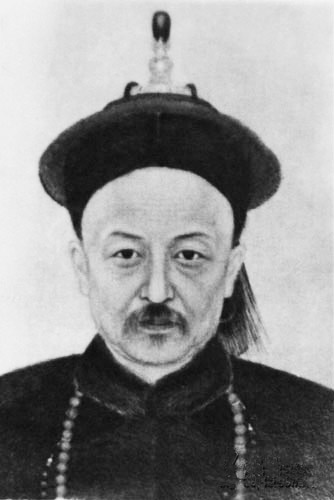
Hong Jun’s Death Left Her Nothing
The couple returned to Beijing in 1890. That year Jinhua gave birth to their daughter, Deguan. Three years later, in 1893, Hong Jun died at 54. His relatives moved quickly. As a concubine, Jinhua held no legal claim on the household or its assets. She and Deguan were removed. She walked behind Hong Jun’s coffin as it traveled back to Suzhou.
Then she was penniless again.
She returned to prostitution. This time the circumstances were different. She was no longer a teenage girl on a flower boat. She was a widow who had lived in Europe, socialized with German aristocrats and Chinese diplomats, and crossed the world in a senior official’s household. She used the name Cao Menglan when she set up her business in Shanghai, and later Sai Jinhua, meaning “prettier than golden flower,” after relocating to Tianjin. The stories she carried from Berlin were worth more than any credential her profession could otherwise offer.
China’s wealthy and powerful paid to hear them. By 1899 she had established the Golden Flower Troupe, a courtesan theater company that performed for clients in both Tianjin and Beijing. Her establishment was operating in the capital when the city broke open.
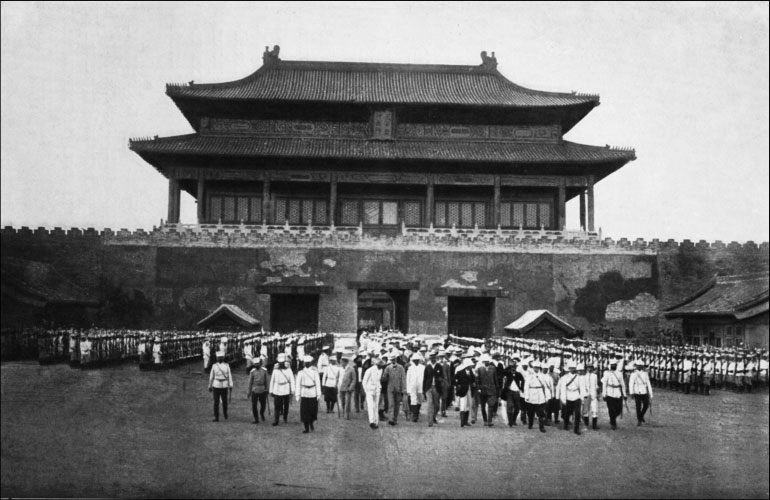
The Rebellion Brought Waldersee Back
The Boxer Rebellion reached Beijing in the summer of 1900. The anti-imperialist Boxer movement, which had spent years building resentment against Christian missionaries and the rising influence of foreign powers across northern China, marched on the capital. Thousands of foreign nationals and Chinese Christians took refuge in the Legation Quarter.
An Eight-Nation Alliance composed of Britain, France, Germany, Japan, Russia, the United States, Italy, and Austria-Hungary dispatched a combined military force to relieve the siege. They broke through in August. By September 7, 1901, the Boxer Protocol had been signed, and the officials who had supported the rebellion were executed.
When German soldiers arrived at Jinhua’s section of the city during the occupation, they were surprised to find themselves addressed in their own language. She reportedly showed them photographs she still possessed from her European years, images of herself among people the soldiers would have recognized. The next morning a vehicle arrived at her door. She was taken to German Army headquarters.
Alfred von Waldersee, now the overall commander of the Allied occupation forces, was there. He was 68. She was 28. They had not seen each other in over a decade.
What passed between them was never fully disclosed. Jinhua later admitted in her biography that the two were on good terms but vigorously denied a sexual relationship. The scholar Dewei Wang noted the significant differences in age, political concern, and social status that made a romance unlikely. A German soldier’s diary recovered in the 1980s documented that the two were in close contact.
According to the legend that attached itself to Jinhua’s name and never let go, it was she who persuaded Waldersee to treat the citizens of Beijing with greater mercy than the Alliance’s forces had been showing. Whether the legend is accurate, whether it was a story she cultivated for protection, or whether her influence has been exaggerated by a public that needed a heroine in a moment of national humiliation, no surviving witness ever confirmed.
She was canonized by popular memory as “the Ninth Heaven Goddess Protecting the Nation.” The government’s verdict was different.
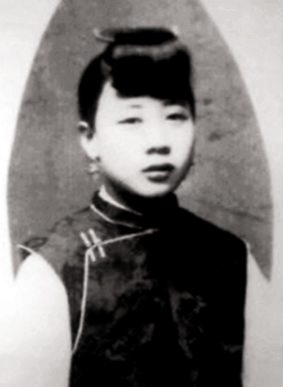
Sai Jinhua Outlived Everything She Loved
The years after the rebellion collapsed into cycles of brief prosperity and ruin that had defined her entire life. In 1903, a courtesan named Fengling who worked in her establishment committed suicide by ingesting opium. Authorities charged Sai Jinhua with torturing the woman and driving her to her death. She was imprisoned. The charge was eventually reduced to manslaughter, but the legal proceedings consumed most of what she had. She was expelled from Beijing and banished to her hometown.
She had already outlived Deguan by then. Her daughter, born in 1890, died in 1908 at 18 years old.
She married twice more: Huang, a railroad engineer, in 1908, and Wei Sijiong in 1918. Both died and left her penniless again. She returned, each time, to the only work she had ever known. By the final years of her life there was nothing left to return to. She lived off the kindness of admirers and the fees paid by journalists and historians who arrived wanting to hear her describe Berlin, the Legation Quarter, Waldersee’s headquarters. Plays, novels, and musicals about her life had been written across three decades. A drama was in rehearsal when she died.
Her maid found her on the morning of December 4, 1936. She was 64. One of the coldest winters Beijing had experienced in years was under way. Qi Baishi, one of China’s most celebrated painters and calligraphers, was commissioned to engrave her headstone. The woman who had once stood in the drawing rooms of imperial Berlin was buried in the city she had, according to those who remembered, helped to save.
Wan Xianchu, a scholar who wrote about her life, concluded that “regardless of whether Sai Jinhua’s role in China’s foreign relations may have been exaggerated and despite the controversies surrounding her conduct and affairs, she lived a tough and spectacular life that has assured her a place in the modern history of China.”
What that role actually was, no surviving witness ever fully confirmed.
Leave a Reply