
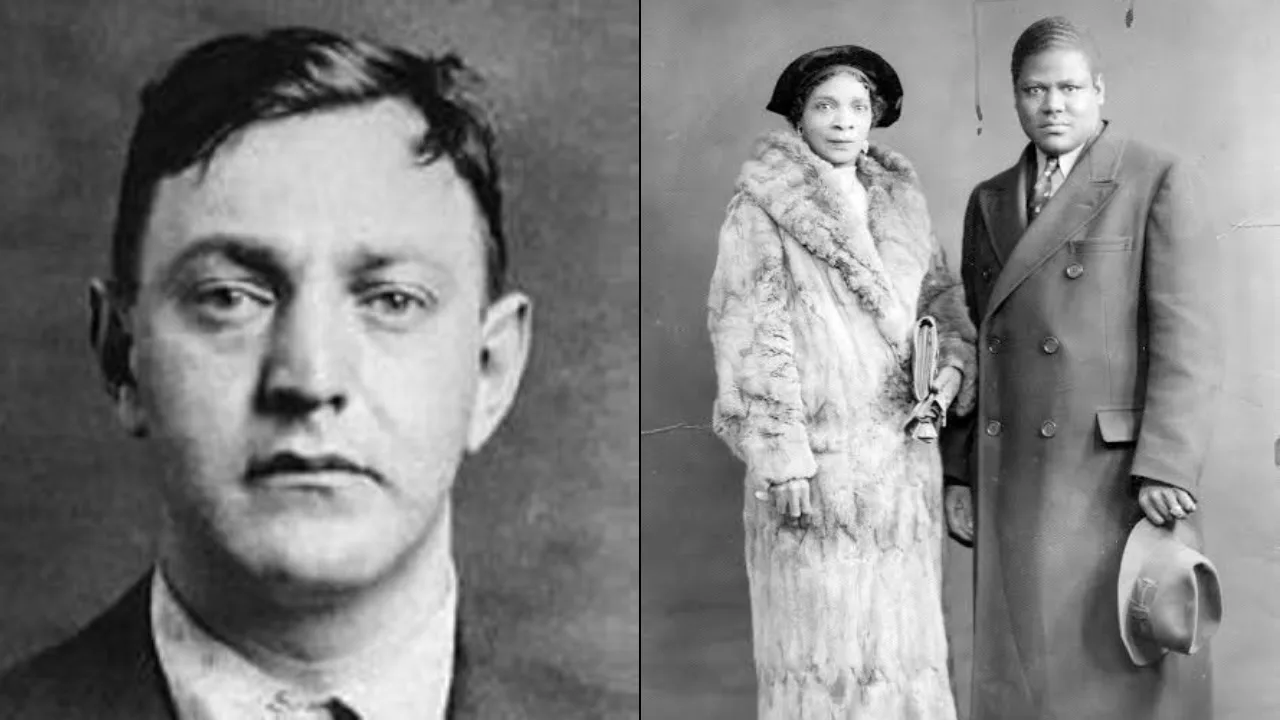
In 1930s Harlem, Stephanie St. Clair ran a numbers empire estimated at half a million dollars, survived a mob war that killed more than 40 people, and sent her dying enemy a telegram signed “Madame Queen of Policy.”
On the night of October 23, 1935, Dutch Schultz was shot in the restroom of the Palace Chop House in Newark, New Jersey. Gunmen hired by the Mafia Commission had come for him, and they had found him. He was moved to a hospital, where he delivered a long incoherent stream of words to the detectives sitting at his bedside. Then a telegram arrived.
Stephanie St. Clair had sent it. “As ye sow, so shall you reap,” it read. She signed it Madame Queen of Policy.
Two years earlier, she had been hiding from this man under a pile of coal.
St. Clair Arrived With Nothing Familiar
The circumstances of Stephanie St. Clair’s birth remain genuinely contested. Her 1924 Declaration of Intention lists Fort-de-France, in Martinique, as her birthplace. The most thoroughly researched biography, by historian Shirley Stewart, places her birth in Guadeloupe on Christmas Eve, 1897. Both islands are in the French West Indies. What the record does not dispute is her mother’s name, Félicienne, or the fact that Félicienne worked alone to send her daughter to school. St. Clair would eventually compete against men with considerably less education than she had received.
When her mother fell ill, St. Clair left school to tend to her. When her mother died, she left the island entirely. Exactly when she arrived in the United States is similarly unclear: the manifest of the steamer S.S. Guiana suggests 1911, placing her age at around 13, while other accounts favor 1912. She settled in Harlem.
She did not remain on the margins for long. She affiliated herself with the Forty Thieves, a criminal organization that had traced its roots to 1825 and operated as one of New York’s oldest gangs. She learned how the city’s underworld was structured. By April 1917, she had invested $10,000 of her own money in a numbers operation in Harlem. The source of that capital, like much of her early life, has never been confirmed.
Madame Built Harlem’s Policy Empire
The numbers game was not simple gambling. It was an informal financial structure built for African-Americans who were systematically locked out of legal investment. Banks in early twentieth-century New York routinely refused black clients. Wall Street was not available to them. The numbers operation filled the gap.
Players bet on a number between 1 and 999, staking as little as a nickel. The winning number was derived daily from two figures published by the New York Clearing House: the clearance total for member banks and the Federal Reserve credit balance. The odds rewarded some familiarity with New York’s financial system. The bets were small. The volume, across thousands of daily participants in Harlem, was enormous.
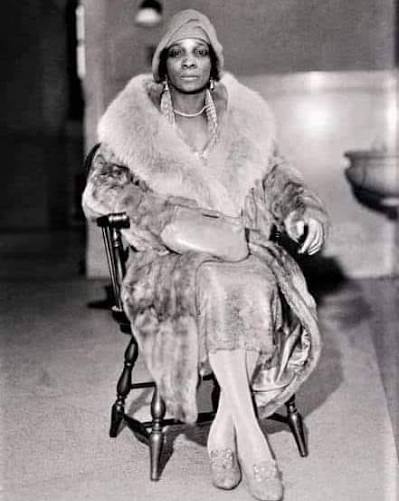
St. Clair organized this structure into a formal enterprise. She hired runners, controllers, and enforcers. She cultivated police contacts and paid them. Contemporaries described her as arrogant, educated, expensively dressed, with a temper that arrived without warning and expressed itself fluently in multiple languages. By the mid-1920s she was collecting a percentage from every stake placed through her network. By 1930, one New York journalist estimated her personal fortune at roughly half a million dollars, a sum equivalent to nearly ten million dollars today. She owned multiple properties in Harlem. In Manhattan she was known as Queenie. In Harlem itself, people called her Madame St. Clair.
She also placed paid advertisements in the New York Amsterdam News and other Harlem papers, educating residents about their legal rights under police contact. The police read them.
Schultz Declared War on Her Empire
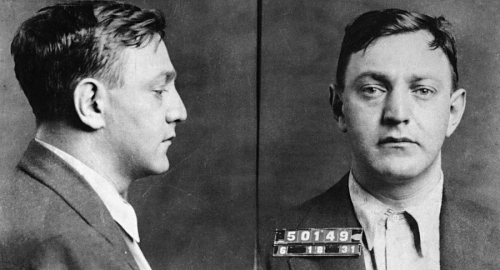
Arthur Flegenheimer, better known as Dutch Schultz, was born in the Bronx in 1901 and had spent the previous decade building a bootlegging empire across the borough. With Prohibition ending in 1932, he needed new revenue. He looked north to Harlem’s numbers operations and decided to take them.
He sent St. Clair an ultimatum: surrender her operation or begin paying him a substantial percentage of everything it earned. Many operators had capitulated. St. Clair refused.
What followed lasted years and cost more than 40 lives. St. Clair placed full-page newspaper ads across Harlem urging residents to “play black,” directing bets away from any banker collecting on Schultz’s behalf. When she identified storekeepers taking his numbers, her enforcers entered those stores and destroyed them. Schultz responded with kidnappings, contract killings, and a standing offer to anyone who could deliver her. She moved through a series of safe houses. At the peak of the violence, Schultz’s men came close enough that she concealed herself in a coal cellar, lying buried under a pile of coal until they passed. She transferred daily operations to her chief enforcer, Ellsworth “Bumpy” Johnson, and waited.
The conflict ended not because of anything St. Clair managed to do directly, but because of a decision made much farther downtown.
Schultz had announced his intention to murder Thomas Dewey, the New York State-appointed Special Prosecutor who was building new racketeering charges against him. The Mafia Commission, the ruling body of several of New York’s organized crime families, calculated that killing a prosecutor would bring catastrophic law enforcement pressure down on every operation in the city. They ordered Schultz killed before he could act.
On October 23, 1935, gunmen shot Schultz at his own table in the Palace Chop House. He died the following day. The telegram arrived while he was still breathing.
St. Clair Exposed Harlem’s Corrupt Police
The war with Schultz had not been St. Clair’s only war. Since 1929, she had been publishing columns in the Amsterdam News naming police officers who shook down Harlem’s numbers operations, detailing exactly what she had paid each one and when. The police arrested her on December 30, 1929, for possession of policy slips. On New Year’s Day 1930, she placed an editorial announcing the arrest. “I have been arrested and framed by three of the bravest and noblest cowards who wear civilian clothes,” she wrote.
At her March 1930 trial, she represented herself. She admitted to being a numbers banker. She told the court she had been “marked for a jail term because of her fight for courtesy and freedom from annoyance of the police.” The judge and jury convicted her. She was sentenced to eight months and twenty days in a workhouse on Welfare Island.
She served the sentence. Then she walked into the Seabury Commission.
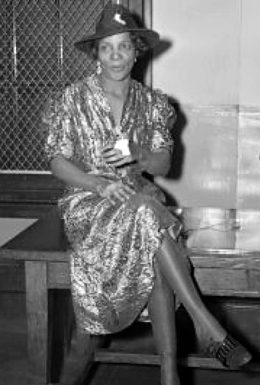
Judge Samuel Seabury was investigating corruption throughout New York’s police department and judiciary. St. Clair testified in December 1930, appearing in a mink coat. She told the commission she had paid police officers $6,000 over the years to protect her runners, with further payments through an intermediary to a lieutenant in the Sixth Division. She provided names, dates, and amounts. The commission suspended that lieutenant and thirteen of his officers. St. Clair went home and kept writing.
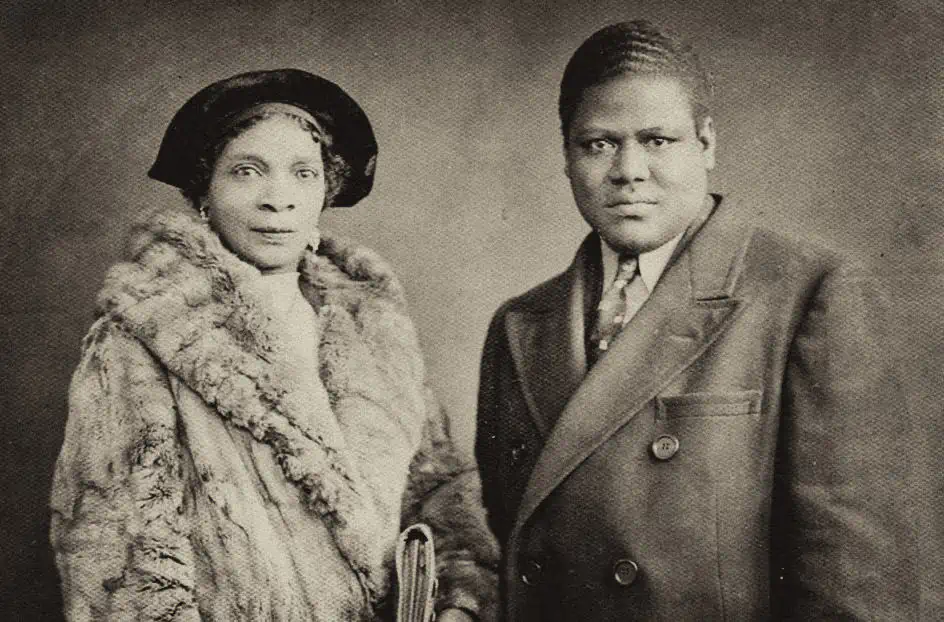
A Marriage Contract Ended in Gunshots
In 1936, St. Clair entered what she described as a trial marriage contract with a man who called himself Sufi Abdul Hamid, born Eugene Brown, in Lowell, Massachusetts. Hamid had reinvented himself as a labor and civil rights activist in Harlem, known for his cape, his turban, and his stepladder speeches against Jewish business owners. The press had given him a nickname: the Black Hitler.
Their contract stipulated a one-year trial period. It did not survive. Hamid had been conducting an affair with Dorothy Matthews, a Harlem fortune teller who performed under the name Madame Fu Futtam. When St. Clair confronted him, he denied it.
On January 18, 1938, she shot him on his way to see a lawyer. The bullets grazed him. He survived.
At the trial that followed, St. Clair testified that Hamid had treated her cruelly and that the gun discharged during a struggle between them. The judge was not persuaded. He stated from the bench that St. Clair had “been living by her wits all of her life” and sentenced her to two to ten years at Bedford Hills Correctional Facility for Women in Westchester County.
Hamid divorced her. Within weeks he married Madame Fu Futtam. That summer, he died when his private airplane ran out of fuel over Long Island and crashed.
He had bought the plane himself. He had kept the fuel low.
St. Clair was released from Bedford Hills in the early 1940s. She never returned to the numbers business and never again placed ads in Harlem newspapers. She moved to a house on Long Island, made legitimate investments, and kept herself out of print. Bumpy Johnson, by then the dominant figure in Harlem’s numbers operations, came to live with her in her later years.
She died in December 1969, a few days before what would have been her 72nd birthday. No New York newspaper ran an obituary for the woman who had outlasted Dutch Schultz, exposed a police lieutenant and thirteen officers to a state commission, and sent a dying gangster a Bible verse for his final hours. The city she had spent fifty years fighting, first from inside its criminal structures and then from inside its newspapers, filed nothing about her passing.
What remains is a telegram, five words and a signature, sent to a man who had ordered her killed, while he was still alive enough to read it.
Leave a Reply