
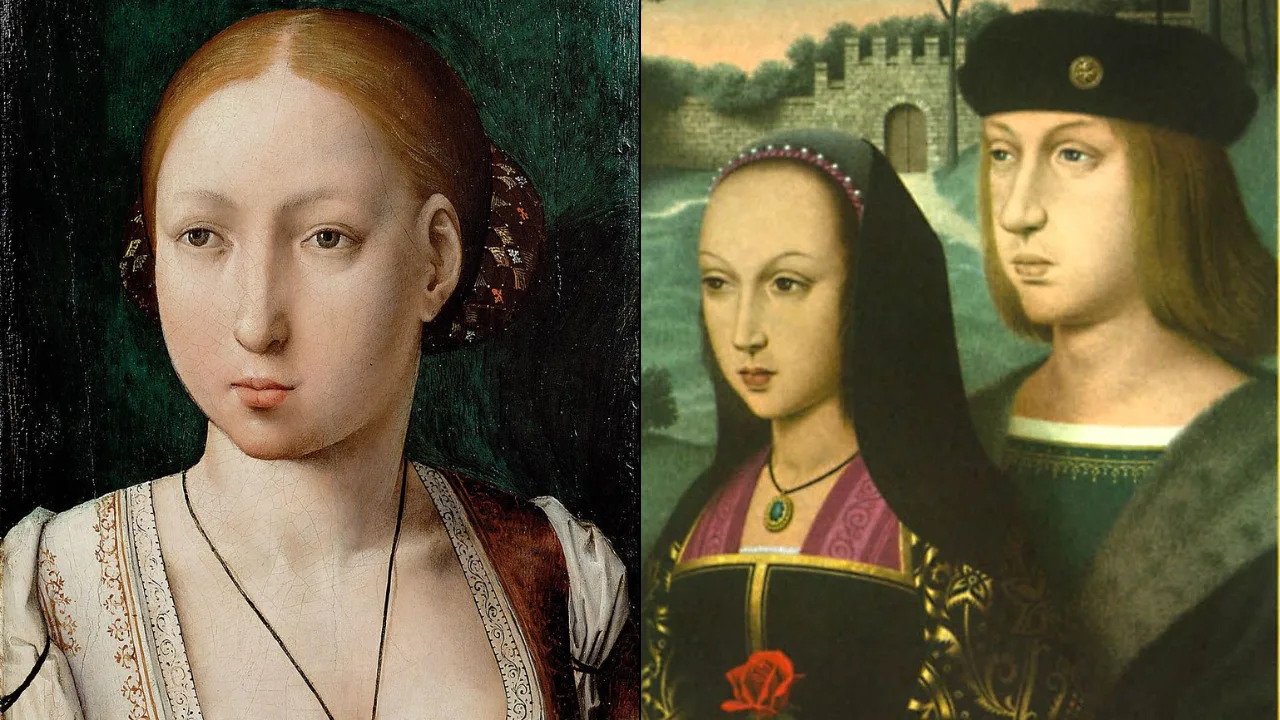
Juana of Castile ruled Spain for 46 years on paper and never once in practice, imprisoned inside the palace at Tordesillas while her husband, her father, and her son declared her mad and governed in her name.
In August 1520, a rebel army stormed the palace at Tordesillas in the province of Valladolid and freed the woman inside. The rebels were Castilian nobles and urban leaders known as the Comuneros, fighting against the rule of King Charles I. They had been told, for eleven years, that the woman confined in Tordesillas was too mentally unstable to be spoken with. They brought notaries with them when they went to find out.
The notarized records from August 1520 describe a woman who spoke with clear intelligence and sound judgment.
Juana of Castile had been Spain’s rightful queen since 1504. She would remain in Tordesillas until her death in 1555. The rebels held the palace for 103 days. Then imperial forces returned, the doors closed, and the notarized documents were filed away.
Three Deaths Made Juana an Heir
Juana was born on November 6, 1479, in Toledo, the third child and second daughter of Queen Isabella I of Castile and King Ferdinand II of Aragon. Two older siblings stood between her and any throne: her sister Isabella, heir to Castile, and her brother John, heir to Aragon. No one expected her to inherit either. Her education prepared her for marriage rather than governance. She learned Castilian, Catalan, Latin, and French, became proficient in music, and studied philosophy and rhetoric alongside the classical curriculum typical of the Renaissance courts of the 1480s. She also clashed early and frequently with her deeply devout mother. Some accounts from the period suggest Isabella used coercive measures in an effort to bring her daughter to religious heel, though the exact nature of those measures is disputed.
The marriage arranged for Juana in 1495 was a matter of foreign policy. Isabella and Ferdinand’s foremost enemy was France, which had been contesting control of the Italian peninsula since the early 1490s. The Habsburg emperor Maximilian I, France’s other great rival, proposed a double union: Juana would marry his son Philip, and her brother John would marry Philip’s sister Margaret of Austria. Two dynasties, one shared enemy.
Then death undid the plan entirely. John died on October 4, 1497, in Salamanca, only months after his wedding to Margaret. Margaret was pregnant at the time but miscarried, and John’s line ended with him. The following year, Juana’s older sister Isabella died in childbirth in Zaragoza on August 23, 1498, having married King Manuel I of Portugal. Her infant son, Miguel da Paz, survived and was designated heir to three crowns: Portugal, Castile, and Aragon. Miguel died in July 1500, not yet two years old.
Juana was now heir to everything her parents ruled.
Philip the Handsome Married and Deceived Her
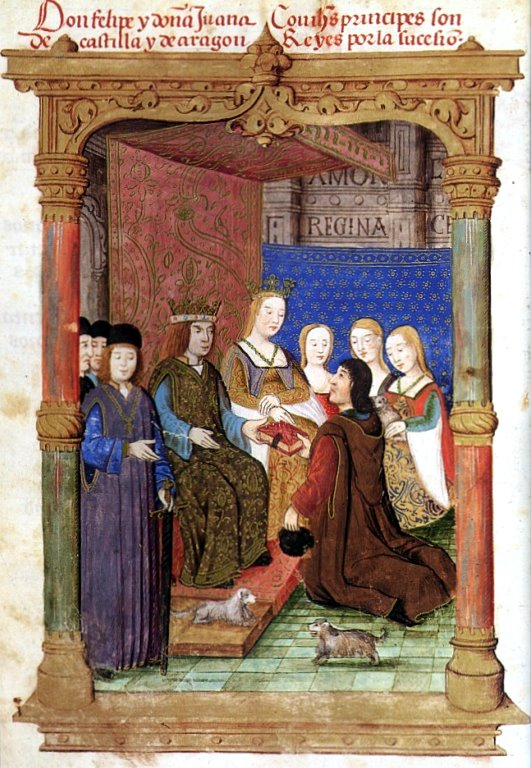
A fleet of more than 100 ships sailed from Laredo on August 22, 1496, carrying the 16-year-old Juana to Flanders. The fleet was beset by storms. It arrived in Flanders without forewarning and neither Maximilian nor Philip was on hand to receive her. The wedding took place on October 19, 1496. Contemporary accounts suggest the couple demanded to be married almost immediately upon meeting. Six children followed in rapid succession between 1498 and 1507: Eleanor, Charles, Isabella, Ferdinand, Mary, and a posthumous daughter, Catherine, born after Philip’s death during the journey that would later be used as the primary evidence of Juana’s madness.
The early passion did not survive the court at Brussels. Philip was a serial philanderer whose affairs were common knowledge throughout the Low Countries. Juana’s response, documented by those around her, oscillated between rages and extended withdrawals during which she would remain in her rooms and refuse to eat. Whether these episodes reflected genuine psychological distress or the understandable reaction of a woman with no legal or social recourse against her husband, historians have since argued both positions at length. Philip, who had clear political reasons to want his wife declared incompetent, was not a neutral observer of her mental state. He was among the first to circulate accounts of her instability to foreign courts.
Juana had no one at the Burgundian court who answered to her.
Isabella’s Death Left Juana Exposed
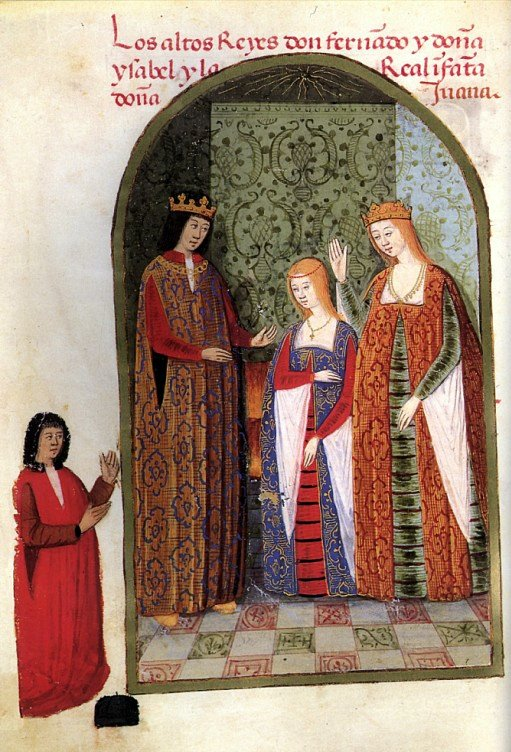
Queen Isabella I of Castile died on November 26, 1504. Her will named Juana as heir to Castile. Ferdinand retained Aragon as his own kingdom. The dynastic union her parents had spent their lives constructing suddenly fractured along its seam, with Juana as queen of one half and her father as king of the other.
Neither Ferdinand nor Philip found this arrangement satisfactory. Ferdinand wanted to hold Castile. Philip wanted to control it through his wife. Juana was the legal sovereign and the inconvenient fact around which both men were required to maneuver. Ferdinand began presenting the Cortes of Castile with accounts of his daughter’s “infirmity” as early as February 1505. The specific nature of this infirmity was never named. The Cortes accepted it nonetheless and legitimized his right to administer Castile on her behalf. By June 1506, a treaty between Ferdinand and Philip had formally ceded the government of Castile to Philip on the grounds of Juana’s incapacity. Ferdinand revoked the agreement the same day, arguing it had been extracted by force.
Juana, queen of Castile, was present at none of these negotiations.
Philip’s Death Began the Coffin Journey
Philip died suddenly in Burgos on September 25, 1506. He was 28. The official cause was typhoid fever. Contemporaries immediately suspected Ferdinand of poisoning him, a charge that was never substantiated and remains disputed by historians. Juana, who was pregnant with their last child, was left a widow and the sole nominal ruler of Castile.
What she did next was used against her for the rest of her life.
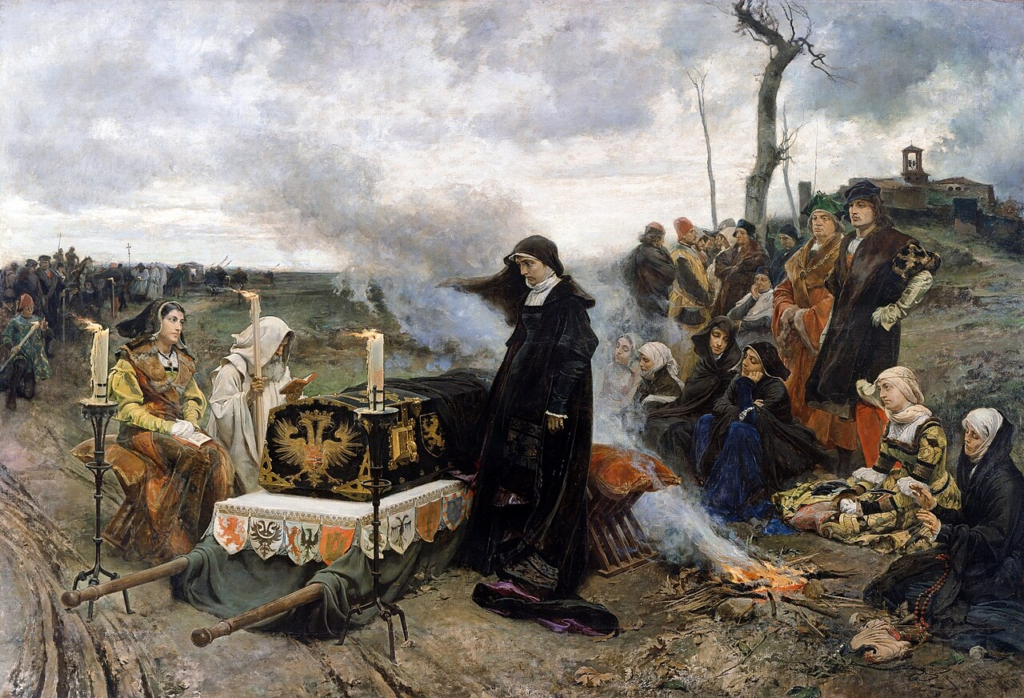
Philip had expressed a wish to be buried in Granada, where Juana’s mother lay. Burgos was more than 400 miles north of Granada. Juana accordingly refused to permit his burial until she could escort the coffin south, a journey that would take eight months. She undertook it in winter, while pregnant. Stories circulated almost immediately that she refused to let female attendants near the coffin, consumed by jealousy even of the dead, and that she ordered the coffin opened so she could gaze on the body inside. These accounts traveled faster than the cortege itself. They became, in the telling, proof of insanity. Independent correspondence from the same months does not record signs of serious mental illness. What the documented record confirms is that a widow was transporting her husband’s remains to his agreed place of burial, as widows were expected to do, while pregnant, in winter, across the interior of the Iberian peninsula.
Ferdinand met her on the road and used every mile of the journey as evidence.
Ferdinand Imprisoned His Own Daughter
Ferdinand returned to Castile in August 1507 and took administrative control of the kingdom, citing Juana’s alleged incapacity as justification. Juana did not resist publicly. She appears to have retreated into the withdrawal that had characterized her earlier responses to Philip’s control, which served her father’s purposes exactly.
In February 1509, he had her formally confined at the palace at Tordesillas, a small town in the province of Valladolid the same region where her parents had signed the famous 1494 treaty dividing the Americas between Spain and Portugal. Her loyal servants were dismissed. The people now surrounding her answered to Ferdinand. Juana’s youngest daughter, Catherine, born during the coffin journey in 1507, remained with her.
The first jailer Ferdinand appointed, Mosén Ferrer, later admitted to using “la cuerda” on his prisoner: a form of torture involving rope suspension and weighted restraints. When Cardinal Cisneros investigated after Ferdinand’s death in January 1516, he found that “such atrocities had been committed” that he suspended Ferrer immediately for “endangering the health and life of Her Highness.” The investigation further found that the queen had been confined in dark, poorly lit rooms and forbidden to approach windows so that she could not be seen from outside.
Ferdinand, the man who had arranged all of this, visited his daughter at Tordesillas twice during those years.
The Comuneros Found Her Speaking Clearly
Ferdinand died on January 23, 1516. Under the terms of succession, Juana now inherited Aragon as well, uniting both kingdoms under her rule. The territory was henceforth called the Kingdom of Spain. Juana was its first queen. She remained inside Tordesillas.
Her son Charles, raised in Flanders and speaking little Spanish, arrived in Spain in 1517 and continued the confinement. His guardian the Marquis of Denia replaced what Ferdinand had established. Conditions at Tordesillas did not improve. In 1520, Castilian nobles and urban leaders rose in the Revolt of the Comuneros, objecting to Charles’s reliance on foreign advisers and his prolonged absences from his Spanish kingdoms. The rebels marched on Tordesillas in August of that year. They freed the queen. They brought notaries.
The notarized records from August 1520 describe a woman who spoke with clear intelligence and sound judgment.
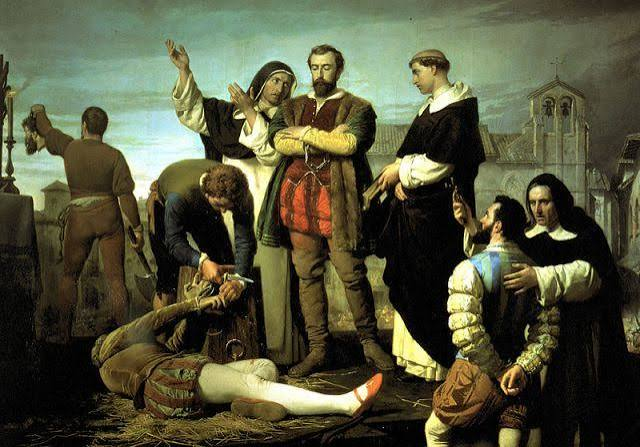
Juana declined to sign documents against her son. The revolt collapsed. Royalist forces retook Tordesillas in December 1520. The rebel leaders were defeated at the Battle of Villalar in April 1521. Those who had led the movement were beheaded. The doors at Tordesillas closed again, and no independent witness formally recorded Juana’s state of mind again for the rest of her life.
Charles Kept Her Imprisoned Thirty-Five Years
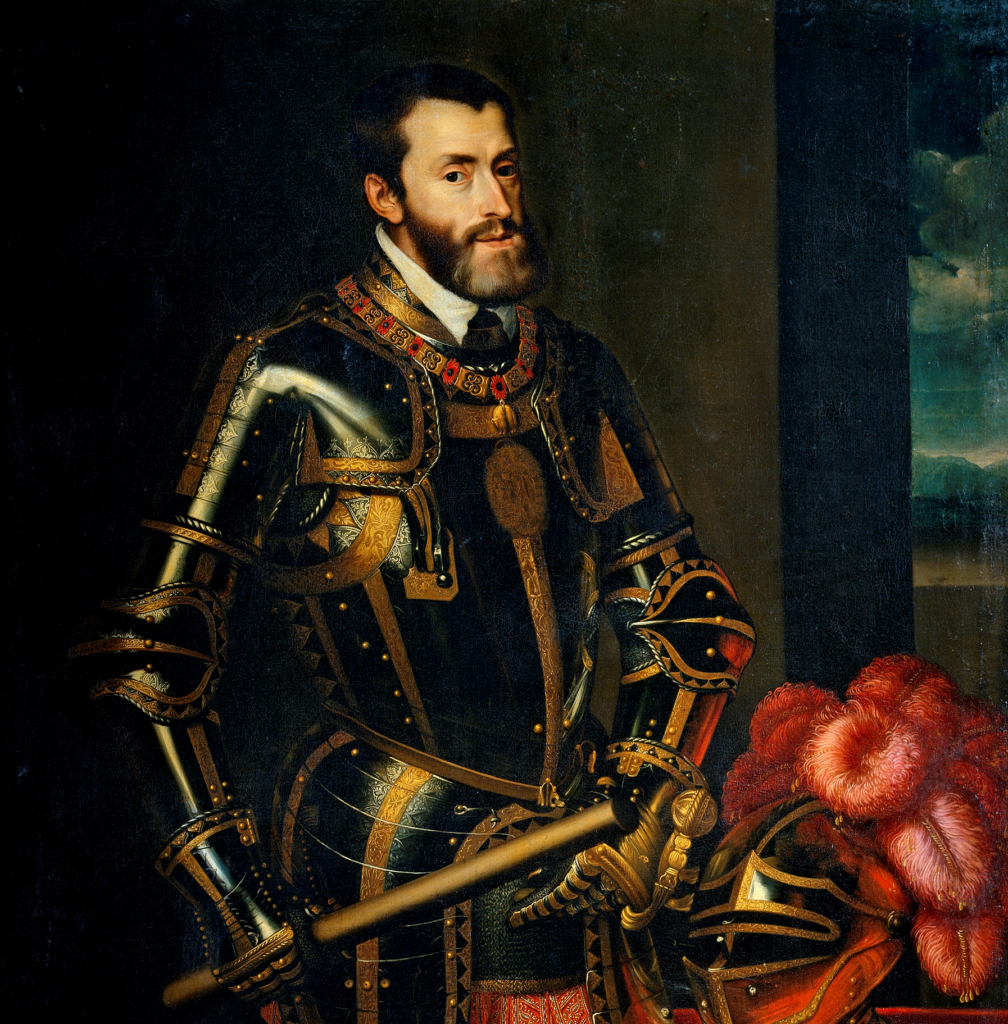
Charles went on to become the most powerful ruler in Europe since the fall of the Roman Empire, inheriting his father’s Habsburg territories across the Low Countries and Austria, holding the title of Holy Roman Emperor from 1519, and presiding over a Spanish empire expanding across the Americas. Juana’s name was formally attached to the joint reign throughout. Charles continued to reference her as co-sovereign as a constitutional convenience. She governed nothing from inside Tordesillas.
Juana died on April 12, 1555, at the age of 75. She had been confined for 46 years. She outlived her husband, her father, her daughter Isabella, her brother-in-law Henry VIII of England, and everyone else who had ever declared her unfit to rule. Modern scholars have proposed schizophrenia, bipolar disorder, and severe depression as possible diagnoses.
Others have noted the more obvious fact: every man who declared Juana incompetent gained direct political power from that declaration. Philip spread rumors of her madness before he died. Ferdinand used those rumors to seize Castile. Charles sustained the confinement his grandfather had built. In 1520, when independent notaries actually questioned the Queen of Spain in her own chambers, they wrote down what they found.
They found a woman who spoke with clear intelligence and sound judgment.
The notarized documents still exist. Eleven days after the rebels filed them, imperial forces returned to Tordesillas. Juana of Castile went back inside and did not come out again for thirty-five years.
Leave a Reply