
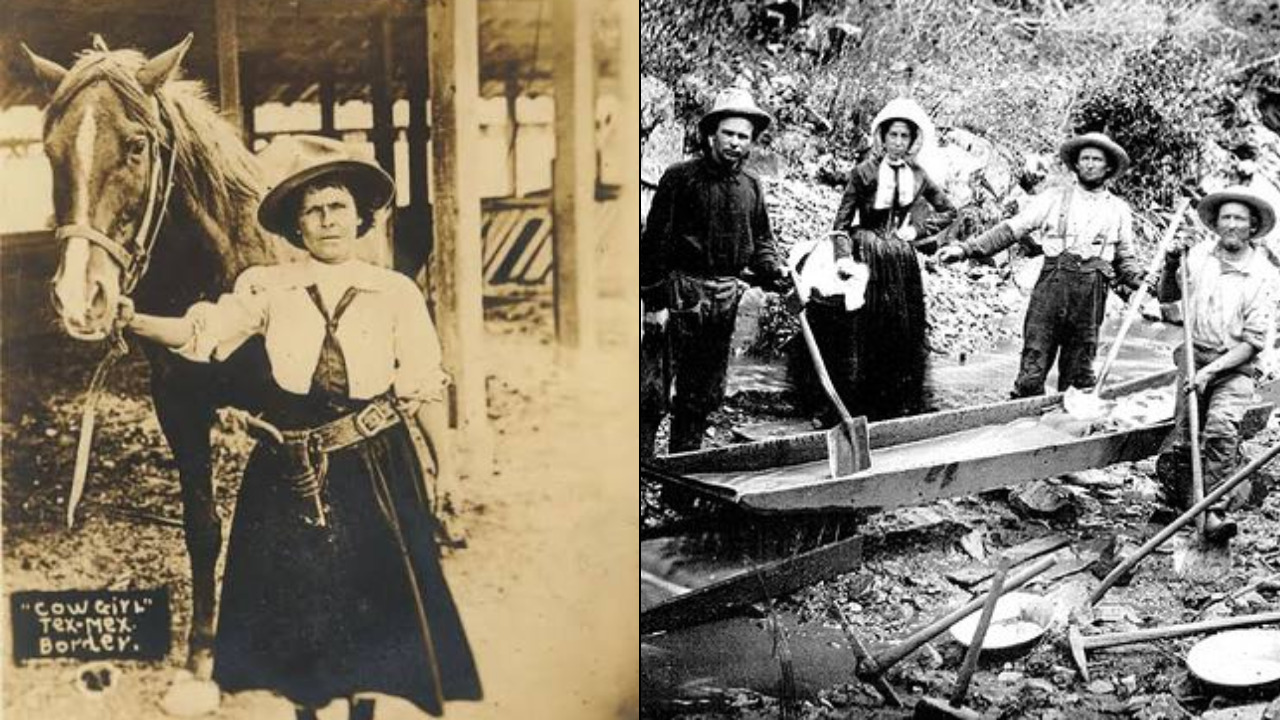
Born around 1812, Sarah Bowman stood six feet two inches tall, refused to take cover during the Mexican artillery siege of Fort Brown in May 1846, and went on to operate a brothel network stretching from Texas to Arizona that the US Army depended on and official history quietly declined to record.
The Great Western Answers the Mexican Challenge
On March 20, 1846, General Zachary Taylor’s army halted at the south Texas bank of the Arroyo Colorado. Mexican soldiers had positioned themselves along the far shore. Bugles rang across the water with a warning: any American who attempted the crossing would be shot. Taylor’s officers conferred. The column held its ground. Then a six-foot-two, red-haired laundress pushed her way to the front of the formation, addressed the general directly, and said that if he would supply her with a decent pair of trousers she would wade the river herself and whip every soldier on the other bank who dared show his face.Her name was Sarah Bowman. She was a cook and laundress on an army wage.The troops crossed the river without her. But the legend had already started.
A Woman Too Large for the Record to Ignore
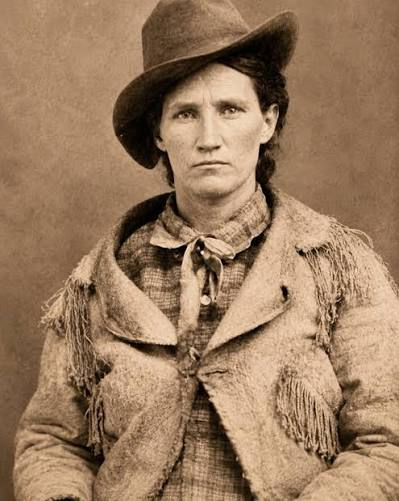
Bowman was born Sarah Knight, almost certainly in 1812 or 1813, in either Tennessee or Clay County, Missouri. Everything about her early life remains beyond reliable recovery. She later described herself as coming from a respectable family, but the claim is unverifiable, and what the record does establish is straightforward: she could not read or write, stood six feet two inches tall, weighed approximately 200 pounds, spoke fluent Spanish, and at some point in the late 1830s married a soldier and followed him into the camp-follower world that would define the rest of her life.
The nickname arrived through the army’s admiration, and its reference point was unmistakable. The SS Great Western, designed by the engineer Isambard Kingdom Brunel and launched from Bristol in 1837, completed its maiden voyage from Bristol to New York in April 1838, becoming the first steamship purpose-built for regular transatlantic service. It was the largest vessel of its kind in the world, and it was famous for its size and the force with which it moved through water. Soldiers named Bowman after it. The comparison was not only about physical scale. Like the ship, she was built for conditions that defeated ordinary things.
Her first husband enlisted in the Seventh Infantry. Bowman joined him as a camp laundress during the Second Seminole War, fought in the swamps of Florida between 1835 and 1842 under General Zachary Taylor. When the campaign ended and Taylor’s forces eventually moved to Texas in the mid-1840s, Bowman moved with them. By 1846 she had remarried. Her second husband, who appears in the records as Borginnes or Bourdette or Bourjette depending on the source, held a position in the Fifth Infantry and was assigned to Fort Texas on the north bank of the Rio Grande, directly opposite the Mexican city of Matamoros. Bowman set up an officer’s mess. She ran a canteen. She had been doing exactly this, in one form or another, for the better part of a decade.
The Siege That Made Her the Heroine of Fort Brown
The Mexican-American War of 1846 had its origins in the disputed position of Texas. Texas had declared its independence from Mexico in 1836, fifteen years after Mexico had separated from Spain in 1821. In 1845, the United States annexed Texas as a state, pressing its claim that the southern border ran along the Rio Grande. Mexico contested this, insisting the true border lay further north at the Nueces River. Taylor was dispatched south to occupy the disputed territory and establish the American position. His forces arrived at the Rio Grande in late March 1846. Fort Texas began to take shape on the north bank.On May 3, 1846, Mexican artillery opened fire on the garrison. The bombardment would last seven days.
Taylor’s standing orders required the women at the fort to take shelter in an underground magazine. Bowman refused to go. For the duration of the siege, she kept her kitchen operating in the open air, moving through the compound with food and buckets of coffee while artillery shells detonated around her. A tray was shot out of her hands. A shell fragment pierced her sunbonnet. She loaded cartridges and prepared to man the ramparts if Mexican forces broke through. She stayed on her feet for seven consecutive days of artillery fire without abandoning her station.
The story reached newspapers in New York and Philadelphia. Texas Ranger John Salmon Ford later recorded what her reputation had become on the frontier: she had, he wrote, “the reputation of being something of the roughest fighter on the Rio Grande and was approached in a polite, if not humble, manner.”The army gave her a title.hey called her the Heroine of Fort Brown.
The War Carried Her Deeper Into Mexico
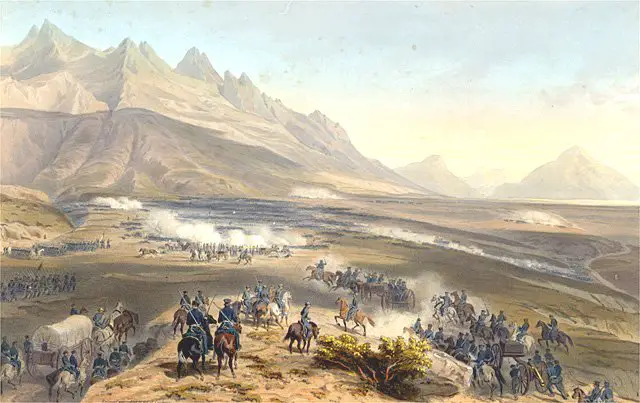
When Taylor’s forces advanced south into Mexico, Bowman went with them. She was present at the Battle of Buena Vista in February 1847, near Saltillo in the northern Mexican state of Coahuila, where Taylor’s outnumbered force of roughly 4,700 repulsed a Mexican army of 15,000 under General Antonio López de Santa Anna over two days of close fighting. Bowman loaded cartridges during the battle and carried wounded soldiers from the field. She then established a hotel in Saltillo, the American House, providing meals and accommodation for troops moving to and from the front.
The wider war ended in a comprehensive American victory. General Winfield Scott’s forces occupied Mexico City in the autumn of 1847. Under the Treaty of Guadalupe Hidalgo, signed on February 2, 1848, Mexico recognized the Rio Grande as the southern border of Texas and ceded vast territories to the north. The modern border between the two countries was fixed. Bowman remained in Mexico through the final months of hostilities, then began moving west.
Bowman Built Her Empire Across the Frontier
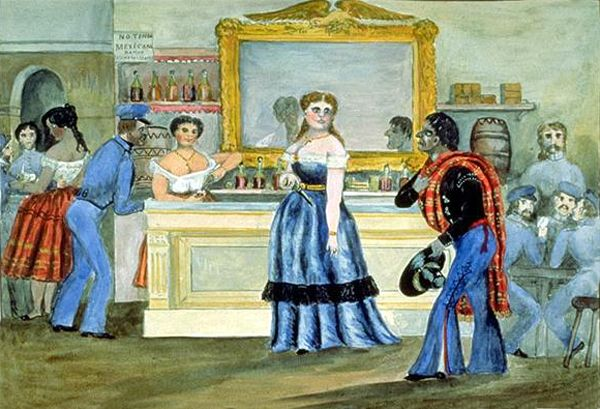
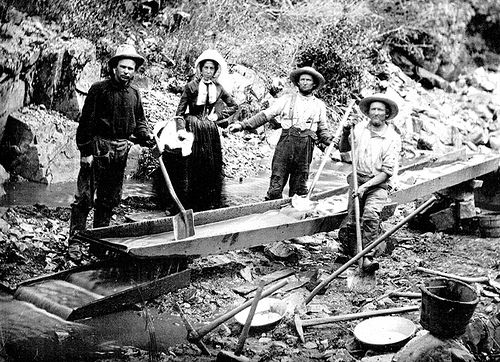
In 1849, she arrived in Franklin, Texas, now El Paso. Gold had been discovered in California the previous year, and the roads west were crowded with prospectors. Estimates suggest as many as 300,000 people made the journey to California by the mid-1850s, many of them former soldiers and camp followers who had served in the Mexican campaign. Bowman opened a hotel in Franklin to serve the westbound traffic. The establishment also functioned as a brothel, the first in what would become a pattern that stretched across the southwestern frontier for the next two decades.
She sold the Franklin hotel to the army and moved east to Socorro, New Mexico, where she married for the third and final time. Albert J. Bowman was a German-born upholsterer who had enlisted as a dragoon in the US Army. He was stationed in Socorro, and when he was discharged from military service in November 1852, the couple relocated to Fort Yuma, on the border between California, Arizona, and Mexico. Bowman became the first permanent Anglo female resident of what would eventually become Yuma, Arizona.
At Fort Yuma she operated restaurants, served again as a company laundress, and ran a brothel network on both sides of the border. In 1855, First Lieutenant Sylvester Mowry, stationed at the fort, wrote to a friend in Rhode Island about her. He described Bowman as a woman who had served with the army for twenty years, who had distinguished herself during the bombardment of Fort Brown, and who now kept the officers’ mess at Yuma. He added that among her other good qualities she was “an admirable pimp.”
Mowry intended this as a compliment. By the social accounting of the frontier, it was one.Throughout these years Bowman adopted Mexican and Native American orphans, teaching them to cook and do laundry, and she lived alternately on the American and Mexican sides of the border, in part to protect the children from the garrison’s racial prejudices. In 1856 she traveled to Fort Buchanan in the Sonoita Valley to establish another hotel. By the mid-1860s her marriage to Albert Bowman had ended. She continued operating.
The Army Gave Her a Colonel’s Brevet
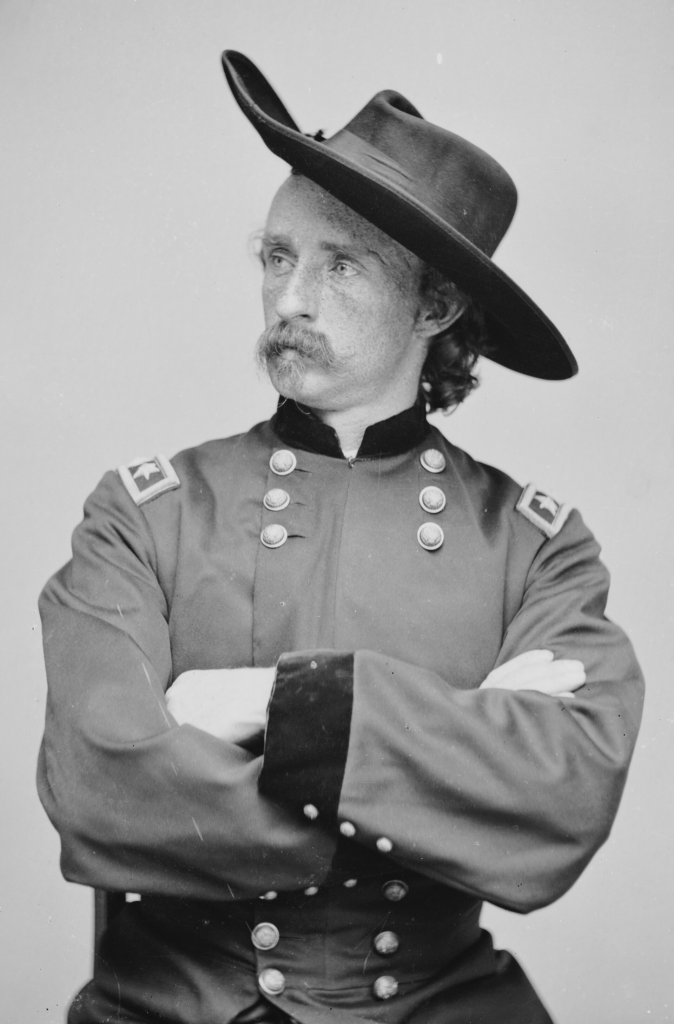
Sarah Bowman died on December 22, 1866, from a spider bite. She was approximately fifty-three years old. The Arizona Gazette’s obituary described her as “brave and determined almost beyond precedent.” The following day, the Twelfth Infantry stationed at Fort Yuma gave her a full military funeral and buried her in the fort’s post cemetery. She was posthumously breveted an honorary colonel, the first woman to receive that distinction in the United States Army.
In August 1890, when Fort Yuma was decommissioned, the army exhumed the 159 bodies in the post cemetery and transferred them to the Presidio in San Francisco. Bowman went with them. She rests there now, among Civil War generals and Medal of Honor recipients, in a national cemetery maintained by the institution she spent thirty years feeding, nursing, supplying, and following across two wars.The brevet arrived after she was dead. The history took longer still.
Leave a Reply