
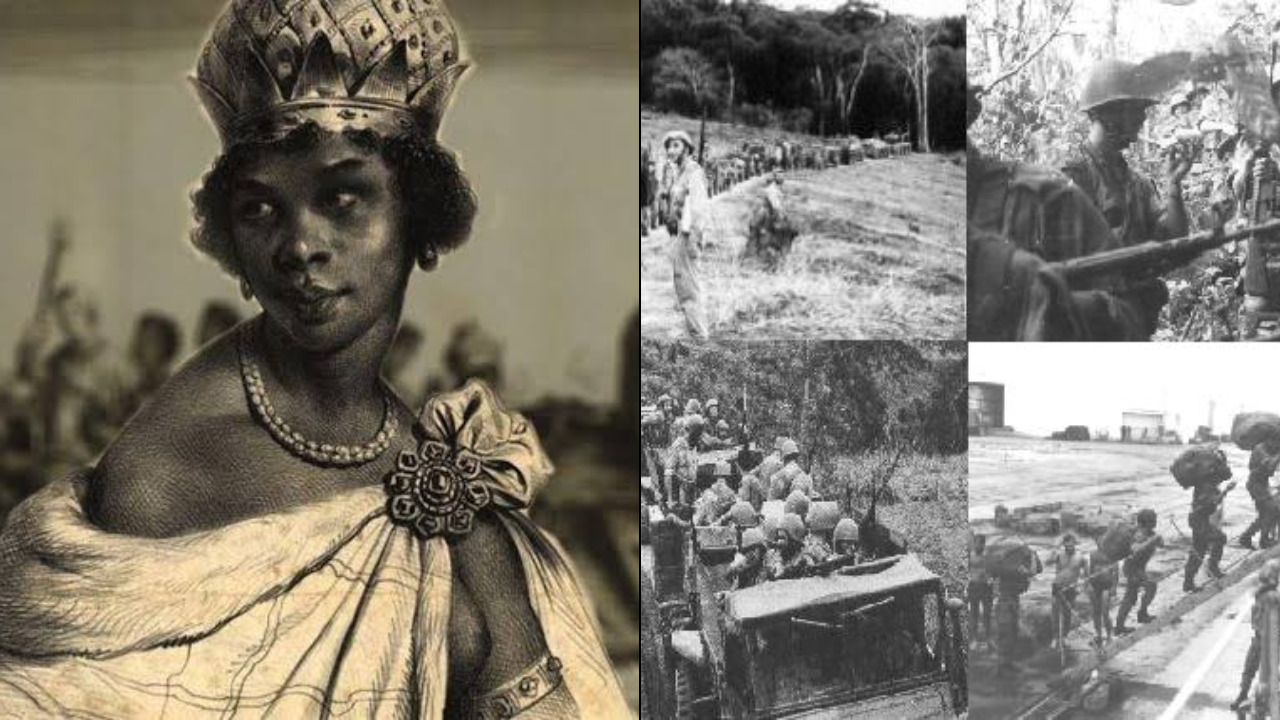
Between 1624 and 1663, Njinga Mbande outmanoeuvred a dozen Portuguese governors, deposed a rival queen to take her kingdom, and sold as many as 13,000 captives a year to Dutch merchants to finance a war she refused to lose.In 1617, the new king of Ndongo ordered his sister’s infant son killed. Ngola Mbandi had just taken the throne after the death of their father, and he spent his first months in power eliminating every rival he could identify, including his own half-brother and that man’s entire family. His sister Njinga, then about 35, was spared. Her son was not. She and her two sisters, Kambu and Funji, were forcibly sterilised on his order.Seven years later, she was queen.
Portugal Had Been Dismantling Ndongo For Fifty Years
The kingdom Njinga was born into around 1582 was already losing. Ndongo was a Mbundu state in the highlands east of the coast, ruled by a figure whose title, ngola, would eventually give Angola its name. Njinga’s mother, Kengela ka Nkombe, was one of her father’s slave wives and his favourite concubine a lineage her enemies would use against her for the rest of her life.The Portuguese established their trading post at Luanda in 1575 with the help of Kongo, Ndongo’s northern rival. Initial peace curdled into decades of war.
Villages were burned, hostages taken, and by one estimate 50,000 people seized as slaves. Ndongo defeated Portugal at the Battle of Lucala in 1590 but had already lost most of its territory. By the time Njinga’s father became king in 1593, his own noblemen the sobas were refusing to pay him tribute and defecting to the enemy.Then, in 1607, the Imbangala arrived. These were roving warbands, ferocious, ritually organised, and available for hire.
Portugal hired them.Njinga’s father, who had no expectation that a daughter would ever rule, could afford to indulge her. She trained with the army and became skilled with the battle axe, the traditional Ndongan weapon. She sat in on legal councils, war councils, and state rituals. Portuguese missionaries taught her to read and write their language. Every one of those decisions would eventually be used against Portugal.
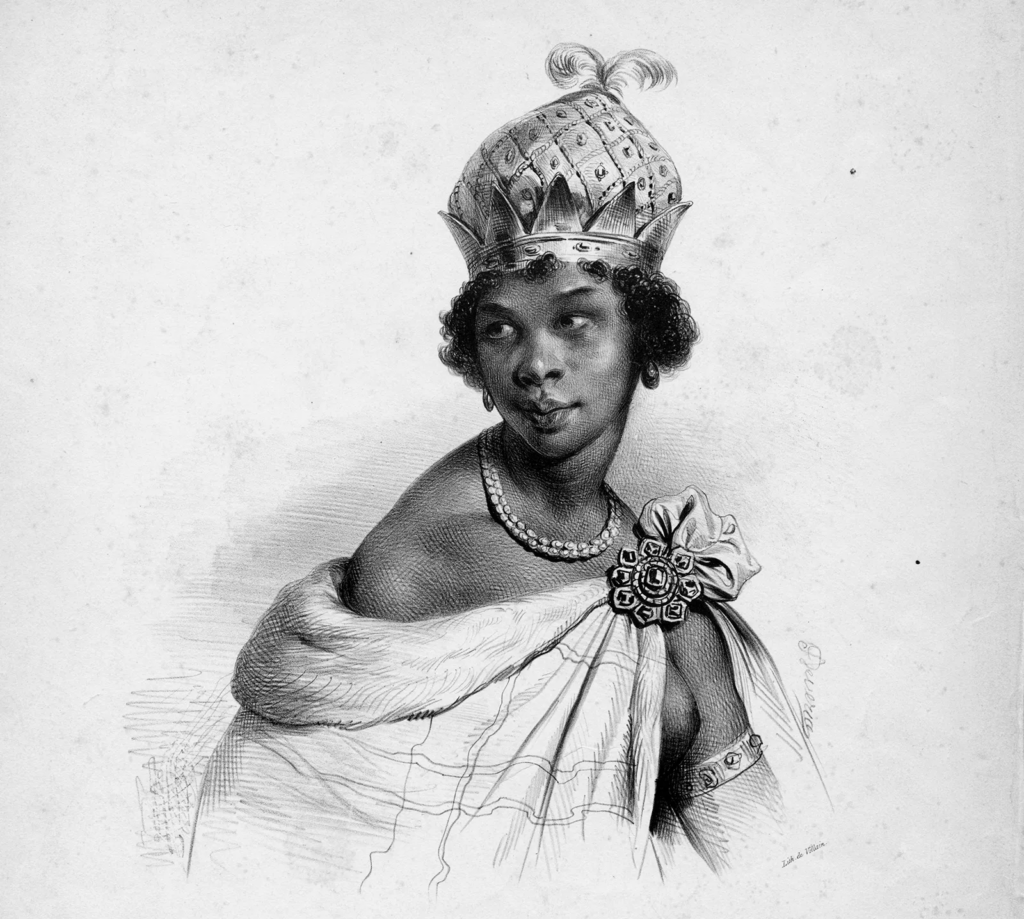
Njinga Sat On A Servant’s Back To Negotiate As An Equal
By 1621, Ngola Mbandi had proven a disastrous war leader, and he needed a diplomat. He recalled the sister whose child he had murdered and asked her to go to Luanda as his emissary. She agreed on two conditions: full authority to negotiate in his name, and permission to be baptised.She arrived with a large retinue and enough presence that the governor paid all her party’s expenses. Ndongan envoys typically met the Portuguese in European dress. Njinga wore Ndongan clothing, feathers and jewels included.
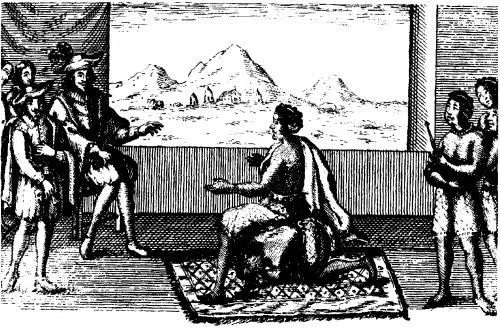
According to a widely repeated account, the Portuguese laid out chairs for their own officials and a mat on the floor for her the standard treatment reserved for conquered peoples. One of her attendants knelt and formed a seat with her own body. Njinga sat on her and addressed Governor João Correia de Sousa at eye level.What she extracted in that room mattered more than the staging. Portugal agreed to remove the forts it had built inside Ndongan territory.
Njinga refused any tribute at all, on the argument that only conquered peoples paid tribute and her people had not been conquered. When the Portuguese questioned whether she meant any of it, she offered to be baptised publicly, and was, taking the name Dona Ana de Sousa after her godmother Ana da Silva the governor’s wife and the governor himself. She returned to Kabasa in late 1622 in triumph. She had also agreed to admit Portuguese slave traders into Ndongo.The treaty collapsed within two years. Portugal refused to withdraw from its fortresses and went on raiding for captives.
She Took The Throne And Killed A Seven-Year-Old To Keep It
In 1624, Ngola Mbandi died. Sources disagree on how some say suicide, others poisoning, and his sister’s involvement has never been established either way. He had named her his successor.Njinga moved fast. Her supporters seized the ritual objects that conferred legitimacy. She had her brother’s remains preserved in a misete, a reliquary she could consult afterwards. And she dealt with the one obstacle that could not be argued away: her seven-year-old nephew, held in the guardianship of the Imbangala warlord Kasa.
She proposed marriage to Kasa, married him, and had the boy killed. Heywood records that Njinga regarded this as settling the account for her own murdered son.Her rivals argued she was ineligible on two counts she was the child of a slave wife, and she was a woman. She countered that she descended directly from the royal line through her father while they had no bloodline claim at all. The argument would consume the next three decades.
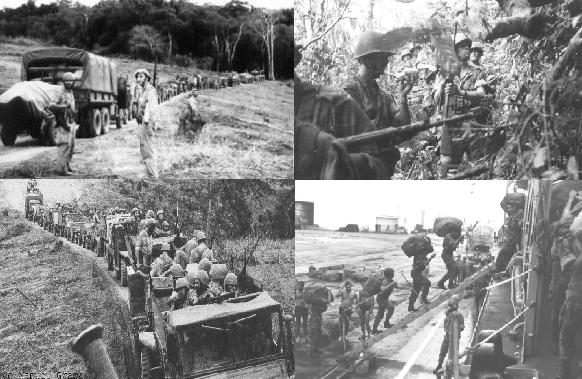
Portugal Declared War And Left Her With Two Hundred Soldiers
Governor Fernão de Sousa demanded she become a vassal and pay tribute. She refused outright. He responded by pressuring her sobas to swear vassalage to Portugal instead, cutting the ground out from under her throne.Njinga retaliated by sending messengers to encourage enslaved Mbundu to flee Portuguese plantations and join her. When Portugal complained, she replied that she would honour the treaty and return escaped slaves, but that her kingdom had none. It worked. Portuguese officials began to fear a general uprising.They declared war on 15 March 1626.
She lost. Driven from her island capital, she made a long retreat east, abandoning most of her followers on the calculation that the Portuguese would stop to re-enslave them rather than pursue her. The calculation was correct. In November 1627 she sued for peace and sent 400 captives as a gift, offering vassalage and tribute if Portugal would recognise her claim. They beheaded her lead diplomat and demanded she retire from public life. Njinga locked herself in a room for several weeks. She emerged and started rebuilding.An ambush the following year cost her half her army, most of her officials, and both her sisters. By late 1628 she had roughly 200 soldiers left.
She Married Her Enemy And Deposed Another Queen
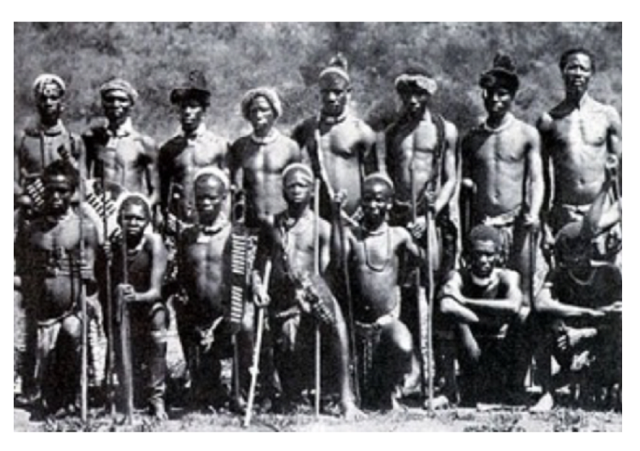
Kasanje was an Imbangala warlord who had previously executed several of Njinga’s envoys. He offered her an alliance on the condition that she marry him and surrender her lunga, the great bell that marked an Ndongan war captain’s authority. She accepted both terms and underwent Imbangala initiation. The rites, as far as the sources agree on them, included a blood oath.What she built from that alliance was new. Heywood’s assessment is that Njinga’s particular genius lay in fusing Mbundu political authority with Imbangala military organisation, which valued merit and religious commitment over lineage and sex a system that had far more use for her than her own nobility did.
She freed escaped slaves and granted land and titles to exiled Ndongans to fill her ranks.Between 1631 and 1635 she invaded Matamba and captured its ruler, Queen Mwongo Matamba. Imbangala custom required the defeated queen’s execution. Njinga had her branded, spared her, and took her daughter into service as one of her own warriors.Matamba had a tradition of female rule. Njinga had finally found a throne that did not require her to argue for the right to sit on it.
The Dutch Alliance Made Her The Richest Trader On The Coast
In 1641 the Dutch West India Company took Luanda. Njinga had an embassy on the road almost immediately, offering an alliance and access to the slave trade.The partnership transformed her. Her war camp grew to some 80,000 people. She reclaimed large stretches of Ndongo between 1641 and 1644, beat a Portuguese army at Ngoleme in 1644 and routed another at Kombi in 1647, then laid siege to Massangano. She collected tribute in captives from the nobles now flocking back to her, and sold them to the Dutch for firearms. By 1644 she regarded only Garcia II of Kongo as her political equal, and Portugal regarded her as its most dangerous adversary in Africa.
She also invaded Kongolese territory that had never been part of Ndongo and refused to give it back. Kasanje, her former husband, assembled a coalition of Imbangala leaders against her.The Portuguese record shows what her expansion cost on the other side of the ledger. Her sister Funji, held captive in Luanda, had been passing Portuguese plans to her in secret correspondence. When the Portuguese captured Njinga’s archives at Kavanga in 1646, the letters were in them. Funji was drowned in the Kwanza.In August 1648, a Portuguese fleet from Brazil retook Luanda. The Dutch commander sued for peace and sailed for Europe. Njinga’s army arrived outside the city to find her ally gone.
Portugal Recognised Her After Thirty Years Of Refusing To
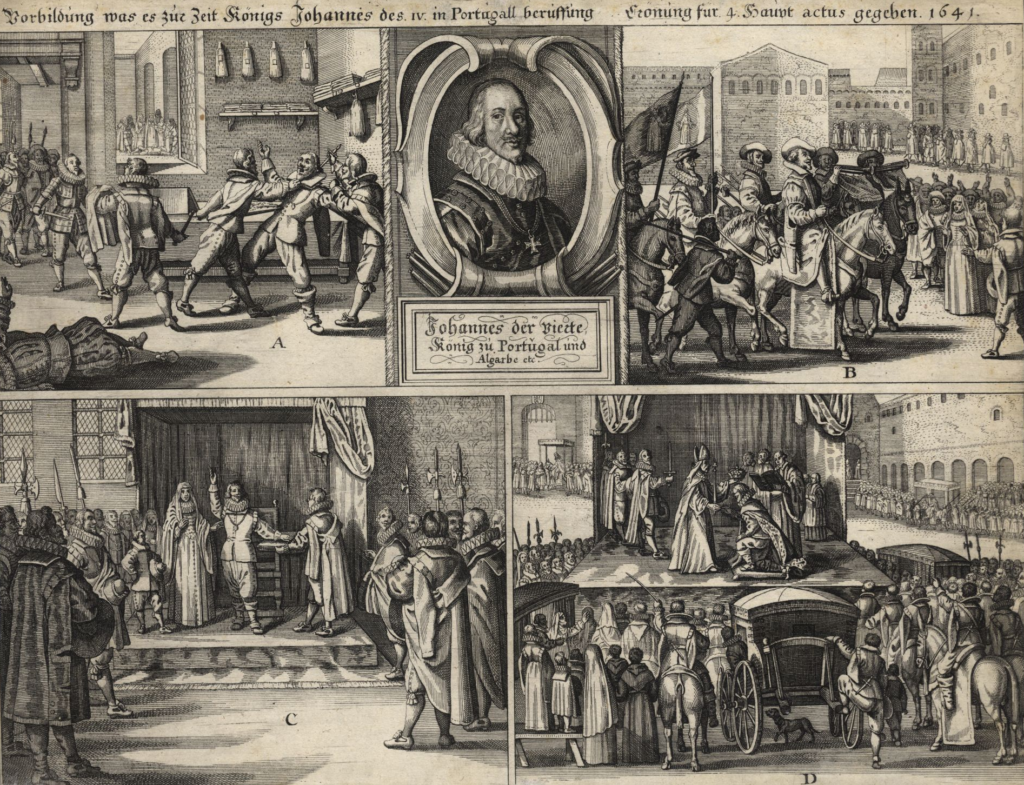
Negotiations opened in 1651, resumed in 1654, and concluded in late 1656. Portugal was exhausted, at war with Spain, and desperate to reopen the trade. Njinga was in her seventies and wanted her surviving sister back.The treaty ceded her western lands and fixed the Lucala River as the border. It also concentrated the entire regional slave market in her own capital, handing her a monopoly, and obliged Portugal to defend her against Kasanje and Ngola Hari. A clause requiring Matamba to pay tribute was proposed and never ratified.
Kambu came home on 12 October, escorted by a Capuchin procession. Njinga and her officials clapped their hands, the traditional Mbundu signal that terms were accepted. In 1657, Portugal renounced its claim to Ndongo.Her court changed with the peace. She abolished concubinage and married her favourite concubine in a Christian ceremony.
She replaced military drills with education, imported European silk, permitted women in her war camps to bear children for the first time, and built churches across her kingdom. She also empowered Christian priests to burn traditionalist shrines, had opposing priests whipped, and sold several of them to Portuguese slavers, asking specifically that they be shipped overseas. The proceeds furnished a new church. Pope Alexander VII wrote to praise her in 1661.
She Died In Her Sleep And Her Kingdom Tore Itself Apart
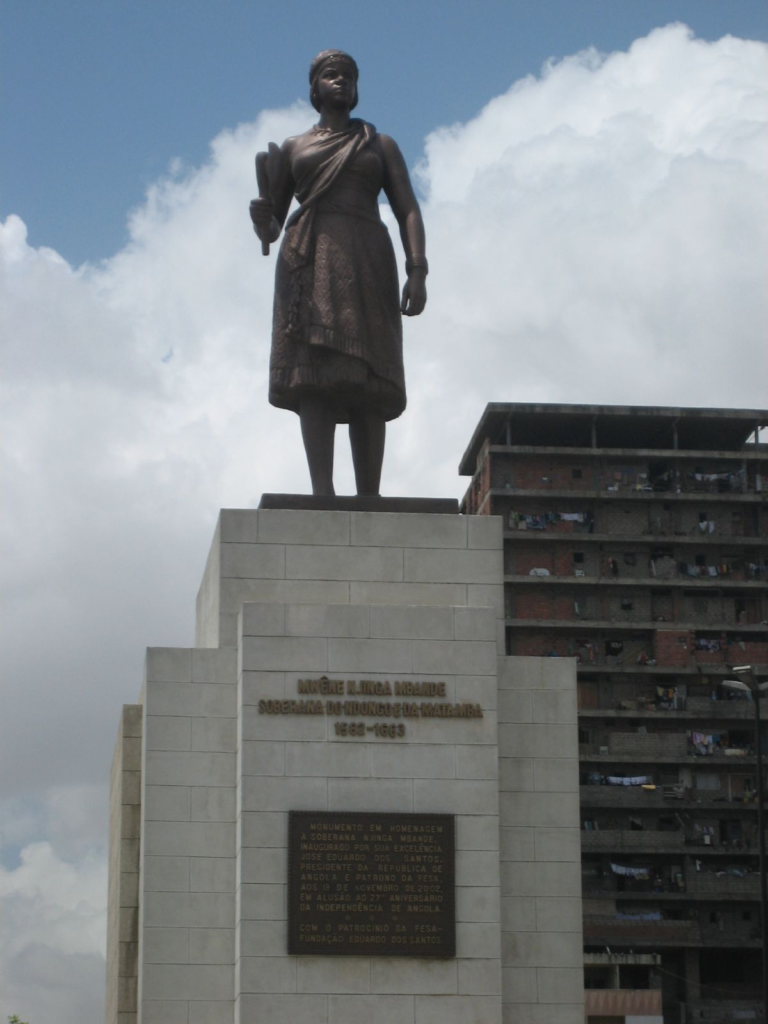
In October 1663, an infection settled in her throat. By December it had reached her lungs. Njinga Mbande died on the morning of 17 December, about 80 years old. Cavazzi presided at the funeral. Services were held across Matamba and in Luanda, by Portuguese and Mbundu alike.Her sister Barbara ruled for three years before Matamba collapsed into civil war between Barbara’s faction and the Imbangala commanders. Ndongo itself was finished: the Portuguese sacked the fortress at Pungo Andongo on 29 November 1671 and killed its ruler.
Matamba survived, and for eighty of the 104 years after Njinga’s death it was ruled by women. Nobody had to argue for their right to the throne.A year before she died, Cavazzi watched the old queen review her troops and remarked on how well she still moved. Njinga told him that in her prime she could have wounded any Imbangala warrior alive, and that she would have taken on twenty-five armed men at once unless they carried muskets.
Leave a Reply