
Born in the Moscow ghetto in 1819, Esther Lachmann married a Portuguese fortune on June 5, 1851, handed her new husband a letter ending the marriage the next morning, and walked away with his name, his house, and £40,000 in securities.On the morning of June 6, 1851, in a house on the rue Rossini in Paris, Albino Francisco de Araújo de Païva was handed a letter by the woman he had married the previous day. Théophile Gautier had stood as a witness at the church in Passy. The bride had signed the banns as Pauline Thérèse Lachmann.
The letter, as recorded in the memoirs of Count Horace de Viel-Castel, told Araújo that the transaction was complete: she had acquired his name, he had acquired a wife of the foulest repute, and no one in Paris would receive her. “Let us part,” she wrote. “Go back to your country.”He went. She kept the house, its furnishings, and the £40,000 written into the marriage contract roughly £5.5 million in today’s money. She also kept the name. For the next thirty-three years, Europe knew her as La Païva.
Esther Lachmann Leaves a Husband, a Baby, and Moscow Behind
She was born on May 7, 1819, in the Moscow ghetto, to Martin Lachmann, a weaver, and his wife Anna Amalie Klein, Jewish and of Polish descent. The family had little. Almost nothing survives of her childhood.On August 11, 1836, aged 17, she married Antoine François Hyacinthe Villoing, a tailor. They had one son, Antoine, born in 1837. Shortly after the birth, she left both of them.
What followed is only partly documented. She travelled to Berlin, Vienna and Istanbul before settling in Paris near the Église Saint-Paul-Saint-Louis, where she adopted the name Thérèse and worked in a maison de passe a house of assignation. She had no money, no connections, and a husband she could not divorce. The demi-monde she had entered was crowded with prettier women. What she had instead was a plan.
A Pianist Pays for Her Entry Into Society
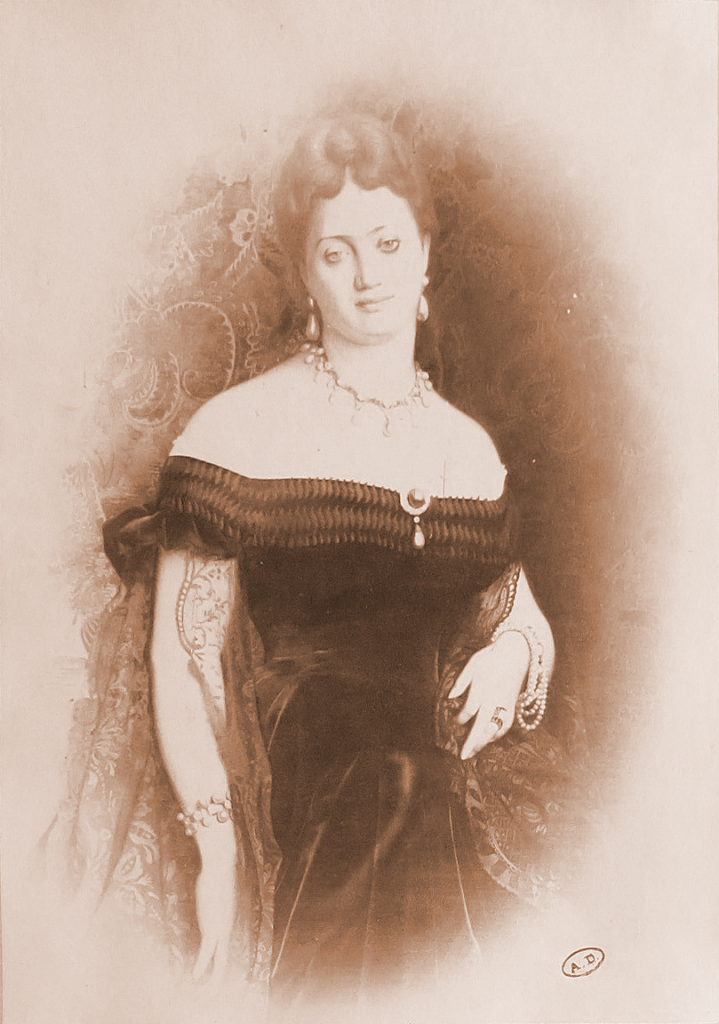
Around 1840, at the German spa town of Bad Ems, dressed in borrowed gowns, she met Henri Herz. He was 37, a celebrated pianist, composer and piano manufacturer. One account holds that she secured his attention by fainting at one of his performances; whether the collapse was genuine has been questioned ever since.
Herz installed her in an apartment. Richard Wagner, Hans von Bülow, Théophile Gautier and Émile de Girardin all passed through their circle. He introduced her as his wife, and Paris called her Madame Herz, though she was still legally married to a tailor in Paris. The connection opened artistic society to her. It did not open aristocratic society, and she knew the difference.
Their daughter Henriette was born around 1847 and handed to Herz’s parents to raise. She died at about 12. Her brother Antoine died in 1862, while studying medicine. Lachmann had by then abandoned both.Her spending outran Herz’s income. In 1848 he sailed for America to recover his finances through concerts and business ventures. American critics found his playing torpid. While he was gone, his family put her out of the house.
Interior photographs and engravings of the Hôtel de la Païva, particularly the yellow onyx staircase and the silver bath
A Milliner’s Advice Sends Her to Covent Garden
Destitute, she was taken by her friend, the courtesan Esther Guimond, to a fashionable milliner named Camille. Camille’s advice was specific: go to London, a fairy-land where noble strangers hand beautiful women £40,000 or £50,000 a year in pin money.She went, in borrowed finery, and made straight for Covent Garden.Her first conquest was Edward Stanley, 2nd Baron Stanley of Alderley not, as is often repeated, the 15th Earl of Derby. She became his mistress.Others followed, among them the duc de Guiche, later 10th duc de Gramont.
As her reputation grew, so did her prices.One story from this period concerns a banker named Adolphe Gaiffe.Cornelia Otis Skinner’s version has La Païva demanding twenty 1,000-franc notes, to be burned one by one during a scheduled thirty minutes in her bed; Gaiffe substituted counterfeits, then found the spectacle of the burning so unnerving that he could not perform.A rival account has the courtesan herself burning the notes, unaware they were fake, while Gaiffe collected on a bet with his friends that he could have her for nothing. Both versions survive. Neither can be confirmed.She loved her jewels, and called them her children.
A 22-Year-Old Prussian Hands Her Everything She Asked For
In 1852, at a party given by the Prussian consul in Paris, she met Count Guido Henckel von Donnersmarck. He was 22, a Silesian mining magnate and a cousin of Bismarck, and had inherited an industrial fortune four years earlier when his elder brother died. She was 33.According to Viel-Castel, she then pursued him across Europe by appearing to do nothing of the kind arriving in the same cities, attending the same events, and behaving throughout as though she had not noticed him.
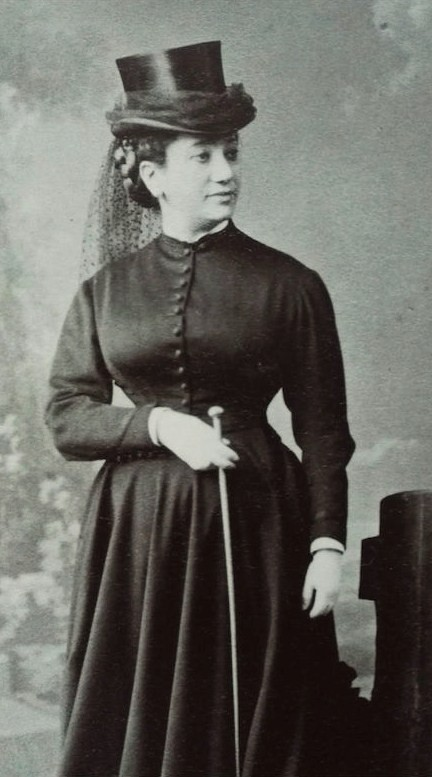
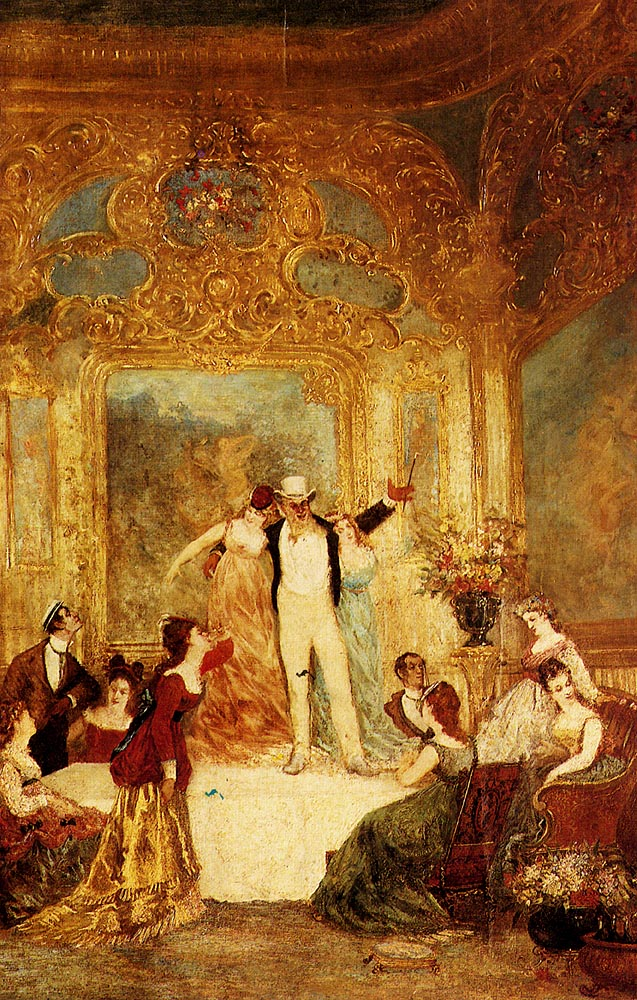
In Berlin he offered to make her his mistress and share his fortune. She is reported to have said afterwards that all her wishes had come to heel like tamed dogs.In 1857 he bought her the Château de Pontchartrain, near Paris, and gave her an annuity of £80,000. She had the interiors redone, cut new vistas through the park, and planted rare species. The local peasantry were scandalised by the sight of her galloping the grounds dressed as a man.
4147
The Mansion on the Champs-Élysées Becomes Her Argument
The land at 25 avenue des Champs-Élysées was acquired on July 11, 1855. Pierre Manguin designed the house; Hector Lefuel completed it in 1866. Among the craftsmen who worked on it was a young Auguste Rodin, then in the studio of Albert Carrier-Belleuse.The central staircase was cut from Algerian yellow onyx, more expensive than marble, chosen to match the Donnersmarck yellow diamonds. A ceiling mural rendered her as a goddess.
A silver bathtub was fitted with three taps, one of which ran milk or champagne, depending on which account you read.Flaubert, Zola, Delacroix, Paul de Saint-Victor and Arsène Houssaye came to her salons. At one dinner she overheard two guests estimating her worth at 10 million francs and cut in to correct them: ten million would yield barely 500,000 francs a year, and her table alone cost more than that.
The Goncourt Brothers Record the Face Beneath the Powder
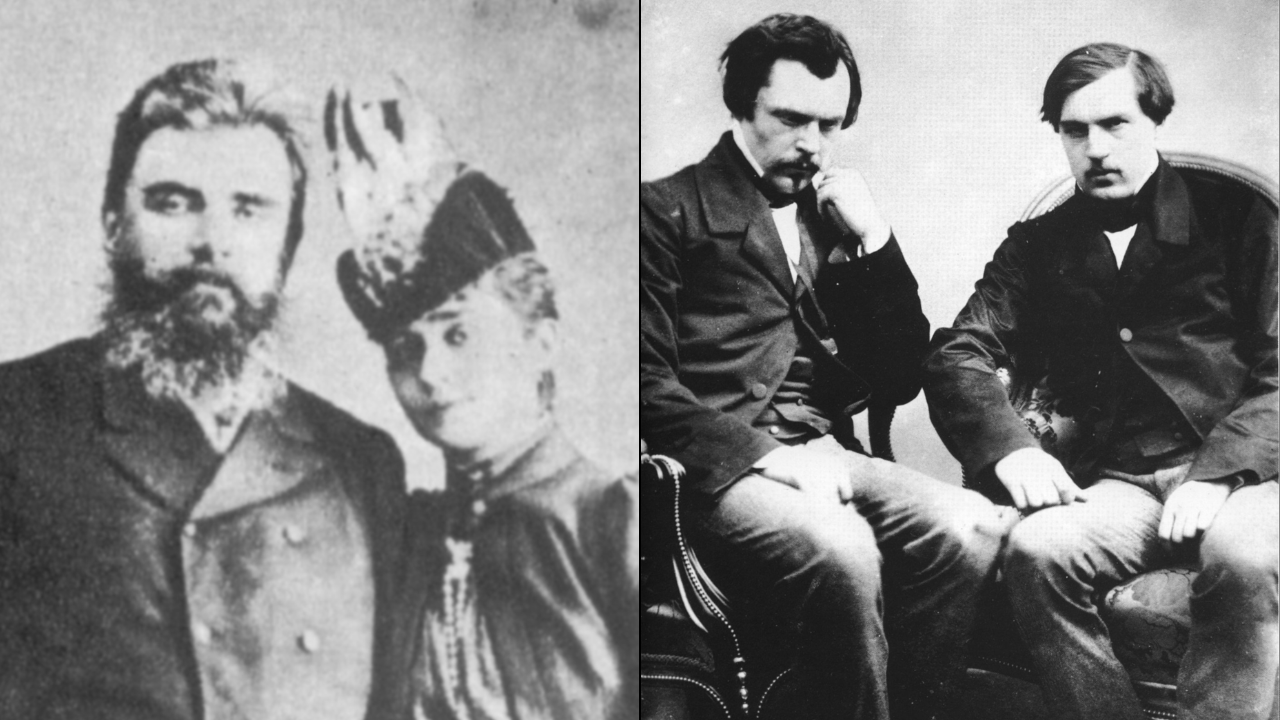
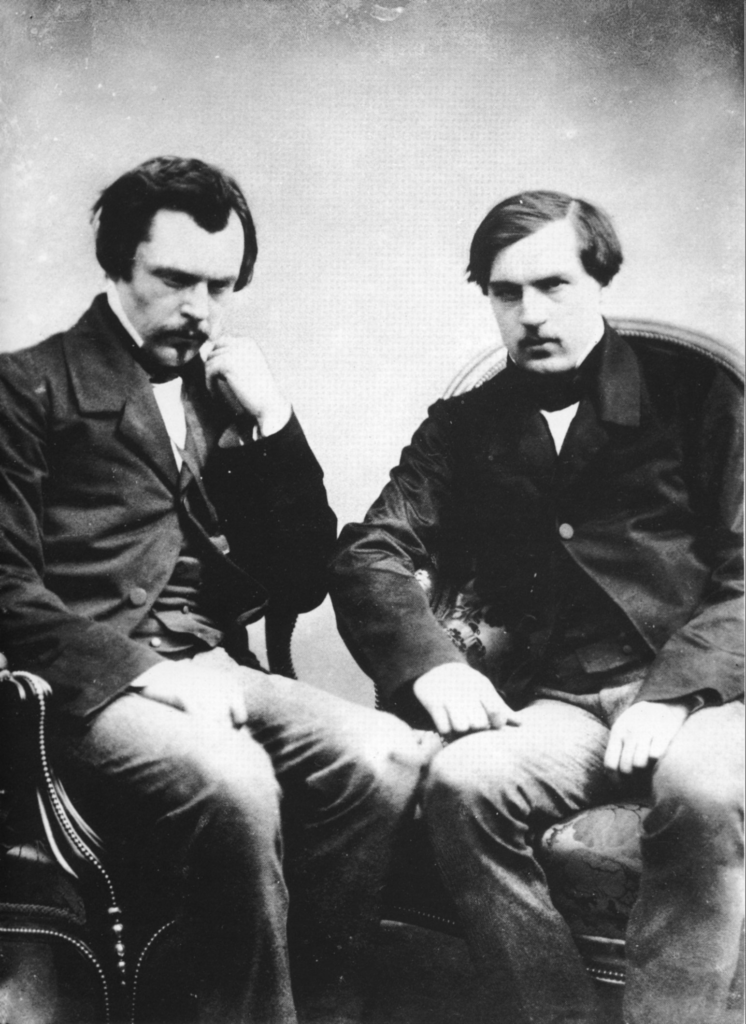
In 1857, Viel-Castel noted in his memoirs that she was at least forty, painted and powdered like an old tightrope walker, and had slept with everyone. He also called her the queen of kept women, the sovereign of her race.A decade later, with La Païva near 50, the Goncourt brothers set down the fullest surviving eyewitness description: white skin, good arms, beautiful shoulders, reddish underarm hair visible each time she adjusted her straps, a pear-shaped nose flattened at the tip, and a mouth reduced to a straight line across a face laid thick with rice powder.
Beneath that face, they wrote, another was intermittently visible the terrible face of a painted corpse.Joanna Richardson’s later assessment was blunter still: the one great courtesan who appears to have had no redeeming feature.
France Loses a War and Turns on the Prussian Count’s Wife
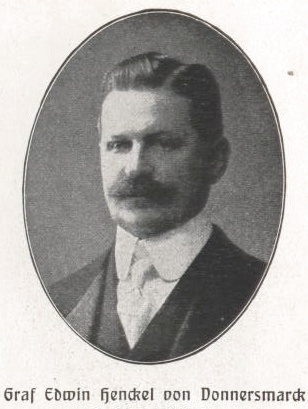
On August 16, 1871, she obtained an annulment of her marriage to Araújo. Ten weeks later, on October 28, she married Henckel von Donnersmarck in the Lutheran church in Paris. His wedding gift was a triple-strand diamond necklace that had belonged to the deposed Empress Eugénie.The timing was catastrophic. France had just lost the Franco-Prussian War. Her husband had served as military governor at Metz and was made governor of the Lorraine territory Prussia intended to annex.
A Russian-born Jewish courtesan married to a Prussian magnate, with access to every drawing room in Paris, was an obvious target. Rumours that she was spying for Germany circulated widely. They were never substantiated. Alexandre Dumas fils put her on stage in 1873 as Césarine in La Femme de Claude, a promiscuous traitor described as a strange, morbid, monstrous creature. Audiences hissed her at the opera.
Her first husband’s replacement did not survive the decade either. Ruined by gambling debts, failed investments, and the fortune his wife had stripped from him, Araújo shot himself in Paris in 1872. Portuguese newspapers reported the death in early October; other records give November; several biographers place it in 1873.In 1877 the couple left France for Henckel’s Silesian estates.
She Died in a House in Silesia, and the Story Refused to End
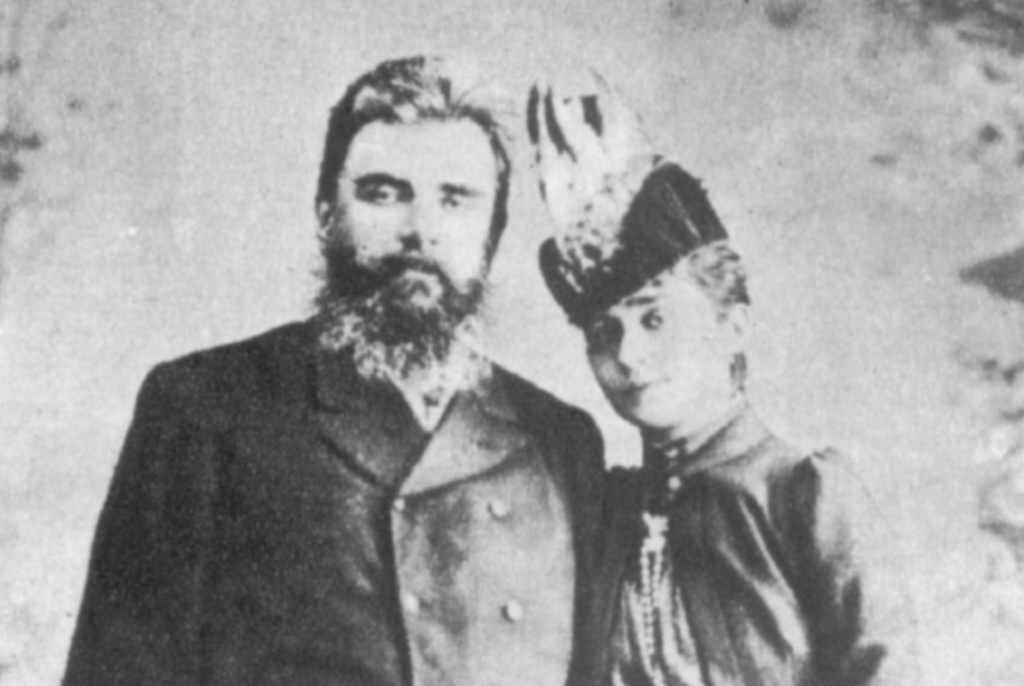
Esther Lachmann, Countess Henckel von Donnersmarck, died at Schloss Neudeck on January 21, 1884, aged 64. The contents of Pontchartrain were auctioned off that same year.Legend holds that her husband could not bring himself to bury her, that he had her preserved in embalming fluid and kept her in the attic at Neudeck, and that the body was found there by Katharina Slepzow, the Russian noblewoman he married in 1887.
The story has been repeated for well over a century. No documentary evidence supports it.What can be verified stands at 25 avenue des Champs-Élysées. The yellow onyx staircase is still there. Since 1904 the house has belonged to a gentlemen’s club, and the men who pass beneath the ceiling where a weaver’s daughter from the Moscow ghetto had herself painted as a goddess are not, as a rule, told whose house it was.
Leave a Reply