
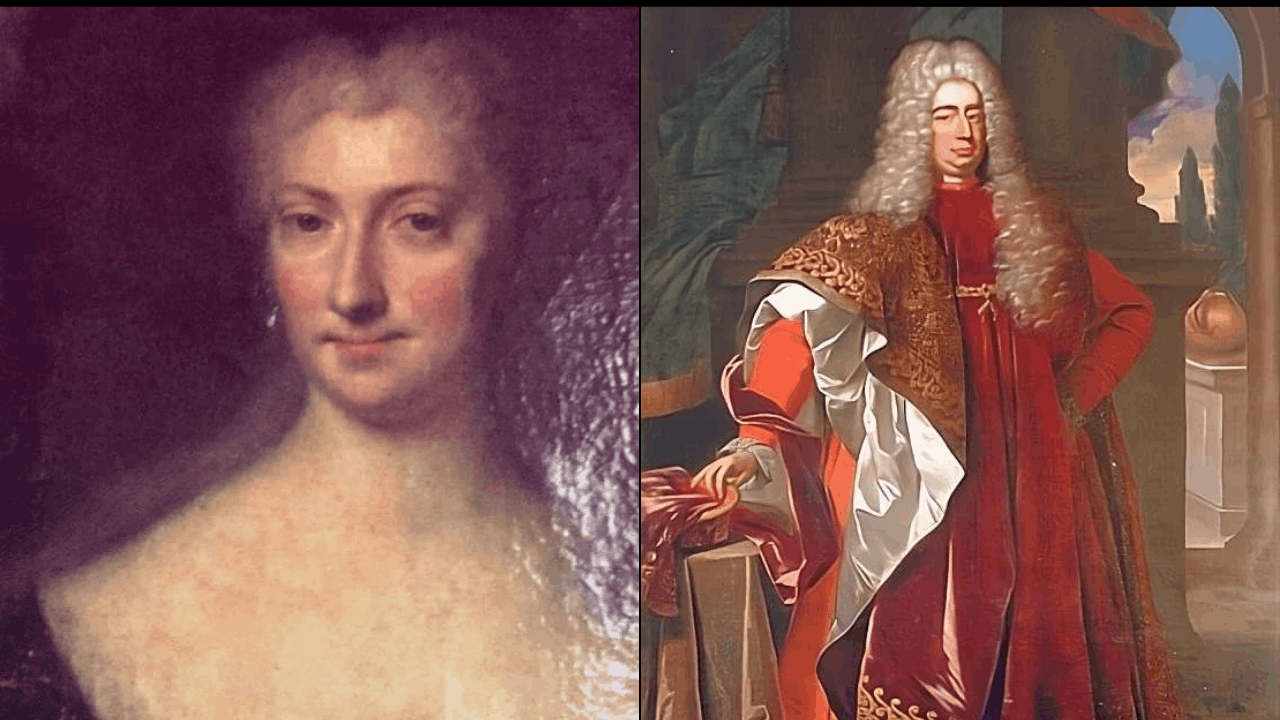
The Vampire Princess: The Illness, the Legend, and the Unanswered Questions Behind Eleonore von SchwarzenbergOne winter morning in the late 1730s, an imperial physician arrived at the Schwarzenberg estate on the outskirts of Vienna and was shown to the rooms of the Princess Dowager. He left, by various accounts, shaken.
She looked, he reportedly said, like a walking corpse. The curtains were drawn against the daylight. Her screams could be heard across the palace grounds at night. By the time Eleonore von Schwarzenberg died on May 5, 1741, the story had already escaped the walls of the estate and what it became in the Bohemian countryside outlasted everything else she had ever done.
A Bohemian Noble in a Minor Key
Eleonore Elisabeth Amalia Magdalena of Lobkowicz was born on June 20, 1682, in the Bohemian town of Mělník. Her father was Prince Ferdinand August of the House of Lobkowicz one of the oldest and most distinguished aristocratic lineages in Bohemia, with roots traceable to the fourteenth century and the second Duke of Sagan, a title his father Václav Eusebius had purchased in 1646. Her mother was Margravine Maria Anne Wilhelmine of Baden-Baden, a daughter of Wilhelm, Margrave of Baden-Baden.
The Bohemia Eleonore was born into was not yet the Czech Republic that distinction was three centuries away. It was a kingdom within the tangled web of the Holy Roman Empire, old enough to carry the memory of the Burgundians, the Spanish, and the Austrians who had ruled it in succession, and small enough that its nobility depended heavily on strategic marriages to maintain their standing among the great powers. Eleonore’s education would have reflected this: French, increasingly the lingua franca of European courts, alongside Latin, mathematics, dancing, and the rituals of courtly conduct.
On December 6, 1701, at the age of nineteen, Eleonore married Adam Franz Karl Eusebius, hereditary prince and from 1703 onwards, Prince of Schwarzenberg, a principality of considerable standing within the Holy Roman Empire. The match was a social ascent for Eleonore’s family: her father provided a dowry of 20,000 guilders, 3,000 paid upfront, the rest to follow in instalments. Adam’s father, Prince Ferdinand Wilhelm, the second Prince of Schwarzenberg, was the beneficiary.
The union was troubled from the first. Adam, it emerged, had previously entered a secret marriage with the daughter of the Austrian ambassador to Rome, and had been required to arrange a swift annulment before the wedding to Eleonore could proceed. The annulment cast a long shadow. Worse, Eleonore did not become pregnant for years, and when a child came a daughter, Maria Anna, born on December 25, 1706 no male heir followed. Then a miscarriage in 1709, followed by accusations of infidelity against Eleonore, drove the couple into separate residences for much of the 1710s. The dowry dispute added its own weight: Eleonore’s father, Ferdinand August, died in 1715 still behind on his instalments.
The Man Who Inherited an Empire and Died in a Deer Forest
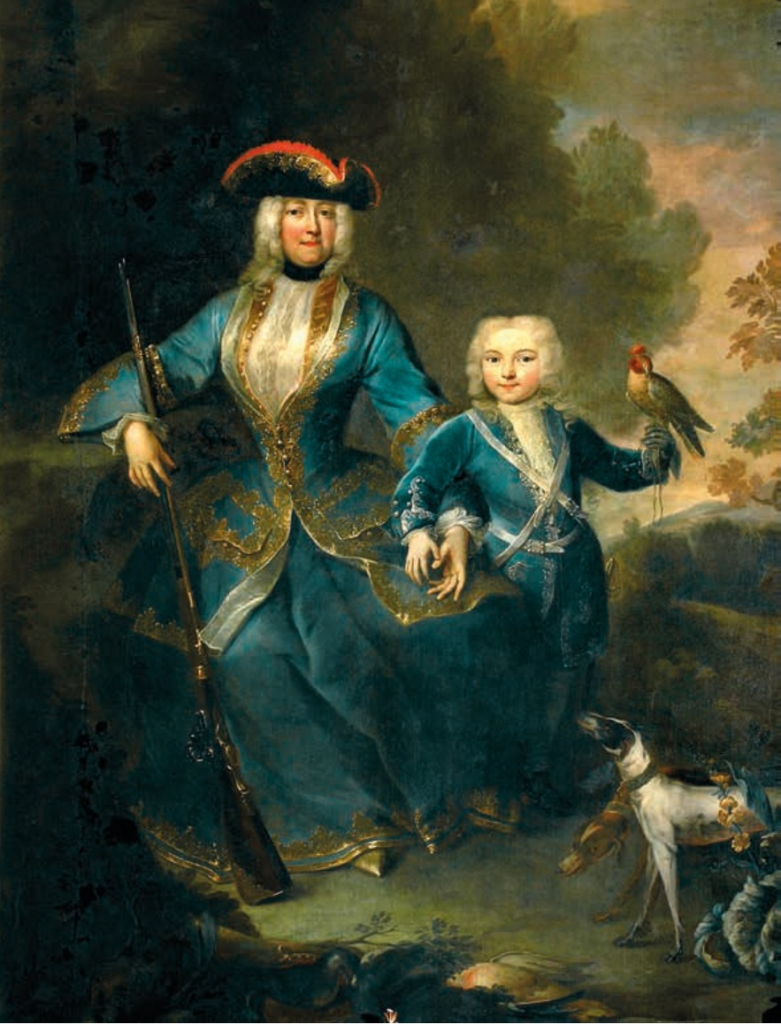
Reconciliation came in 1719, when Adam acquired an enormous Bohemian estate following the death of his aunt the most significant of these being the lands at Český Krumlov, which had belonged to the princes of Eggenberg. The inheritance transformed both the family’s finances and its emotional temperature. In 1722, the male heir the marriage had long been waiting for arrived: Joseph Adam was born on December 15, 1722, in Vienna.
Adam, by this point, was among the most senior figures in the imperial administration. He had been appointed K.K. Chamberlain and elected to the Geheimrat the Emperor’s advisory council and served as Obersthofmarschall, or Lord High Marshal, from 1711 to 1722, a position that placed him at the heart of the Habsburg court. From 1722, he was elevated to Oberststallmeister, Master of the Horse. He was also a Knight of the Order of the Golden Fleece, the highest chivalric honour in the Habsburg lands, bestowed by Charles VI himself. By the late 1720s, he and Eleonore were spending much of their time at the imperial capital in Vienna under Charles VI Holy Roman Emperor and, under his Bohemian regnal title, Charles II.
On June 10, 1732, Adam joined Charles on a deer hunt at the imperial estate near Brandeis, a settlement close to Prague now known as Brandýs nad Labem-Stará Boleslav. What happened next remained, even to those present, a matter of some ambiguity: the Emperor aimed his rifle at a deer and fired. Adam Franz, standing approximately sixty metres away, stepped into the line of fire. He died the following morning, June 11, from his wounds. He was 51. It was reported that Charles was devastated. He took Eleonore’s nine-year-old son Joseph under his personal care at the Vienna court and arranged a baronial pension of 5,000 guldens annually for the princess dowager.
The Illness That Became a Legend
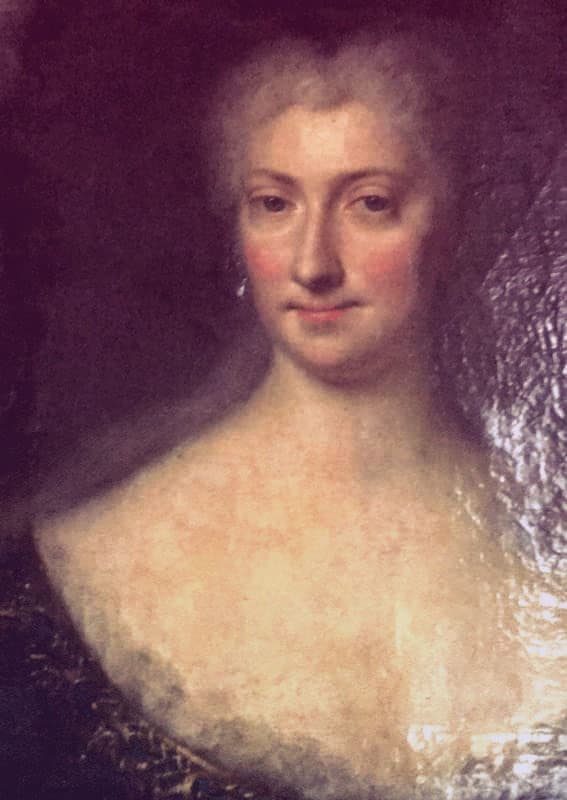
Eleonore spent her remaining years managing the Schwarzenberg estate. In the late 1730s her health deteriorated sharply and without obvious explanation. She became extremely thin and pale, apparently unable to eat, drink, or sleep consistently, resting only at certain points during the day. Contemporary accounts describe screams that carried through the palace at night. She turned to folk remedies among them narwhal tusk, the horn of an Arctic whale sold throughout early modern Europe as unicorn horn and valued more highly than gold by weight for its supposed curative properties. She reportedly employed individuals associated with alchemy and folk medicine. Sunlight disturbed her. The curtains stayed closed.
Charles VI sent his own physician, Franz von Gersdorf, to the estate. By most accounts, Gersdorf found the princess in a condition that alarmed him. Whether he used the phrase “walking corpse” in a medical report or whether that detail belongs to the story’s later elaboration remains unclear. Eleonore von Schwarzenberg died on May 5, 1741, at the Palais Schwarzenberg in Vienna. She was 58.
An autopsy, requested by Gersdorf, determined the cause of death: cervical cancer, complicated by multiple tumours, at least one of which was reportedly larger than a tennis ball. Before she died she had specified her burial wishes in a will dated April 28, 1741. She asked to be attended only by twelve poor men. Her heart was to be removed and interred beside her husband’s heart in the family crypt at the church of St. Vitus in Český Krumlov. Her body was buried separately.
The Vampire and the Documentary
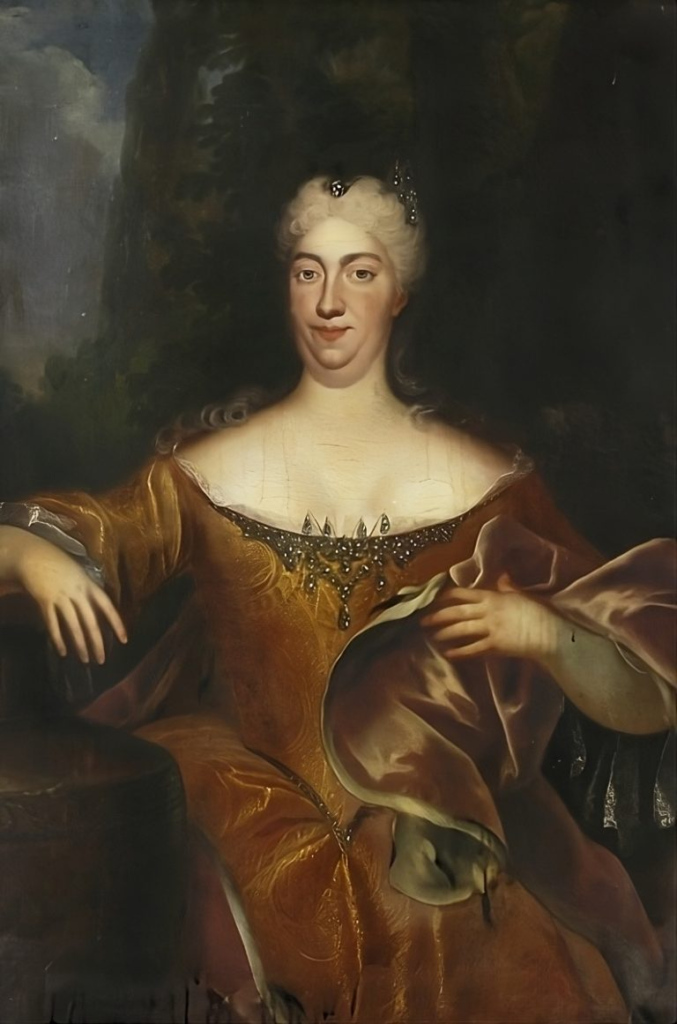
In the years following her death, vampire panic was spreading through Bohemia and Moravia with an urgency the modern world finds difficult to reconstruct. These were not metaphorical fears. Communities were disinterring recently buried bodies, decapitating them, driving stakes through them, and burning them on the grounds that the deceased had returned to prey on the living. Into this climate, rumours circulated that Eleonore von Schwarzenberg had been seen walking through nearby towns and cemeteries after her death. Some claimed she had been observed among the corpses of the recently deceased. Her name was spoken of as damned. The stories faded with time.
In 2007, an Austrian television documentary titled Die Vampirprinzessin The Vampire Princess in English revived them. The film argued that Eleonore had engaged in vampirism and had subsequently inspired two major works of Gothic literature: Gottfried August Bürger’s poem Lenore, written in 1773 and published in 1774, and Bram Stoker’s novel Dracula, published in 1897.
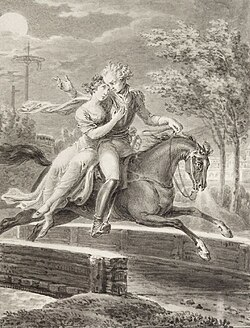
The documentary’s most specific claim concerned Bürger’s ballad. Lenore is a Gothic poem in which a dead soldier rides back from Bohemia to claim his grieving lover, dragging her to an eerie grave. The connection proposed was this: the poem’s title is a shortened form of Eleonore, and the ballad’s setting draws on the Bohemian world the princess had inhabited. It was also claimed that Stoker possessed an earlier draft of Dracula in which the inspiration was not a Transylvanian count but a woman an Austrian princess.
Stoker did quote Lenore directly in Dracula, and the novel does contain a deleted opening chapter featuring a female figure in a Bavarian tomb; whether either of these constitutes evidence of a direct line to Eleonore von Schwarzenberg is another matter entirely.
What the Documentary Built and What It Proved
The circumstantial nature of the evidence deserves acknowledgement. Bürger was a German Sturm und Drang poet working from folklore the ballad draws on folk traditions involving dead lovers and supernatural night rides, not on a specific historical noblewoman. The name Lenore was a common German variant of Eleonore without any particular Schwarzenberg association. Stoker’s use of Bürger’s poem confirms only that he had read it, as had most of literate Europe by the late nineteenth century. The deleted chapter’s female figure has never been traced specifically to Eleonore by any source outside the documentary’s own argument.
The folk remedies the documentary cited as evidence of occultism were, as the documentary itself half-acknowledged, standard across pre-modern Europe. The removal of Eleonore’s heart and its separate interment may look singular today, but the Habsburg royal family maintained their own heart crypt the Herzgruft at the Augustinian Church in Vienna in which the hearts of senior members of the dynasty were buried apart from their bodies and viscera. Heart burial in eighteenth-century Central Europe was a mark of piety and dynastic sentiment, not vampirism.
What the 2007 documentary and the stories that preceded it reflect is something historically real, even if the conclusions they reach are not: a dying woman in an era of vampire panic, exhibiting symptoms extreme pallor, aversion to light, an inability to eat, nocturnal suffering that her community had no medical framework to understand. The autopsy performed after her death gave her condition a name her contemporaries did not have: cervical cancer, progressed to the point of tumours large enough to be found on examination, ravaging a body that had been deteriorating for years.
Eleonore von Schwarzenberg died alone in a darkened room in Vienna, attended by twelve poor men of her own choosing. The legend that grew around her tells us a great deal about the eighteenth-century Bohemian imagination. It tells us very little about her.
Leave a Reply