
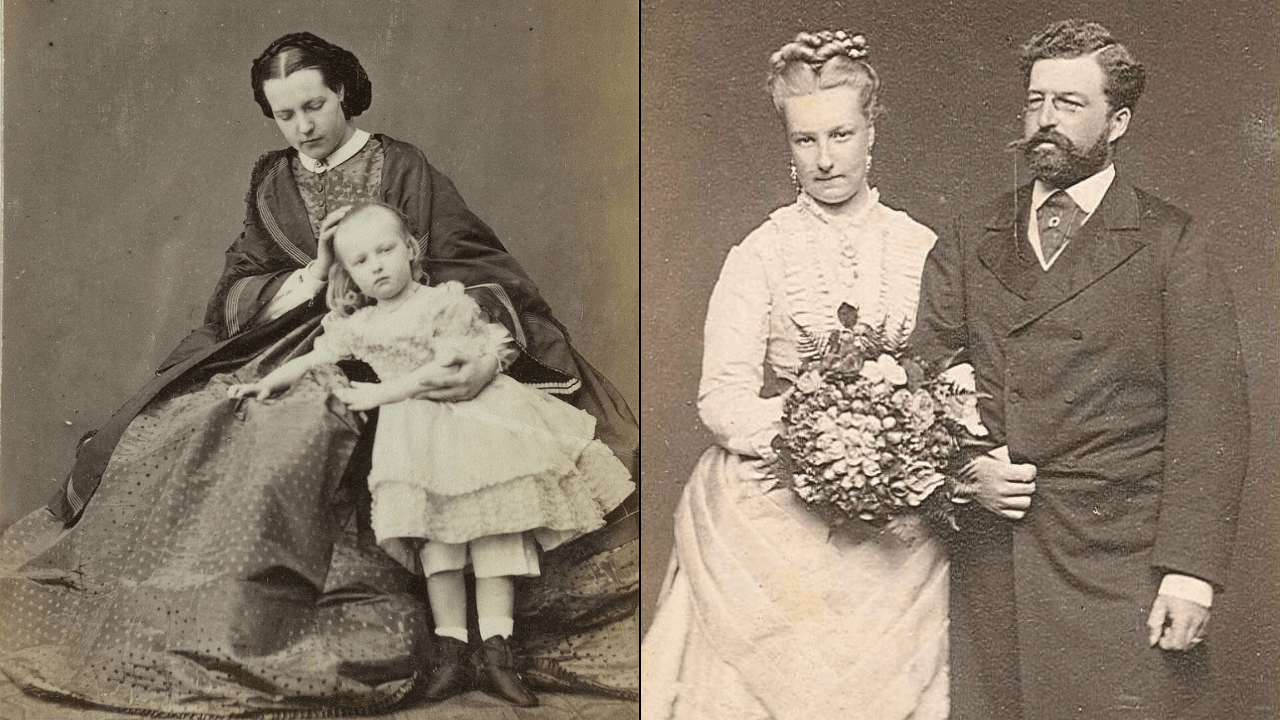
After escaping the psychiatric asylum her husband had locked her in for six years, Princess Louise of Belgium discovered her father had married his sixteen-year-old mistress five days before dying and left his daughters almost nothing.On a morning in May 1898, the door of an asylum in Döbling, on the northern outskirts of Vienna, closed behind Princess Louise Marie Amélie of Belgium. She was forty years old.
No physician had diagnosed her with any illness the historical record confirms. What she had done was take a Croatian count as her lover, watch her husband lose a duel fighting to recover his honor, and refuse to return quietly to the gilded suffocation of the Palais Coburg.Prince Philipp of Saxe-Coburg and Gotha settled the matter the way powerful men in the Habsburg Empire could: he convinced Emperor Franz Joseph I to declare her insane. Louise spent six years locked inside.
The King’s Daughter Nobody Wanted
Princess Louise Marie Amélie of Belgium was born on 18 February 1858 at the Royal Palace of Brussels. Her birth was a disappointment. Belgium had been an independent nation for fewer than thirty years won in the revolution of 1830 after centuries of rule by the Burgundians, then the Spanish, the Austrians, the French, and the Dutch and her father, Crown Prince Leopold, wanted a son to secure the succession. He would not stop wanting one for the rest of his life.
Her mother, Queen Marie Henriette of Austria, was a Habsburg princess who had married Leopold in 1853. The union was arranged for dynasty rather than affection, and the household it produced was cold. Leopold II, who ascended to the Belgian throne on 10 December 1865, was an autocratic and distant father. His description of the infant Louise noting with blunt humor that she had “dark eyes and a large nose, worthy of mine in every way” captures both the limits of his warmth and the full reach of his narcissism.
A son finally came in 1859: Leopold, Duke of Brabant. Two more daughters followed, Stéphanie in 1864 and Clémentine in 1872. Then, on 22 January 1869, nine-year-old Leopold died at Laeken from pneumonia the delayed consequence of a fall into a pond the previous year. His death shattered the royal household. Louise, ten years old, was left grieving while her parents attempted to revive a marriage already cold to the bone.
That last attempt produced only another daughter. After Clémentine arrived in 1872, Leopold and Marie Henriette separated emotionally for good. The queen retreated with increasing frequency to the Belgian resort town of Spa, eventually earning the sardonic title “the Queen of Spa.” Louise and her sisters grew up in what remained.
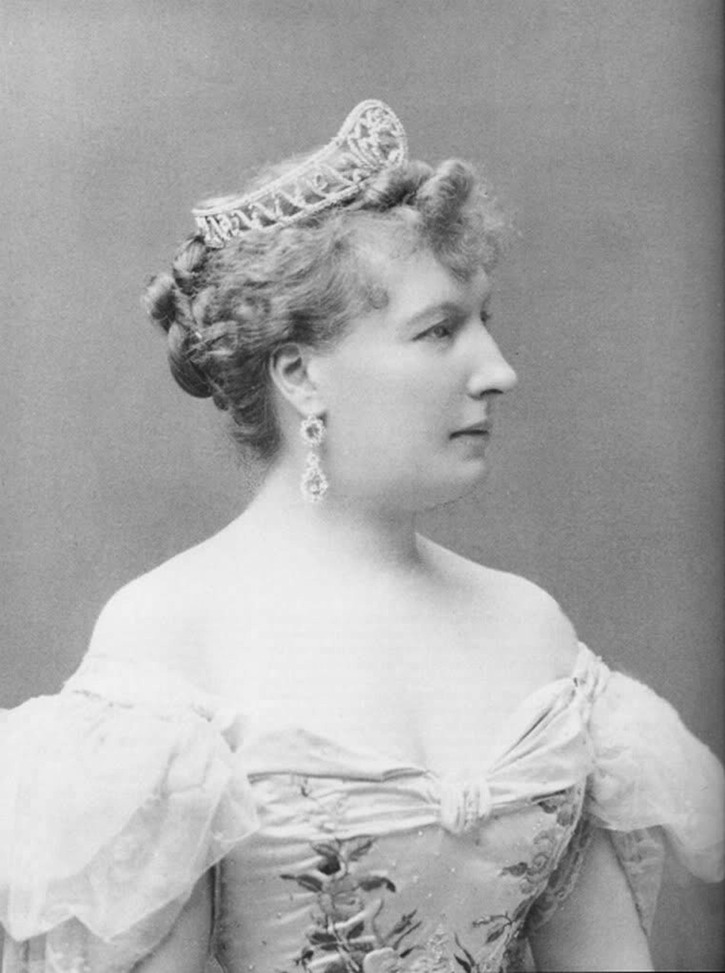
Married at Seventeen to a Man She Would Come to Despise
As the eldest daughter of the Belgian king, Louise had been a diplomatic asset since childhood. Belgium was a minor power in a continent where great powers settled borders by force. In 1870, Prussia and its German allies went to war with France, seized Alsace-Lorraine, and demonstrated once more what strength without allies meant for smaller nations. Louise’s future husband had been a matter of negotiation since she was very young.
The suitor eventually chosen was Prince Philipp of Saxe-Coburg and Gotha, born in Paris as a grandson of King Louis-Philippe I of France and connected by blood to the French and British royal families. He was also, owing to the intricacies of European dynastic intermarriage, both Louise’s paternal second cousin and her maternal first cousin once removed. After lengthy negotiations, the pair married at the Royal Palace of Brussels on 4 February 1875. Louise was seventeen. Philipp was thirty-one.
In her memoirs, published decades later under the title Autour des trônes que j’ai vu tomber, Louise described her wedding night as so distressing that she fled the palace the following morning in her nightgown to hide in a greenhouse. The marriage never recovered from its opening. The couple settled at the Habsburg court in Vienna, taking up residence at the Palais Coburg which Louise later described as dark, strangely furnished, and terrifying in its dimensions where they lived under the roof of Philipp’s domineering mother.
Louise found her mother-in-law suffocating and Philipp contemptible. She nicknamed him der Dicke the fat one. He was fourteen years her senior and appeared to feel no particular obligation to treat her as anything other than a domestic inconvenience.Two children were born: Leopold Clement in July 1878, and Dorothea Maria Henriette in April 1881. By the time Dorothea arrived, the marriage existed on paper. Louise began spending her considerable energies, and her husband’s considerable money, on Vienna’s social world.
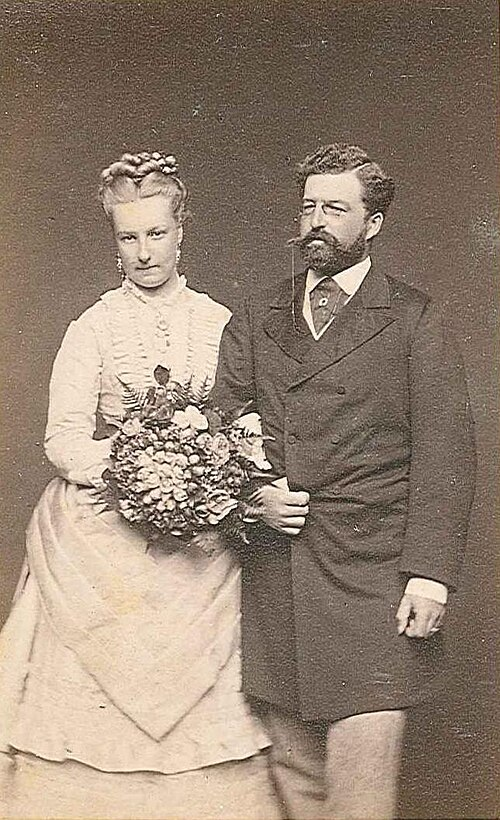
The Affair That Ended Louise’s Freedom
In the early 1880s, Louise began the first of several affairs. Whispers about her conduct spread through the Habsburg court, then reached Belgium. Leopold II, who was by this point accumulating vast personal wealth through his brutal private governance of the Congo a territory he ruled not as a colony of Belgium but as his own personal property received the news of his daughter’s indiscretions with cold fury Then came Géza Mattachich.
In 1895, Louise met Count Géza Mattachich-Keglevich during a ride in the Prater parklands of Vienna. He was a Croatian lieutenant in the Austro-Hungarian army, twenty-seven years old to her thirty-seven, and ten years her junior. Louise was entranced. Their affair was conducted openly.By January 1897, she had left the Palais Coburg permanently, taking Dorothea with her and traveling first to Paris, then to Cannes, then through southern France.
Her son Leopold Clement, calculating that his mother’s conduct had destroyed his inheritance prospects, broke with her. Her daughter soon followed, at the urging of her own fiancé. Louise was left with Mattachich and her debts.
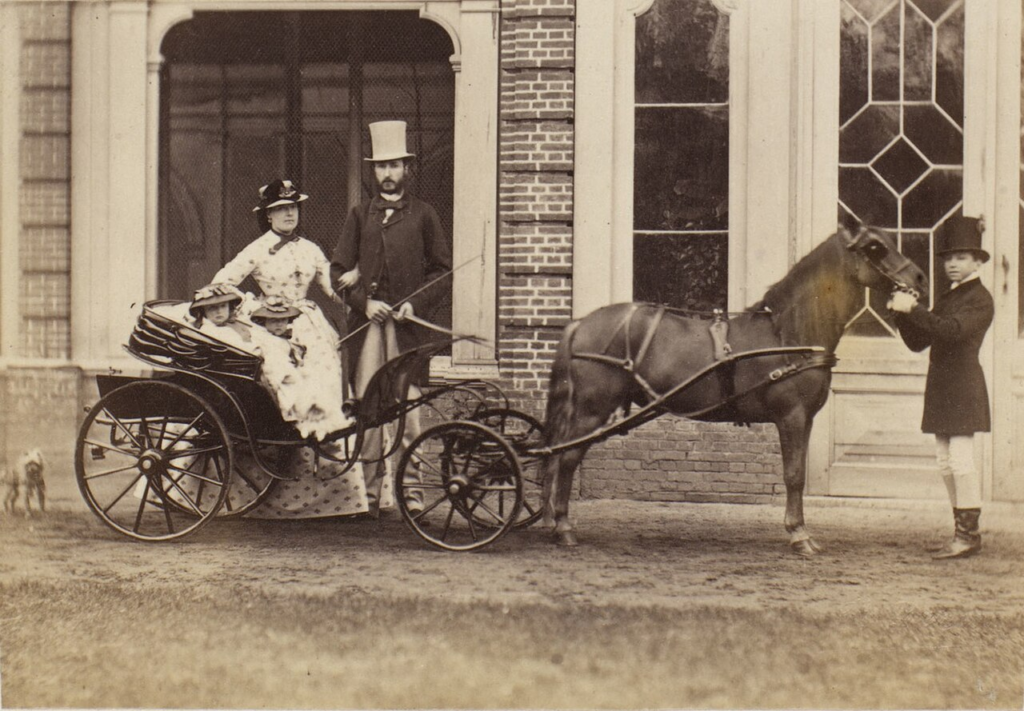
How a Lost Duel Became Six Years Behind Asylum Walls
In 1898, Philipp moved to settle the matter publicly. He challenged Mattachich to a duel in Vienna first with guns, then with swords. Philipp was wounded. The humiliation was total.He chose a more durable weapon.In May 1898, Philipp convinced Emperor Franz Joseph I to declare Louise insane. She was offered a choice: return to the Palais Coburg or enter an institution. Louise refused to return to the household she had escaped.
Simultaneously, Mattachich was arrested and imprisoned for four years convicted of forging the signature of Louise’s sister, Princess Stéphanie, on promissory notes for jewelry worth approximately 2.5 million dollars. Whether Mattachich actually forged those documents, or whether the charge was engineered to neutralize him, was disputed at the time and never conclusively resolved.
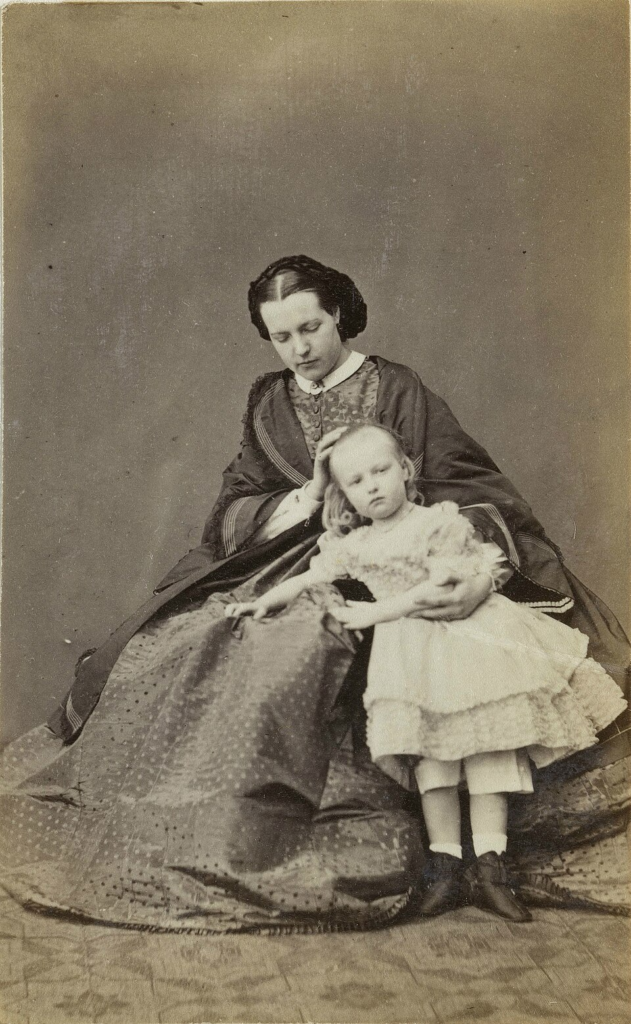
Alarmed by the press coverage that Louise’s confinement was attracting, Philipp arranged to have her removed from Vienna in 1899 and transferred to an institution in Saxony. She vanished from public view. The only family contact the historical record documents over the following years was a single visit from Dorothea in February 1903.
How Louise Escaped From Saxony and Proved Her Own Sanity
Mattachich was released around 1902. He spent the following years writing articles and a memoir in support of Louise’s cause. Then, in the summer of 1904, he moved. Louise had been transferred to Bad Elster in Saxony for a health cure. Surveillance was light. Mattachich orchestrated her escape across the border into France.After more than six years of confinement, Louise walked free.In 1905, she was formally declared sane. On 15 January 1906, her divorce from Philipp was finalized. She was forty-seven years old.Leopold II Left His Fortune to His Teenage Mistress
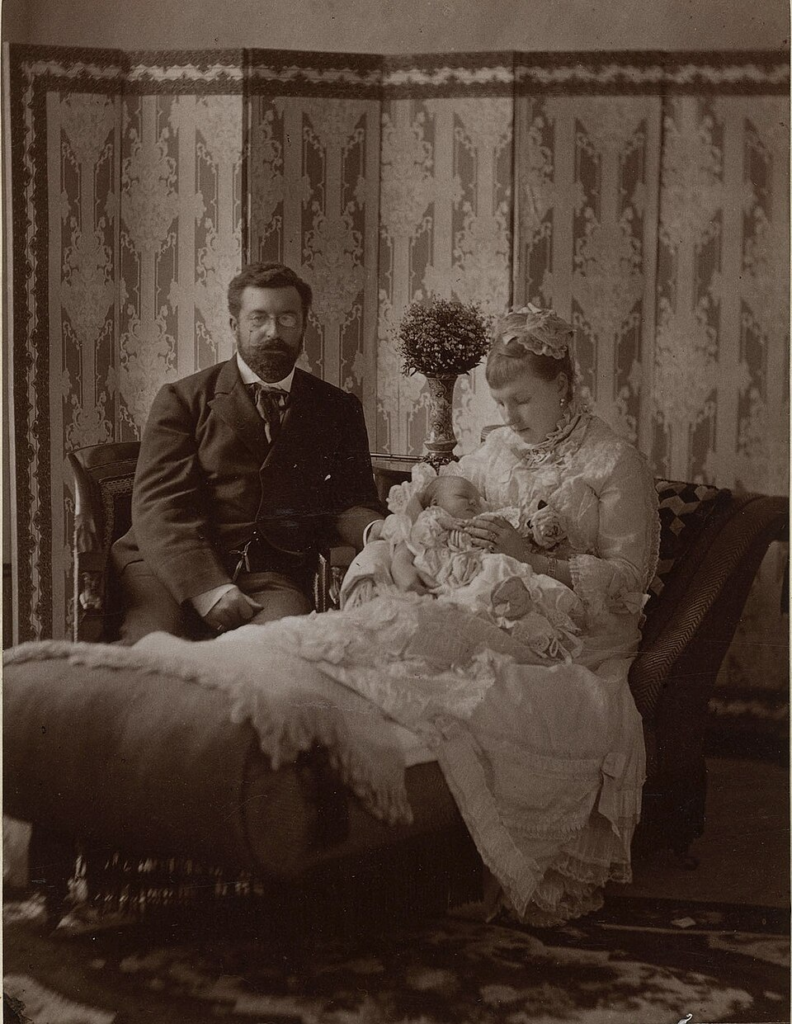
Leopold II died on 17 December 1909, at seventy-four years old. He had spent the previous decade in the company of Caroline Lacroix a sixteen-year-old he had met in Paris in 1899, whom he ennobled as Baroness Vaughan, and with whom he had two sons. Five days before his death, on 12 December 1909, he married Caroline in a religious ceremony at the Palace of Laeken. No civil ceremony was performed. Under Belgian law, the marriage was void. He died regardless, having arranged his affairs so that his immense Congo-derived fortune flowed not to his daughters but to Caroline and a web of holding companies deliberately structured to prevent legal challenge.
Leopold had also, it emerged, anticipated his daughters’ response. Much of the wealth had been hidden in Belgian and foreign holding companies created specifically to insulate it. Louise, Stéphanie, and Clémentine contested the will through the Belgian courts and lost. The Belgian state eventually agreed to pay each disinherited princess approximately five million francs a significant sum to ordinary people, and a fraction of what their father had accumulated from forced labor in the Congo and transferred to a woman he had known for a decade.
The Son She Lost, the War That Took Everything Else
Louise and Mattachich settled improbably back in Vienna before the First World War, despite everything that city had cost them. When war broke out in 1914, Austria-Hungary expelled them. Belgium was under German occupation. They relocated to Munich.On 17 October 1915, Louise received word that Leopold Clement had been shot five times at close range in his Vienna apartment by his mistress, Camilla Rybicka, who then smashed a bottle of sulfuric acid onto his face and turned the revolver on herself. She died at the scene. Leopold Clement lost his right eye to the acid. Three ribs were shattered; his spleen ruptured. He survived in agony for six months.He died on 27 April 1916. He was thirty-seven years old.
The inheritance funds from Belgium, originating in an occupied country, stopped arriving. By early 1917, Louise’s debts had reached thirty million marks. Declared insolvent, she watched her remaining possessions auctioned. Dorothea and Stéphanie sent occasional funds. It was not enough to be anything other than survival.After the armistice, Louise returned to France and published her memoirs in 1921. Mattachich died of heart and kidney failure in Paris in the autumn of 1923.
On 1 March 1924, Princess Louise Marie Amélie of Belgium died at the Hotel Nassauer Hof in Wiesbaden, Germany. She was sixty-six years old. Her only surviving child, Dorothea, who had married Ernst Günther, Duke of Schleswig-Holstein, was not with her. Dorothea never had biological children and adopted several. She died in January 1967. The family line ended there.
Louise Marie Amélie of Belgium died in a German hotel room, her published memoirs her only estate, sixty-six years after she had been born in the Royal Palace of Brussels to a king who had wanted a son.
Leave a Reply