
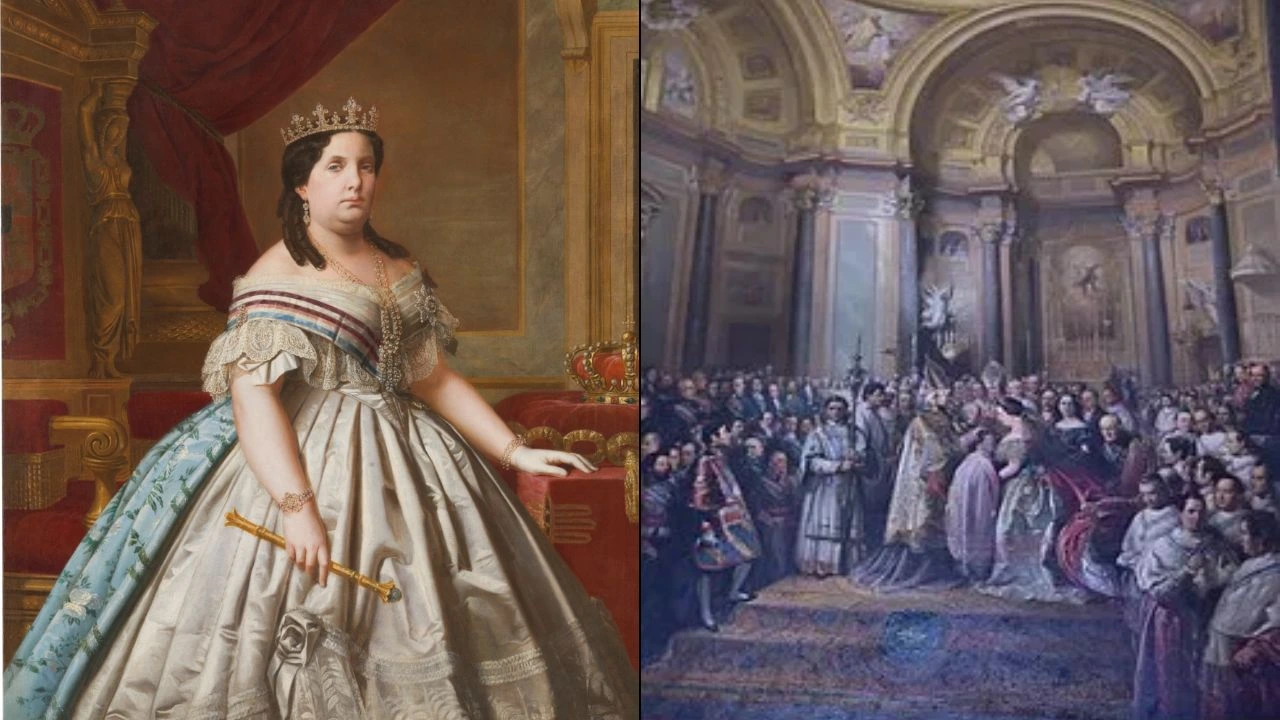
Spain’s only queen regnant survived a priest’s knife in 1852, outlasted 12 pregnancies in a marriage she despised, and was finally driven from her throne by the very general she had once tried to divorce her husband to marry.
On the morning of September 30, 1868, Queen Isabella II of Spain boarded a train at San Sebastián and crossed into France. She was 37 years old. She carried with her an entourage and 35 years of accumulated ruin. As the train reached the border, it passed another train travelling in the opposite direction, carrying exiles who were finally coming home.
They pressed their faces to the windows. “Down with the Bourbons!” they shouted. “Long live liberty! Long live the Republic!”
She did not return to Spain for eight years. When she finally did, the government would not allow her inside Madrid.
A Throne Built on a Dying Empire
The country Isabella would one day inherit had been retreating from greatness for two centuries. As recently as the 1500s, Spain had been the world’s dominant power, its empire extending across the Americas and drawing enormous wealth in silver and gold from Mexico, Peru, and Bolivia. That wealth had never been converted into a modern economy. By the early nineteenth century, Spain had lost the vast majority of its colonies. Mexico, Argentina, Gran Colombia, and Peru had all declared independence. The nation Isabella would rule was archaic, broke, and structurally divided.
Her father, King Ferdinand VII, had not helped matters. He had ruled Spain on and off since 1808, a man more interested in preserving his own authority than in governing effectively. With no male heirs, he issued the Pragmatic Sanction in 1830, overturning the Salic Law that had barred women from the Spanish throne. The succession would pass to his firstborn daughter.
Isabella was born on October 10, 1830, at the Royal Palace in Madrid.
A Child Queen Inherited a Nation at War
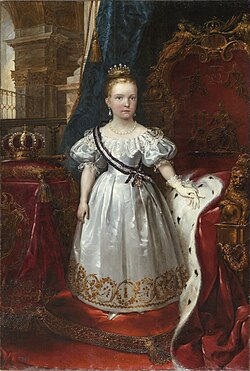
Ferdinand VII died on September 29, 1833, aged 48. Isabella was two years and eleven months old. She became Queen Isabella II of Spain, the first queen regnant the country had seen since Juana la Loca, who had ruled Castile from 1504 and Aragon from 1516 until her death in 1555. Nearly three hundred years had passed.
Not everyone accepted it. Ferdinand’s brother, Infante Carlos, refused to recognise a female sovereign and launched a civil war. The First Carlist War lasted seven years, held together on the royalist side by Isabella’s mother, Maria Christina of the Two Sicilies, who served as regent. Maria Christina secured loyalty through concessions, granting the army and liberal factions greater political influence in exchange for their support. She also commissioned Spain’s most progressive constitution to date, promulgated in 1837. Behind closed doors she was enriching herself at a significant rate.
The secret came out in 1840. In December 1833, just three months after Ferdinand’s death, Maria Christina had secretly remarried. Her new husband was a low-ranking soldier named Agustín Fernando Muñoz. When the news became public, the scandal was severe enough to end her regency. She stepped down. General Baldomero Espartero, the most celebrated Isabelline commander of the Carlist Wars, assumed the role.
Espartero served until 1843, when a military coup led by Generals Leopoldo O’Donnell and Ramón María Narváez forced him out. That same year, the Cortes declared Isabella of age at 13. She swore the Constitution of 1837 on November 10, 1843, and assumed the full powers of the crown. Most accounts describe her as cheerful but ill-educated and poorly informed, content to leave government to the powerful men surrounding her.
She was 13. Spain had not stopped fighting itself since before she was born.
Marriage Became Spain’s Most Watched Scandal
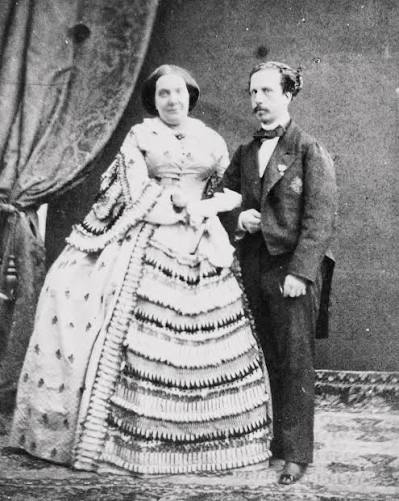
On October 10, 1846, Isabella’s sixteenth birthday, she married Francisco de Asís, Duke of Cádiz. He was her double first cousin and in his mid-twenties. The Moderate Party had arranged the match for reasons of political stability. Isabella had reportedly made clear she preferred Francisco’s younger brother, Enrique, Duke of Seville. That same day, Isabella’s younger sister, Infanta Luisa Fernanda, married Antoine d’Orléans, Duke of Montpensier.
Isabella later described the wedding night to intimates with a single question: “What shall I tell you about a man whom I saw wearing more lace than I was wearing?”
Historians have since speculated at length that Francisco de Asís was either homosexual or impotent, and that few if any of Isabella’s children were biologically his. Isabella became pregnant twelve times over the next twenty years. Five children survived into adulthood: Infanta María Isabel, born in December 1851; Alfonso, born in November 1857; and three daughters all named María, born between 1861 and 1864: María del Pilar, María de la Paz, and María Eulalia. Francisco recognised every child. He is also reported to have extracted money from the queen in exchange for his continued silence, with the extortion intensifying after their eventual formal separation.
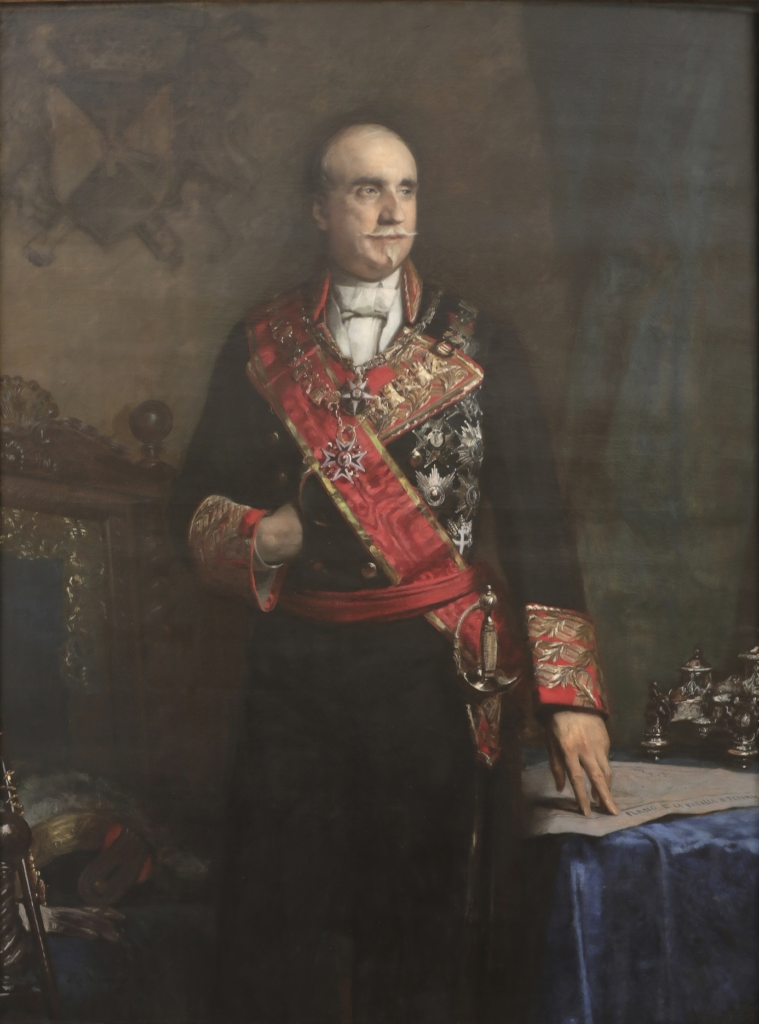
The marriage had collapsed publicly by 1847. Isabella, then 17, made no attempt to conceal her infatuation with General Francisco Serrano, Duke of La Torre, a man twenty years her senior. She let it be known she would willingly divorce Francisco to marry him. The suggestion scandalized the court. Serrano was quietly transferred to the post of Captain General of Granada. He would later command the revolutionary army that drove her from the throne.
A Priest Came Within Inches of History
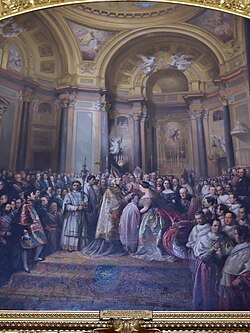
On the morning of February 2, 1852, Isabella was leaving the Chapel of the Royal Palace of Madrid with her royal escort, intending to proceed to the Basilica of Nuestra Señora de Atocha. A man stepped forward from the crowd. His name was Martín Merino y Gómez, an ordained priest and liberal activist. He gave the impression of wanting to deliver a message.
Then he drove a knife toward her chest.
The gold embroidery of her dress and the baleen stays of her corset together reduced the force of the blow. What would have been a fatal wound became a minor incision at the right side of the belly. The Royal Guard seized Merino within seconds. He was defrocked and executed by garrote.
Isabella survived. The near-miss left her permanently frightened.
Reformers Found the Queen an Obstacle
By June 1854, Spain’s political frustrations had reached a breaking point. General Leopoldo O’Donnell launched a military uprising at Vicálvaro on June 28, demanding a new government and an end to the corruption that had defined the preceding decade. Street protests spread across the country. Facing the prospect of civil war, Isabella was advised to appoint General Baldomero Espartero as Prime Minister.
Espartero entered Madrid on July 28. The Progressive Biennium that followed ran from 1854 to 1856. Government bureaucracy was overhauled. Tax collection was reformed. Censorship was loosened. Political association was permitted for the first time. The beginnings of a national railway network were laid. A new liberal constitution was drafted in 1856.
Isabella did not obstruct these measures. She did not support them either. When O’Donnell staged a counter-revolutionary coup in 1856 and ended the Bienio Progresista, the drafted constitution was quietly shelved. It was never enacted.
The reformers named it the Unborn Constitution.
Opposition United and Revolution Followed
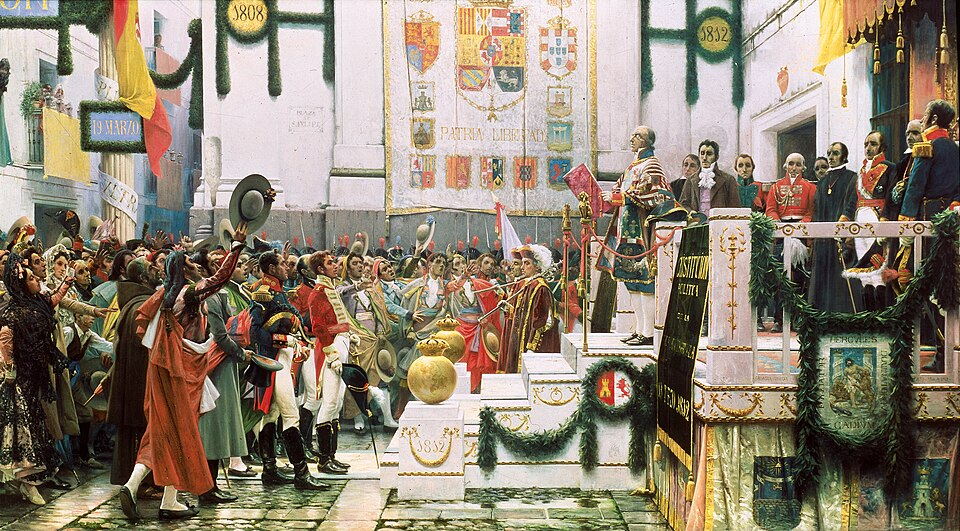
On August 16, 1866, exiled progressives, democrats, and members of the Liberal Union gathered in the Belgian port city of Ostend and signed a pact under General Juan Prim. Their objective was direct: Isabella had to go. A constituent assembly, elected by universal male suffrage, would decide what came next.
On July 7, 1868, Isabella banished her own sister and brother-in-law after they were linked to a conspiracy against the Crown. It was a sign of how completely the ground beneath her had shifted.
The Glorious Revolution began on September 18, 1868, with a naval mutiny in Cádiz. Isabella was at her traditional summer retreat on the coast at Lekeitio in Biscay. She had been about to travel to San Sebastián to meet Napoleon III. The French royals never arrived. The royalist army was defeated by revolutionary forces under the command of Marshal Francisco Serrano at the Battle of Alcolea on September 28. The man she had once tried to leave her husband to marry had just ended her reign.
Two days later, Isabella boarded a train for France.
Paris Offered No Second Act
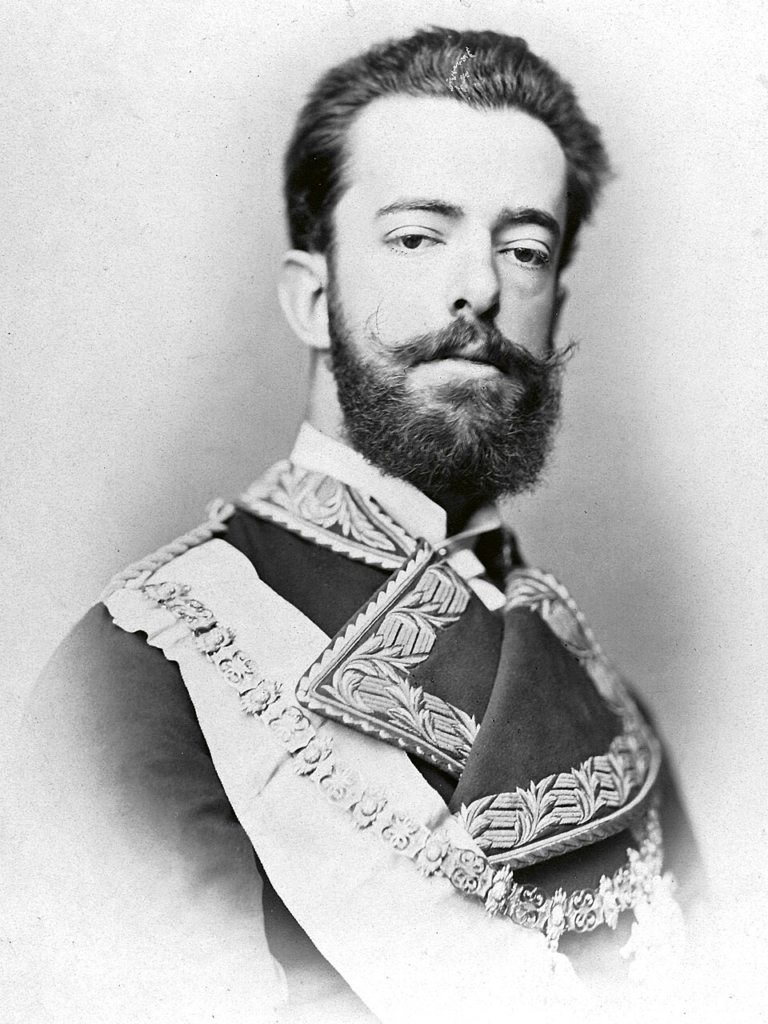
The former queen settled at 172 Rue de Rivoli in Paris. She would spend most of the rest of her life there. The revolutionary government in Spain briefly crowned Amadeo of Savoy, the second son of Victor Emmanuel II of Italy, as Amadeo I. He abdicated in 1873. The First Spanish Republic collapsed within months. On December 29, 1874, a military coup proclaimed the restoration of the Bourbon monarchy and recognised Isabella’s son as King Alfonso XII. He landed in Barcelona on January 9, 1875.
Isabella formally renounced her dynastic rights on June 25, 1870, officially described as having done so “freely and spontaneously.” The renunciation was tied to an economic settlement connected to her formal separation from Francisco de Asís.
She returned to Spain in July 1876. The government permitted her to visit Santander and El Escorial. She was allowed into Madrid for a matter of hours on October 13. She moved to Seville, stayed briefly, and left for France again in 1877. She spent the remainder of her life at the Palacio Castilla. She was there in 1885 when Alfonso XII died prematurely at 27. She was there in 1901 when she wrote her will, requesting burial at El Escorial alongside the kings of Spain.
Isabella II died on the morning of April 9, 1904, aged 73. Her physicians attributed the cause to influenza. Her body left the Palacio Castilla for the Gare d’Orsay and arrived at El Escorial on April 15. The funeral took place the following day at San Francisco el Grande.
The Spanish had two names for her. La Reina Castiza: the Traditional Queen. And la de los Tristes Destinos.
The Queen of Sad Mischance.
She had inherited a broken throne at the age of two and handed back a broken country at 37. Whether the damage was something she caused or something she absorbed, Spain never agreed. She crossed into France with that question still open, and the exiles on the other train had already made up their minds.
Leave a Reply